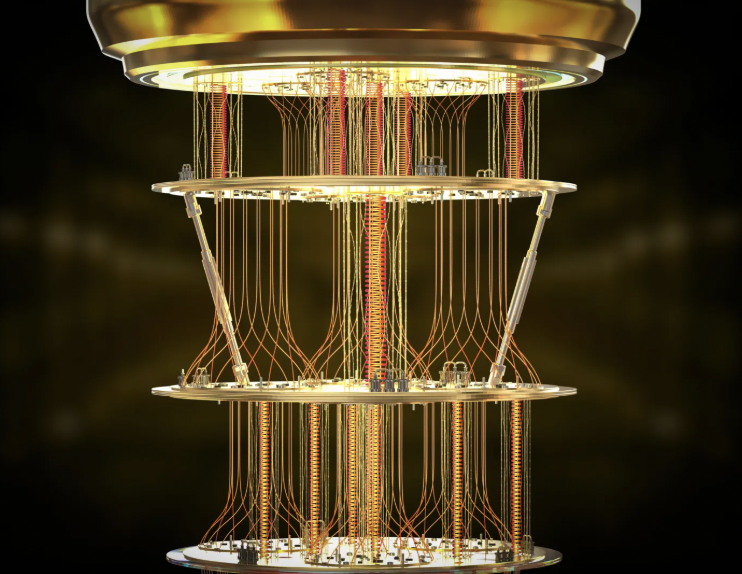
QRL 2.0 keeps moving forward - audits are still 50% complete, with more upstream fixes merged into qrysm, improved slashing protection, web3.js alignment with go-qrl, and better E2E testing. Quiet, steady progress toward a post-quantum blockchain built for the long term. $QRL https://t.co/LztttGRH4F
@PQCRadar Hey, you'll find its GitHub repository is old, bad, and lacks updates. What does that prove? Maybe blockchain only needs to be secure and efficient; the rest can be left to future developers.
PQC is now considered a critical technology for the US government, giving the response to the quantum computing threat more urgency. https://t.co/6G62QDlGzG
What are the most important points from the new Trump Executive Orders on Quantum? ⬇️
1. The first executive order launches a national effort to produce a quantum computer in the next 5 years, investing in American quantum leadership to stay ahead of the pack.
2. The second executive order directs federal agencies to transition to post-quantum cryptography for their computer systems by 2031.
3. The Department of Energy is tasked with creating a Scientifically Relevant Quantum Computer, making quantum a top 2 science and technology priority.
4. The US Government directly understands the risk to existing systems when a powerful quantum computer comes online. The defense provided by post-quantum cryptography is as important as the offense.
5. Post-quantum cryptography is mentioned countless times. NIST and Department of Commerce are planning to lead the charge to ensure systems (and digital assets) remain protected in a post-quantum world.
@CrypticWhale_ Excuse me, I've to say:
CZ @cz_binance deserves respect though, his remarks obviously shows he is in lack of fundemental concept or basic terminology on cryptography, as a global crypto leader, it's very bad to speak out so many unmerticulous words or ethicaless suggestion.
🧠 #TechTuesday | Can #Bitcoin Really Migrate to Quantum Safety?
BTQ has introduced a Bitcoin Quantum testnet with BIP 360, aiming to bring quantum-resistant transaction models to Bitcoin. The approach focuses on reducing public key exposure and testing post-quantum structures in a live environment.
Their approach:
• Reduce exposure of public keys (P2MR)
• Introduce quantum-resistant transaction formats
• Explore a separate “Bitcoin Quantum” chain
But not everyone agrees.
Post-quantum concerns highlight that:
• Migration requires users and miners to adopt a new chain
• Social consensus is slow and uncertain
• Historical data may remain exposed
• Coordination is harder than the technology itself
Some researchers argue that even with working solutions, adoption remains the biggest barrier. In systems where data is permanent, delays in upgrading security can compound long-term risks.
At Abelian, we believe blockchain infrastructure should not depend on complex migration or uncertain consensus. Post-quantum security and privacy should be built in from the start, not introduced later under pressure.
Preparation is easier before the risk becomes unavoidable.
Learn more: https://t.co/8m4QyiYroP
#PQAbelian #ABEL #PostQuantum #Blockchain #Web3 #QuantumComputing
🚨Quantum threat to #Bitcoin is becoming real!
A new @Glassnode analysis estimates that nearly 10% of Bitcoin’s total supply is “structurally unsafe” in the event of a major quantum breakthrough, capable of breaking current elliptic curve cryptography.
The exposed supply includes:
* Early Pay-to-Public-Key (P2PK) wallets
* Legacy multisig structures
* Certain Taproot outputs
At the same time, nearly 70% of BTC supply remains unexposed to direct quantum threats, highlighting that the ecosystem still has time to prepare, but not indefinitely.
The industry conversation is evolving from theoretical risk toward practical migration paths:
🔹 Post-quantum cryptography
🔹 Quantum-safe wallet standards
🔹 Address hygiene improvements
🔹 New output formats like P2MR
The broader takeaway:
Quantum resilience is becoming a strategic infrastructure discussion for crypto, not just an academic one.
Read more: https://t.co/RkNYIWyNWr
#PQAbelian #ABEL #PostQuantum #QuantumComputing #Blockchain
⚛️ @Google's latest post-quantum research highlighted the growing urgency around blockchain security in the quantum era, with #Abelian referenced among the few blockchain projects in the discussion.
At Abelian, privacy is engineered into the protocol layer from day one:
🔐 Confidential by default, with optional transparency
🛡️ Secured by native post-quantum cryptography
⚡ Engineered for resilience in the quantum era
As quantum computing advances, the standards for digital assets, identity, and financial privacy will inevitably evolve alongside it.
Future-proof privacy starts at the protocol layer.
$ABEL | Digital Gold 2.0 | https://t.co/hkhcsTGkHR
#PQAbelian #ABEL #PostQuantum #Blockchain #Web3 #QuantumSecurityTechnology #QuantumComputing #GoogleQunatumAI #Google
🚨QUANTUM THREAT TIMELINE MOVES CLOSER
A new report says “Q-Day,” when quantum computers could break modern encryption, may arrive as early as 2030.
A breakthrough is seen as “more likely than not” by 2033.
@justinsuntron Hello Mr. @justinsuntron , #Coinbase and #Ethereum are actively advancing their quantum-resistant initiatives. How does your #TRON plan to migrate to quantum-resistant? Let me help you—please contact me.