What is the primary purpose of the Address Resolution Protocol (ARP) in a local area network?
A. Resolving IP addresses to MAC addresses
B. Resolving MAC addresses to domain names
C. Assigning IP addresses to new devices
D. Routing data packets to external networks
Show hint
The 19-year-old hacker, Peter Stokes, was caught by the FBI despite bouncing his internet connection across three countries using a Virtual Private Network (VPN).
He believed a VPN would hide his real identity by masking his public Internet Protocol (IP) address.
However, his Windows 11 operating system was tracking a hidden, permanent code
known as a Global Device Identifier (GDID).
This specialized tracking number is unique to the physical computer itself and does not change when you activate a VPN.
When Stokes used his computer to conduct cyberattacks, his background Windows system automatically logged his activity alongside this secret GDID number.
Microsoft recorded this data through its built-in telemetry features and subsequently shared the logs with federal investigators.
The FBI used these digital fingerprints to link his precise web traffic directly back to his physical laptop.
This educational case highlights that hiding an IP address is insufficient for total anonymity, as modern operating systems constantly track hardcoded hardware data
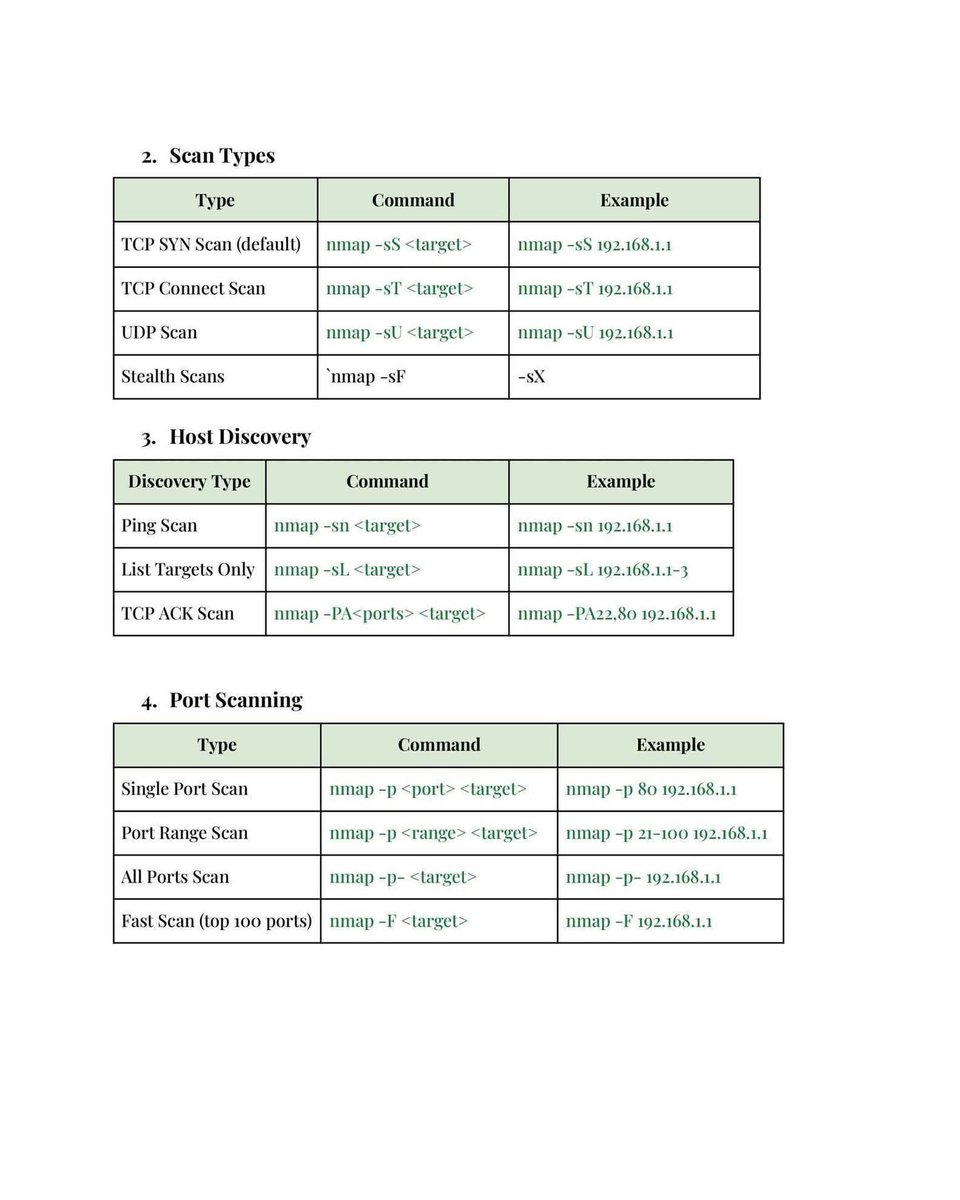
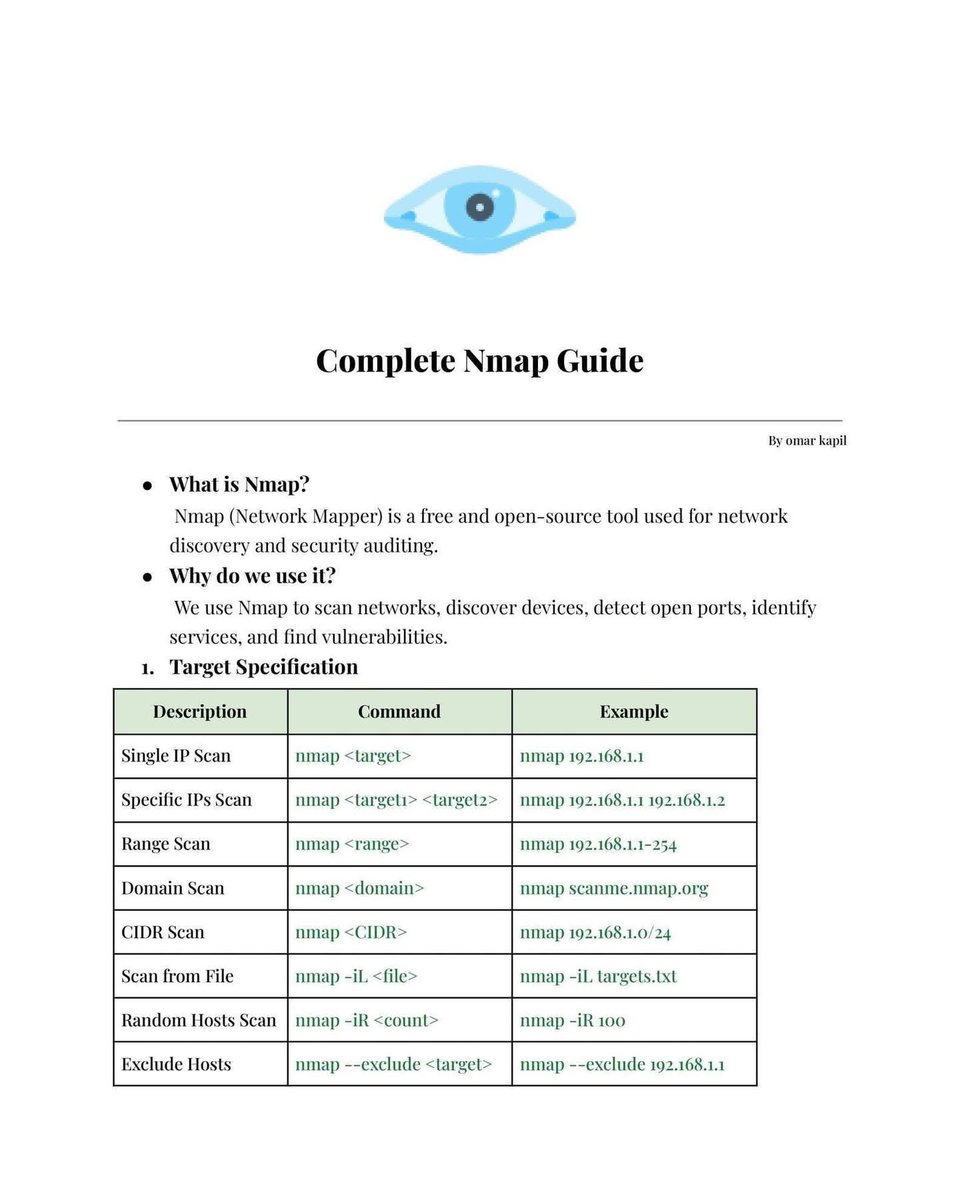
Learn how to stay stealthy during network scans using the decoy flag in Nmap 🛡️����
By using the -D flag, you can send duplicate packets from spoofed IP addresses alongside your own. This technique obfuscates your activity, making it much harder for anyone monitoring the network to pinpoint the actual source of the scan.
Some people think OS detection needs complex tools. But a simple ping tells you a lot.
Here is how it works:
Every packet sent over a network has a TTL value, a counter that drops by 1 at each hop so packets don't loop forever.
Windows → 128
Linux → 64
Cisco → 255
So when..
you ping a host and get TTL 58 back, it started at 64, dropped a few hops along the way, Probably Linux.
Not always 100% accurate. But a solid first clue before touching a scanner.
Different TTL values based on OS: https://t.co/X5dueSLnH0
Some people think OS detection needs complex tools. But a simple ping tells you a lot.
Here is how it works:
Every packet sent over a network has a TTL value, a counter that drops by 1 at each hop so packets don't loop forever.
Windows → 128
Linux → 64
Cisco → 255
So when..
Today I actually hacked someone for real.
Two of my friends. They had a feeling something was coming — I convinced them it had nothing to do with hacking. Classic social engineering.
One command. That's all it took.
Full access to their system.
Told them after.
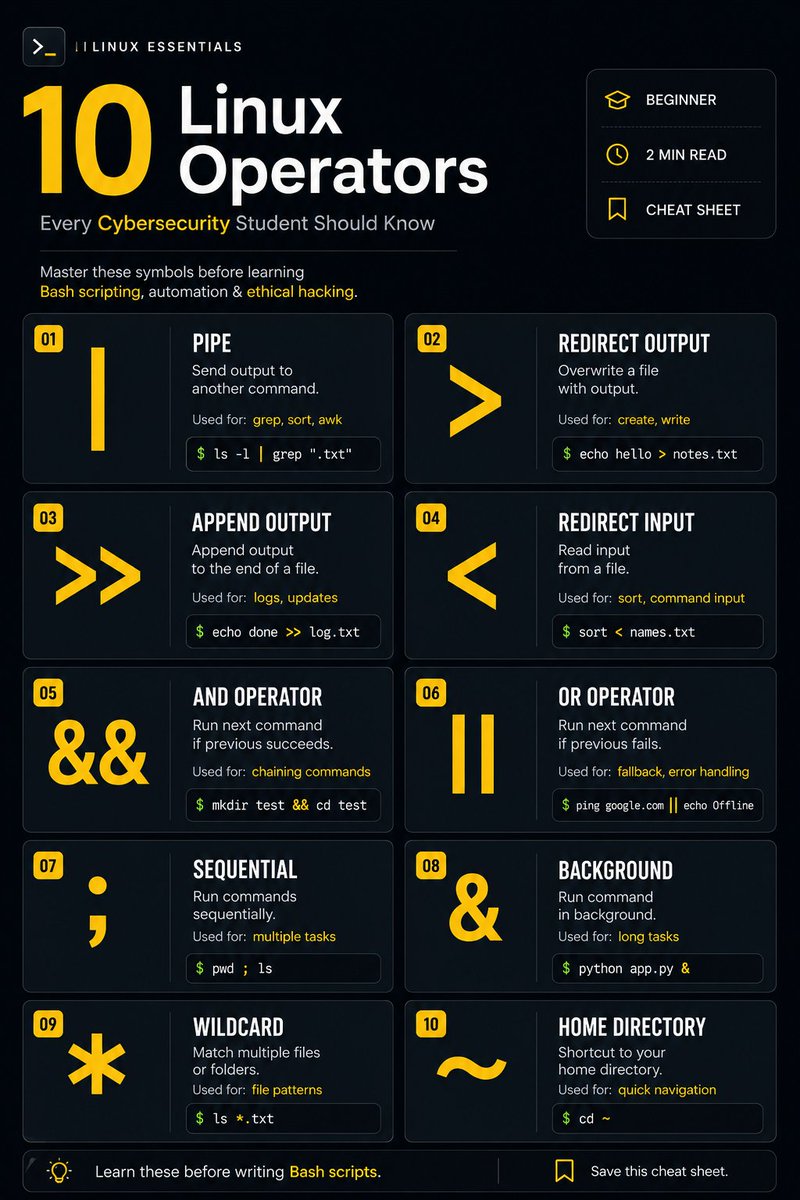
These 10 Linux commands will make your teammates think you've been using Linux for 20 years.
1. htop — visual, interactive top
2. ncdu — find what's eating your disk
3. tldr — readable man pages
4. fzf. — fuzzy finder for everything
5. bat — cat but with syntax highlighting
6. ripgrep — grep but fast
7. jq — JSON on the command line
8. watch — run any command every N seconds
9. tmux — never lose a session again
10. ss — better than netstat
Bookmark this.
Which one do you already use? 👇
Recon tip that took me 2 years to learn:
Google Dorks are not dead.
They just got smarter.
Stop searching: site: target./com
Start searching:
site:target./com ext:env OR ext:log OR ext:sql
ext: filters by file extension.