Happy #StarTrekDay — in honour of this occasion and with apologies to the Great Bird of the Galaxy for my transgressions, I have replaced every instance of the word “brain” in Spock’s Brain with the word “dick”.
I’m so very sorry.
#SpocksDick
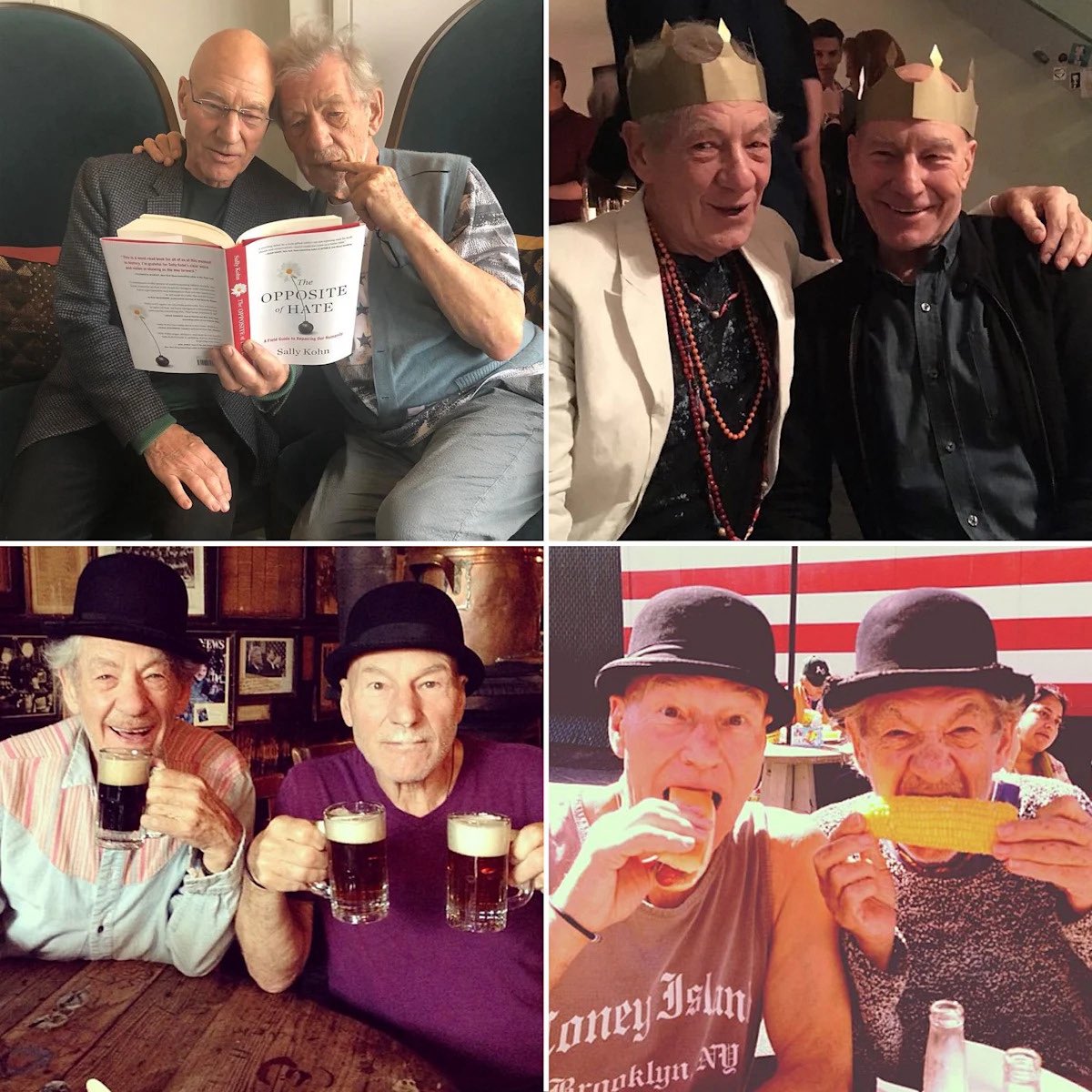
Sir Patrick Stewart and Sir Ian McKellen knew each other for nearly 50 years before becoming close friends on the set of X-Men.
Around that time, Sir Patrick passed on the role of Gandalf, which his good friend would go on to make his own. In a later interview he stated “My dear friend Ian McKellen became a living legend with his performance as Gandalf in The Lord Of The Rings.”
The two will appear together one final time in Avengers: Doomsday. ❤️
When my husband died, because he was so famous and known for not being a believer, many people would come up to me-it still sometimes happens-and ask me if Carl changed at the end and converted to a belief in an afterlife. They also frequently ask me if I think I will see him again. Carl faced his death with unflagging courage and never sought refuge in illusions. The tragedy was that we knew we would never see each other again. I don't ever expect to be reunited with Carl. But, the great thing is that when we were together, for nearly twenty years, we lived with a vivid appreciation of how brief and precious life is. We never trivialized the meaning of death by pretending it was anything other than a final parting.
Every single moment that we were alive and we were together was miraculous, not miraculous in the sense of inexplicable or supernatural. We knew we were beneficiaries of chance. . . . That pure chance could be so generous and so kind. . . . That we could find each other, as Carl wrote so beautifully in Cosmos, you know, in the vastness of space and the immensity of time. . . . That we could be together for twenty years.
That is something which sustains me and it’s much more meaningful. . . . The way he treated me and the way I treated him, the way we took care of each other and our family, while he lived. That is so much more important than the idea I will see him someday.
I don't think I'll ever see Carl again. But I saw him. We saw each other. We found each other in the cosmos, and that was wonderful.
- Ann Druyan
Because a certain kind of man believes that not getting everything he wants from women is oppression. This applies both to incels and to the type of trans-identified man who insists that speech, laws and physical spaces should be reconfigured around his self-image.
Enforcement of some UK laws and rules is so bad that powers like this can be presented as ‘new’ when they’ve already been in place for years.
https://t.co/uRZsNtfiWy
Does this Government have no shame?
The whole process of drafting and implementing the official definition of “anti-Muslim hostility” stinks.
First, Angela Rayner appointed five people to the Working Group tasked with drafting the definition. All had previously expressed support for the need for a definition, and all had troubling links to Islamist organisations.
Second, the Ministry of Housing, Communities and Local Government said it had deleted all responses to the Working Group’s consultation. That appeared to contradict the Government’s own data policy and has only fuelled speculation that Islamist extremists may have had an opportunity to influence the process.
Third, the Ministry has now admitted that it did not delete the responses after all: they still exist on the department’s data system.
What on earth is going on? It is time for Angela Rayner to come clean with the British public.
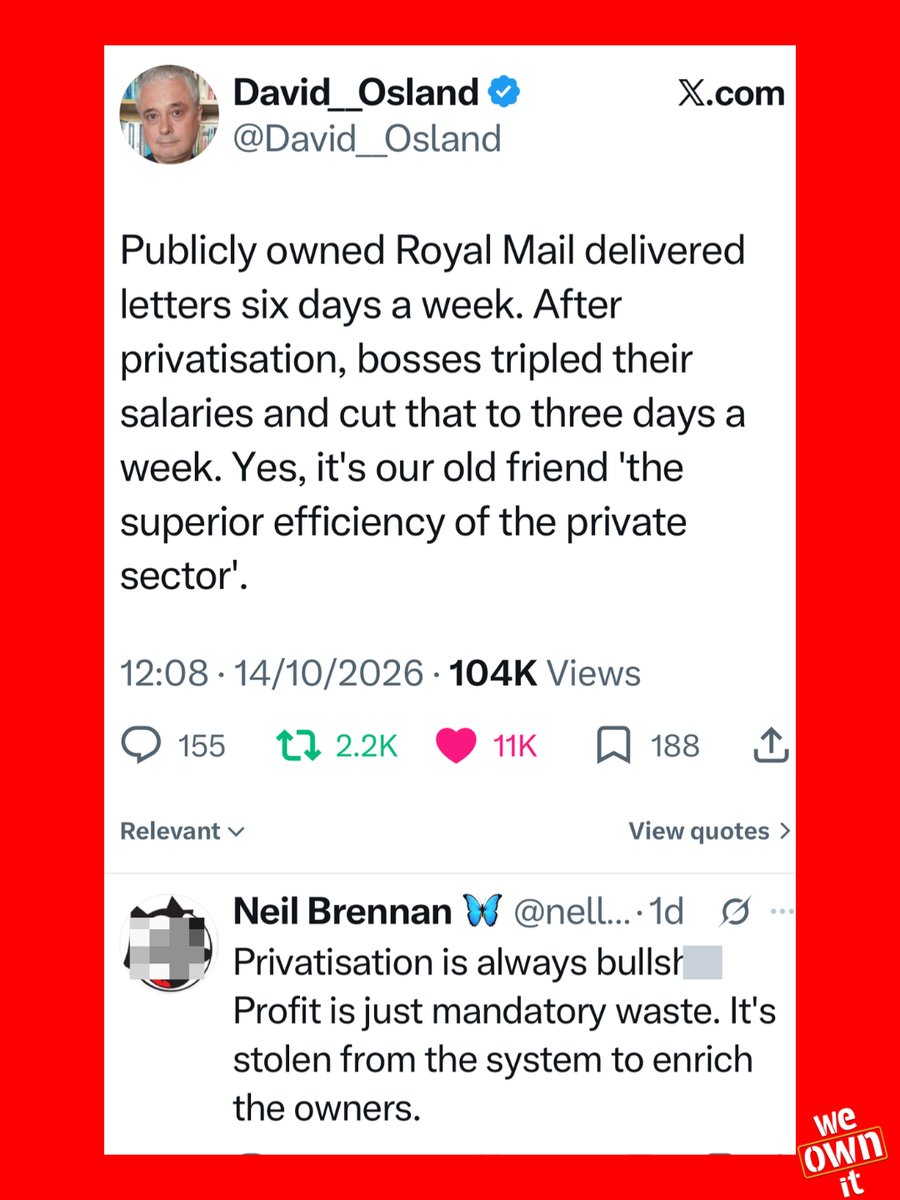
The crisis at Royal Mail is completely man-made.
Let's take it back into public ownership and reinvest parcel profits into hiring staff to deliver letters
It would cost just 0.1% of the UK national debt to buy back Royal Mail
In 1943, Odile de Vasselot carried out a series of perilous operations to help Allied airmen evade capture in occupied France.
With extraordinary courage, she coordinated their escape lines: meeting them at the Belgian frontier, supplying essential forged documents, and arranging travel tickets to neutral Spain, enabling their safe return to Britain.
Remember the remarkable wartime service of this courageous heroine!
I am a member of the Norwegian Nobel Committee.
There are five of us. Five people, appointed by a parliament most of the planet could not find on a map, who decide, once a year, which human being the world has agreed to call good.
I know. I know. I think about it on the tram.
We meet in a building on Henrik Ibsens gate, a street named after a man who wrote almost exclusively about people discovering they are frauds, which nobody on the committee finds funny except me. There is a room with a long table and the portraits of the dead laureates looking down, Mandela, the Dalai Lama, a great many earnest men in spectacles, and one portrait we do not discuss, which is Kissinger, 1973, awarded while the bombs were still falling, after which two of our predecessors resigned and the satirist Tom Lehrer said political satire was now obsolete. We keep him on the wall. A reminder. Every family has the uncle.
It is October in Oslo, which means the sun gives up around four in the afternoon like a civil servant, and it rains the particular Norwegian rain that isn’t quite falling, just hanging there, judging you. I arrive with wet shoes. I always arrive with wet shoes. There is coffee, because this is Norway and there is always coffee, we drink more of it per person than almost anyone alive, and someone’s wife has sent kanelboller, the cinnamon buns, and we sit, five Norwegians, damp, caffeinated, sugared, and we decide the moral standing of the entire species.
Let me tell you how it actually works, because the world imagines a cathedral and it is, I promise you, a book club with a mandate.
287 nominations this year. 208 people, 79 organizations. Anyone can nominate, that’s the secret nobody understands: a professor, a parliamentarian, a former laureate, so the “nominee” list is meaningless, it’s a suggestion box, and every autumn some congressman nominates his own golden retriever and the press writes “SHORTLISTED.” Nobody is shortlisted. There is no short list the public ever sees. There is us, and the coffee, and the rain, and the portraits, and a Norwegian stubbornness that is older than the prize itself.
We read reports. The institute’s advisers write them, thick dull documents, and we argue. Our chairman told the BBC once that in the final meeting “there is a high temperature.” High temperature, for a Norwegian, means someone slightly raised an eyebrow and then apologized for it. We don’t do high temperature. We do a long silence, and then Kristin says “well,” and everyone knows exactly what “well” meant, and it’s settled. That’s our shouting. “Well.” You’d have to be raised here to hear the violence in it.
Now. This year. I will not say the name, because we never say the name, but you know the name.
A certain head of state wanted this prize the way a child wants a thing in a shop window, which is to say loudly, and in public, and with the full belief that wanting it was itself the argument. He said he deserved it. He said he’d ended eight wars, a number that grew most times he said it, like a fish. He had other heads of state phone us. Israel’s prime minister posted it on the internet, “Give him the Nobel.” The leaders of Cambodia and Pakistan announced they’d nominated him, as though announcing it were part of it, as though we tally mentions. A man flew around the globe collecting endorsements for a Norwegian committee the way you’d collect signatures for a petition to the council about a noisy dog.
And here, uff da, is the detail I treasure, the one that makes me smile into my coffee. The nomination deadline is the 31st of January. He took office on the 20th. So for all the phone calls, all the posts, all the gilded lobbying, the only nominations that could possibly count for this year’s prize were filed in the first eleven days of his term, before he had, by his own arithmetic, ended a single one of the eight wars. He campaigned all year for a prize whose window had shut while he was still hanging up his coat. We didn’t have to reject him. The calendar did. We just watched. Norwegians are very good at watching. We have long winters.
People think we sit there weighing his deeds. We don’t. That’s the thing I can’t make the world understand. We’re not grading his homework. We don’t owe anyone the prize for a ceasefire, however real, however loud the announcement. “He made peace” is not a sentence that ends in a medal, the way he believes it does, the way he believes every good thing ends in his name on it. The will of a dead Swede says the prize goes to whoever did the most for fraternity between nations. A dead Swede, I should add, who made his entire fortune inventing dynamite and selling arms, and spent his last years horrified at his own obituary, which called him a merchant of death, and so bought his way to immortality as a man of peace. The whole prize is one guilty arms dealer’s attempt to launder his name. We are, all of us, administering a dead man’s public relations. I find this clarifying. It keeps me humble. It should keep everyone humble, and it keeps, by my count, no one humble at all.
So who did we give it to?
An eighty-five-year-old woman. A judge. Born in Durban, under apartheid, granddaughter of a Tamil man who came to South Africa as indentured labor, a bus driver’s daughter from the poor Indian quarter, who became the first non-white woman to run a law practice in her province, who defended Mandela’s people when defending them was dangerous, who sat on the Rwanda tribunal and the court at the Hague, and who, at eighty-five, is right now a judge weighing whether a genocide is a genocide. When we told the world, our chairman said the rule of law “underpins the system we have set up to ensure peace,” and that “peace requires justice.” She wasn’t even in Oslo. She was in Nuremberg. In courtroom 600. The actual room where they tried the Nazis. You cannot stage that. God staged that, and God, it turns out, is a better satirist than any of us.
She did not phone us. She did not post. No prime minister demanded it for her on the internet. She had, as far as our deliberations are concerned, the one qualification the loud man could never manufacture, which is that she wanted the work and not the medal. The medal finds those people. It flees the ones who chase it. This is not a rule we wrote. It’s just the only pattern the hundred-odd years of our mistakes has ever shown.
The reaction from across the ocean was immediate. His spokesman posted that we “place politics over peace.” Ja. Perhaps. We’re five damp pensioners in a rainy city; of course it’s political, it was always political, it was political when we gave it to a sitting American president nine months into his first term for the promise of things he had not yet done, and we have been quietly embarrassed about that one for fifteen years, so believe me, we had a particular reason this year to prefer a woman with fifty years of verdicts behind her over a man with eight wars in front of him and a deadline already behind him.
Here is what he will never understand, the thing I’d tell him on the tram if he ever took one. We are the one prize he cannot buy, cannot post his way to, cannot have a friendly dictator phone in for him. Not because we’re incorruptible, nei, we’re as vain and wrong and human as the portraits on our wall. But because the entire point of the thing, the only power a small cold country’s book club has ever held, is that it goes to the person not performing the wanting. The moment you demand it, you’ve proven you don’t understand what it’s for, and proving that is itself the disqualification. He ran the most expensive campaign in the history of the prize and the campaign was the reason. He was never losing to Navi Pillay. He was losing to the concept.
It’s dark now. Four o’clock dark. The buns are gone. Kristin said “well” an hour ago and we all went home. I’m on the tram with my wet shoes, and somewhere across the water a very powerful man is explaining to a camera that the prize is rigged, that we’re corrupt, that he’ll win it next year, and he genuinely might, we’re only five idiots and we’ve been wrong before, Kissinger is still on the wall.
But not this year. This year an old woman in Nuremberg, in the room where the law once stared down the exact kind of man who thinks wanting a thing loudly enough should make it his, got a phone call she didn’t ask for.
That’s the job. We don’t reward the man who ends the war and announces it.
We reward the woman who spent fifty years deciding what a war was.
He’ll never see the difference. That’s rather the whole point of him.
Takk for i dag. I have to change trams.
NYU math professor Tristan Buckmaster says OpenAI’s Tuesday drop of 722 AI-generated math papers wiped out entire research programs:
“This recent dump of papers on Tuesday destroyed the careers of early career mathematicians.”
#Edwards2026MovieThingChallenge@midgetmoxie
September 29: Movie or TV Character Who is an Angel…
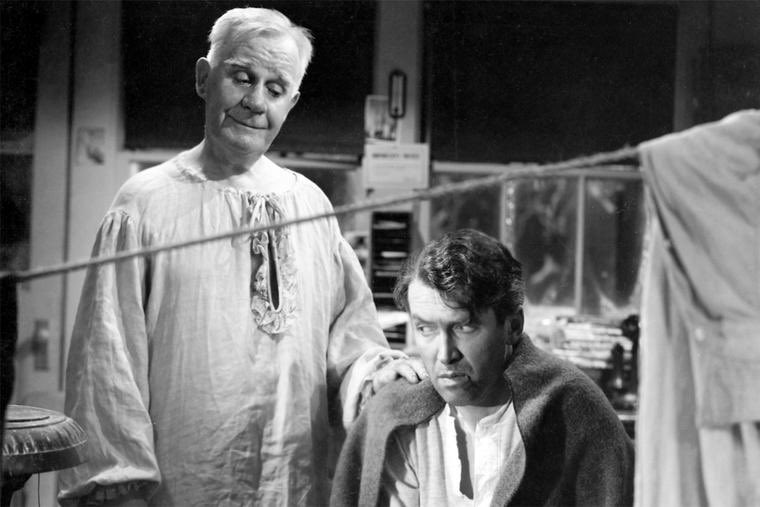
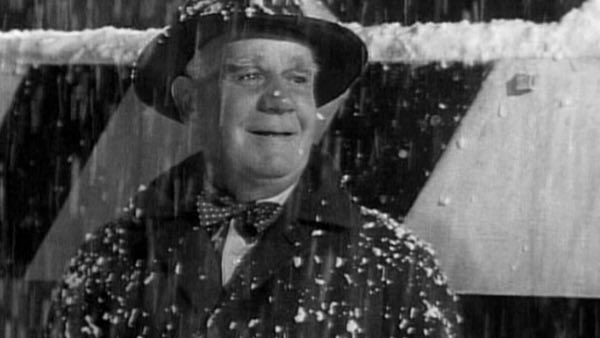
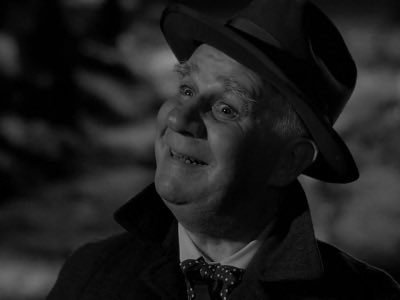
Clarence (Henry Travers), It’s a Wonderful Life - such a beautiful performance. I cannot imagine anyone else in the role!
The politicisation of absolutely everything is becoming deeply tedious. We used to be a sane country. Women could wear nail varnish or not, according to their preference, and nothing further needed to be said, certainly not by the BBC.
ChatGPT has now a big problem.
Researchers at Oxford and Cambridge exposed a massive threat to large language models.”
They call it “model collapse."
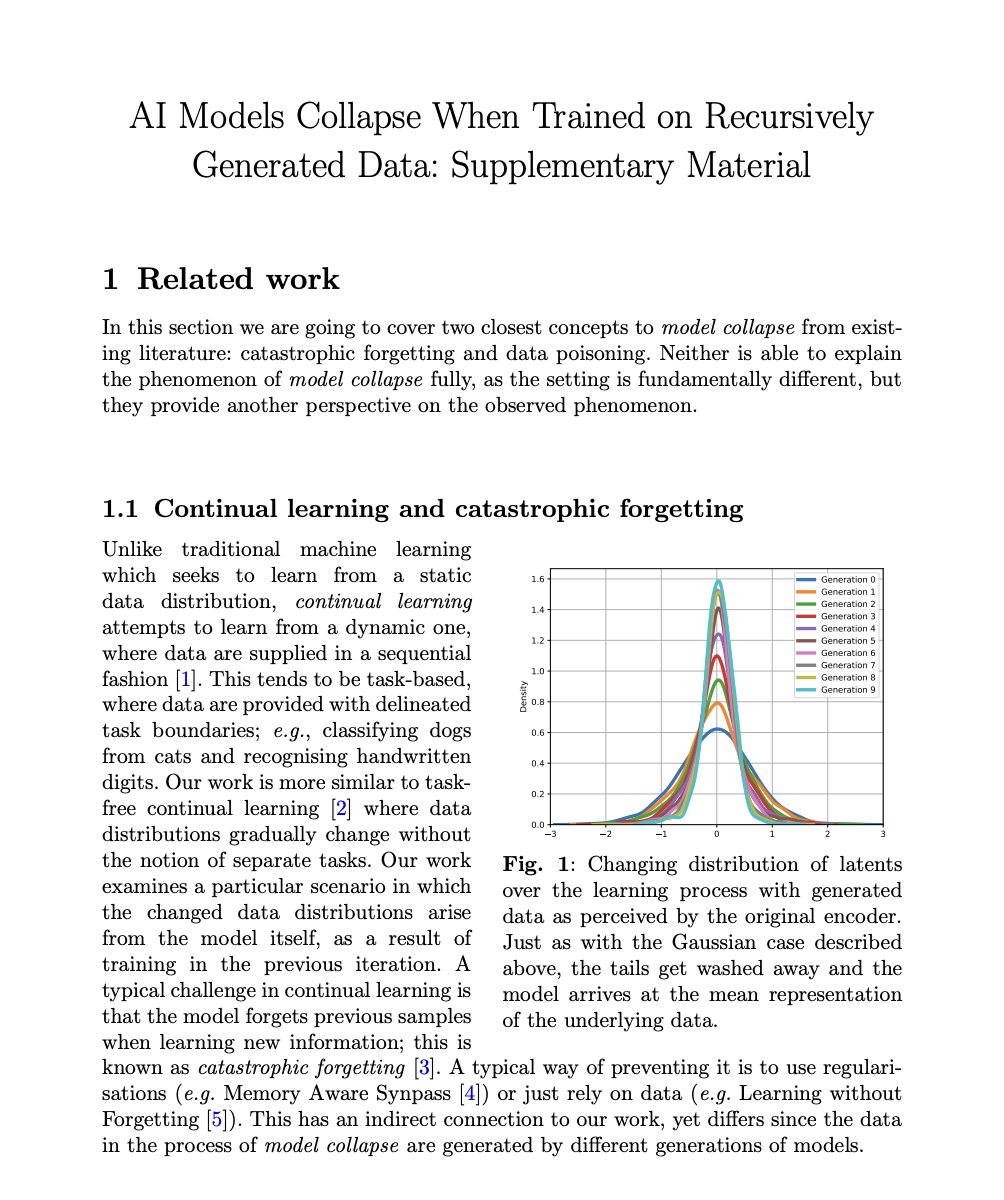
Internet ecosystem is rapidly changing, and generative AI will soon contribute much of the text found online. This forces us to consider what happens to future iterations like gpt-n when they are trained on data scraped from the web that was already generated by an llm.
According to the research, indiscriminately using model-generated content in training causes "irreversible defects" in the resulting ai. the model loses the "tails of the original content distribution." in other words, it begins to forget the creative, fringe, and unique nuances of actual human writing, collapsing into a repetitive echo chamber.
This isn't just a chatgpt issue.. the researchers built theoretical intuition showing this collapse is ubiquitous across learned generative models, occurring in large language models as well as in variational autoencoders and gaussian mixture models.
Tech companies rely on scraping the internet for large-scale data to build smarter models. However, the paper warns that if we want to sustain the benefits of training on web data, model collapse must be taken seriously.
Ultimate takeaway? data collected from genuine human interactions is going to become increasingly valuable in a web filled with ai content.