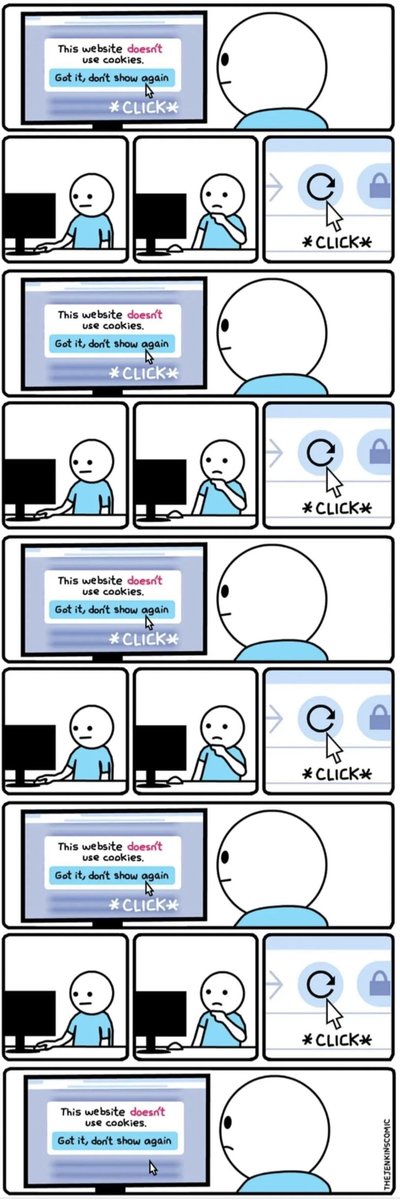
Remember: When introverts need alone time, it’s not about you, it’s about us recharging. Our solitude doesn’t necessarily mean we’re mad or unhappy with you. In the silence, we find the energy to be the loving friend, colleague, or partner who you value.
A critical skill in software development is being able to make progress in a broken system.
All human systems are broken in one way or another.
The faster you can accept that, the more peace you’ll find in your job.
I keep saying this and somehow it’s seen as a lack of transparency.
If you don’t trust your developers to know when to refactor, don’t hire them.
Unless you’re actively working on the codebase you’re unqualified to decide whether to refactor - period!
RIP Bram Moolenar.
I'm grateful for Bram's work on Vim and for the impact it has had on the world. Thank you for everything, Bram!
Message from his family: https://t.co/oFdphPxz0v
#vim#bram
If you sit in back-to-back meetings at work, read this:
Microsoft's Human Factors Lab studied 14 participants across two days of video meetings.
• Day 1: 4 back-to-back 30-min meetings.
• Day 2: 4 30-min meetings with 10-minute breaks in between.
Participants wore EEG caps to monitor electrical activity in their brains.
The results were fascinating...
The two key takeaways:
Takeaway 1: Back-to-Back Meetings Promote Stress
Back-to-back meetings created an accumulating buildup of stress in the brain.
Anticipation of transitions caused further spikes.
Short breaks in between meetings allowed the brain to reset and never experience the stress buildup.
Takeaway 2: Breaks Promote Performance
Back-to-back meetings resulted in negative levels of frontal alpha symmetry, a brain state connected to lower levels of engagement.
Short breaks in between meetings resulted in positive levels, meaning participants performed better.
Conclusion: Take More Breaks
The conclusion of the study seems to be that short breaks in between meetings are necessary:
• Eliminate stress buildup
• Improve performance
• Reduce impact of attention residue
I started implementing 25-minute meetings into my schedule (a built in 5-minute break) and immediately noticed a positive impact.
A short walk or some movement in that window provided a clear reset.
25-minute meetings also eliminate the 5 minutes of “how about the weather” low value chit chat most meetings open with.
If you set the tone to dive in and stay focused, there are few things that take more than 25 minutes.
Try it!
If you enjoyed this or learned something, follow me @SahilBloom for more in the future.
Have you tried #ChatGPT as a coding partner?
Ryszard Balcerzak, Lead Consultant Developer from Thoughtworks Spain, recently explored its potential in a #PairProgramming session and shared his experience in this new blog post: https://t.co/vQdLCYSsug
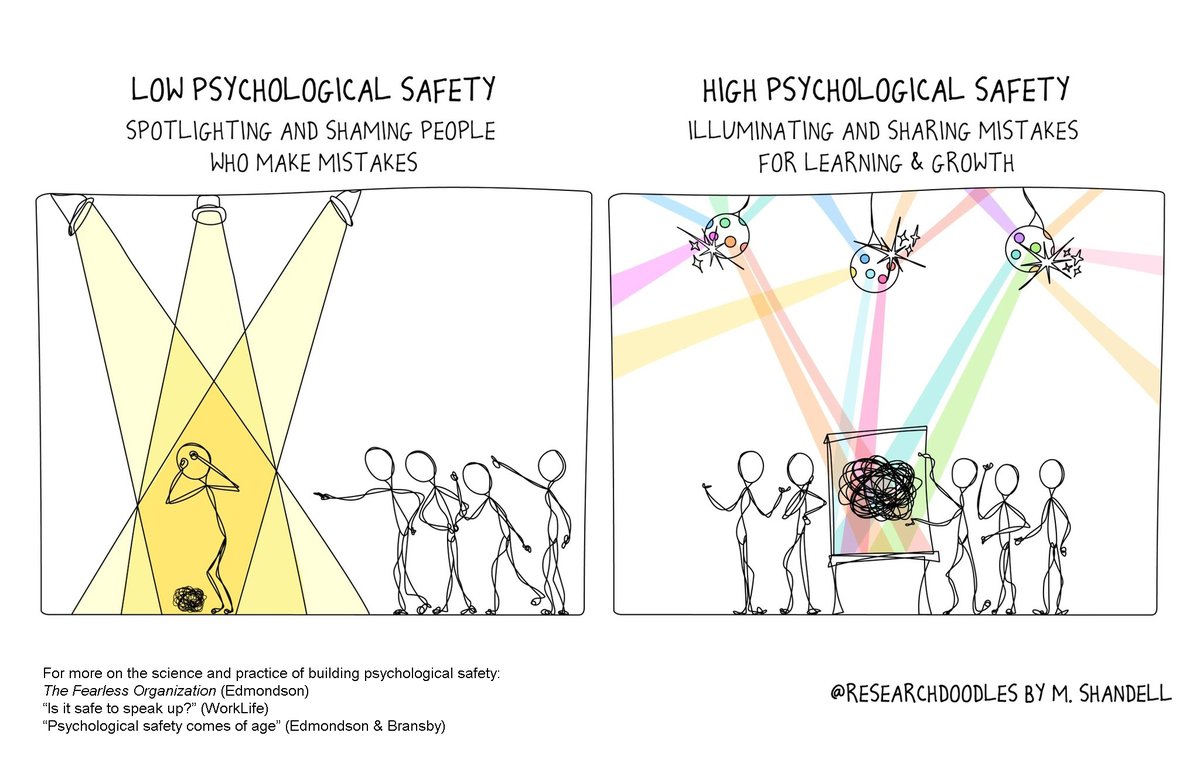
Blaming and shaming doesn't stop people from making mistakes. It stops them from admitting mistakes.
If people can't share their blunders, they can't learn from them—and neither can the rest of us.
The best way to prevent errors is to make it safe for people to discuss them.
At Thoughtworks, we believe that all personalities fit into leadership positions. Our most-read careers blog of last year was ‘Being an introverted leader’ by Co-Managing Director of Spain, Matheus Tait #2022Highlights https://t.co/gdXohv06bv