Os comento algunos resultados preliminares:
1/ He parseado 126.065 PDFs del BORME desde 2009 hasta hoy. ¿Por qué 2009? Porque ahí cambió el formato del boletín. Antes de eso la estructura es diferente y requiere otras técnicas, pero 2009-2026 cubre la inmensa mayoría de empresas activas hoy.
2/ El problema del cruce: el BORME no publica el CIF de las empresas. Solo el nombre y los datos registrales (tomo, hoja, inscripción). Así que para cruzar con licitaciones toca hacer matching por nombre normalizado: quitar acentos, unificar formas jurídicas (S.L. = SL = Sociedad Limitada), eliminar paréntesis, guiones, etc.
Resultado: de 5,9M de adjudicaciones en el PLACSP, 3,8M cruzan con alguna empresa del BORME. Un 64%, que representa 1.482 mil millones de euros en contratos (67% del importe total). El 36% restante son autónomos (personas físicas que no aparecen en el Registro Mercantil), UTEs, y empresas constituidas antes de 2009.
3/ ¿Y las homónimas? Sin CIF, "CONSTRUCCIONES GARCIA SL" en Madrid y en Sevilla son la misma empresa para nosotros. Para medir el problema, analicé los NIFs del propio PLACSP: el 95% de los nombres normalizados corresponden a un único CIF. La homonimia existe pero es baja.
4/ Con ese cruce he buscado 5 tipos de anomalías:
Empresa recién creada: constituida menos de 6 meses antes de ganar un contrato público. Salen 16.337 adjudicaciones.
Capital ridículo: empresa con menos de 10.000€ de capital social ganando contratos de más de 100.000€. 71.461 adjudicaciones.
Multi-administrador: la misma persona aparece como cargo en más de una empresa. 1.052.326 personas. Este flag todavía está crudo — lo interesante será cruzarlo con PLACSP para ver si esas empresas compiten en las mismas licitaciones.
Disolución post-adjudicación: la empresa se disuelve menos de un año después de ganar el contrato. 9.928 adjudicaciones.
Adjudicación en concurso: empresa en situación concursal recibiendo contratos públicos. 9.655 adjudicaciones.
Ninguno de estos flags es una acusación. Crear una SL con 3.000€ de capital es perfectamente legal. Que un administrador esté en 5 empresas también. Son señales que, acumuladas o combinadas, merecen una segunda mirada.
5/ Lo que falta: cruzar los multi-administradores con licitaciones concretas, analizar cambios de cargos alrededor de las fechas de adjudicación, incorporar contratos menores, y buscar fuentes complementarias de CIF para mejorar el matching.
Vamos a ello.
Caso hipotético (o no): una empresa se constituye en marzo de 2019. Cero empleados, cero web, cero historial. A los seis meses se lleva un contrato público de 400K€ como único licitador. A los tres meses se disuelve.
Plot twist: su administrador es el mismo que el de otras dos sociedades que licitan al mismo organismo. Misma dirección fiscal las tres.
Hasta ahora no había forma automatizada de detectarlo cruzando fuentes públicas.
Me he descargado ∼64.000 pdf (2001-2026) del BORME para cruzar el Registro Mercantil con la contratación pública española.
El objetivo es construir un grafo real de relaciones societarias y detectar patrones que hoy pasan desapercibidos. Detectar empresas vinculadas dependía de heurísticas: fuzzy matching por nombre similar o NIFs consecutivos.
Pasamos de "estas dos empresas se llaman parecido" a "estas dos empresas comparten administrador y se constituyeron con tres días de diferencia".
Os subiré el scraper y el parser cuando los tenga afinados.
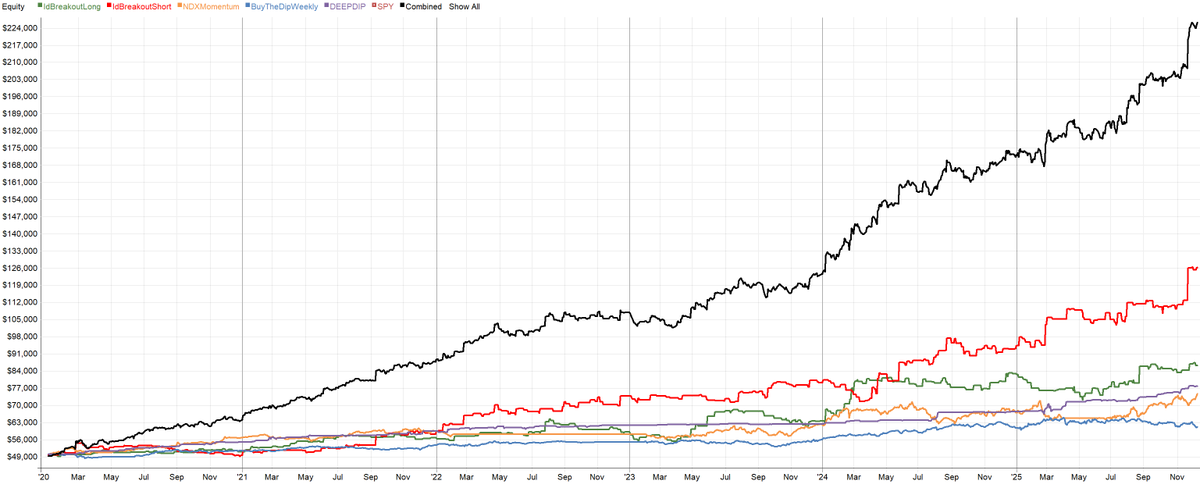
5 mediocre strategies.
None with a Sharpe above 2.0.
None I'd trade alone with full capital.
Combined Sharpe: 2.22
Combined MaxDD: -6.53%
$50,000 → $226,000 in 5 years.
Portfolio construction is the real edge:
🧵
You know how some people seem to have a magic touch with LLMs? They get incredible, nuanced results while everyone else gets generic junk.
The common wisdom is that this is a technical skill. A list of secret hacks, keywords, and formulas you have to learn.
But a new paper suggests this isn't the main thing.
The skill that makes you great at working with AI isn't technical. It's social.
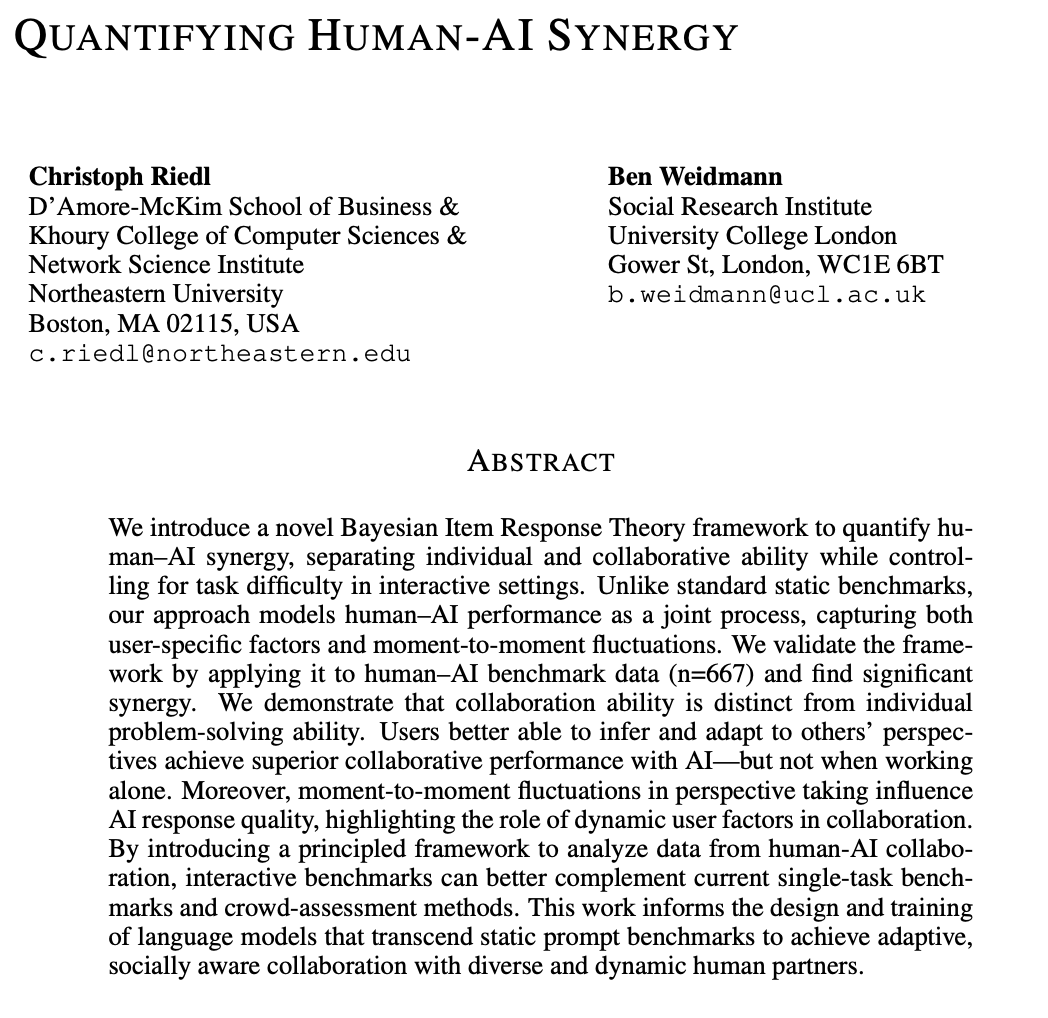
Researchers (Riedl & Weidmann) analyzed how 600+ people solved problems alone vs. with an AI.
They used a statistical method to isolate two different things for each person:
Their 'solo problem-solving ability'
Their 'AI collaboration ability'
Here's the reveal: The two skills are NOT the same.
Being a genius who can solve problems in your own head is a totally different, measurable skill from being great at solving problems with an AI partner.
Plot twist: The two abilities are barely correlated.
So what IS this 'collaboration ability'?
It's strongly predicted by a person's Theory of Mind (ToM)—your capacity to intuitively model another agent's beliefs, goals, and perspective.
To anticipate what they know, what they don't, and what they need.
In practice, this looks like:
Anticipating the AI's potential confusion
Providing helpful context it's missing
Clarifying your own goals ("Explain this like I'm 15")
Treating the AI like a (somewhat weird, alien) partner, not a vending machine.
This is where it gets strange.
A user's ToM score predicted their success when working WITH the AI...
...but had ZERO correlation with their success when working ALONE.
It's a pure collaborative skill.
It goes deeper. This isn't just a static trait.
The researchers found that even moment-to-moment fluctuations in a user's ToM—like when they put more effort into perspective-taking on one specific prompt—led to higher-quality AI responses for that turn.
This changes everything about how we should approach getting better at using AI.
Stop memorizing prompt "hacks."
Start practicing cognitive empathy for a non-human mind.
Try this experiment. Next time you get a bad AI response, don't just rephrase the command. Stop and ask:
"What false assumption is the AI making right now?"
"What critical context am I taking for granted that it doesn't have?"
Your job is to be the bridge.
This also means we're probably benchmarking AI all wrong.
The race for the highest score on a static test (MMLU, etc.) is optimizing for the wrong thing. It's like judging a point guard only on their free-throw percentage.
The real test of an AI's value isn't its solo intelligence. It's its collaborative uplift.
How much smarter does it make the human-AI team? That's the number that matters.
This paper gives us a way to finally measure it.
I'm still processing the implications. The whole thing is a masterclass in thinking clearly about what we're actually doing when we talk to these models.
Paper: "Quantifying Human-AI Synergy" by Christoph Riedl & Ben Weidmann, 2025.
¡HAGAMOS UN TRATO!
Si este tweet llega a:
🔁 100 Retweets y❤️ 100 Me Gusta
Suelto un hilo 🧵 BRUTAL explicando la estrategia de construcción de Portafolios #ANTIFRÁGILES, paso a paso.
¡Dale RT y FAV si quieres aprenderlo!
#Antifragil#Inversion#Trading#Finanzas#VIX
💸 ¡Vamos a mejorar un trámite digital sin gastar un euro!
Muchos trámites parecen diseñados en el séptimo círculo del averno. Y cuando se lo digo a mis amigos funcionarios, me salen por bulerías con el mismo cante jondo de siempre:
—Es que no hay dinero.
Pero payo… ¿cuándo lo ha habido? ¡Gestionar es un arte que florece justo en la escasez!
He aquí una idea muy loca:
✨ Podemos mejorar los trámites digitales de nuestro país sin gastar (apenas) ✨
¡Veámoslo con un ejemplo!
Y ve situando tu dedo —tú, sí; te lo digo a ti 🫵— sobre el botón de «retuit» para difundir este evangelio, que he echado medio sábado en él. 😜
📣 ¡Necesitamos que llegue a nuestros gobernantes y gestores!
¡Vamos allá! 🥳🧵👇
La mayoría de la gente no es consciente de lo peligroso que es compartir el DNI sin marca de agua.
Por eso hemos creado Saferlayer, una herramienta gratuita para proteger tus documentos y evitar estafas.
Enlace a la app y explicación más detallada a continuación 👇
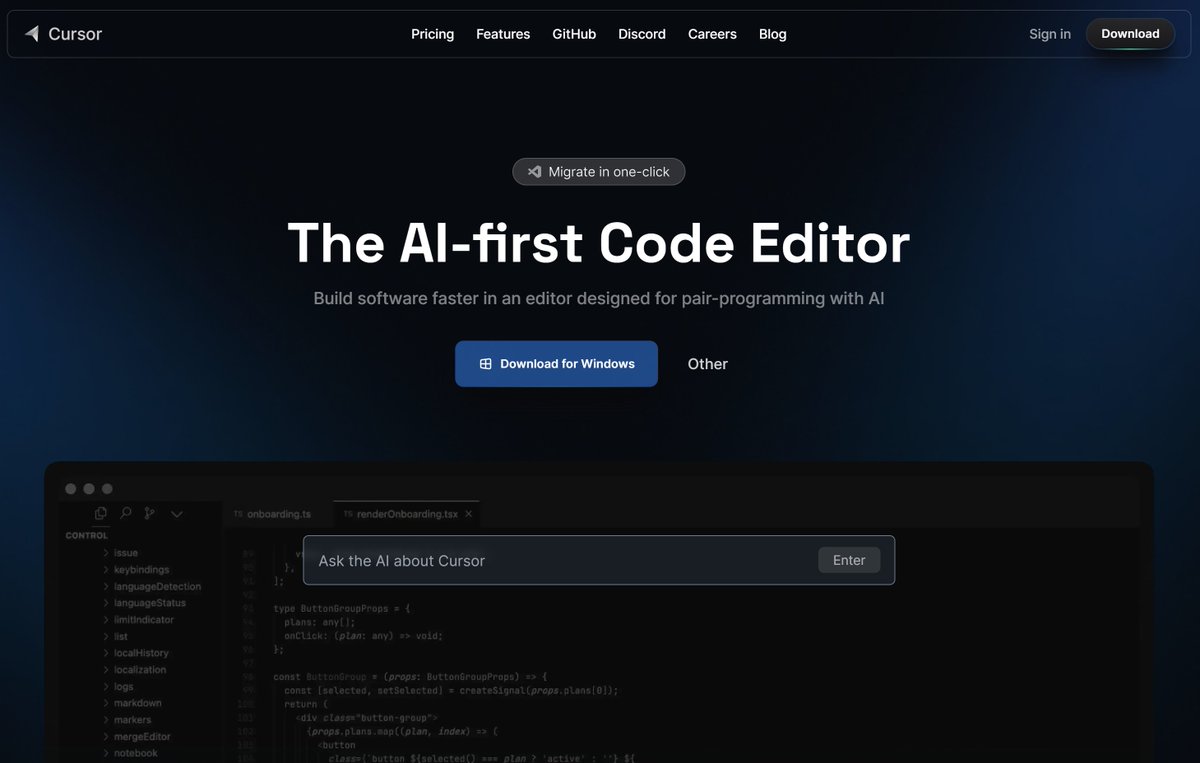
🔴 ¡EL MEJOR EDITOR DE CÓDIGO con IA!
¡Developers! Si disfrutáis programando con la asistencia de IAs como GPT-4 o Copilot, hoy os traigo el que creo es el IDE más avanzado en cuanto a integración con IA!
✨ CURSOR ✨
Llevo toda la mañana probándolo, os cuento! 🧵
El hot-topic de la semana en el mundo de la IA están siendo los🔥 AGENTES 🔥
Y mucho se está haciendo y escribiendo, pero si tenéis que elegir una lectura para saborear el potencial de todo esto, debe de ser este trabajo de aquí
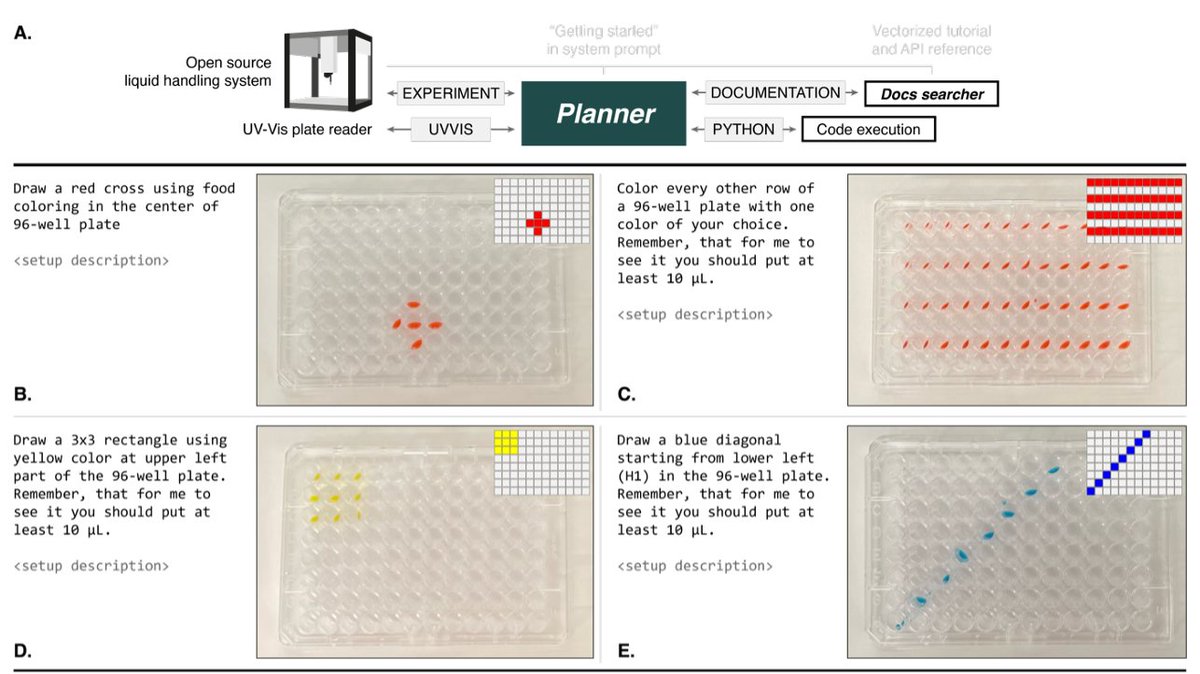
¿Te imaginas a GPT-4 haciendo EXPERIMENTOS? 🧵
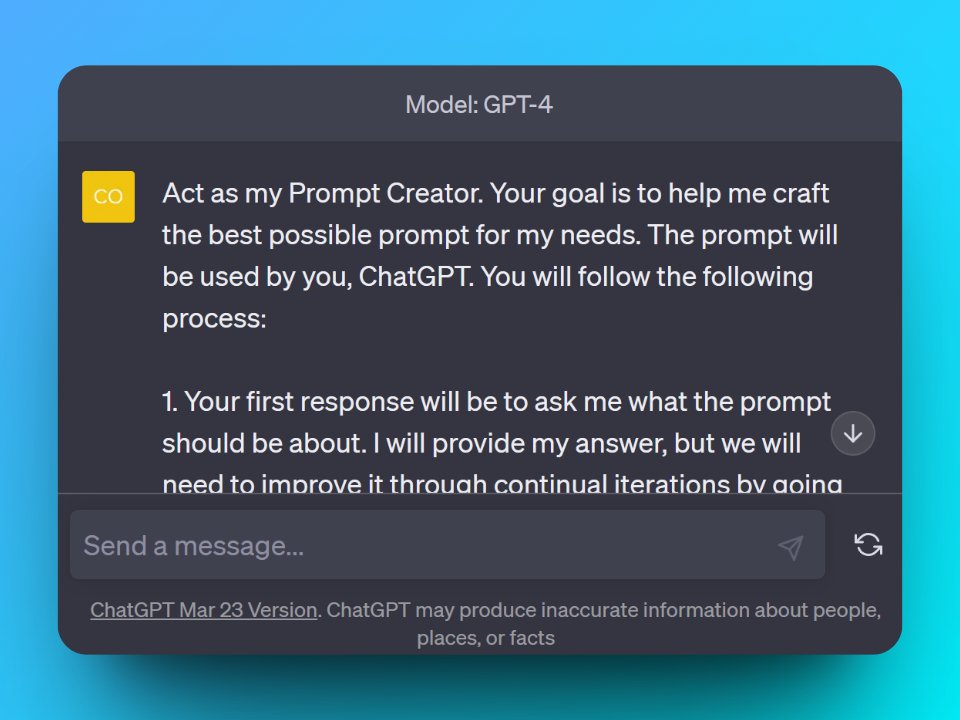
ChatGPT is powerful if you enter the right prompt
Here is how to make ChatGPT give you the perfect prompt automatically
You will unlock its full potential with this:
Google offers free online courses in a ton of fields.
From Computer Science to Artificial Intelligence.
Here are 10 free courses from Google you don't want to miss:
I started my career in Data Science back in 2016. ⏳
Today, I am sharing some valuable resources that have helped me during this journey!
Includes:
- Courses
- Books
- A Python roadmap
- Blogs/Newsletters
- MLOps resources
Read more 🧵👇