Our lab at the University of Maryland studies vector-borne diseases, with a special focus on Lyme disease and novel prevention & treatments.
*Views are our own*
We are proud to share this article from our group, published in @NatureGenet, about the elusive genome of the black-legged or deer tick, featuring our presentation of the most complete genome, transcriptome, proteome, and related analysis for the species! https://t.co/H6nDZZG29K
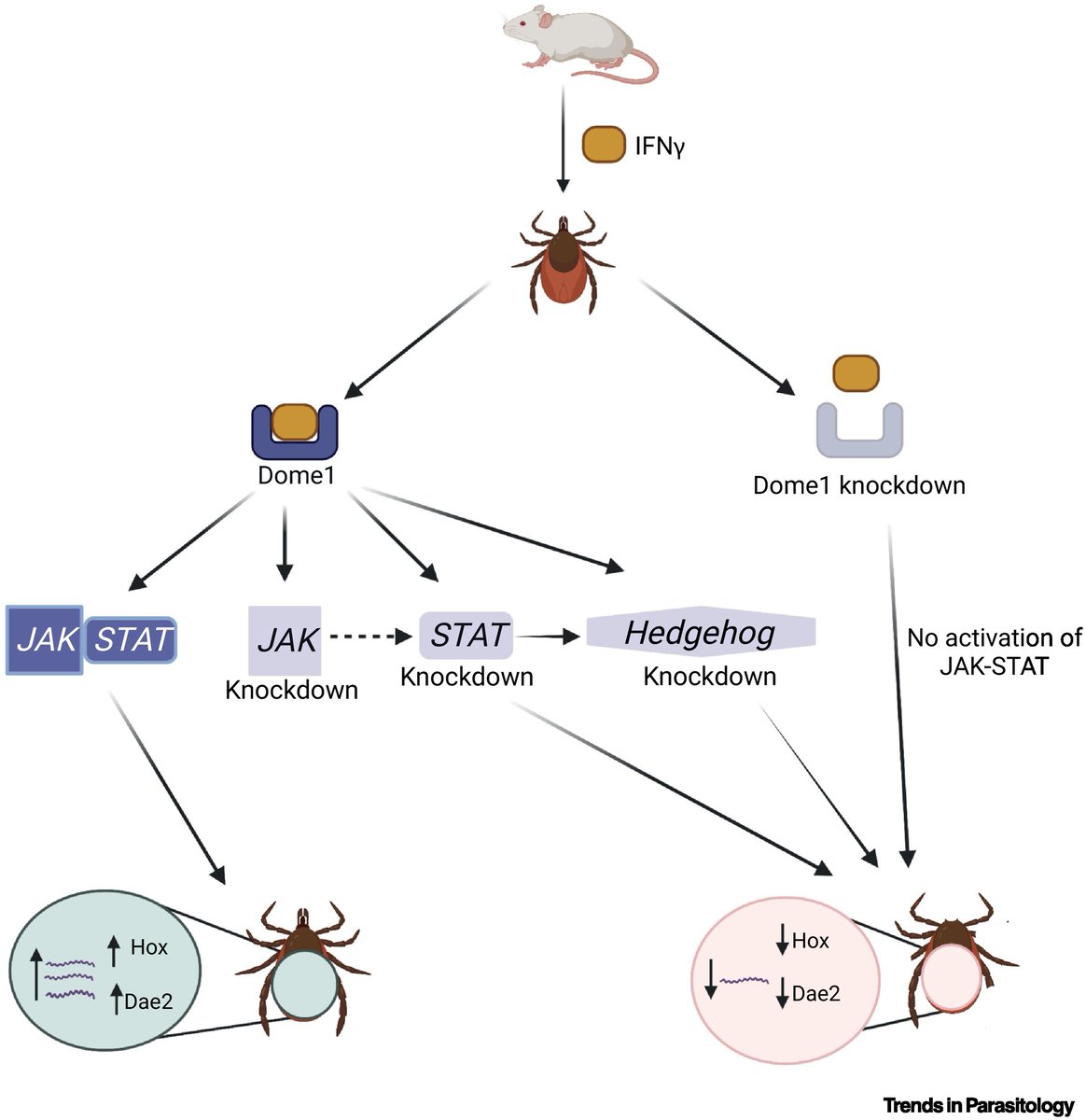
Parasitic ticks exploit host-derived interferon-γ through cross-species signaling to promote arthropod immunity and development, according to a new study in Science. https://t.co/1a00G9XLC3
🎉 OUT TODAY @NatureGenet
📰 A high-quality Ixodes scapularis genome advances tick science
👩🏿🤝👨🏼 @DeSandipDe @PalLabUMD and team
👇🏼
https://t.co/WeOXXmifJz
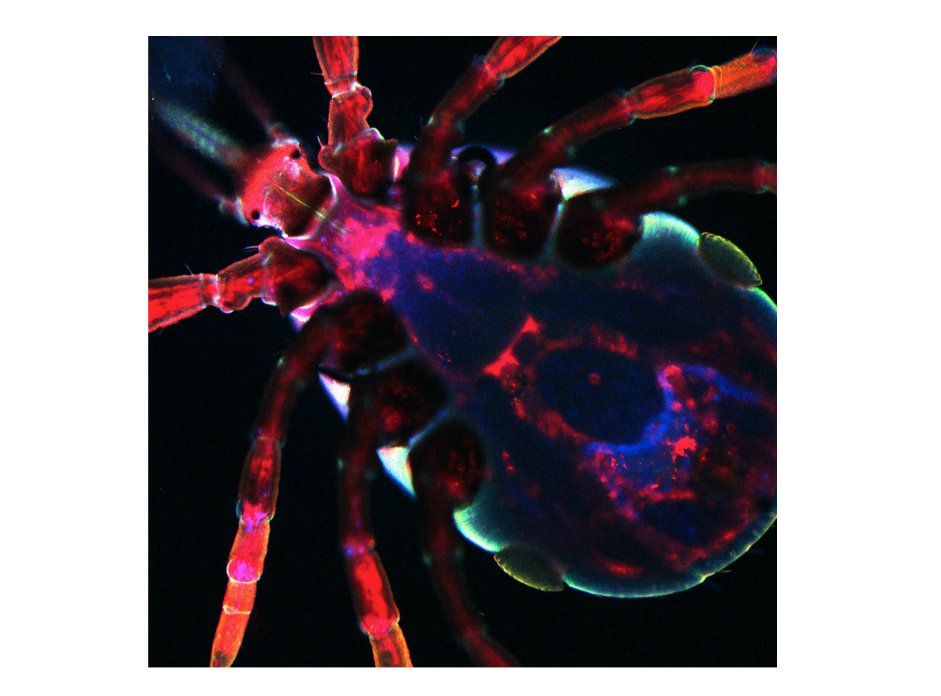
Who doesn't love a striking immunofluorescence image? We're very proud that one of our tick images was selected by the editor of @TrendsImmuno for the cover of their current issue! https://t.co/XO1tKFJ6ZF
We are thrilled to announce the publication of a featured review from our lab. Check out our article in @TrendsImmuno which highlights some truly fascinating aspects of tick-host associations.
Our lab is hiring a new postdoc to work on drug discovery and vaccine projects. If you (or someone you know) is interested in this exciting work, please see this link for more information! https://t.co/1WoGfLfzw7
We are very excited that @CellMicrobiol is featuring our new article about tick biology & Lyme disease as the Editor’s Choice Article, and with a really cool image of the tick gut on the cover! https://t.co/HEAiw1AM8q
Some surprising new statistics about Lyme disease from @CDCgov: Now there's an estimate of close to 500,000 new cases annually, in the US alone - much more than we thought before. Here's to hoping that our research can make a difference! https://t.co/YVQhtTKH3o
As biologists, we care deeply for all living things, and yearn for the wellbeing of species around the world. How refreshing it is to see how people have come together to protect threatened wildlife in their communities! https://t.co/2FWby5znPC
Mice lacking PGLYRP1 had an increased B.b. "spirochete burden in the heart and joints, along with splenomegaly. Mice lacking PGLYRP1 also showed signs of immune dysregulation, including lower serum IgG levels and higher levels of IFNγ, CXCL9, and CXCL10." #LymeDisease
Very excited to share our preprint describing a CRISPRi platform for Borrelia burgdorferi. Project led by @NickTakacs86 in fun collaboration with lab members, @JunLiuLab and Patti Rosa. #LymeDisease#Lyme https://t.co/LHEjECedg3
Ticks make life hard for many of us – but as researchers in infectious diseases, we love being able to visualize them so closely! A fluorescent microscopic look into tick molecular components is a first step towards novel prevention strategies against Lyme disease!!
Check out our new paper in @CellMicrobiol, where we investigate an important structure (and related protein) in the tick gut. The results of our study show some promising results that can hopefully be applied to novel Lyme disease interventions.
Recently published in Cellular Microbiology by Yang, Koči and Smith et al. A novel tick gut protein promotes #Borrelia burgdorferi infectivity and impacts the resident #microbiome@PalLabUMD#Ticks#LymeDisease
Check it out here: https://t.co/uLelvu6yHU
DNA is the blueprint of life - but environmental factors can affect how DNA is differentially expressed within individuals! Our new review from @TrendsGenetics delves into the concept of epigenetics as it relates to ticks, vector biology, & Lyme disease: https://t.co/wE81ikQ5tK