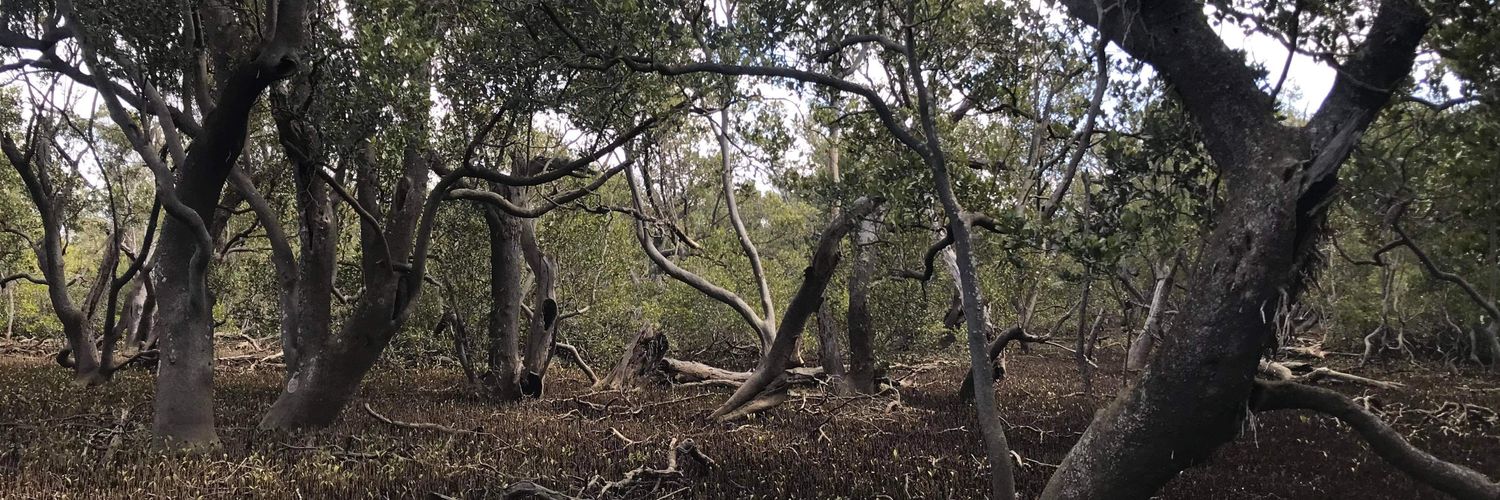
I am absolutely delighted to share the first paper from my PhD! ‘Hydroclimate proxies for eastern Australia using stable isotopes in grey mangroves (Avicennia marina)’ (currently free access) https://t.co/E3BxvVpaKm #mangrove#radiocarbon#isotope#palaeoclimate
Our new paper on using seasonal palaeo-flow reconstructions and artificial neural networks for water balance modelling has just been published! Interested in how the past can inform hydroclimate risk? Read more 👇 https://t.co/ts72bMsakh
Excited to share our new paper on two multi century seasonal streamflow reconstructions for western Tasmania! We show streamflow has been declining in the last 100 years but the 15th century was much drier. Awesome team of co-authors👇https://t.co/DfFirr1RGp
@kalesniderman @TomSaundersABC@windjunky Absolutely. Can't say how many papers I've read where the authors interpret dry periods in palaeoclimate records as "a shift to more El Niño-like conditions" and vice versa.
Wrapping up the year with a publication that I am really excited about. This was such a great collaboration experience. 👇
Drought and deluge: the recurrence of hydroclimate extremes during the past 600 years in eastern Australia’s NRM regions https://t.co/ALHGQWUeEX
Ever wondered if perennial #river classifications are suitable in the Australian context? We explore this in our latest paper 👇
Massive thanks to my coauthors 🙌 @UON_research
Challenges of classifying and mapping perennial freshwater systems wit... https://t.co/Qwh7SFKQBc
@thirstygecko Bizarre how it does that! I had one where it said the Australian and New Zealand Drought Atlas (ANZDA) was the "Australian and New Zealand Dendrochronology Network" (which doesn't exist!)
La Niña is finally fading and some models are predicting the development of an El Niño by spring/summer. @abelikesdirt and I talk about what this could mean for Australia👇 https://t.co/1LwbDhF3gi via @ConversationEDU