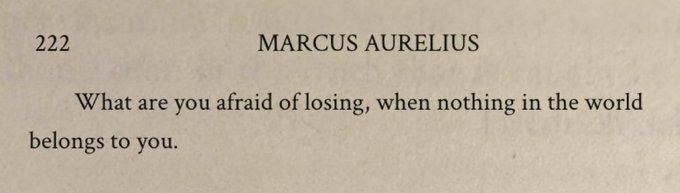
I’m in love with this sentence:
“The degree to which a person can grow is directly proportional to the amount of truth he can accept about himself without running away.”
Had a Jane Street interview in 2013 that still bothers me.
It was my 6th round. Final interview. The guy walks in carrying no laptop, no notebook, just a cold brew and what I later realized was a single IKEA tea candle.
He writes on the whiteboard:
food: $200
rent: $800
utilities: $150
candles: $3,600
family: dying
Then he turns around and says, “Optimize.”
I laughed because I thought it was a culture-fit bit. He did not laugh.
So I said, “Well, obviously you spend less on candles.”
He says, “Assume candles are non-discretionary.”
Okay.
I start building a model. Basic constraint satisfaction. Family survival as a soft penalty. Candles as a state variable. Maybe there’s an arbitrage where you buy wholesale paraffin and convert the $3,600 line item into inventory.
He stops me.
“You’re thinking like a consultant.”
That’s when I knew I was in trouble.
He says, “Give me a bid-ask on family dying.”
I say, “What?”
He says, “You’re long candles, short family. Where do you make markets?”
I try to recover. I say the real issue is liquidity: rent and utilities are fixed, food is elastic, candles are emotionally inelastic. Therefore the optimal strategy is to securitize future candle enjoyment and borrow against it.
He nods for the first time.
Then he asks, “What time do you sell the candles?”
I say, “Whenever the market is liquid?”
He says, “Be more specific.”
I say, “Uh… 10 a.m. Eastern?”
For the first time, he smiles.
He goes, “Every day?”
I say, “Every day.”
He says, “In size?”
I say, “In size.”
He says, “And what do we call that?”
I say, “Market manipulation?”
The room gets very quiet.
He looks disappointed and writes something down.
“No. We call it providing liquidity to candle ETFs during the U.S. cash open.”
I try to save it. “Right. Of course. The family isn’t dying because we underfunded them. They’re just experiencing temporary price discovery.”
He nods again.
Then he points back at the board.
I had missed it. The utility bill was $150, but candles provide light. You can zero out utilities.
I update the budget:
food: $200
rent: $800
utilities: $0
candles: $3,750
family: still dying, but now in a more capital-efficient way
He says, “How confident are you?”
I say, “0.95.”
He smiles and circles candles.
“0.95 huh?”
Then he asks me to estimate how many leveraged longs get liquidated if we dump $3,750 of candles at 10:00:01 every morning for 90 consecutive trading days.
Needless to say I did not get the offer.
The biggest opportunity for would-be startup founders is AI. But the most underpriced opportunity is probably non-AI ideas. So if you have a good non-AI idea, go for it, because everyone else is going to overlook it.
Demis Hassabis’s “Einstein test” for defining AGI:
Train a model on all human knowledge but cut it off at 1911, then see if it can independently discover general relativity (as Einstein did by 1915);
if yes, it’s AGI.
Elon Musk was asked why his companies move faster than anyone else.
His answer:
"I'm constantly addressing the limiting factor. Whatever the limiting factor is on speed, I'm going to tackle that. If capital is the limiting factor, I'll solve for capital. If it's not the limiting factor, I'll solve for something else."
He then said something most managers never figure out:
"If something is going really well and making good progress, there's no point in me spending time on it."
"The irony is if something's going really well, they don't see much of me. But if something is the limiting factor, they'll see a lot of me."
He spends his time entirely on whatever is blocking the next step.
Not on what's interesting. Not on what he's best at. But on whatever is the bottleneck right now.
Most leaders do the opposite... They gravitate toward what they're comfortable with and away from the hard problem.
From: @dwarkesh_sp and @collision