@airindia unable to make a web check in. We have all the necessary ticket and PNR. I am unable to get through your call centre.
@makemytripcare@risingpearl
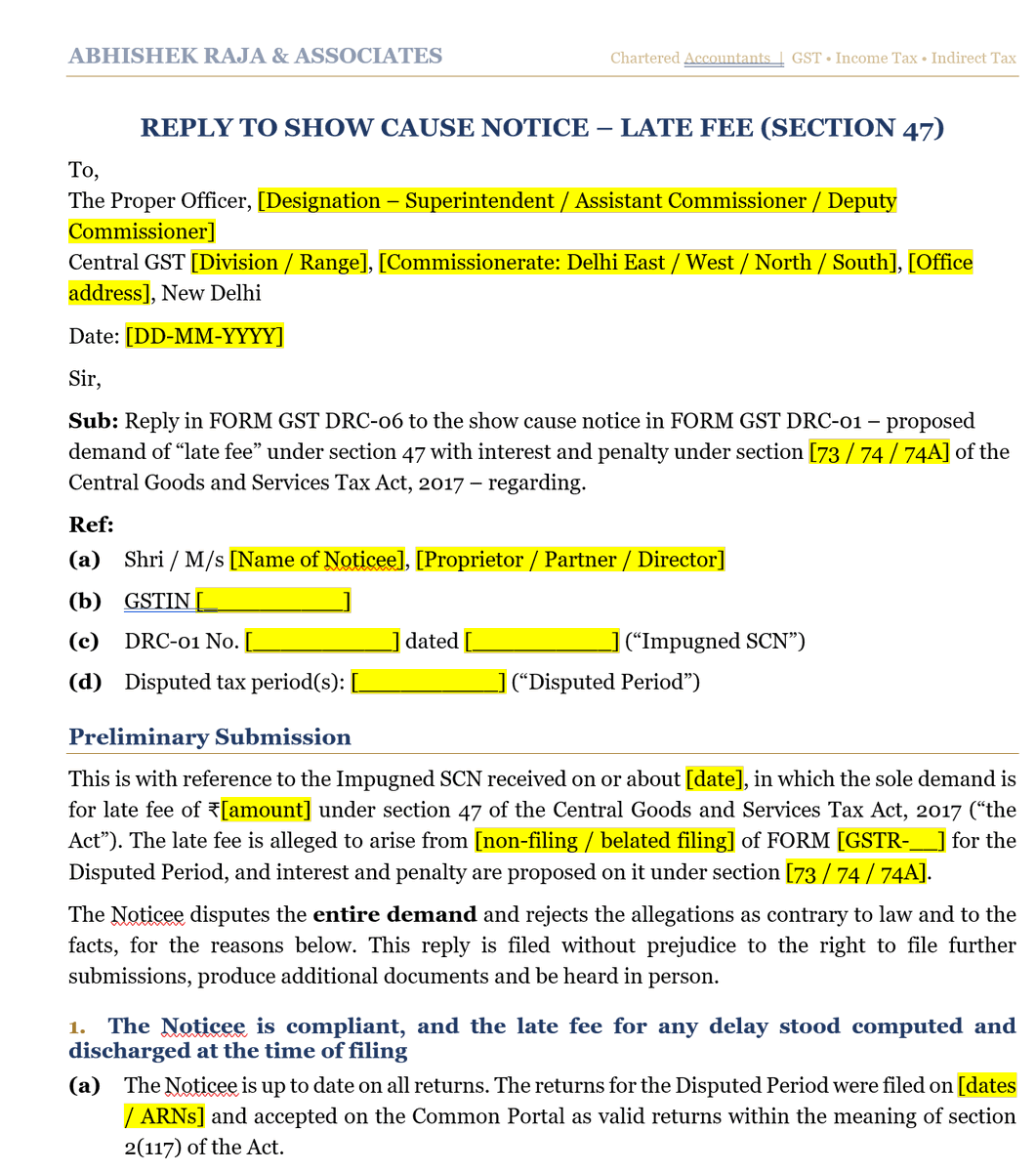
A GST notice is an allegation. It is not proof of fraud.
CBIC Circular No. 258/04/2026-GST (26 October 2026) clarifies how GST demands and orders should be handled.
5 key points:
→ No automatic fraud: Non-payment or a mismatch alone does not establish fraud. The notice must explain the basis and supporting evidence.
→ A reply cannot be ignored: The order must explain why the taxpayer’s arguments and evidence are accepted or rejected.
→ Fair hearing is essential: Taxpayers must get a proper opportunity to present their case, and hearing proceedings must be properly documented.
→ No demand beyond the notice: The final order cannot exceed the amount specified in the SCN or confirm a demand on grounds not mentioned in it.
→ AI-generated information must be verified: Officers must independently verify such information and remain responsible for the correctness of their orders.
If taxpayers must justify their claims, the Department must justify its decisions too.
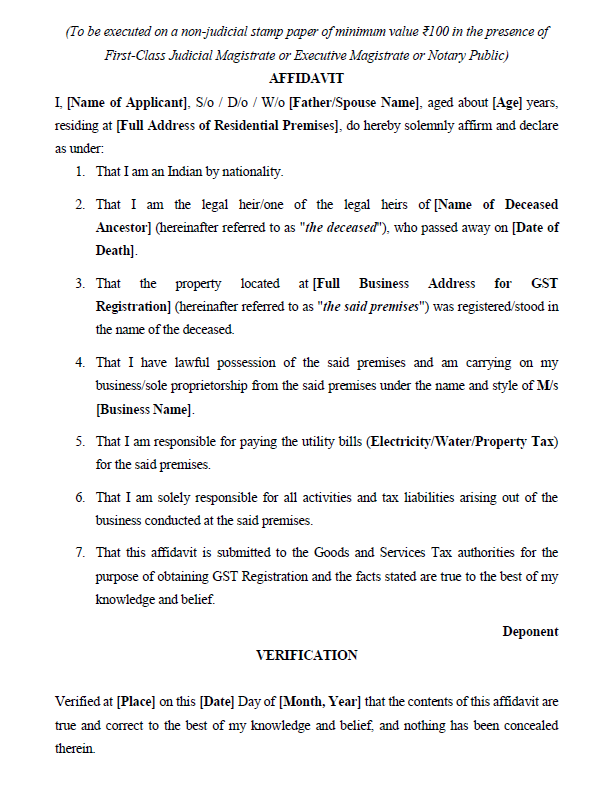
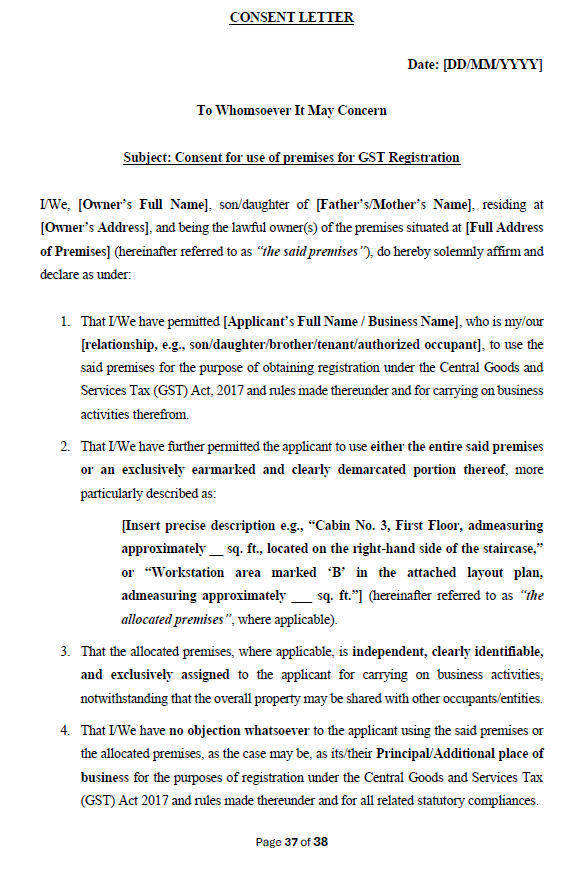
BREAKING: GST Circular No. 257/03/2026 : Guidelines for the handling applications for GST registration
GST Registration reforms that professionals have been waiting for! 👏
Thank you, @cbic_india, for Circular No. 257/03/2026-GST.
✅ Prescribed document checklists and formats for different types of premises
✅ Clear guidelines on documents required for registration
✅ No unnecessary documents or presumptive queries
✅ Queries to be raised through FORM GST REG-03, with an opportunity to rectify deficiencies
✅ Defined timelines for processing applications
✅ Deemed approval if the officer fails to act within the prescribed timeline
✅ FAQs to address practical issues faced by taxpayers and professionals
A welcome step towards a more transparent, predictable and taxpayer-friendly GST registration process.
Hope these guidelines translate into better ground-level implementation!
Join this Whatsapp Group for all the updates:
https://t.co/iVw5vo5Hf2
मुख्यमंत्री देवेंद्र फडणवीस यांच्या निर्देशांनुसार सामाईक नावे असलेल्या 7/12 जमिनीच्या हिस्सा विक्रीच्या नोंदणी प्रक्रियेत सुस्पष्टता आणण्यासाठी महसूल विभागाने महत्त्वपूर्ण शासन परिपत्रक जारी केले आहे.
या निर्णयामुळे जमिनीच्या विक्रीवरून सहहिस्सेदारांमध्ये निर्माण होणारे वाद आणि न्यायालयीन याचिकांची संख्या कमी होण्यास मदत होणार आहे. भूमी अभिलेख विभागाची मोजणीची ‘क’ प्रत दस्तासोबत जोडल्यास इतर सहहिस्सेदारांची लेखी संमती किंवा ना-हरकत प्रमाणपत्र आवश्यक राहणार नाही. मात्र, ही प्रत जोडलेली नसल्यास इतर सहहिस्सेदारांची लेखी संमती किंवा ना-हरकत प्रमाणपत्राशिवाय दस्ताची नोंदणी करता येणार नाही.
@Dev_Fadnavis@cbawankule
#Maharashtra #DevendraFadnavis
A MAJOR HTTPS COMPROMISE
eMudhra TLS intermediate certificates were found to be compromisable because they didn't bother to use random numbers.
Web browsers rely on TLS certificates for HTTPS traffic. Your web browser needs the intermediate certificate to verify that, when you connect to a domain, it's real and not someone spoofing it along the TCP/IP route from your computer, Wi-Fi, ISP, to the web server.
Intermediaries are trusted parties who are given the private keys to issue TLS certificates for domains.
If the certificate key is compromised, anyone can issue a fake TLS certificate, tap the traffic, and listen to your Internet traffic because it is no longer end-to-end encrypted. A malicious party can read your passwords, messages, and all your online life. For example, eMudhra, with its intermediary keys, can give a "https://t.co/OxNiPJjLOw" domain certificate for anyone, and after this, the party can wiretap your Facebook traffic.
eMudhra is India’s largest Certifying Authority, employs about 600-850 staff and generates roughly $70M in annual revenue. Its main lines are enterprise identity and cybersecurity platforms, digital signature and trust services, and related consulting.
Each certificate's private key was a random number between 1 and 256. Yes 256. Not 256 bits but two hundred fifty.
Modern web browsers follow revocation lists and automatically stop trusting anything signed by eMudhra. But web browsers are only one part of Internet-connected software. Operating systems, development libraries, Internet of Things devices and generally anything with an Internet connection are all affected, unless its auto-updating authority has issued an emergency fix.
Emudhra digital certificates have been compromised.
Best of luck filing your GST, ROC ...or any income tax filings that need DSC.
I think the govt needs to put out a TV advisory. You need to upgrade your browsers and root stores all across India.
https://t.co/pN5mNIwnYH
@SwiggyCares@Swiggy I have ordered 4 items but received only 3 items. When trying to resolve the issue, your team is not ready to re order to me or refund the same. Your team is also not talking to me further. I have already given my grievance 4 times.
@SwiggyCares Your customer care says you have given me a coupon. On further questions we are informed that coupon is valid only for 7 days. What if we do not want any further order? You have not disclosed the details of the coupon beforehand. Why should I be forced?
@Parag_Gudhka Hi there. We apologize for the inconvenience caused. We request you to please share with us your order ID so that we can have our records checked and assist you promptly.
@SwiggyCares@Swiggy I have ordered 4 items but received only 3 items. When trying to resolve the issue, your team is not ready to re order to me or refund the same. Your team is also not talking to me further. I have already given my grievance 4 times.
See this. Vijaynagar empire founders, Hakka Bukka put Jazia tax on Jains to convert them to Hindus.
But Jazia tax is not there in Hinduism. Where did they learn this from ?
Yes,guys. Islam. Hakka Bukka used to be Muslims. They were converted to Hinduism by a Rishi/Sage called Vidyaranya.
Mysore’s famous neighborhood, Vidyaranya Puram is named after this Rishi.
"Kalya shasana" the inscription that talks of persecution and killing of Jains by Vaishnavas(Hindus). Then Bukka Raya made a treaty with the Jains and the Vaishnavas. In that treaty, he took the tax for each jain head from the Jains and gave protection to the Jains. The Sasana at Shravanabelagola Bhandara Basadi inscription clarifies this development. The sadhus had to pay the head tax to remain Jains. To avoid this, they said that we are not Jains but sadhus. The word "sadhus" was used to describe the group that remained and they are known as sadhu Jains . This is not bukkaraya sandhi. Bukkaraya Sandi talks of agreement between Jains and Hindus where Jains leave their temple at Anegondi, Hosapattana, Penugonda , Kallaha (present-day Kalya), Tirumala (Tirupati in Andhra Pradesh), Peruma Kovil (Kanchipuram), Thirunarayanapura (Melukote) and billigiri Betta so that Hindus will not destroy Gomateshwara at shavanabelagola.
#RealHistory
#BitterTruth
A blank column in Form 3CD led to a penalty.
Clause 40 (GP, NP, turnover, stock-in-trade, etc.) was left blank in the tax audit report.
The AO treated the report as incomplete and levied a penalty.
The CIT(A) upheld it.
The assessee explained:
→ The omission was inadvertent and due to a software error
→ The CA who prepared the report filed an affidavit confirming there was no mala fide intention
The matter reached the Delhi ITAT.
The Tribunal held that, considering the facts of the case, this amounted to “reasonable cause” under Section 273B.
Penalty deleted.
The Tribunal called the facts peculiar, so this is not a free pass to leave clauses blank.
But in this case, the explanation and supporting affidavit established reasonable cause.
Case: Partyaksh Sharma v. ITO | ITA No. 1813/Del/2026 | AY 2017-18 | Delhi ITAT | 17.07.2026
CBDT Circular No. 4/2007, dated 15th June, 2007 [F. No. 149/287/2005-TPL]
Distinction between shares held as stock-in-trade and shares held as investment - tests for such a distinction:
1. The Income-tax Act, 1961 makes a distinction between a “capital asset” and a “trading asset”.
2. Capital asset is defined in Section 2(14) of the Act. Long-term capital assets and gains are dealt with under Section 2(29A) and Section 2(29B). Short-term capital assets and gains are dealt with under Section 2(42A) and Section 2(42B).
3. Trading assets are dealt with under Section 28 of the Act.
4. The Central Board of Direct Taxes (CBDT), through Instruction No.1827 dated August 31, 1989, had brought to the notice of the assessing officers that there is a distinction between shares held as investment (capital asset) and shares held as stock-in-trade (trading asset). In the light of a number of judicial decisions pronounced after the issue of the above instructions, it is proposed to update the above instructions for the information of assessees as well as for guidance of the assessing officers.
5. In the case of Commissioner of Income Tax (Central), Calcutta Vs Associated Industrial Development Company (P) Ltd (82 ITR 586), the Supreme Court observed that:
“Whether a particular holding of shares is by way of investment or forms part of the stock-in-trade is a matter which is within the knowledge of the assessee who holds the shares, and it should, in normal circumstances, be in a position to produce evidence from its records as to whether it has maintained any distinction between those shares which are its stock-in-trade and those which are held by way of investment.”
6. In the case of Commissioner of Income Tax, Bombay Vs H. Holck Larsen (160 ITR 67), the Supreme Court observed:
“The High Court, in our opinion, made a mistake in observing whether transactions of sale and purchase of shares were trading transactions or whether these were in the nature of investment was a question of law. This was a mixed question of law and fact.”
7. The principles laid down by the Supreme Court in the above two cases afford adequate guidance to the assessing officers.
8. The Authority for Advance Rulings (AAR) (288 ITR 641), referring to the decisions of the Supreme Court in several cases, has culled out the following principles:
“(i) Where a company purchases and sells shares, it must be shown that they were held as stock-in-trade and that the existence of the power to purchase and sell shares in the memorandum of association is not decisive of the nature of the transaction;
(ii) the substantial nature of transactions, the manner of maintaining books of accounts, the magnitude of purchases and sales and the ratio between purchases and sales and the holding would furnish a good guide to determine the nature of transactions;
(iii) ordinarily the purchase and sale of shares with the motive of earning a profit would result in the transaction being in the nature of trade/adventure in the nature of trade; but where the object of the investment in shares of a company is to derive income by way of dividend etc. then the profits accruing by change in such investment (by sale of shares) will yield capital gain and not revenue receipt”.
9. Dealing with the above three principles, the AAR has observed in the case of Fidelity Group as under:-
“We shall revert to the aforementioned principles. The first principle requires us to ascertain whether the purchase of shares by a FII in exercise of the power in the memorandum of association/trust deed was as stock-in-trade, as the mere existence of the power to purchase and sell shares will not by itself be decisive of the nature of transaction. We have to verify as to how the shares were valued/held in the books of account i.e., whether they were valued as stock-in-trade at the end of the financial year for the purpose of arriving at business income or held as investment in capital assets. The second principle furnishes a guide for determining the nature of transaction by verifying whether there are substantial transactions, their magnitude, etc., maintenance of books of account and finding the ratio between purchases and sales. It will not be out of place to mention that Regulation 18 of the SEBI Regulations enjoins upon every FII to keep and maintain books of account containing true and fair accounts relating to remittance of initial corpus of buying and selling and realizing capital gains on investments and accounts of remittance to India for investment in India and realizing capital gains on investment from such remittances. The third principle suggests that ordinarily purchases and sales of shares with the motive of realizing profit would lead to inference of trade/adventure in the nature of trade; where the object of the investment in shares of companies is to derive income by way of dividends etc., the transactions of purchases and sales of shares would yield capital gains and not business profits.”
10. CBDT also wishes to emphasise that it is possible for a taxpayer to have two portfolios, i.e., an investment portfolio comprising securities which are to be treated as capital assets and a trading portfolio comprising stock-in-trade which are to be treated as trading assets. Where an assessee has two portfolios, the assessee may have income under both heads, i.e., capital gains as well as business income.
11. Assessing officers are advised that the above principles should guide them in determining whether, in a given case, the shares are held by the assessee as investment (and therefore giving rise to capital gains) or as stock-in-trade (and therefore giving rise to business profits). The assessing officers are further advised that no single principle would be decisive and the total effect of all the principles should be considered to determine whether, in a given case, the shares are held by the assessee as investment or stock-in-trade.
12. These instructions shall supplement the earlier Instruction no. 1827 dated August 31, 1989.
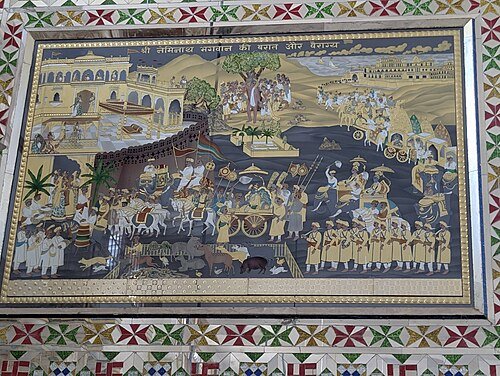
Wedding procession of Neminatha, 22nd Jain tirthankara and his renunciation seeing pain of animals kept for slaughter.
Painting in Ranila Jain temple, Haryana
📢 #ICAI Member Benefit Alert
Free Class 3 Individual Signing DSC – 2-Year Validity
The Beneficiary Schemes Directorate of ICAI is offering a Class 3 Individual Signing Digital Signature Certificate (DSC) with 2-year validity, completely FREE of cost, through IDSign for eligible ICAI Registered Practicing Professional Members.
🔹 Prerequisites & Key Details 💼
• Eligibility: Practicing CA
• Certificate: Class 3 Individual Signing DSC
• Validity: 2 Years
Apply Online at https://t.co/9b4zy81n92
Enter your ICAI Membership/Registration Number in the Remarks Field to facilitate ICAI approval.
Video Verification: Review your details, complete the video verification process, upload the required video and note the Reference Number.
🔹 Support & Assistance ☎️
IDSign Support: 1800-572-1734
Email: [email protected]
For further details:
📞 8031290969
🌐 https://t.co/lZ4c4wUpRS
Beneficiary Schemes Directorate, ICAI:
📞 0120-3045994
📧 [email protected]
Regards,
CA Akhil Pachori
Samvatsari reminds us that forgiveness and compassion strengthen every bond.
On this sacred occasion, may humility guide us and may kindness and goodwill shape our every action.
Michhami Dukkadam!