As glaciers melt, we must act fast. ❄️🌏
At #Glaciers2025 in Dushanbe, @UNESCAP stressed regional cooperation, innovation & science-based policy.
New MoU with @icimod boosts joint action on water, climate & resilience in #AsiaPacific.
🔗 https://t.co/fKlXBNkksd
The Director General of ICIMOD, Pema Gyamtsho, was invited to the ‘On Air with Sanjay’ podcast, where he spoke about the future of the mountains and people, emerging challenges in the Hindu Kush Himalaya and also reflected on ICIMOD’s mission and vision.
Today marks a new chapter in the partnership between ICIMOD and the United Nation Economic and Social Commission for Asia and the Pacific (ESCAP).
The Economic and Social Commission for Asia and the Pacific (ESCAP), the UN’s most inclusive intergovernmental platform in the Asia-Pacific, supports sustainable development through regional cooperation, technical assistance, and knowledge-sharing aligned with national priorities and global frameworks.
At the sidelines of the 2025 conference on glaciers preservation in Dushanbe, both institutions agreed to collaborate on air pollution, water-climate resilience, and disaster risk reduction across the Hindu-Kush Himalaya (HKH) and the Asia-Pacific.
As one of the largest glaciated, water-rich, and biodiverse regions across the world, the HKH is undergoing massive changes.
Accelerated glacial loss, depleting biodiversity, increasing multi-hazards, and persistent air pollution pose a serious existential threat to the people of the region.
The agreement between both institutions will drive actions on these fronts, including:
🔹Regional cooperation on air quality through the RAPAP platform
🔹Joint efforts on climate risk, early warning systems & sustainable water governance
🔹Shared knowledge, tools, and policy dialogues to empower countries and communities
@UNESCAP
Black Carbon is part of a group of super pollutants known to adversely affect the atmosphere and accelerate global warming.
Like CO₂, black carbon is an equally warming but lesser-known pollutant that is contributing to glacier loss in the Hindu Kush Himalaya (HKH).
As a component of PM2.5 pollution, when inhaled, it can penetrate into the lungs, leading to a number of respiratory and other health conditions.
Read more about how black carbon is changing weather patterns and increasing downstream risk for communities in this article from the South China Morning Post: https://t.co/wdw0sRWe5X
#AirPollution #BlackCarbon @CleanAirFund@CCACoalition@sacep_org
Urgent action needed on black carbon: a key driver of glacier melt and monsoon disruption
A new report by the Clean Air Fund backed by the International Centre for Integrated Mountain Development calls for urgent action to reduce black carbon emissions.
Black Carbon (BC), which is commonly seen as soot, is an SLCP or short-lived climate pollutant with a short lifespan but devastating longer term consequences.
“Black carbon accelerates ice melting in the Arctic and the glaciers, ice sheets, icebergs, and sea ice that make up the wider cryosphere. Black carbon emissions also disrupt Asian and West African monsoon precipitation, leading to increased flooding that adversely impacts agriculture, lives, and livelihoods, and contribute to localised warming and extreme heat.”, says the report.
In the figure, the regional contribution to black carbon emissions, with 60% of emissions in South Asia coming from the residential combustion of fuels, is shown. Source: Clean Air Fund
Read the full press release: https://t.co/RndG6egwUg
#Glacier2025
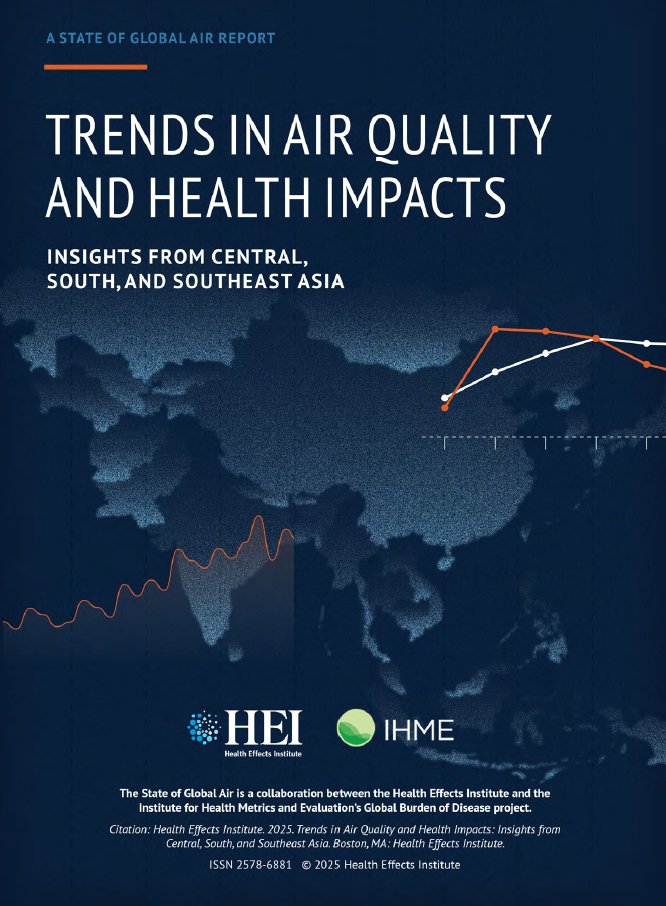
📣 New Report!
Air pollution is Asia's leading environmental risk factor for poor health, affecting millions of people annually.
Check out our new report focused on air pollution & health in Central, South, & Southeast Asia ➡️https://t.co/qLU3drxJ8n
#AirQuality
1/3
I am looking for a JRF at @HydUniv with exposure to atmospheric aerosols. Masters in Atmospheric Sciences or Meteorology with a valid NET or GATE score. Please help me to spread the word and interested candidates please write to [email protected] with their CV.