Some observations:
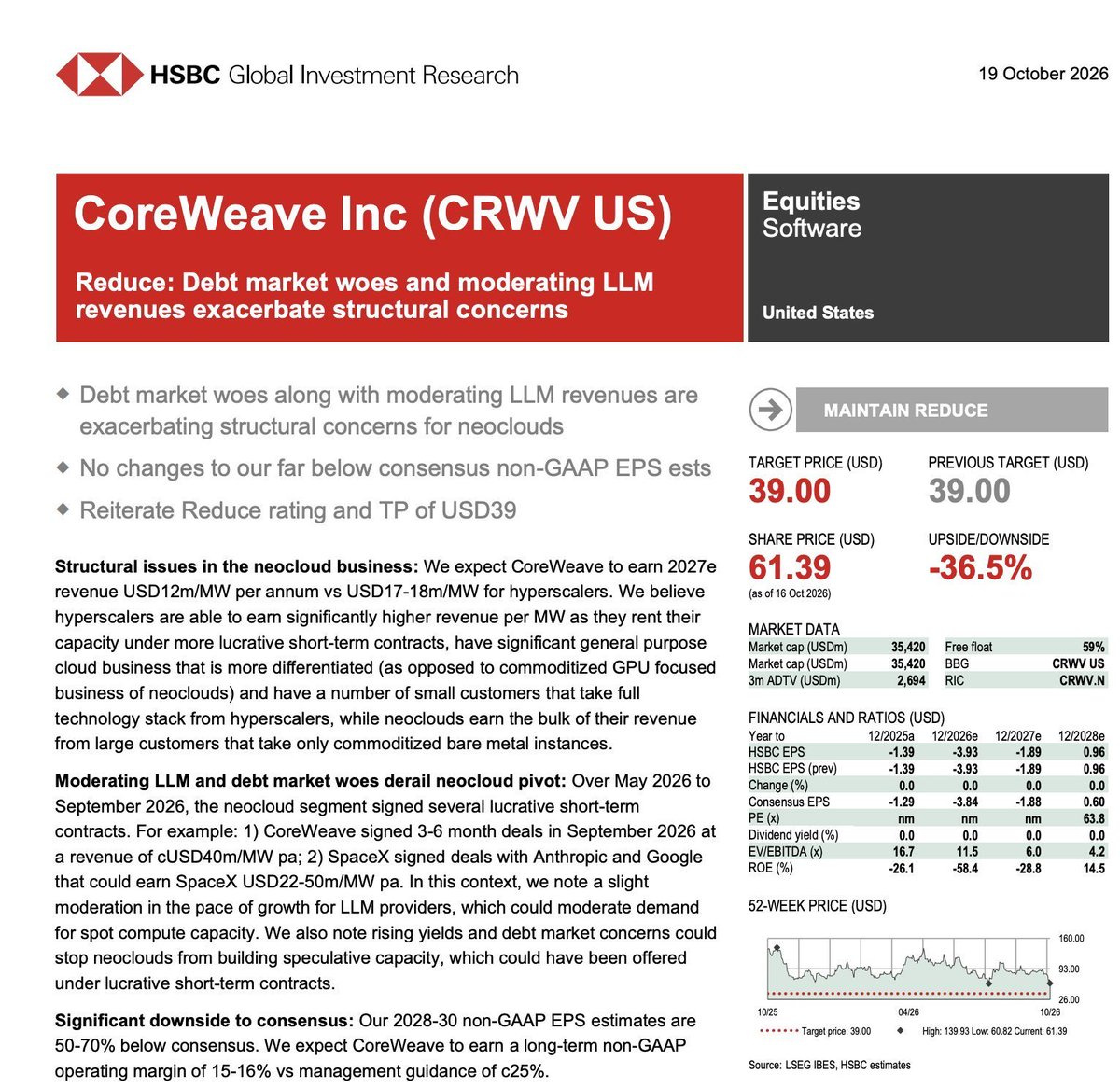
* Hyperscalers make ~50% more revenue per MW than neoclouds. The difference is the bundle: storage, networking, software and support all sell with the compute. A neocloud mostly sells the GPU-hour alone.
* CoreWeave’s average debt cost is ~6.3%, but new money costs 14–15%. The average is low because most of the book is GPU loans repaid from hyperscaler contracts. Those GPUs pay for themselves out of contracted cash flow.
* The question is the unsecured debt from here on. As cheap debt matures, CoreWeave has to refinance well below its 14–15% marginal rate before 2028. Otherwise the higher interest bill comes straight out of its valuation.
* If the next MW costs more to fund, it needs a higher spot price to break even. Secured lending doesn’t set the rental price. But the cost of the next unsecured dollar sets the price each neocloud needs to build
I've been critical in the past of AI compute indexes and the willingness to price compute based on the spot rental price, but now that the AI reset is sinking into the repricing of AI buildout debt its time to realize that the cost of capital is what determines the price of compute.
The most important number in GPU pricing right now isn't $/GPU-hour. It's the gap between what a hyperscaler pays to borrow (~90bp over Treasuries) and what a neocloud pays (~1,100bp).
The cost of compute is now set by the cost of capital, and the spot rental rate no longer tells you much.
The price of an H100 isn't one number. The same chip in the same rack costs a different amount depending on whose balance sheet it sits on. A ~1,000bp funding gap is a structural cost advantage that no amount of operating skill closes.
For example, take one GPU-hour apart. Most of it isn't power or space. It's paying back the chip, the interest on the loan that bought it, and the return the equity expects. A $40–55k all-in GPU, 75% debt-funded, at ~7,000 utilized hours a year is a financing instrument that happens to do matrix multiplication.
As the +500bp on neocloud debt (10%→15%) adds $0.20–0.30 to the break-even cost of every GPU-hour, which is then added on to the rental price.
That's 8–10% of the H100 index, from a credit spread alone, driven almost entirely by the cost of capital.
That means that the compute spot index is a derivative of the AI infra debt credit curve and the squeeze on neocloud margins.
This was already expressed by Seneca who said that if you are trying to distinguish yourself with your strength, an ox will always be stronger than you. So work on being maximally human.
I tend to always start like this. Then things flip.
Modern Finance, Portfolio Theory, IQ, Value at Risk, Gaussianism, Identitarianism, Atheismo-Zionism, GMOs, Zionistan, Game Theory, Epstein, Davos, Shmavos...
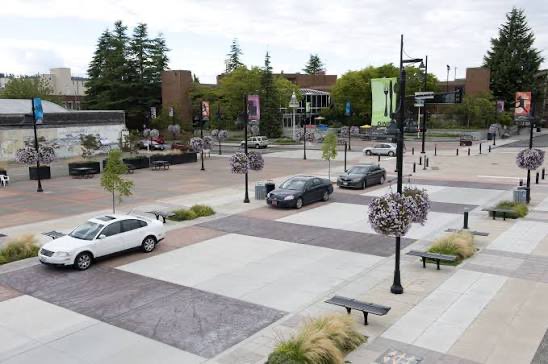
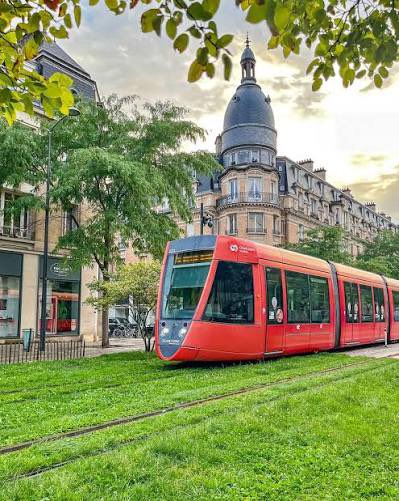
Something I’ve not noticed about France until lately is how amazing the street furniture is
You can walk from a cheap long stay car park to the airport terminal and it feels classy.
It makes a difference.
Lots of planting. Lots of pedestrian protection
Even the bins feel sophisticated
Trains on grass feels like the future we were promised
I don’t mean famous stuff like Hector Guimard metro, I mean just many town centers
If credentials lose their signaling value to AI-generated resumes, we will revert to a world where personal connections dictate who gets hired.
That isn't competitive capitalism, it’s cronyism. We discuss this future and how to get out of it with @lugaricano, author of “Messy Jobs: The Work That AI Cannot Reach” on our latest Capitalisn’t podcast:
https://t.co/HCZqS6lgYV
@vimalkumar_u well said! you probably do not remember me but we trained together several times in Paris prior to a French tournament you were going to play in. that was a long time ago…
A 162-year-old bottle of Guinness has been recovered from a shipwreck, with scientists hoping DNA preserved inside the beer could help recreate the original 1864 recipe.
The guy who invented dial telephones put 250,000 phone switchboard operators out of work. This was the highest paying position for women in the US. The guy who invented it was NOT an engineer or electrician, but rather, a mortician. There were two funeral homes in the town he served… his and a rival. The owner of the rival had a wife who worked as a switchboard operator. Anytime anyone called for A funeral home or HIS funeral home, she would route the call to her husband. He invented the dial phone so customers could explicitly end around switchboard operators and call someone directly. I just love this story.
bonus tweet: Germany has 333 Michelin star restaurants, ahead of Spain. we will all agree Michelin stars do not equal good food necessarily and that the author points to the median. still such an accomplishment does not point towards “impoverished supply chains”.
design and outward building looks, how things look pretty in high art, cultural dynamism and beauty as metaphysics yardstick are four different things which should not be conflated. bundled together they produce a mood not a thesis. 1/n
Someone asked me recently why I’ve become interested in aesthetics after having spent most of my life more interested in STEM-adjacent topics. I hadn’t really considered the question consciously before, but I’m certainly thinking about aesthetics more than I used to. I think it’s a confluence of things:
• Many things today are ugly and far uglier than they used to be or need to be. Once you see this, it’s kinda hard to stop perceiving it. (Early twentieth century phone boxes versus modern phone boxes; old water fountains versus new water fountains; etc.) As someone with a naively meliorist assumption that most things should be getting better rather than worse, it’s all a bit perplexing: why did we stop doing things nicely? Is it a choice? Was there a malevolent spell cast upon us? This vein led me to think more about modernism and why much of art became more intentionally "challenging", grotesque, opposed to prettiness, rebarbative, dissonant, etc. Can or should anything be done about this? Is this just how things ought to be?
• Relatedly, much of modernism involved a kind of explicit repudiation of cultural continuity and represented a schism with prior practices. This is maybe most evident in American architecture, where the International Style exhibition in 1932 initiated the displacement of a rich tapestry of prior styles. This cultural break seems important and interesting to me, and I suspect that the rejection had important consequences outside of the aesthetic domain. Samuel Hughes has been exploring this question in his recent writing at @WorksInProgMag; @RuxandraTeslo is also pulling on this thread. Elaine Scarry wrote about how beauty inspires creation. If so, the inverse may also be true: ugliness inhibits it.
• It’s clearly the case that changes in the aesthetic domain can at least inspire progress in other places. Petrarch helped set some of the preconditions for the Renaissance which in turn fostered the scientific revolution and Enlightenment. Things like World Fairs (the 1851 Fair at the Crystal Palace recorded 6 million admissions when the population was 21 million) reflect the popular interdependency that used to exist between aesthetics and material development.
• @tedgioia and others have written about stuck culture and how so many domains seem to have ceased to straightforwardly advance in the way that they did up until the nineties or thereabouts. This is obviously peculiar and interesting. What changed, and what does it mean? Is it about the internet and fragmentation? Is it about a loss of supply? Is it just about having reached the zenith of various mediums?
• I’m generally interested in markets and the dynamics of creation. In aesthetics broadly, I find the reflexivity between supply- and demand-side factors to be very thought-provoking. There’s a natural desire to view satisfaction of individual preferences as the yardstick to measure market success, but things get interesting and even a bit unsettling when we start to think about how the supply might start to shape the demand. I often think about this in the context of food. Why is food so much worse in Germany than many of its neighbors? Germany certainly doesn’t have less material ability to produce good food; indeed, Germany is richer than the countries around it. There’s probably something about German food supply chains that is impoverished relative to France and Italy, but the Germans themselves don’t seem too upset about it. It just seems that the Germans are stuck in an objectively worse market equilibrium than their neighbors: the food is bad and they’ve gotten used to it. The obvious question then is where else these kinds of reflexive patterns apply, and where else we’re stuck in some objectively inferior equilibrium, even if preferences are in some superficial sense being sated.
• While this is an extremely banal and obvious point, I hadn’t until recently thought much about or internalized how much one can study reasonably objective things ("the status of women in society", say) through artwork. (Thanks to @_alice_evans for opening my eyes here.) In this vein, I’m pretty excited about the possibilities over the coming years in computational art analysis. I want something that’s conceptually similar to Google Ngram timelines but for the visual arts.
• We've always tried to do things well at Stripe. I've come to see that attempting to do them beautifully is often a helpful way to break out of standard practices and to do something with greater novelty and in a way that might have other benefits besides. (Also, excellent people want to do great work because it is intrinsically satisfying. Explicitly allowing aesthetic considerations to carry weight avoids having to justify every assessment with some kind of torturous empiricism.)
• In his Nobel Lecture, Solzhenitsyn said that, among the Platonic virtues of goodness, truth, and beauty, that beauty is special, for it possesses a unique kind of irrefutability. He notes that arguments, writing, and philosophical systems can all be predicated on misapprehensions, but that “a true work of art carries its verification within itself.” He proceeds to observe that when goodness and truth are threatened, the “ever surprising shoots of beauty will still force their way through.” There is a lot of specious and motivated reasoning in the world today and plenty of questionable value systems. I don’t think that beauty directly reflects any definitive trait, but I’m intrigued by the idea that it can be a marker of deeper metaphysical coherence.
the most interesting point made by the author is about reflexivity. supply shaping demand, and societies locked in objectively inferior equilibria that nobody complains about. a much stronger and more general thesis than any aesthetics framing. n/n