Historical archive of vintage U.S. patent illustrations and in-depth explorations of the inventors, innovations, and technological legacies that shaped society
By the 1960s the limitations of existing storage media had become clear. Magnetic tape degraded with each use, vinyl records wore under the stylus, and neither offered the density or longevity needed for the growing volumes of digital information that computers and high-fidelity audio were beginning to demand.
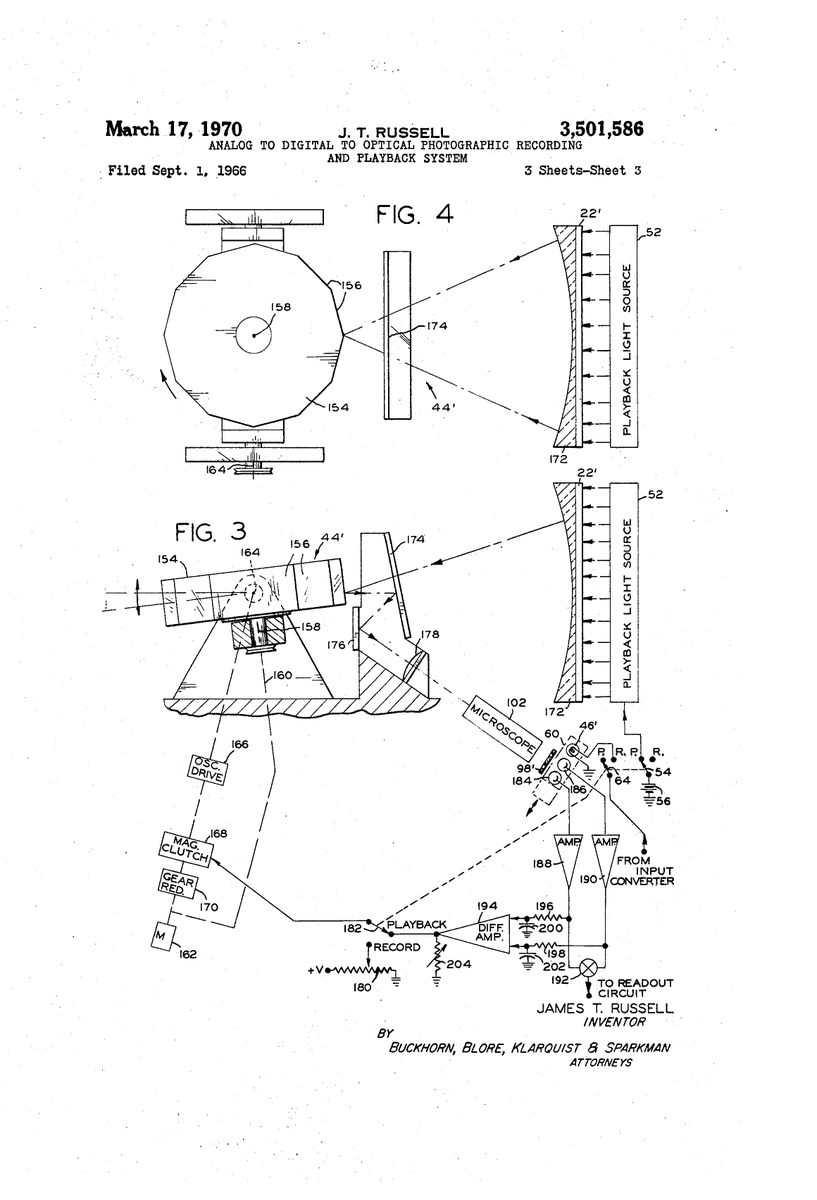
Researchers sought a method that could convert analog signals into durable binary patterns, store them at extremely high density, and allow exact photographic copies to be made without loss of quality. Optical recording on photosensitive media promised a solution: a non-contact system in which light itself would write and later retrieve the data.
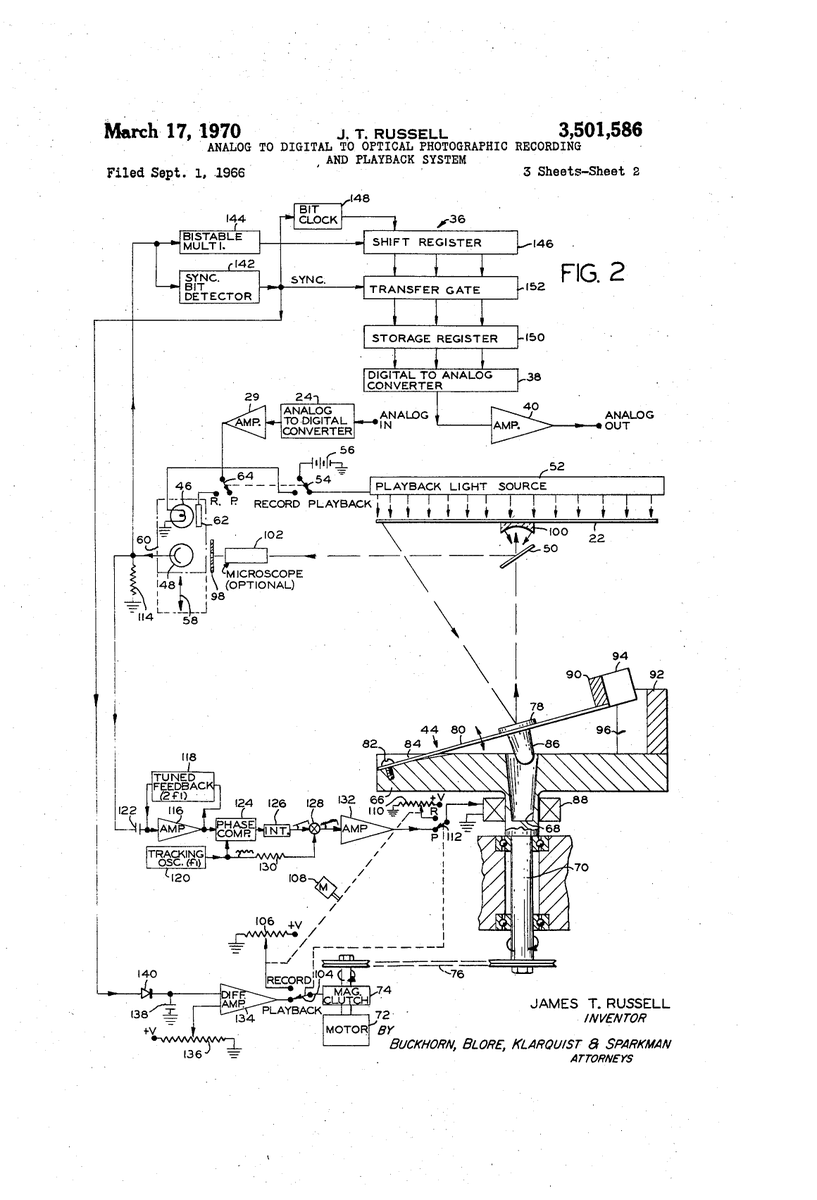
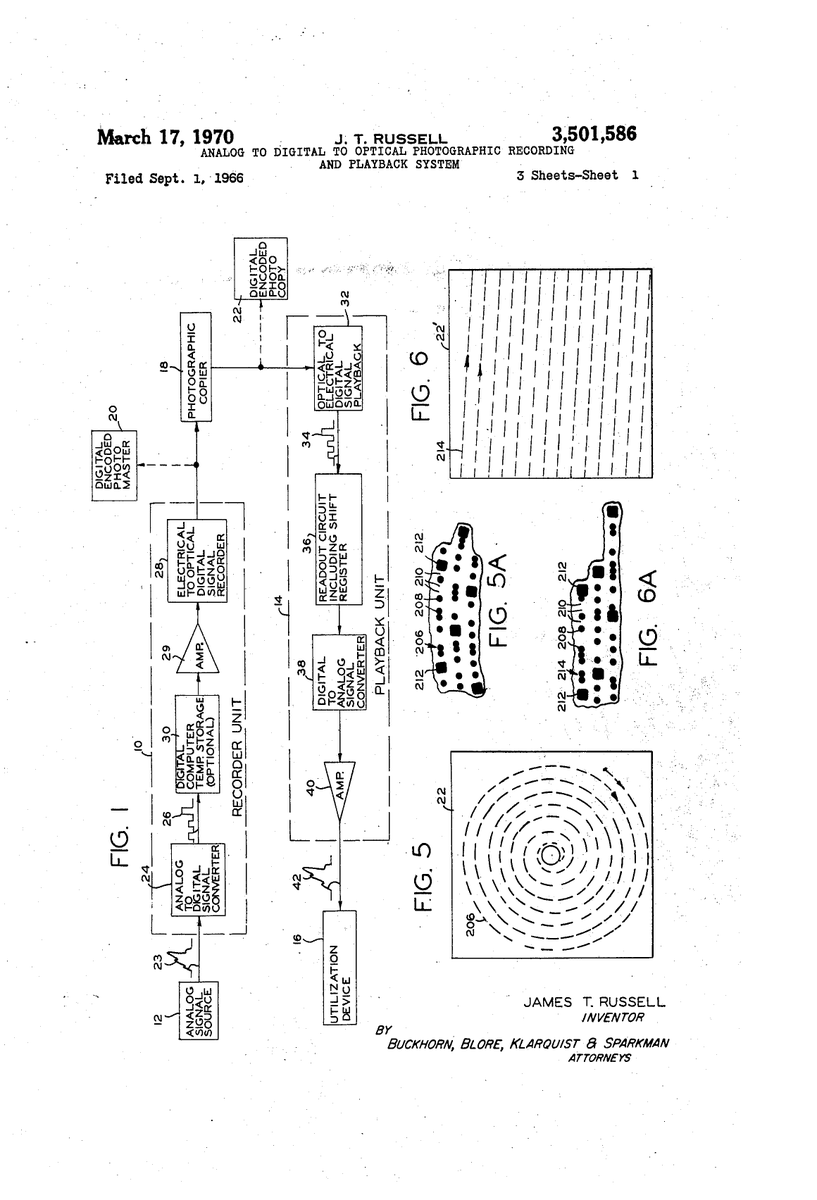
The approach rested on translating an incoming signal into a stream of digital pulses that modulated a focused light source, etching a single continuous track of microscopic binary spots onto a photographic plate. Playback used a photodetector to scan those same spots and restore the original information with far greater fidelity and permanence than earlier analog methods. The resulting record was compact, resistant to physical wear, and capable of being duplicated inexpensively while preserving signal integrity.
James T. Russell, working at the Battelle Memorial Institute, developed this system and received U.S. Patent 3,501,586 in 1970. He described a process in which “an analog input signal is converted to a digital signal that pulses a light source to form a single, series-recorded track of binary coded digital information on a photographic film.”
The patent noted that the digital coded photographic record could store a larger amount of information in a smaller space and deliver a higher signal-to-noise ratio than magnetic alternatives. That foundational insight, refined over the following decades into the compact disc and its successors, is what made it possible for an entire operating system to travel on a single disc that still sits, decades later, in the tray of a familiar drive.
When New Horizons made its closest approach to Pluto in July 2015, the first spacecraft ever to explore that distant world, it carried with it the legacy of a power technology whose essential design had been patented more than half a century before.
In the years after the Second World War, as the United States and the Soviet Union opened the space age, engineers confronted a stubborn barrier to reaching the outer solar system. Chemical batteries could not endure the years-long journeys required, and sunlight grew too feeble to drive solar arrays at the distances of Jupiter, Saturn, or beyond. At Pluto, more than thirty times farther from the Sun than Earth, a probe would need a self-contained, long-lived source of electricity that could operate unattended in extreme cold and vacuum. The convergence of atomic-energy research and the ambitions of planetary exploration created both the pressure and the opportunity for a new solution.
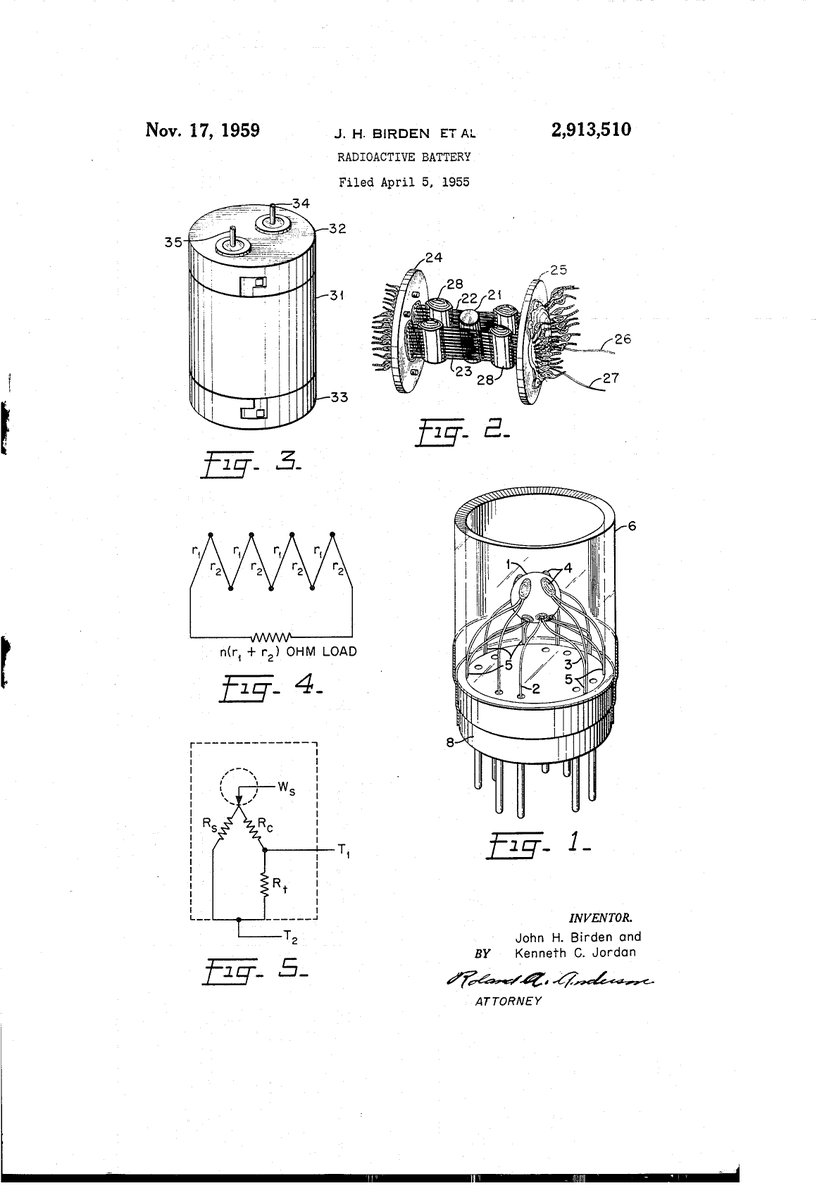
At Mound Laboratories in Ohio, researchers sought to turn the steady heat of radioactive decay into practical electricity without moving parts that might fail far from home. Their approach placed a sealed capsule of radioactive material in thermal contact with one set of junctions in a thermopile while the opposing junctions remained connected to the outer shell, which radiated waste heat into space. By arranging the thermal paths so that roughly half the decay heat traveled through the thermopile leads and by matching the internal electrical resistance of the thermopile to the load it would serve, they achieved useful power levels with acceptable efficiency and low impedance.
John H. Birden and Kenneth C. Jordan captured this advance in U.S. Patent 2,913,510, granted in 1959. They described a cell “so designed that one-half the heat generated by radioactive decay of the source is transferred to the outer container by way of equal-resistance thermopile leads, and the internal series resistance of the thermopile is made equal to the load resistance to be connected thereto.”
The result was a compact, solid-state generator whose descendants—the radioisotope thermoelectric generators carried by New Horizons—supplied the steady power that let the spacecraft operate its instruments, collect its historic data, and send the first close-up portraits of Pluto back across billions of miles.
On this day in 2015, New Horizons, the first spacecraft to explore Pluto, made its closest approach to the dwarf planet. Pictured here is our full-scale model of the New Horizons spacecraft, which recently went back on display at the Museum in DC. #AirSpacePhoto
By the 1960s the limitations of existing storage media had become clear. Magnetic tape degraded with each use, vinyl records wore under the stylus, and neither offered the density or longevity needed for the growing volumes of digital information that computers and high-fidelity audio were beginning to demand.
Researchers sought a method that could convert analog signals into durable binary patterns, store them at extremely high density, and allow exact photographic copies to be made without loss of quality. Optical recording on photosensitive media promised a solution: a non-contact system in which light itself would write and later retrieve the data.
The approach rested on translating an incoming signal into a stream of digital pulses that modulated a focused light source, etching a single continuous track of microscopic binary spots onto a photographic plate. Playback used a photodetector to scan those same spots and restore the original information with far greater fidelity and permanence than earlier analog methods. The resulting record was compact, resistant to physical wear, and capable of being duplicated inexpensively while preserving signal integrity.
James T. Russell, working at the Battelle Memorial Institute, developed this system and received U.S. Patent 3,501,586 in 1970. He described a process in which “an analog input signal is converted to a digital signal that pulses a light source to form a single, series-recorded track of binary coded digital information on a photographic film.”
The patent noted that the digital coded photographic record could store a larger amount of information in a smaller space and deliver a higher signal-to-noise ratio than magnetic alternatives. That foundational insight, refined over the following decades into the compact disc and its successors, is what made it possible for an entire operating system to travel on a single disc that still sits, decades later, in the tray of a familiar drive.
Glass marbles that once filled pockets and circled in dirt rings trace much of their everyday presence to a practical invention that mechanized their creation in the opening years of the twentieth century.
For generations before, the finest glass marbles had been shaped by hand in European workshops, where skilled workers gathered glowing rods of colored glass and carefully snipped away each sphere. The resulting pieces displayed beautiful internal swirls and clarity, yet their scarcity and cost kept them from reaching many American children. Meanwhile, the rapid growth of industry and urban life created new rhythms of childhood—moments snatched between school, chores, and family responsibilities—when simple outdoor games offered welcome focus and friendly rivalry. The demand for durable, affordable playthings that could be produced in greater numbers became increasingly clear.
Inventors working within America’s expanding glass centers turned their attention to this need. They sought ways to form molten glass into consistent spheres without the slow variability of hand methods, drawing on principles already refined in other manufacturing fields. Success here would mean not only more marbles in circulation but a level of uniformity that made games more equitable and enjoyable across neighborhoods and playgrounds, embedding the pastime more deeply into the fabric of everyday childhood.
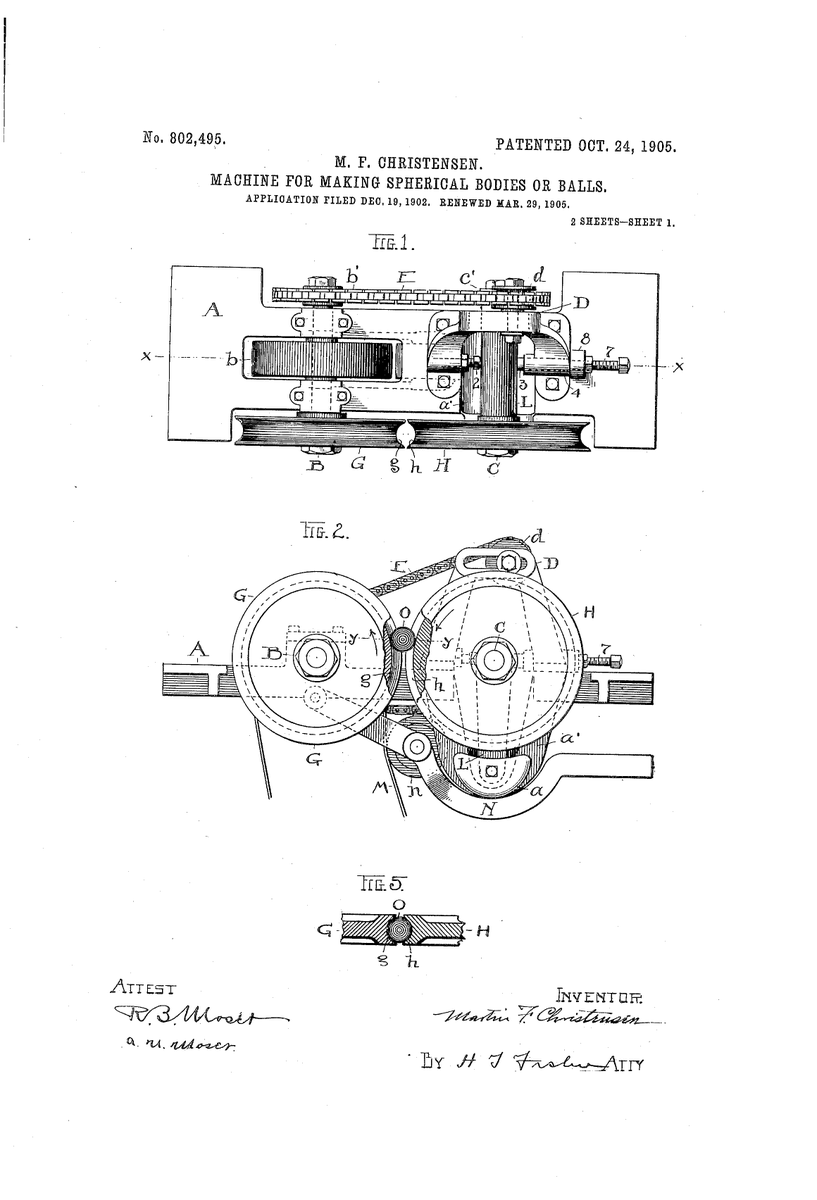
Martin F. Christensen brought this effort to a notable point with the machine he patented in 1905. Having earlier developed equipment for shaping metal balls, he adapted the approach to glass. His design used a pair of grooved rolls turning in opposite directions to roll plastic material into perfect spheres above their center line, with one roll mounted to yield gently and release each finished marble downward. As the patent itself observes, the apparatus was “especially well adapted to the production of glass balls or spheres… from small marbles to balls of an inch or more in diameter.” The straightforward engineering helped move these timeless toys from occasional imports into a widely shared part of childhood memory, the very ones that continue to surface in warm recollections of earlier days.
Full patent text & diagrams: https://t.co/MKoZqh3bIg
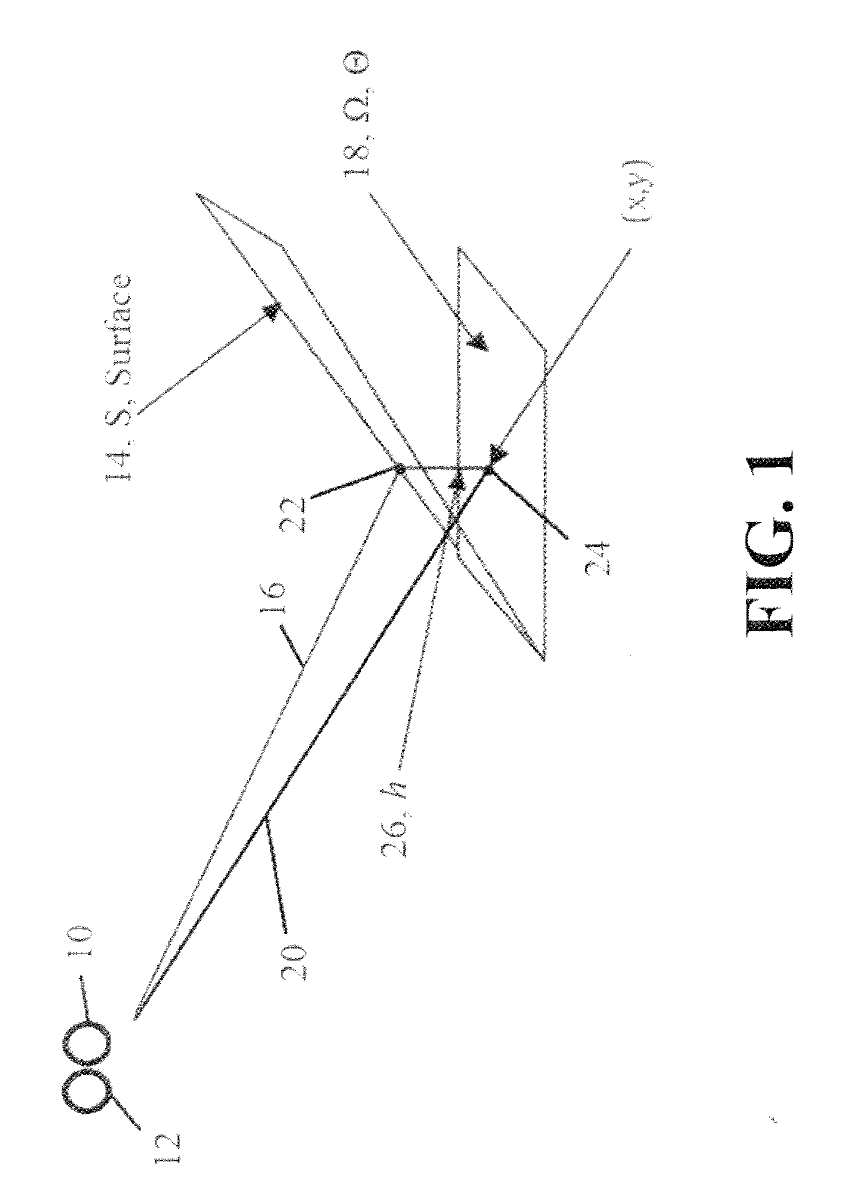
For much of the space age, lunar landings relied on carefully chosen sites in the relatively smooth equatorial lowlands, where prior orbital surveys and, in the case of Apollo, human judgment could mitigate risks. The push toward the south pole in recent decades changed the equation. There, potential landing zones sit near valuable resources yet lie amid far more varied and hazardous topography—slopes that can exceed stability thresholds, rocks large enough to damage landing gear, and lighting that leaves large areas in deep shadow. These conditions made real-time, three-dimensional sensing during descent not merely useful but essential for future missions.
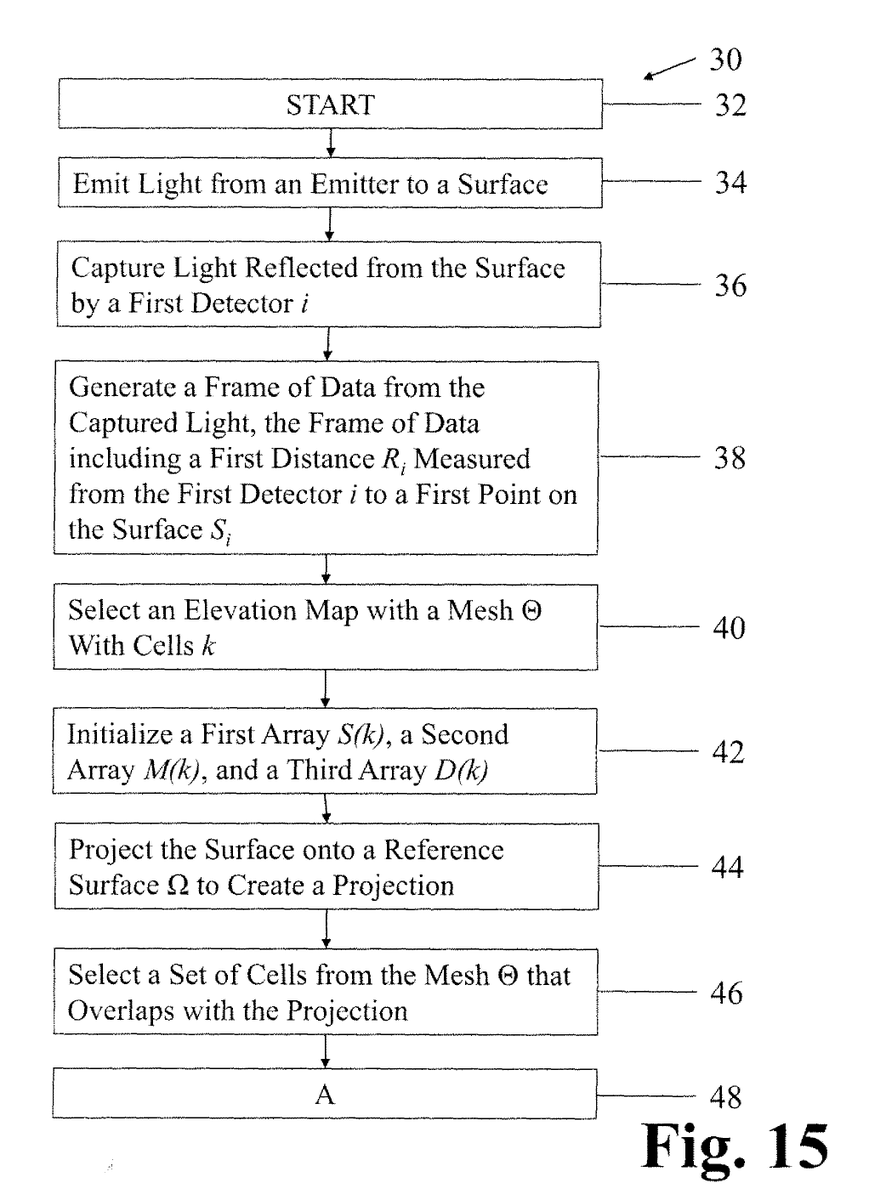
Flash LIDAR provided one of the most promising avenues for meeting this requirement. Unlike scanning systems that build images point by point over time, a flash LIDAR fires a single broad pulse and records returns across an entire detector array almost instantaneously. This produces a dense point cloud of distances across the scene below, suitable for constructing elevation maps even when moving quickly or operating in darkness. Early testing, however, showed that the spatial resolution and coverage from any one frame were often inadequate on their own to support reliable hazard identification at the scale needed for safe touchdown decisions.
Researchers therefore turned their attention to processing techniques that could extract more value from sequences of flash LIDAR frames. Small shifts between successive images, whether from spacecraft motion or sensor adjustments, contain additional information that can be combined to improve detail. U.S. Patent 8,655,513, issued to inventor Michael D. Vanek and assigned to the National Aeronautics and Space Administration, captures key methods for this enhancement. The patent explains its context within work “to detect hazardous terrain features such as craters, rocks, and slopes during the descent phase of spacecraft landings,” enabling digital elevation maps of the quality required for autonomous safe landing.
As Griffin-1 carries this technology forward on its mission to the Moon, it demonstrates how foundational advances in sensing and data interpretation continue to expand the possibilities for exploration in the most demanding environments.
Full patent text & diagrams: https://t.co/fR1qBPOmyb
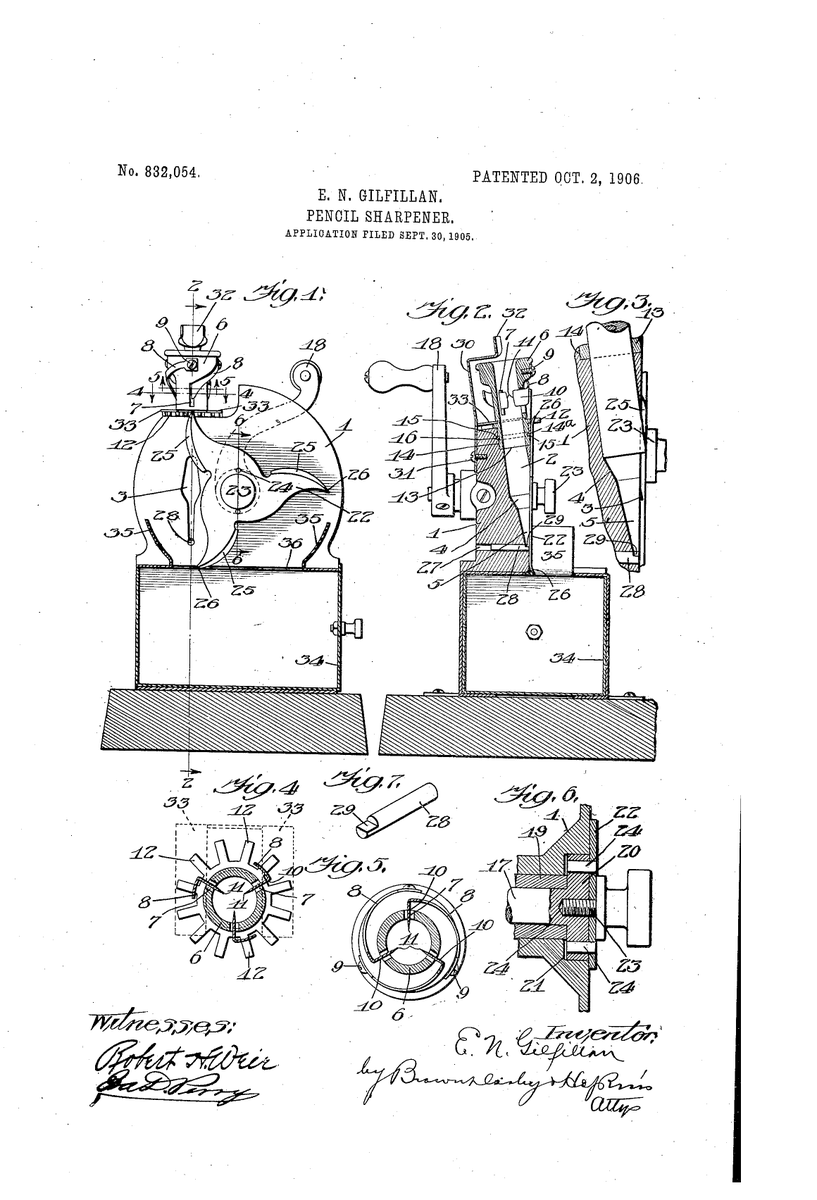
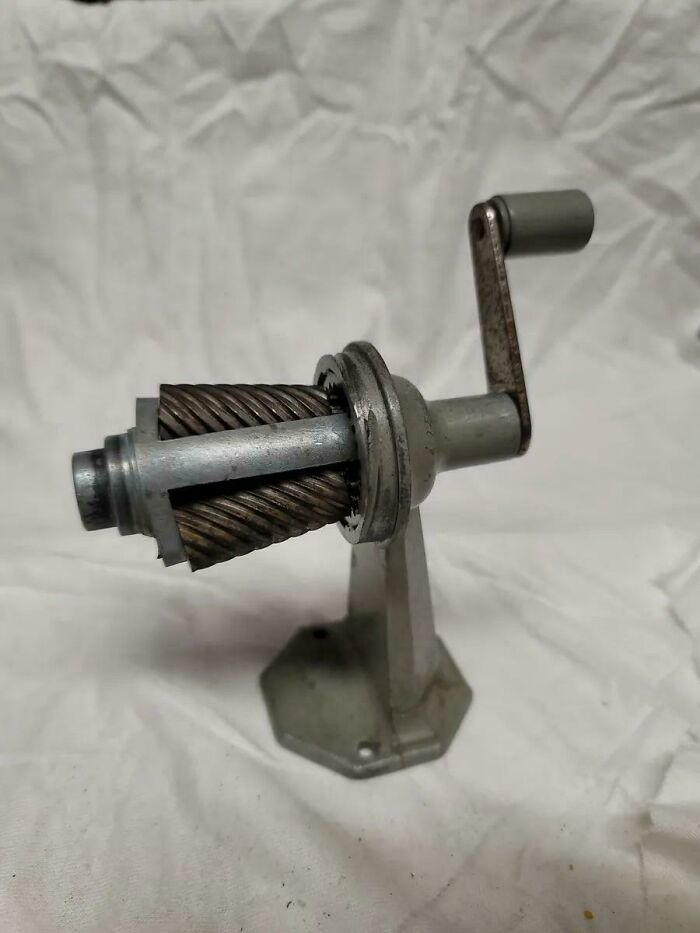
Rather than forcing the user to twist the pencil by hand or rely on abrasive disks, these machines employed precisely angled helical cutting surfaces driven by a simple crank. As the handle turned, the cutters not only removed wood and graphite in controlled spirals but also engaged the pencil holder to rotate and advance the lead steadily forward, producing a uniform point with minimal effort and waste. The shavings were guided into an enclosed receptacle, transforming a scattered nuisance into a contained byproduct and reflecting the era’s broader push toward orderly, productive workspaces.
Essington N. Gilfillan of Chicago captured this engineering insight in his 1906 patent (US832054). He designed a sharpener in which “the cutter serves as a means for rotating and feeding the pencil,” integrating the cutting, rotating, and advancing functions so that each turn of the crank brought a fresh section of pencil into contact with the helical blades while directing debris into a collection box. The result was a compact, durable machine suited to the demands of modern offices and schools.
https://t.co/GiiBTNsjtt
The X-15 program, a joint effort of the Air Force, Navy, and NASA, had been conceived in the early 1950s to explore the hypersonic regime and the upper fringes of the atmosphere. Built by North American Aviation and powered by the throttleable Thiokol XLR99 rocket engine, the sleek, black research aircraft was air-launched from a B-52 mother ship.
Once the rocket ignited, it accelerated rapidly into regions where aerodynamic forces grew vanishingly thin. At such altitudes, conventional control surfaces—ailerons, elevators, and rudders—lost their authority. The vehicle entered a brief ballistic arc, behaving more like a projectile than a plane, yet it still required precise orientation to manage reentry heating and to align for a safe glide landing on the dry lakes of Edwards.
Engineers therefore equipped the X-15 with a reaction control system of small hydrogen-peroxide thrusters mounted in the nose and wingtips. These jets supplied the torque needed to roll, pitch, and yaw the aircraft when there was no air left to push against. The system was not merely an add-on; it represented a fundamental shift in how human-piloted vehicles could be controlled at the threshold of space. Data from these flights helped define the requirements for future orbital spacecraft, including the thermal protection, structural loads, and pilot workload that would later shape the Space Shuttle program Engle himself would command.
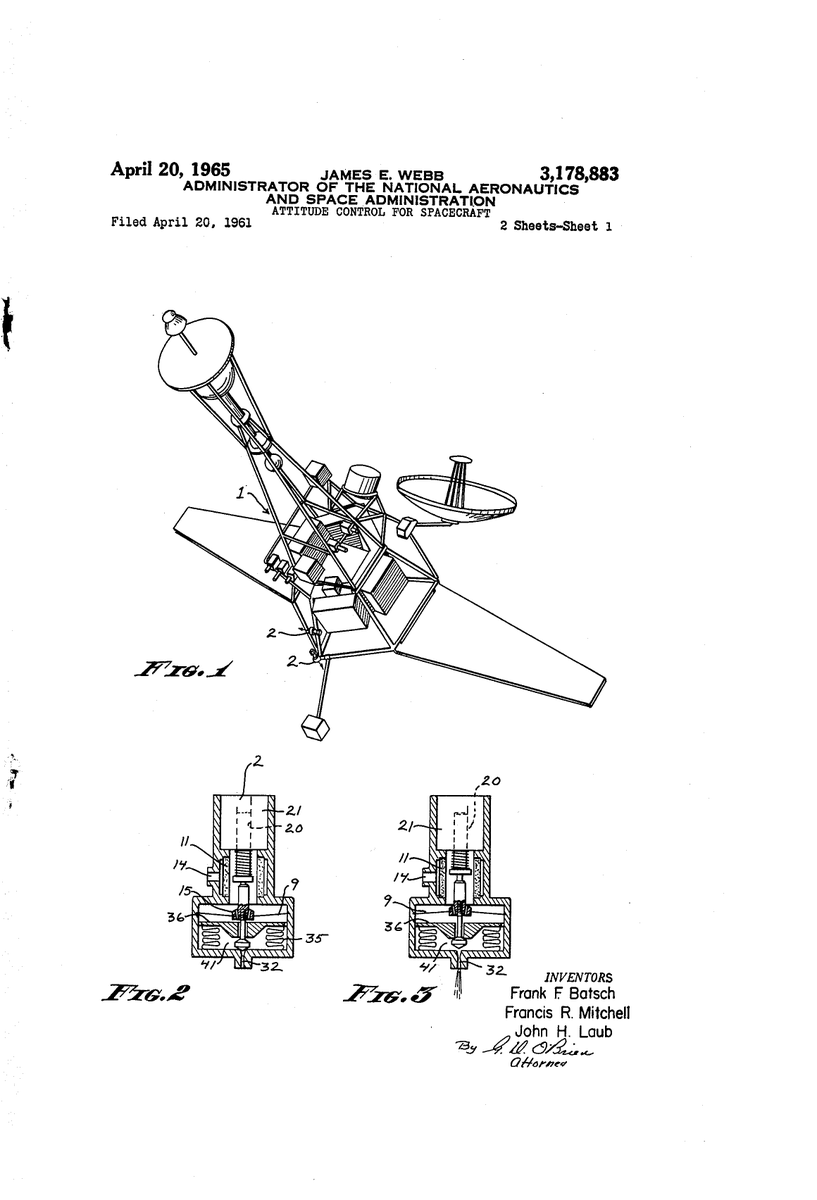
It was in this same period that NASA engineers Frank F. Batsch, John Lauh, and Francis R. Mitchell developed a compact attitude-control device suited to the demands of space vehicles. Their patent, issued in April 1965, described a jetting mechanism that used pressurized gas expelled in controlled puffs to adjust a vehicle’s orientation about its three axes. A solenoid-actuated, snap-acting diaphragm valve allowed precise, low-energy impulses to be delivered on command.
As the specification explains, the design provided “means for producing predetermined jet pulses” while keeping the system simple, reliable, and economical in power and propellant. The work addressed the same core problem Engle confronted at the edge of the atmosphere: how to maintain control when aerodynamic surfaces no longer function.
Full patent text & diagrams: https://t.co/XP9Qx31orz
US Patent 5,433 (1848) – Lewis Tupper's Machine for Compressing Fleeces of Wool
In February 1848, Lewis Tupper of Genoa, New York, was granted a patent for a machine designed to compress fleeces of wool into a more compact form. The invention came at a moment when wool remained a vital raw material for the nation’s growing textile industry, and practical improvements in its preparation and handling offered clear advantages to farmers and processors alike.
The 1840s were years of steady expansion in American manufacturing, particularly in woolen goods. Sheep farming thrived across parts of New York and New England, supplying carding mills and weaving factories that turned raw fleeces into yarn and cloth. Yet the loose, voluminous character of unshorn or loosely gathered wool created persistent difficulties for storage, wagon transport over rough roads, and shipment by canal or early rail. Any device that could reduce bulk without damaging the fiber stood to improve efficiency across the supply chain from farm to mill.
Lewis Tupper addressed these practical challenges with a press built around a sturdy wooden frame and a central compressing mechanism. The design featured a platform and vertical supports that held a circular arrangement of curved arms, which an operator could draw inward using a lever mounted on an upright post. When a fleece was placed in the central area, the arms closed around it to apply even pressure, compacting the material into a denser mass that was easier to handle and pack. The patent drawings illustrate both the overall structure and the details of the lever and arm assembly in operation.
For further reading:
• Original patent drawing at the National Archives: https://t.co/z8ULv86KRc
• Full patent text & diagrams on Google Patents: https://t.co/ynrzIALuDP
In the closing years of the twentieth century, professionals and individuals alike faced a growing mismatch between the demands of mobile life and the tools available to meet them. Laptop computers, though increasingly common, remained too large and power-hungry for constant pocket carry, while traditional paper planners offered no easy way to search, duplicate, or back up information. Earlier electronic organizers had often compounded these frustrations with proprietary rechargeable packs that failed over time, dim or reflective screens ill-suited to real-world conditions, and input systems that made entering anything beyond the simplest notes laborious.
The Handspring Visor line, introduced at the end of the 1990s, responded directly to these shortcomings by combining the mature Palm OS platform with hardware choices that prioritized everyday reliability and future expandability through the Springboard slot. This modular approach allowed users to add cameras, storage, modems, or even telephone capability without discarding the core device, extending its relevance as needs evolved. At the same time, the broader Palm OS ecosystem supported thousands of specialized applications for everything from games to specialized professional tools, creating a living library that enthusiasts continue to explore and revive today through community archives and open-source synchronization projects.
These advances did not arise in isolation. They formed part of a larger shift in which computing moved from the desk into the hand, driven by the recognition that people required constant, lightweight access to their schedules, contacts, and notes without the overhead of constant recharging or complex setup. The Visor’s side-mounted infrared port, chosen specifically to leave room for the expansion slot, and its use of widely available batteries exemplified a design philosophy centered on removing friction rather than adding features for their own sake. Such choices helped the platform endure beyond its original commercial lifespan, allowing devices from that era to serve new generations who value their simplicity and robustness.
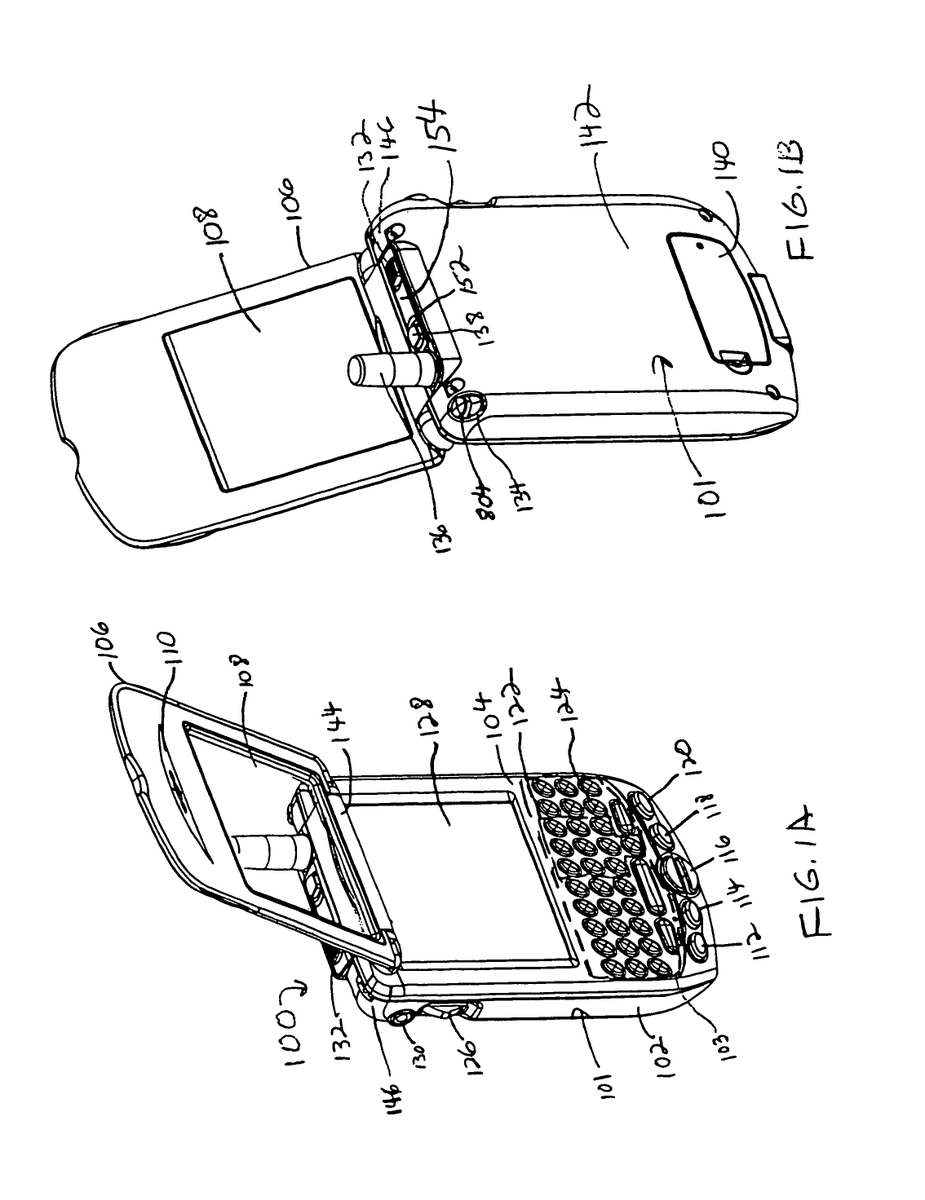
Jeff Hawkins, together with collaborators William B. Rees, Debbie O. Chyi, and Robert Y. Haitani at Handspring, contributed to this lineage through refinements in how users interacted with the limited interfaces of handheld devices. Their work addressed a persistent practical difficulty: in compact machines where physical keys or initial handwriting areas could not display every needed character, locating accented letters, currency symbols, or other alternates often required navigating separate screens or memorizing obscure sequences. The patented interface solved this by presenting intelligently ordered lists of alternate symbols—ranked by frequency of prior selection or contextual relevance—in a convenient pop-up that integrated smoothly with existing input methods.
As the patent observes, “A limited man-machine interface can be time consuming occurs when a user desires to enter a character that is not located as part of the physical interface such as a keyboard or an initial view of a display presented to a user for entering text.” By reducing that friction, the design made extended text tasks on these pocket-sized machines far more natural and reliable.
That same commitment to smoothing the small frictions of daily information management is what continues to draw people back to well-preserved Handspring Visor collections long after more complex vintage machines have lost their appeal.
Full patent text & diagrams: https://t.co/GK3rIJW5FY
Whenever I'm burnt out on vintage PCs, I go back to my PDA collection.
You can get these Handspring Visors and USB cable for <$50 on eBay. They run on AAAs, so no dead battery packs or proprietary charging cables, have monochrome LCD screens that look great outdoors, and sync to a modern PC/Mac with the palm-sync repo on Github. Plus, PalmDB has thousands of apps and games for download.
Do you have a PDA?
The wooden pieces with their distinctive notches, shown lined up in the image, belong to Lincoln Logs, the construction toy whose innovative design received formal patent protection in the summer of 1920.
In the years after the First World War, Americans were rediscovering interest in their country’s origins, and log cabins stood as powerful emblems of early settlement, independence, and the life of Abraham Lincoln. At the same moment, a growing emphasis on progressive education encouraged toys that let children learn by doing—building, experimenting, and understanding structure through their own hands. Construction sets of various kinds were appearing on toy shelves, yet few captured the warmth and historical resonance of real timber in the way this one did.
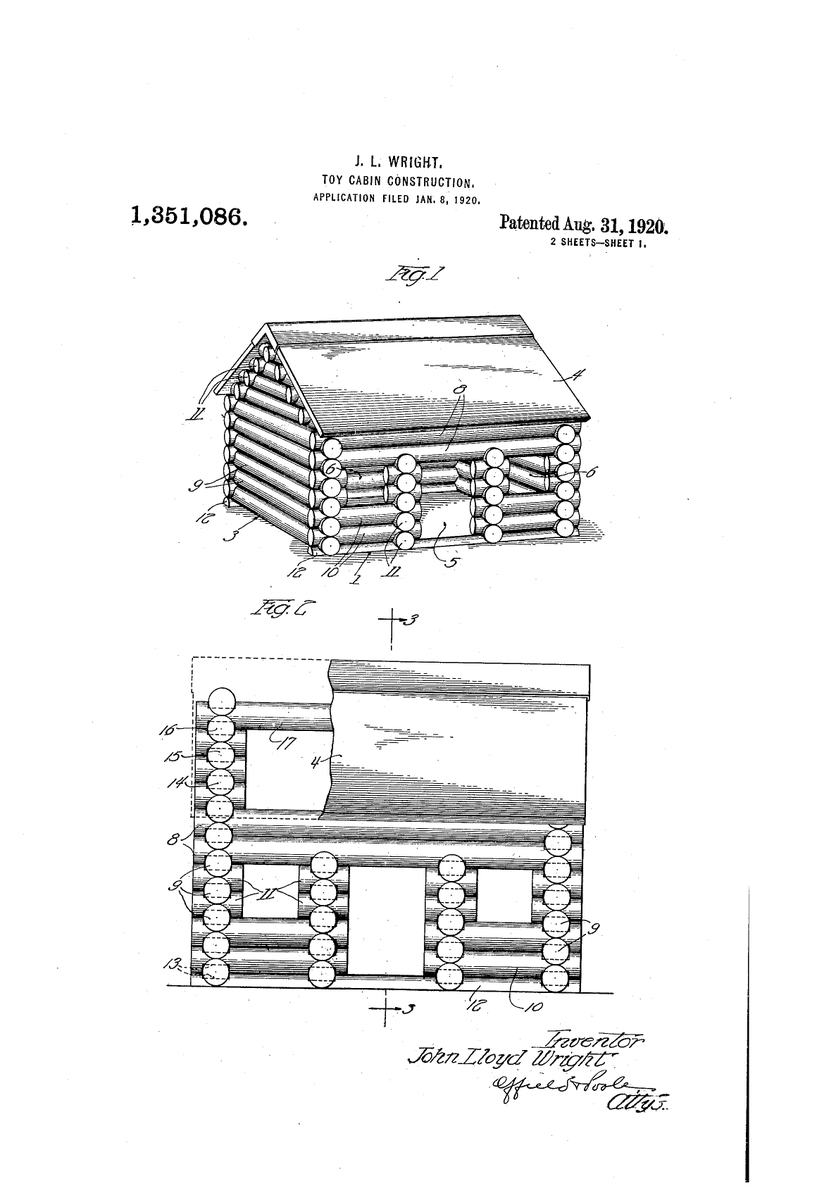
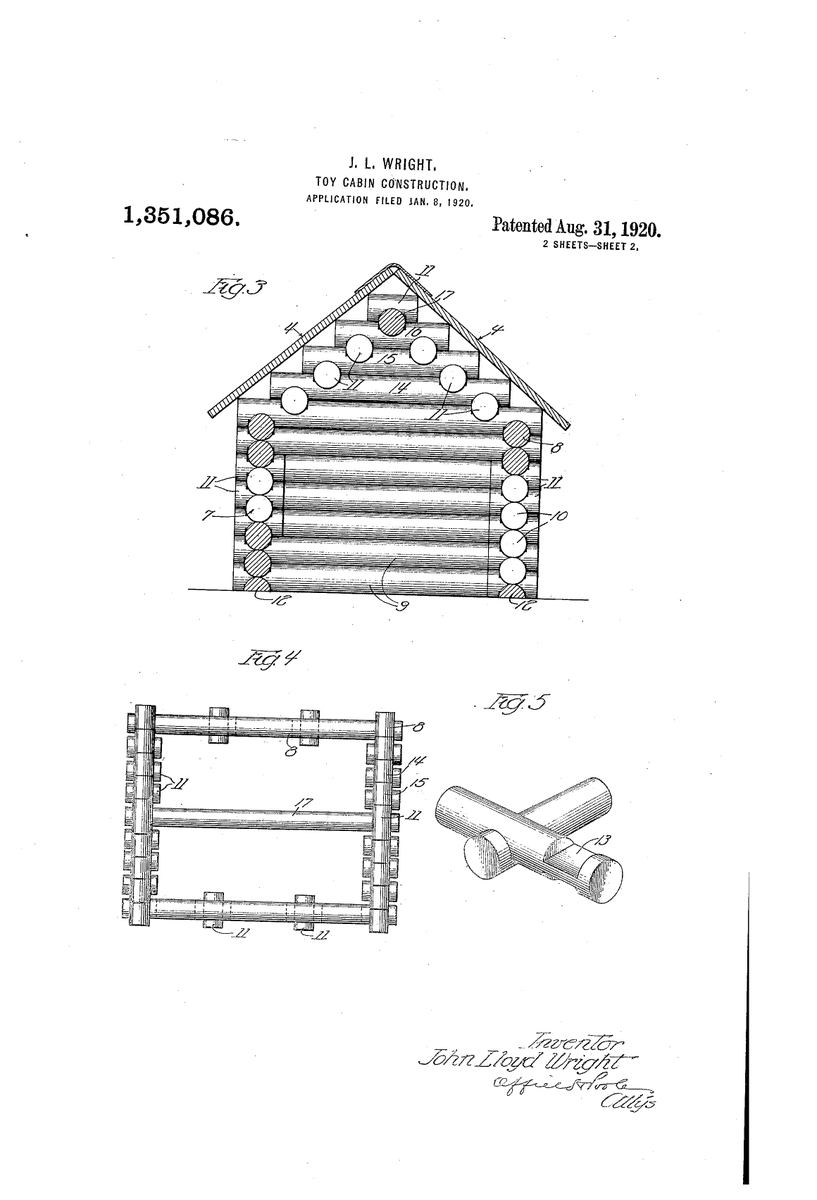
The particular solution embodied in these logs grew from direct experience with serious architecture. John Lloyd Wright, working alongside his father Frank Lloyd Wright on the Imperial Hotel in Tokyo, had seen how interlocking wooden members could be assembled into frameworks strong enough to endure seismic forces. He carried that insight home and scaled it down into a play system of short, round wooden “logs” cut with precise transverse notches. These notches allowed the pieces to lock together at corners and openings, creating walls that stood firmly and openings that could be framed realistically.
John Lloyd Wright secured U.S. Patent 1,351,086 for “Toy-Cabin Construction” on August 31, 1920. The document outlines a complete building system using logs of differing lengths, short transverse connectors to bind the walls, and a ridge-pole roof that required no rafters for stability. In the patent’s own description, the design delivers “a simple yet stable construction which eliminates the employment of rafters and other roof lateral supports.” More than a hundred years on, the same straightforward interlocking principle still invites people to explore the satisfactions of building by hand, just as the pieces pictured here continue to prompt recognition and memory.
Full patent text & diagrams: https://t.co/spxxnX3pAa
US Patent 5764 (1848) – The Washing Machine
This patent, granted to Stephen Baldwin of Williamson in Wayne County, New York, on September 19, 1848, described a washing machine that paired reciprocating dashers with a dedicated tank for holding and supplying wash water. The design reflected the broader push in the mid-nineteenth century to bring mechanical assistance to one of the most physically demanding tasks in American households.
By the 1840s the United States was in the midst of rapid industrial expansion, with textile mills producing greater quantities of affordable cloth and clothing than ever before. Yet the labor of keeping that clothing clean still fell almost entirely on manual effort. In homes across rural New York and the growing nation, women spent long days bent over wooden tubs, rubbing garments against ridged washboards or pounding them with sticks in hot, soapy water. The sheer volume of laundry, combined with the physical strain and time required, created strong demand for any device that could reduce the drudgery, and inventors responded with a steady stream of patented machines that sought to mechanize the rubbing, squeezing, or agitating actions long performed by hand.
Baldwin’s contribution centered on a practical refinement to existing washing-machine designs. He mounted a water tank directly onto the machine’s swinging frame so that it moved in concert with the dashers. The tank had perforations in its sides and bottom that could be opened or closed by means of sliding covers, giving the operator control over when and how wash water reached the clothes being agitated below.
The patent’s claim captured the core idea in straightforward language: the combination, with the dashers of the washing machine, of a tank for holding and supplying the wash water, the tank being perforated and provided with slides for closing the perforations and made fast to the swinging frame. This arrangement aimed to keep the cleaning solution evenly distributed and readily available throughout the washing motion without repeated manual pouring or interruption.
For further reading:
• Original patent drawing at the National Archives: https://t.co/BF17M4N5z0 (Record Group 241, Patent Office drawings)
• Full patent text & diagrams on Google Patents: https://t.co/nhppBuXIiP
For much of the space age, lunar landings relied on carefully chosen sites in the relatively smooth equatorial lowlands, where prior orbital surveys and, in the case of Apollo, human judgment could mitigate risks. The push toward the south pole in recent decades changed the equation. There, potential landing zones sit near valuable resources yet lie amid far more varied and hazardous topography—slopes that can exceed stability thresholds, rocks large enough to damage landing gear, and lighting that leaves large areas in deep shadow. These conditions made real-time, three-dimensional sensing during descent not merely useful but essential for future missions.
Flash LIDAR provided one of the most promising avenues for meeting this requirement. Unlike scanning systems that build images point by point over time, a flash LIDAR fires a single broad pulse and records returns across an entire detector array almost instantaneously. This produces a dense point cloud of distances across the scene below, suitable for constructing elevation maps even when moving quickly or operating in darkness. Early testing, however, showed that the spatial resolution and coverage from any one frame were often inadequate on their own to support reliable hazard identification at the scale needed for safe touchdown decisions.
Researchers therefore turned their attention to processing techniques that could extract more value from sequences of flash LIDAR frames. Small shifts between successive images, whether from spacecraft motion or sensor adjustments, contain additional information that can be combined to improve detail. U.S. Patent 8,655,513, issued to inventor Michael D. Vanek and assigned to the National Aeronautics and Space Administration, captures key methods for this enhancement. The patent explains its context within work “to detect hazardous terrain features such as craters, rocks, and slopes during the descent phase of spacecraft landings,” enabling digital elevation maps of the quality required for autonomous safe landing.
As Griffin-1 carries this technology forward on its mission to the Moon, it demonstrates how foundational advances in sensing and data interpretation continue to expand the possibilities for exploration in the most demanding environments.
Full patent text & diagrams: https://t.co/fR1qBPOmyb
Hello, Griffin-1! We’re pleased to have helped advance the Hazard Detection Lidar technology that will scan and analyze the Moon’s terrain in real-time to map and select the safest landing site.
Learn more: https://t.co/LvGS1JbOuO
Credit: @astrobotictechnology
In the years after color television became common in American households, many families wanted to capture programs they could not watch live—whether evening news, sporting events, or favorite series. Earlier video recorders, developed for broadcast studios in the 1950s, were large, expensive machines that used wide reels of tape and complex mechanisms far beyond household practicality. By the mid-1970s the goal had shifted to compact cassette formats using half-inch tape, helical scanning heads, and azimuth recording to pack far more information into a smaller, more affordable package. Yet a stubborn obstacle remained: crosstalk, the interference picked up when a playback head strayed even slightly onto an adjacent track.
Without a solution, designers had to leave empty guard bands between tracks to prevent visible distortion, especially in color signals. These wasted stretches of tape limited recording time and kept cassettes bulkier than desired. The race to deliver practical home machines with multi-hour capacity therefore depended on finding ways to eliminate those guard bands while still preserving clean playback.
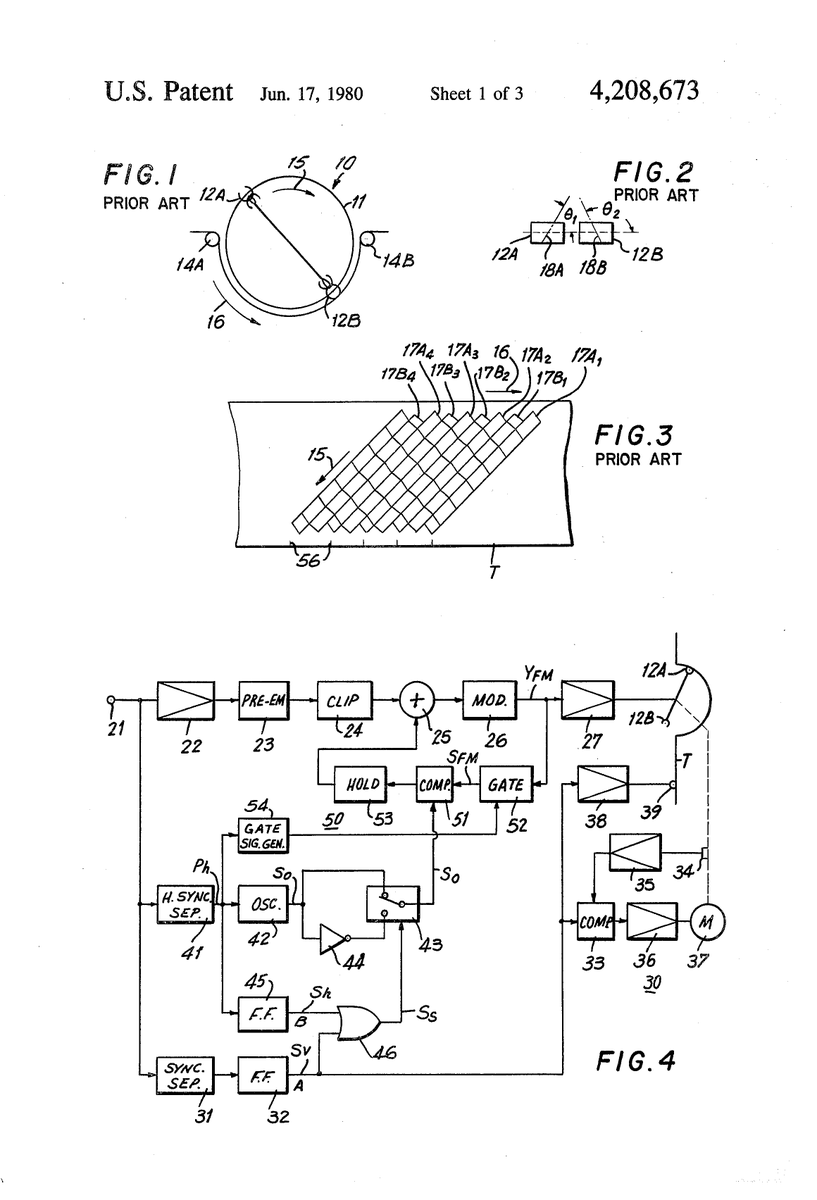
One important contribution to this effort appears in US Patent 4,208,673, issued to inventor Toshihiko Numakura and assigned to Sony Corporation.
Filed in 1977—the same year RCA introduced its first VHS SelectaVision model—the patent describes a method of selectively phase-shifting the frequency-modulated luminance signal and arranging chrominance carriers in opposing phases between adjacent tracks. During playback the resulting crosstalk components invert in phase from one horizontal line interval to the next, allowing them to cancel visually on screen or through simple filtering.
As the patent explains, the approach made it possible to record “without guard bands between successive parallel tracks on tape… even though such tracks have been provided with a very small width so as to attain a high recording density.” Parallel work at JVC produced a related phase-shift technique that helped define the VHS standard itself. Together these advances supported the longer playing times and more compact cassettes that appeared in advertisements like the one shown here, bringing the possibility of personal video libraries a step closer for families willing to make that significant purchase.
Full patent text & diagrams: https://t.co/Yt6xrSQYtO
Glass marbles that once filled pockets and circled in dirt rings trace much of their everyday presence to a practical invention that mechanized their creation in the opening years of the twentieth century.
For generations before, the finest glass marbles had been shaped by hand in European workshops, where skilled workers gathered glowing rods of colored glass and carefully snipped away each sphere. The resulting pieces displayed beautiful internal swirls and clarity, yet their scarcity and cost kept them from reaching many American children. Meanwhile, the rapid growth of industry and urban life created new rhythms of childhood—moments snatched between school, chores, and family responsibilities—when simple outdoor games offered welcome focus and friendly rivalry. The demand for durable, affordable playthings that could be produced in greater numbers became increasingly clear.
Inventors working within America’s expanding glass centers turned their attention to this need. They sought ways to form molten glass into consistent spheres without the slow variability of hand methods, drawing on principles already refined in other manufacturing fields. Success here would mean not only more marbles in circulation but a level of uniformity that made games more equitable and enjoyable across neighborhoods and playgrounds, embedding the pastime more deeply into the fabric of everyday childhood.
Martin F. Christensen brought this effort to a notable point with the machine he patented in 1905. Having earlier developed equipment for shaping metal balls, he adapted the approach to glass. His design used a pair of grooved rolls turning in opposite directions to roll plastic material into perfect spheres above their center line, with one roll mounted to yield gently and release each finished marble downward. As the patent itself observes, the apparatus was “especially well adapted to the production of glass balls or spheres… from small marbles to balls of an inch or more in diameter.” The straightforward engineering helped move these timeless toys from occasional imports into a widely shared part of childhood memory, the very ones that continue to surface in warm recollections of earlier days.
Full patent text & diagrams: https://t.co/MKoZqh3bIg
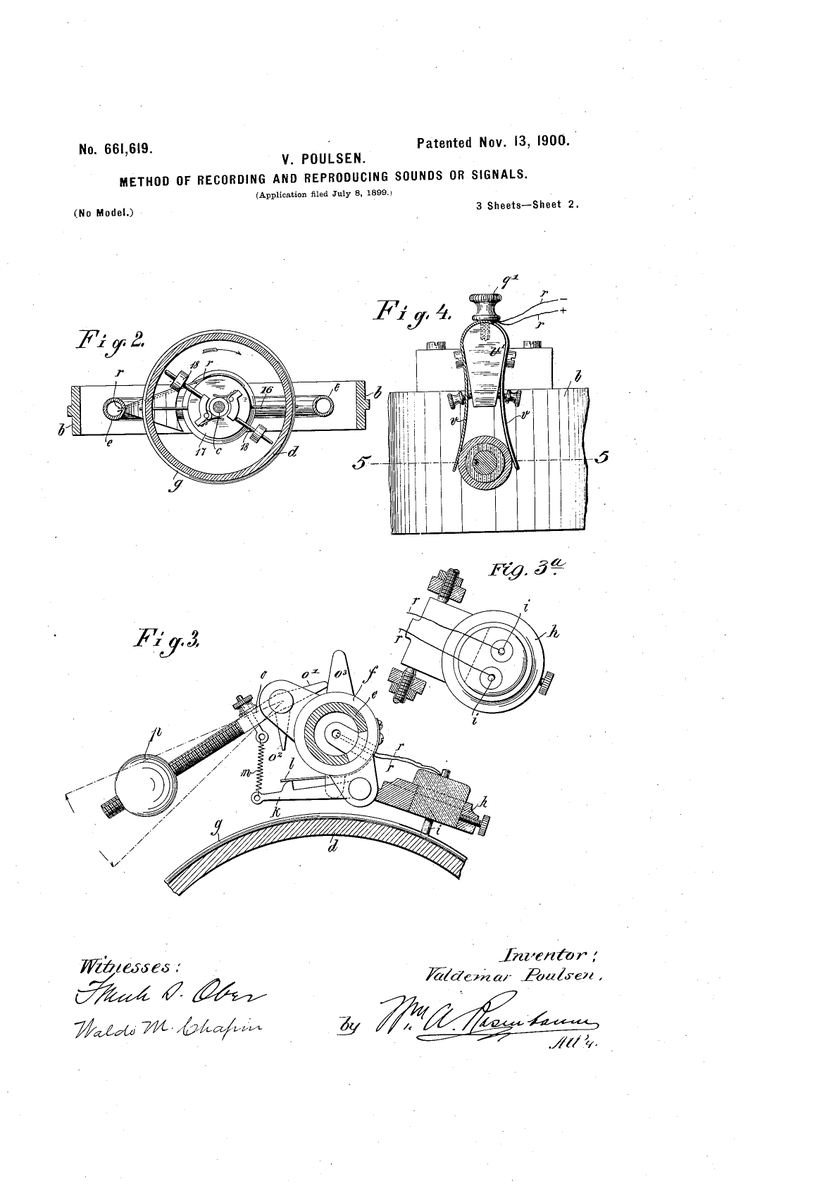
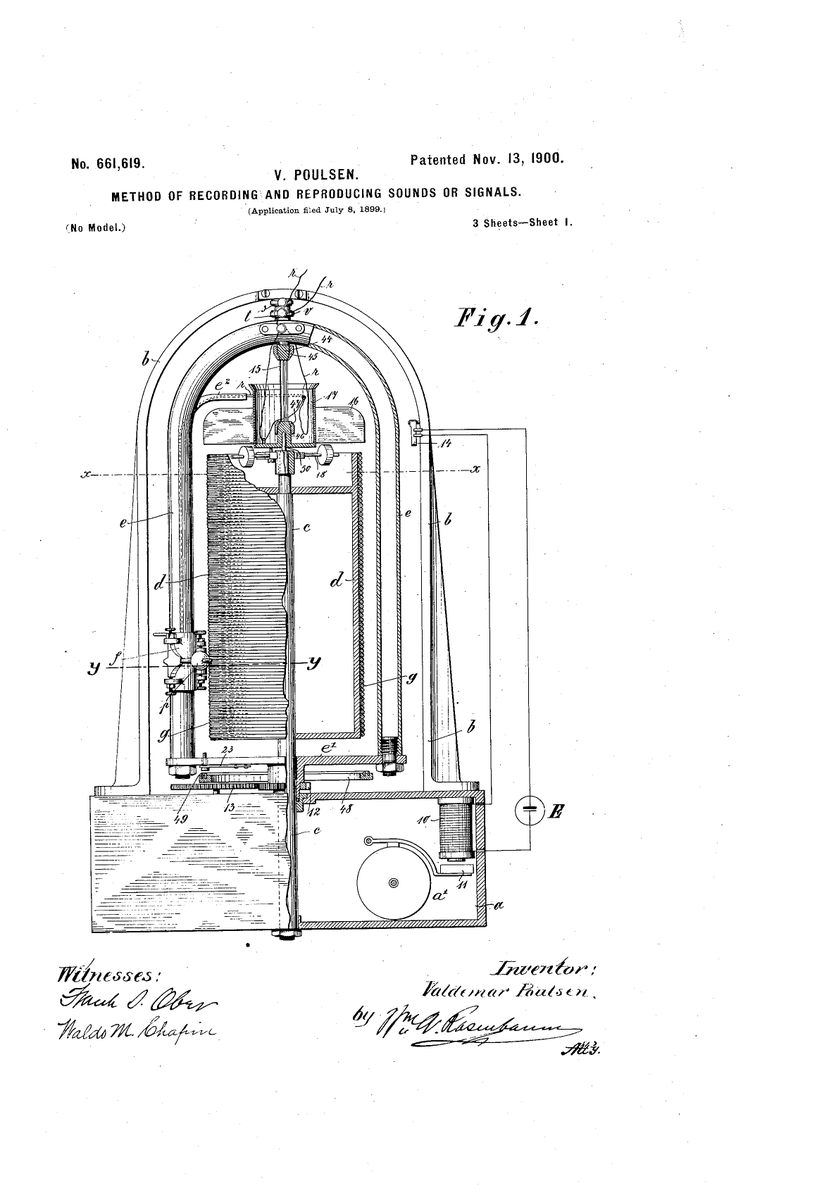
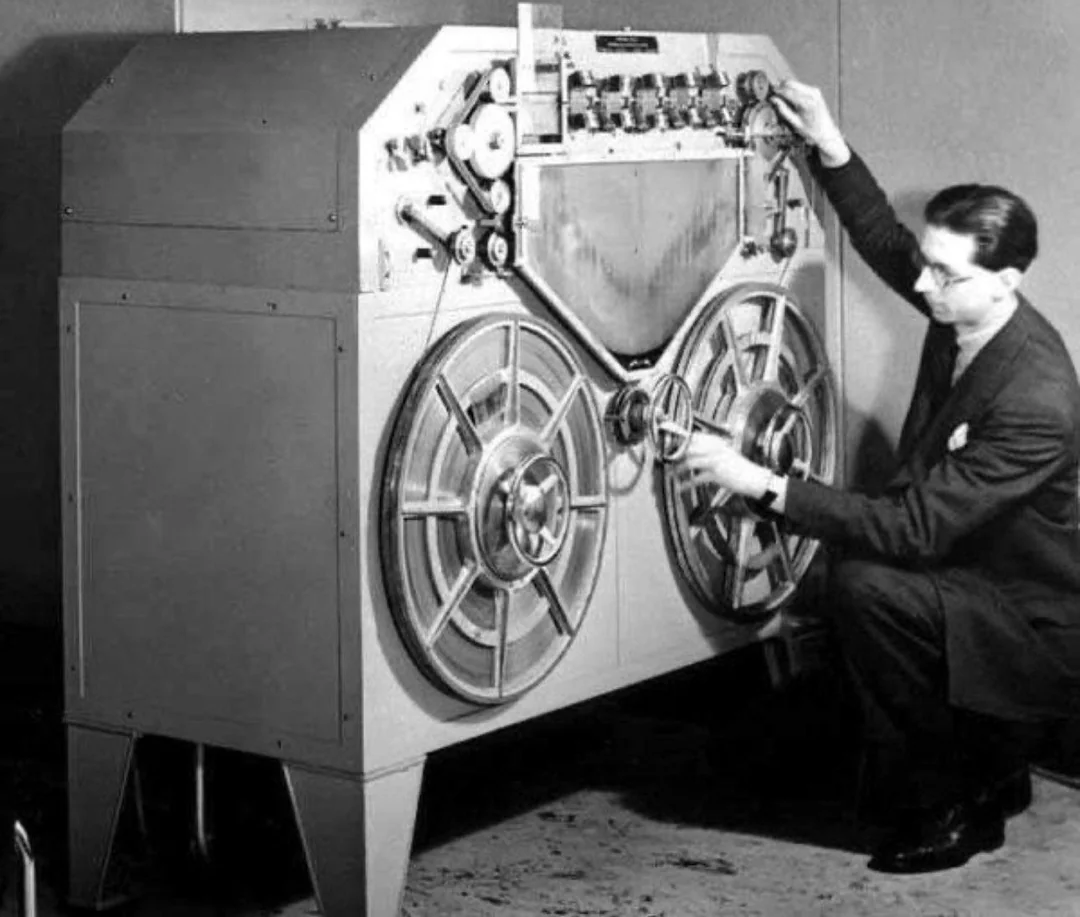
The 1924 Blattnerphone steel tape recorder, developed by Dr. Kurt Stille and Louis Blattner as one of the earliest magnetic tape machines, built directly on Valdemar Poulsen’s 1900 patent for recording sound by magnetizing a moving steel wire or ribbon.
In the early twentieth century, growing telephone networks and radio broadcasting created urgent need for reliable, reusable sound storage. Earlier disc methods were cumbersome and non-editable. Poulsen’s approach allowed varying magnetic patterns to capture speech signals for later playback, an idea made practical by electronic amplification and refined through steel tape for longer duration and studio reliability in the interwar years.
Poulsen sought a way to record telephone messages for absent subscribers. His patent explained how “a paramagnetic body such as a steel wire or ribbon… is magnetically excited along its length in exact correspondence with the signals.” The Blattnerphone carried this principle into broadcasting, preserving voices across time and distance.
Full patent text & diagrams: https://t.co/bPA5rMKYCZ
A Blattnerphone steel tape recorder in 1924. The Blattnerphone was one of the earliest magnetic tape recorders, developed by Dr. Kurt Stille and Louis Blattner.