We develop, demonstrate, and infuse transformational technologies that enhance NASA’s efforts to explore the unknown in space and benefit life on Earth.
As today’s space-based laser instruments measure Earth's terrain, they leave gaps that can include millions of acres.
Learn how NASA CASALS blends machine learning with an ultra-compact lidar to eliminate blind spots and create truly 3D images of Earth’s surface: https://t.co/UZuzoyZyPy
🚀 All aboard the space rideshare!
Two commercial partners hitched a ride into low Earth orbit on SpaceX Bandwagon-5 to test near real time spacecraft connectivity, moving NASA closer to modernizing science mission communications via commercial relay services.
Read more: https://t.co/4UcMOm0ddA
🌕 Happening now! The largest consortium in the U.S. dedicated solely to lunar surface technology development is about to convene. 🚀 Learn from NASA, academic, and private sector experts about why this tech is critical for humanity’s first Moon Base and how we’re collaborating to bring it to life! 👩🚀
@JHUAPL@GeorgiaTech@NASAMoonBase
https://t.co/BOGLd0gHVp
@NASA selected 3 winning teams in its #TechLeapPrize Robotically Manipulated Payload Challenge to advance persistent infrastructure for in-space servicing, assembly, and manufacturing. https://t.co/ZexU9nLP2f
#FlightOpportunities#ISAM
▶️ Watch live now! Experts from NASA, academia & industry are discussing plans for a Moon Base at the Lunar Surface Innovation Consortium Fall Meeting. 🌕
Learn what it takes to land, live & learn on the Moon! 👩🚀
@JHUAPL@GeorgiaTech@NASAMoonBase
https://t.co/5s8VOtu0QO
In the DC area on Thursday? NASA is hosting a free event for World Space Week where the public can learn how we streamed imagery from the Moon to Earth during the recent Artemis II mission. 👩🚀 Join us in-person on Oct. 8 at 3:30 p.m. at NASA Headquarters. Register: https://t.co/WCKqZFL0Ca
NASA has selected 5 U.S. winners as part of the agency's Deep Space Food Challenge: Mars to Table 🍽️ This competition sought innovative solutions for space food systems that would provide safe, nutritious meals to astronauts living and working in space.
Learn more: https://t.co/G8p0JB09yt
@NASA_Technology and @NASAMoonBase are joining forces for this year's Lunar Surface Innovation Consortium Fall Meeting at @GeorgiaTech! 🌕
📅 Join us Oct 14-15 for a front row seat to discussions on development of surface tech needed for an enduring Moon Base! 🚀 @JHUAPL
🔗 Agenda: https://t.co/X80Be8tYCk
📣 Attn 6-12 graders: Working on your proposal to the @NASA TechRise Student Challenge? 💡
📅 Join our Virtual Field Trip on Sept. 22 at 2pm ET to learn more and hear from Dr. Kevin Crosby, a visiting research scientist at @NASAJohnson. 🚀
🔗 Join: https://t.co/gakhmSB7Gq
Back and better than ever! 📡
NASA’s Guam Remote Station is now fully back online after severe damage from Typhoon Mawar in 2023. The station’s return ensures NASA can communicate with the @Space_Station, @NASAHubble, and other critical missions. Read more: https://t.co/7EJwJFVPNK
🚀 Flight Opportunities’ Sept. webinar is now available on demand!
Watch as NASA and Interlune researchers discuss how they leveraged suborbital flights to mature their technologies and build flight heritage ahead of missions sending those techs to the Moon. 🌙
🔗 Watch the webinar: https://t.co/3B5lsyZtYT
🌕 Opportunity: New Solicitation for Lunar Technologies!
NASA has issued a new solicitation to work with partners in advancing critical lunar surface technologies in the key areas including vertical solar arrays, ISRU oxygen production, radioisotope generators, in‑space manufacturing, and advanced nanomaterials — capabilities that are essential to establishing an enduring @NASAMoonBase at the lunar South Pole.
📅 Responses are due October 8, 2026. 🔗 https://t.co/gFVQyZMXtX
Attention middle & high schoolers: The 6th @NASA TechRise Student Challenge is now open! Submit a proposal for a chance to fly your experiment on a NASA-sponsored high-altitude balloon flight test with @aerostarint. No experience needed! 🎈
https://t.co/WIbmGVGXqt
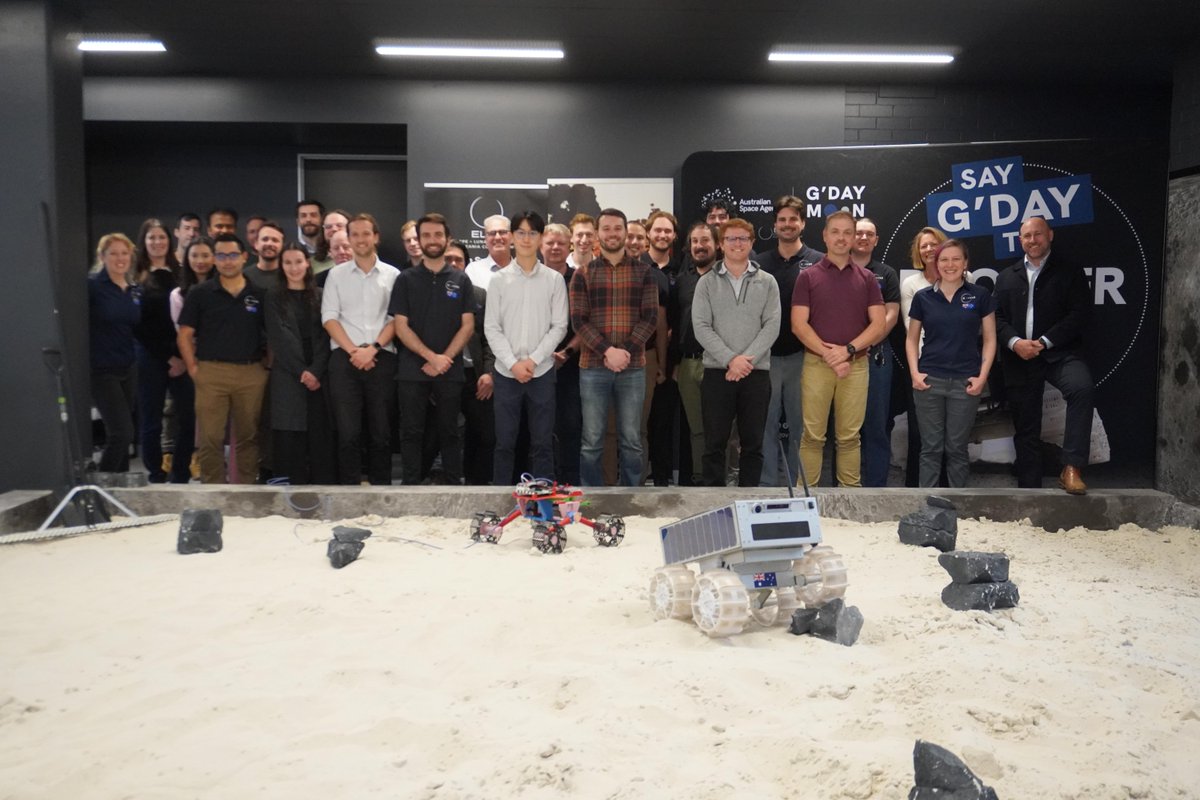
NASA engineers recently traveled to the @AusSpaceAgency 🇦🇺 to support integration and testing of a sensor for a NASA technology payload that will fly aboard Australia’s first lunar rover, Roo-ver.
��� Roo-ver is expected to be delivered to the Moon’s South Pole in 2030 through NASA’s Commercial Lunar Payload Services initiative. The commercial lunar lander mission is part of the broader effort to build humanity’s first @NASAMoonBase.
🔗 Learn more about NASA’s lunar surface technologies:
https://t.co/MR4TmzUNub
Join Flight Opportunities’ Sept. 2 webinar as NASA and Interlune researchers discuss how they leveraged suborbital flights 🚀 to mature their technologies and build flight heritage ahead of missions sending those technologies to the Moon. 🌕
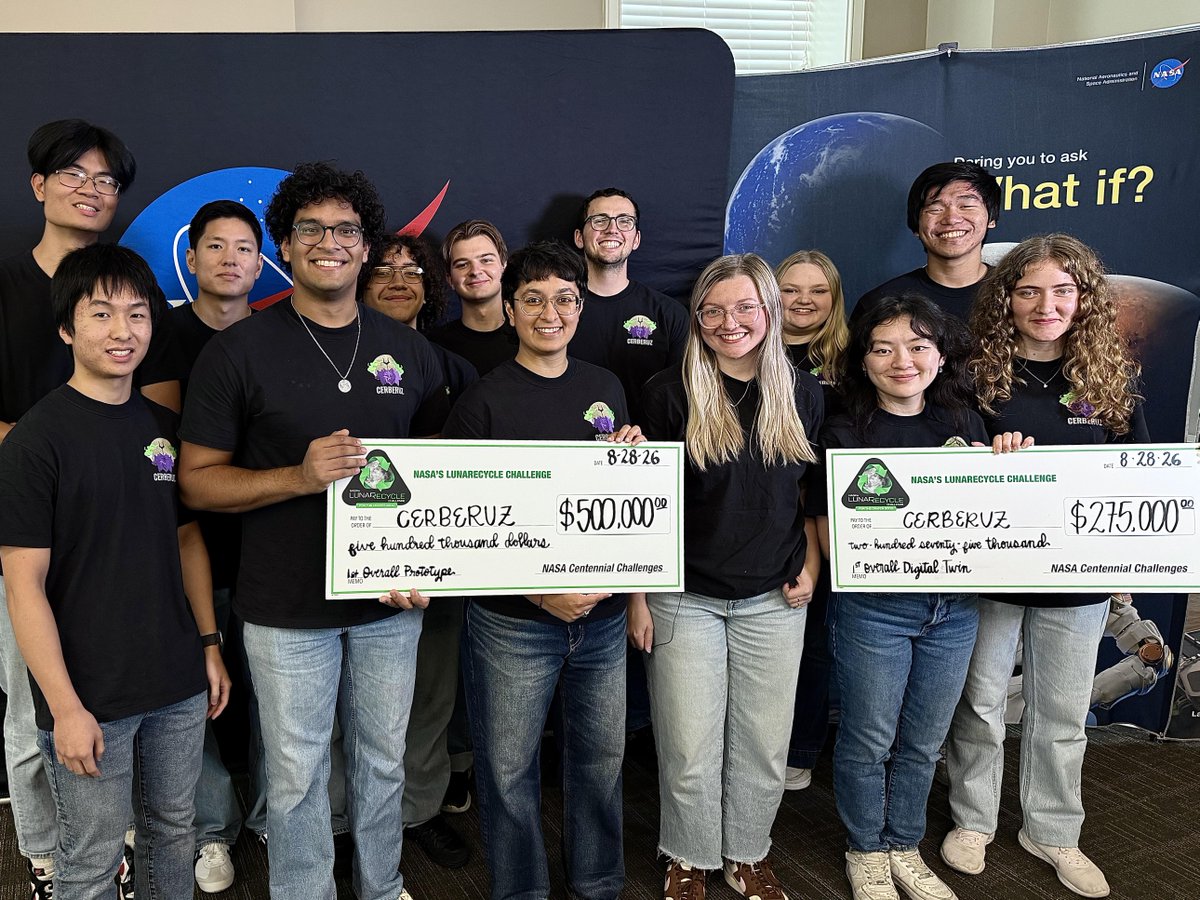
Congratulations to the winners of phase 2 of NASA's LunaRecycle Challenge! 🌕 The competition focused on developing solutions for reducing waste during deep space missions by recycling common materials, like fabrics, plastics, foam, and metals.
Read more: https://t.co/GEza3Sa2Z8
Welcome to the revamped Home and City! 🏠🌎
Explore a fresh new design and discover NASA-born technologies that can be found in your life and the world around you.
🔗 Check it out at https://t.co/DL6Y5YtOZL
Spacecraft exploring the universe can’t always wait for instructions from Earth.
Learn how a NASA-funded business developed a way to help spacecraft autonomously detect faults and respond on their own, demonstrated using design information from NASA’s HelioSwarm mission: https://t.co/GKnlWRnduW
Spicing things up in orbit 🛰️
Our Small Spacecraft Propulsion and Inspection Capability mission is set to launch later this year. SSPICY will demonstrate new propulsion, guidance, navigation, and control technologies to inspect satellites and orbital debris.
Explore how this paves the way for future autonomous servicing in space: https://t.co/Za3jILQfXr
As NASA prepares to establish the @NASAMoonBase, surface mobility will be key to move crew around the lunar surface.
Recently, the top five teams from the Rock and Roll with NASA challenge tested out their wheel designs at @NASAJohnson’s rock yard. https://t.co/PVfeTu6Yv0