Today is launch day for my new book: Never Always, Never Never: Strategic Marketing in an AI World.
Get your copy on Amazon: https://t.co/v91rLEuS9T
Took me five long years to write it. Most challenging project of my life but I’m really happy with how it came together and proud of the outcome.
If you choose to order a copy, an Amazon review would mean the world to me. Thank you in advance❤️
I'm launching a weekly newsletter, focused on marketing, AI, and strategy.
I spent 5 years writing Never Always, Never Never. During that time, I went quiet. The book consumed so much of my life. Now it's out, and I still have more to say.
Every Saturday morning: one concept from the book, new examples that didn't make the cut, and how these ideas are playing out in real time. Grab your coffee and read something that makes you think differently about marketing.
First issue drops this Saturday (tomorrow!). It's about Wilt Chamberlain, granny shots, and why the most effective marketing strategy is often the one that makes executives uncomfortable.
Sign up: https://t.co/HdR88MJRVD
This is of my favorite ads we've ever shipped. It’s for a small brand with an incredible product, brought to life by our creative team using AI tools.
There's a difference between something made with AI and something made by AI. Our creative team conceived this concept, wrote the music, recorded themselves singing the tune, and then meticulously edited every frame over many hours. AI was a tool. Not the creative director.
Too many people are resisting AI content, or think it’s somehow cheating, and are missing the point. This is a great ad, conceived by talented marketers.
Put the same tools in the hands of less experienced or less talented people and you get slop.
But here’s what matters: this is an advertisement for @MitoGrow, a patented biostimulant that works with soil ecosystems rather than against them, helping reduce water consumption by up to 50%. It's basically a multivitamin for plants. You should know about it.
But small brands like this have historically lacked the resources and budgets to produce quality video. Which made it impossible to compete on premium channels like TV against 150 year old synthetic fertilizer brands.
AI, in the hands of talented creatives, is helping change that. This would not have been an option two years ago.
Proud of our team for continuing to ship amazing work on behalf of our clients.
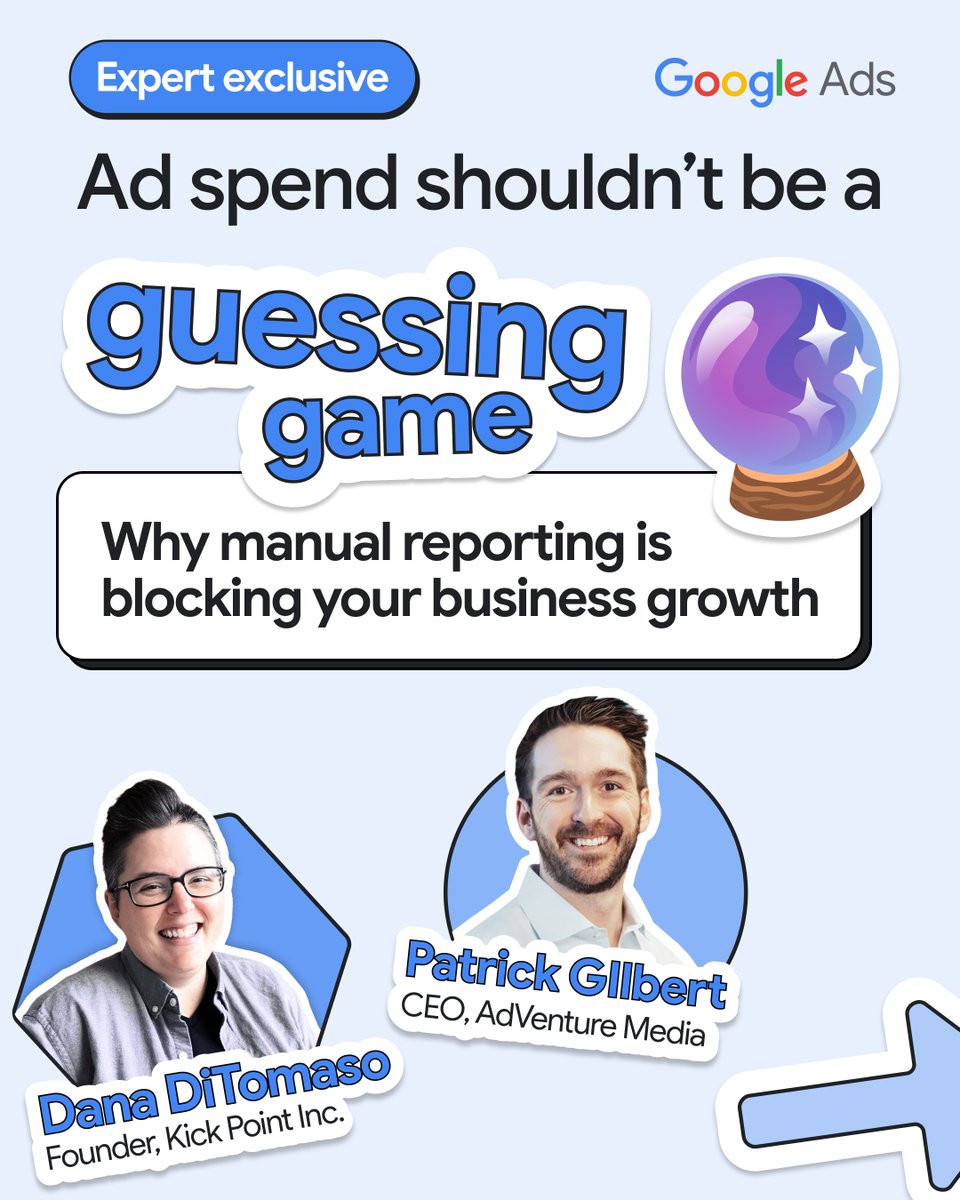
Are you still manually reporting…?
The trap of "how it’s always been done" keeps many marketers stuck in manual silos.
The businesses that win fix their data foundation first so they can use AI as a focused analytical assistant, as noted by Dana DiTomaso, Founder of @kickpointinc.
Shift from defensive to offensive investing to reclaim data-backed confidence, as outlined by @PatrickJGilbert, CEO of @AdVenturePPC:
🔄 Break the manual cycle: Trade fragmented spreadsheets for a unified decisioning engine.
📈 Shift your mindset: Stop using dashboards to simply justify past results. When you view marketing as a growth engine, you can proactively invest in future growth.
🎯 Optimize for profit: Your "north star" should always be bottom-line profit, followed by new customer acquisition and top-line revenue growth. Use tools like BigQuery to get your data into a warehouse that auto-refreshes, eliminating the need to build reports from scratch every morning.
By using Data Manager as your single source of truth and connecting Google Ads to Google Analytics, you can drive real results – a potential +23% increase in conversions and a -10% reduction in cost-per-conversion.
What’s one manual reporting task you’re ready to leave behind?
*Source: Google Internal Data, Oct 2023
For the record: Em dashes have always been a valuable ally for effective communicators.
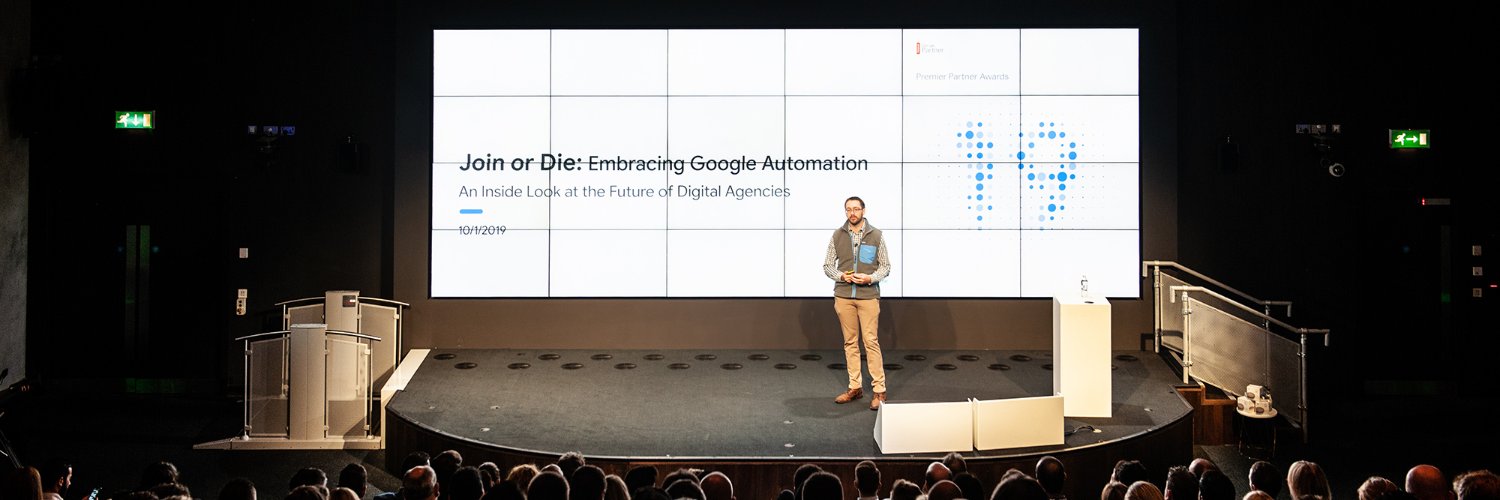
They’re all over my book, “Join or Die,” (published 2020), with the first one appearing on the second page of the book’s introduction.
LLMs definitely overuse them. But they do so because user feedback proves it’s more helpful for understanding context than traditional punctuation.
We PREFER reading text that is broken up by em dashes.
We need to stop the em dash shame—it’s not always AI slop.
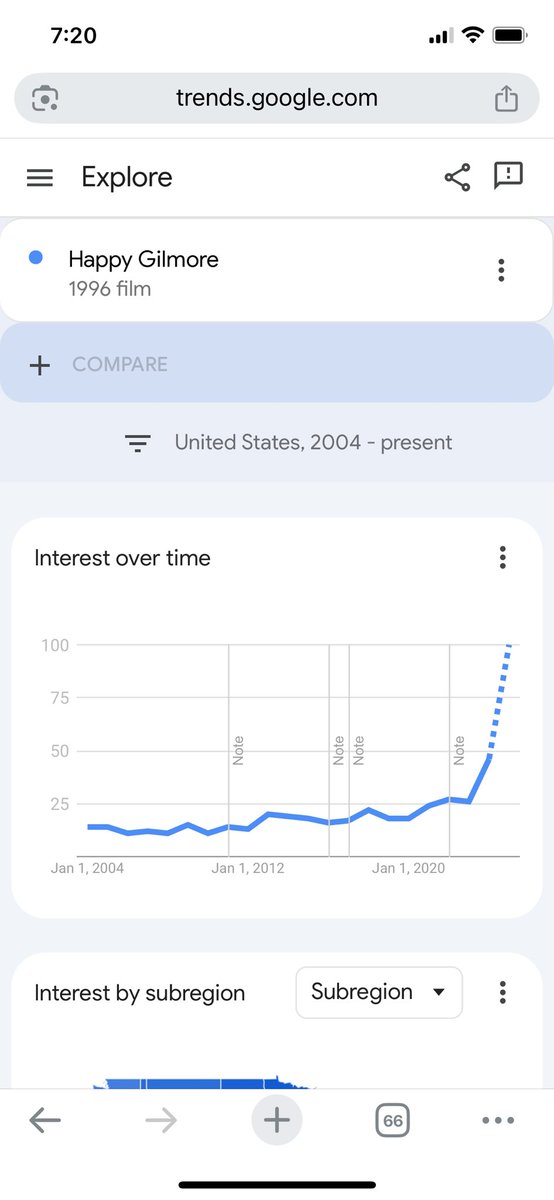
Huge miss by @TheRewatchables not covering Happy Gilmore this week.
@BillSimmons claiming he didn’t like the sequel… but he’s not the target demo.
During slow content summer months when millions of people are desperate for a new podcast, particularly a fun one to listen to with others during a road trip, how did you not see this opportunity??
My favorite part of 2025 thus far is the number of times these three dots have appeared and disappeared over the last ten minutes, as my innocent boomer father grapples with this unfathomable response
From a recent @DigitalSamIAm newsletter—the desire for rational, clearly outlined outcomes often keeps marketers from making better decisions.
In my experience, the companies who pound their chest about being “a data driven company” are often optimizing their campaigns into the ground.
Hi @Disney and @Google, why are you dragging your feet with multi-view options on ESPN and YouTubeTV?
Do you not see the value in doubling or quadrupling your viewable ad impressions for sports fans eager to consume multiple events (or views) at once? What’s the holdup here?
I've spent much of my career yelling at people to use automated (AI-driven) bidding in ad campaigns.
Today, I often find myself outlining the exceptions to my "Join or Die" principles and the risks associated with AI tech when your business or ad account lacks the proper infrastructure.
Here's an updated framework for understanding my never-always-never-never approach to AI bidding:
https://t.co/ceeFqLnrJX
Great WSJ article today about @Starbucks’ with leadership transitions, operational issues, etc.
… but not one mention of the idea that, maybe, US consumers aren’t ready for “Olive Oil Coffee” and “Lavender Lattes.”
Consumers can get strong, overpriced coffee anywhere. For the last 15 years, the brand has won in two categories: customer experience and product innovation.
Specifically, they were the most reliable option for black coffee drinkers and delicious status symbol for sweet flavor seekers.
For a long time, Starbucks was an easy choice for black coffee drinkers, who likely favor convenience and consistency. Their mobile ordering was best-in-class, and their loyalty program offered a ton of perks. Fast, hot, consistent, and justifiable when 10% of visits were comped.
Now, even the smallest coffee shop has an order-ahead function and the Starbucks loyalty program is a shell of its former self.
On flavor, Starbucks long dominated the fall and holiday flavors, and provided innovative summertime cold-drink options. They normalized the PSL, cold foam, the brown sugar shaken espresso, and other options you can now get at Dunkin or even your bagel store.
But this year, after a stellar holiday season, they introduced olive oil coffee, lavender lattes, and some sort of hot and spicy iced tea?
I’d rather die, but thank you for offering.
Starbucks’ operational issues are real concerns, but they seem to be making progress. This should help win back some of the convenience-first (black coffee) customers.
But their latest attempts at product innovation have been a miss. They should cut their losses and find a new way to package and sell customers vanilla, chocolate, and cinnamon flavors.
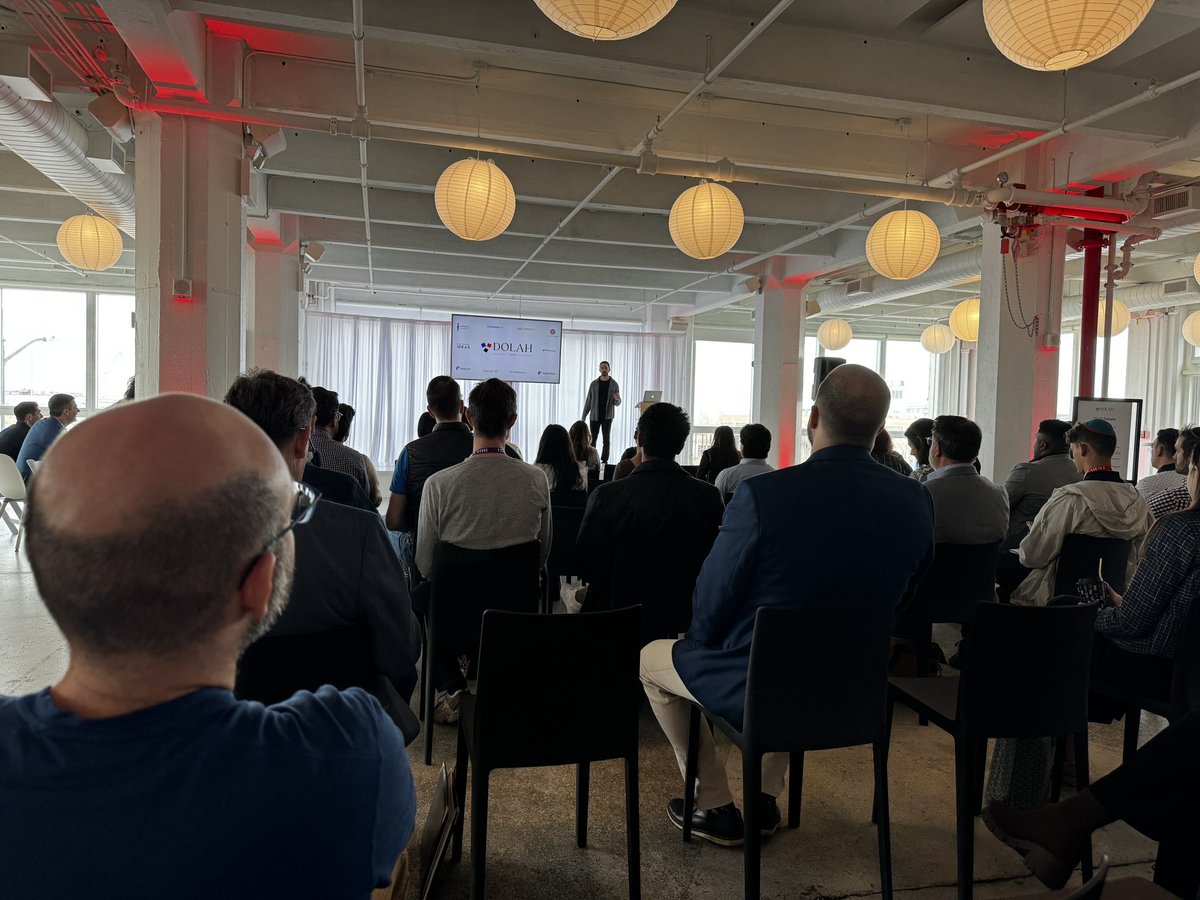
So pumped to be in Brooklyn for the @AdVenturePPC Dolah Conference! First up, @PatrickJGilbert (of Join or Die book fame) with the opening keynote. I’ll be chatting a little later on a forum about PPC careers and the future of PPC management. 🤘
Any other #ppcchat people here? Already ran into @timothyjjensen!
Hey marketing people! Join us in NYC on April 17th at our next DOLAH event!
It’s part conference, part networking event where we share our latest frameworks and case studies for driving success … and how AI fits into every aspect of our work.
Awesome venue, great people, copious laughs, awkward commentary, gluttonous food and drink, and marketing content/insights you won’t find anywhere else.
Four weeks from today! In Brooklyn! Be there!
https://t.co/pr9BNHSQae
(4/4)
Set boundaries with clients and internal team members that Red Tasks (or requests) don’t belong in Slack.
I prefer email… or it can be added to an agenda to discuss on the meeting… or some other method.
I often respond to my team with “Red Task, please email.”
(1/4) @CJSlattery, here’s the solution: Separate “Red” tasks from “Blue” tasks.
Blue tasks are great for to-do lists. They are linear and have a defined start/end—Send a report, write an agenda, install GTM, prepare a PB&J sandwich … all things that are somewhat routine.
Biggest mistake as a business owner this year: bringing clients into slack. Time on comms with clients has increased 4x on average with no actual benefit. Just more talking and less time on accounts.
(3/4)
Slack is great for Blue task management:
“Can you send me that report?”
“When does the promotion start?”
“Do we have your approval to launch these ads?”
“Does Tuesday at 2 work for you?”
“Can you send me a high-res copy of your logo?”
“What’s your developer’s email?”