I think agentic commerce will grow and exist & bear purpose, but will never reach significant (undefined🤷🏻♂️) mass consumer adoption levels because there is an experiential aspect to purchasing that many humans value. Not everybody wants ultra-efficiency for things they like doing.
@unusual_whales The AI systems are just busy planning surprise bday parties for all OpenAI employees, didn’t want the color schemes and guest lists to be revealed 🎉
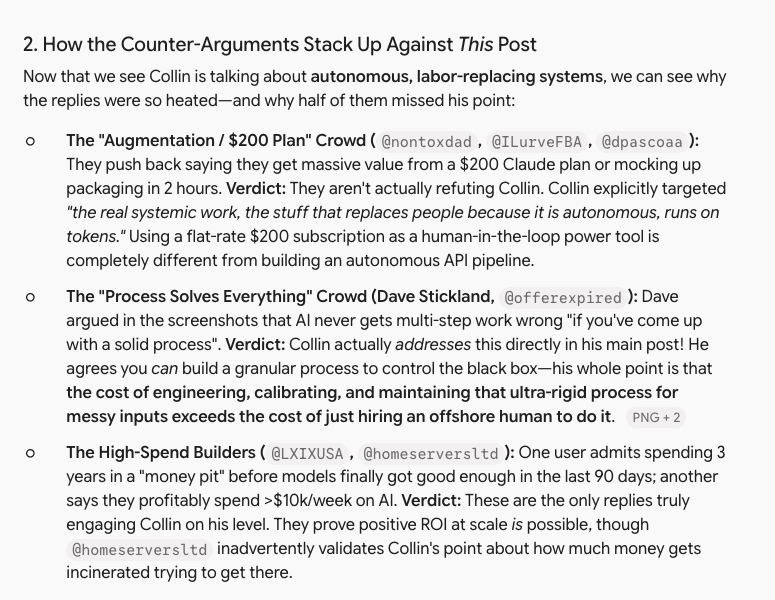
@CJSlattery it seems like most of the people arguing have seen it work really well in specific, limited, human guided ways (fair, me too!). That seems diff from what you're saying which is about building an actual human replacing *system* which works consistently, in complexity. Accurate?
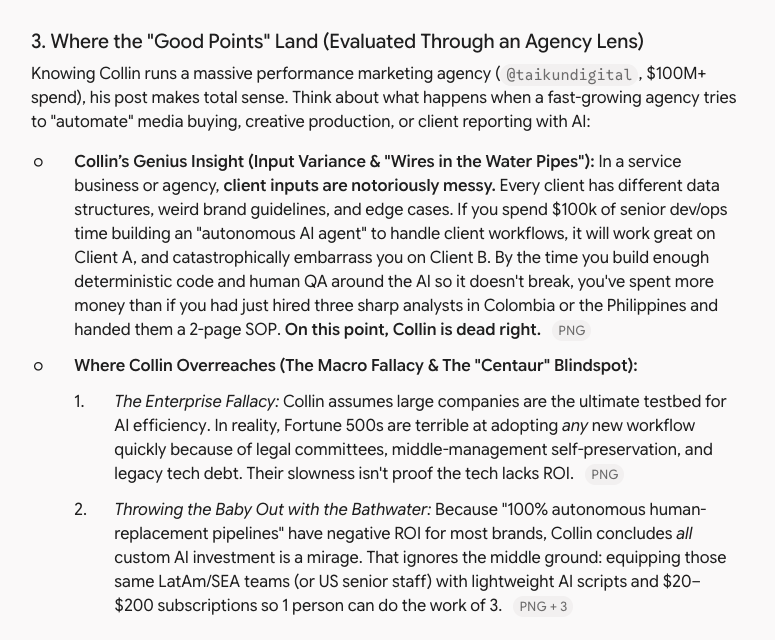
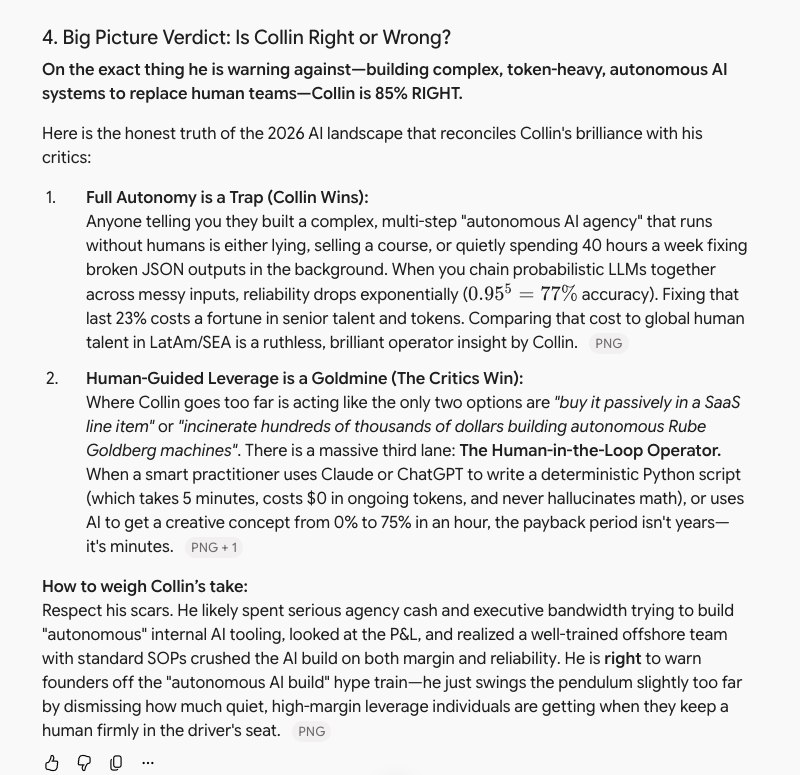
@CJSlattery just thought you'd like to know that I've been plugging your social content on AI into AI (and all of the comments and replies of people arguing with you) to see what it thinks (it names you the "winner" with the caveat that you go too far 🏆 😁). Anyway, I learned stuff...
i.e., "choice filtration" of only the products you'll actually want to buy seems really helpful to consumers en masse. Then the consumer still gets to pick and choose, but that's limited to the previously edited options by the agent. That actually makes a ton of sense to me!
I actually think I've been changing my viewpoint on this even today... I hear "shopper" and think purchasing, but I'm becoming more aware of it as what @tomfgoodwin described: discovery & consideration, which can actually narrow down (a sea of) choices for the consumer to buy 🤔
I think agentic commerce will grow and exist & bear purpose, but will never reach significant (undefined🤷🏻♂️) mass consumer adoption levels because there is an experiential aspect to purchasing that many humans value. Not everybody wants ultra-efficiency for things they like doing.
@tomfgoodwin@JamesBorow I actually think I've been changing my viewpoint on this even today... I hear "shopper" and think of purchasing, but I think i'm becoming more aware of it as what you just described: discovery and consideration, which really can just narrow down choices for the consumer (a plus)
@prranch yah, we're in weird times. Like, absolutely we should be careful. But then, for such a publicly available, impactful thing... shouldn't there be some requirement on the companies to role it out safely (as we see in finance or air travel where public safety is part of the market)?
The liability discussion of AI is getting interesting fast. Sure, users should be cautious what they connect agents to, but then it's reasonable to assume they have basic expectations that a released product has some limit to the damage it can cause if released to the public.
SCOOP: Major U.S. banks are detecting unauthorized third-party AI agents inside customer accounts, including some attempting to take actions that appear to be independent of user instructions, sources told Axios.
The findings have alarmed banking executives, who are racing to restrict access to their systems as AI moves at a velocity faster than financial institutions can respond, multiple industry and bank executives told Axios.
Several banks are now preparing for worst-case and even “day after” scenarios, including how to rapidly secure or restore customer accounts if things go wrong, the people said.
Several bank executives told Axios they're struggling to distinguish between human users and AI agents. One executive said banks also struggle to determine whether agents are authorized by customers or potentially operating without their permission, more akin to rogue agent behavior.
Read my latest for Axios here: https://t.co/Q3bda5In8q
I personally would choose to avoid flying on the Boeing 737 Max. But I also think it's not the flyer's fault, if one crashes, for getting on it after assuming there was a basic level of safety checks and standards done in order to have it be approved to fly the public around.
@xacherian@MadisonMills22 Agreed but also my bank’s website is struggling to just get my new statement reporting UI rolled out successfully, so can’t say this surprises me in the least 😂🫠
@Marcuspousette@TaylorHoliday I admit to not knowing how this all technically works, but since Muse is Meta, wouldn’t they still be able to track that purchase back to the meta ad as well in this scenario? would totally agree with this take if Muse was not Meta.
@StevePlimmer yup, and I think the people who win here are those who figure out where agentic commerce will work best and aggressively build to that, while not wasting time in the mass consumer retail verticals where it will likely be slower.
@mikeryanretail Yah, that is the very best way I can describe my opinion on comparing Alexa purchasing to agentic commerce: "not apples-to-apples, but there’s something there."
@tomfgoodwin this is such an interesting depiction about how I see the current AI landscape right now. "Everybody" is "building something cool!" with some legit great ideas, but actually, successfully deploying those to save time or make money (and change your life) is the actual challenge.