Intelligence must draw on memory. The mind must not simply compile data — as an algorithm now does more quickly than we can — but recall lived experiences, which contain depths of meaning that only the human soul can recognize, and connect more deeply with the goodness of these experiences. Everything that is good begins “with the Spirit” and thus possesses a breath, a dynamism and a sense of communion that, once experienced, are engraved upon the heart. https://t.co/Ij21tkb3qT
In this era of artificial intelligence, it is becoming urgent to distinguish human art from what machines produce. There is an ontological difference, even before an aesthetic one, between art and what a machine can generate through statistical calculation based on millions of images created by others. Algorithms lack the spark of humanity. For this reason, the Church wishes to renew an alliance with artists and cultural institutions to safeguard our humanity.
Artificial intelligence systems do not think, feel, want or understand. Avoid language that gives them human characteristics. This is called anthropomorphizing, when we ascribe human traits, emotions or behaviors to non-human things, such as animals or inanimate objects.
Instead, explain what a system does, how well it performs, who built it and who could be affected by it.
https://t.co/UrgRobU97b
The sibling saints we celebrate today—Martha, Mary, & Lazarus—were close friends of Jesus. They opened their home to Him, & He often stayed there, resting & enjoying their company.
Jesus might not literally come over to our house for dinner. But He desires each of us to make a
We cannot consider #AI to be morally neutral. In reality, every technical tool embodies choices and priorities through what it measures, ignores, and optimizes, and how it classifies people and situations. Ethical discernment cannot be limited to asking whether we are using a system for good or bad purposes. It must also examine how that system is designed and what vision of the human person and society is embedded in the data and models that guide it. #MagnificaHumanitas
VGP Glitch Giveaway Time! Do A Barrel Roll!
Glitch is giving away a copy of Starfox Nintendo Switch 2 and the whole plush crew! Fox, Falco, Peppy, Slippy and her sticker!
RT, Like and Follow VGP to enter for a chance to win.
Winner announced June 25, 2026!
Commencement speaker: I love AI and I hate all of you. They gave me a big check to be here. I love firing people at my big company. I bet none of you would get jobs at my business now that we have AI
(booing)
Commencement speaker: oh? What? What?
What kind of world are we leaving behind? Unfortunately, it is a world distorted by war and war-like language. This pollution of reason comes from the geopolitical sphere and invades every social relationship. Any simplification that creates enemies must be corrected, especially in universities, through complexity of thought and wise exercise of memory.
God does not bless any conflict. Anyone who is a disciple of Christ, the Prince of Peace, is never on the side of those who once wielded the sword and today drop bombs. Military action will not create space for freedom or times of #Peace, which comes only from the patient promotion of coexistence and dialogue among peoples.
Give-away time! 🔁 Retweet for a chance to win a digital copy of Savant - Ascent REMIX for Nintendo Switch™.
We'll be choosing 5 winners tomorrow - we'll PM you the code, so keep your inbox open!
Meanwhile, check out our sweet collab with @SuperRareGames to bring the game to physical on March 26th! #NintendoSwitch #Giveaway
#Peace is not merely the absence of conflict, but an active and demanding gift, which is built in the heart and from the heart. It calls each of us to renounce pride and vindictiveness and to resist the temptation to use words as weapons. This vision of peace has become all the more urgent, as geopolitical tension and fragmentation continue to deepen in ways that burden nations and strain the bonds of the human family.
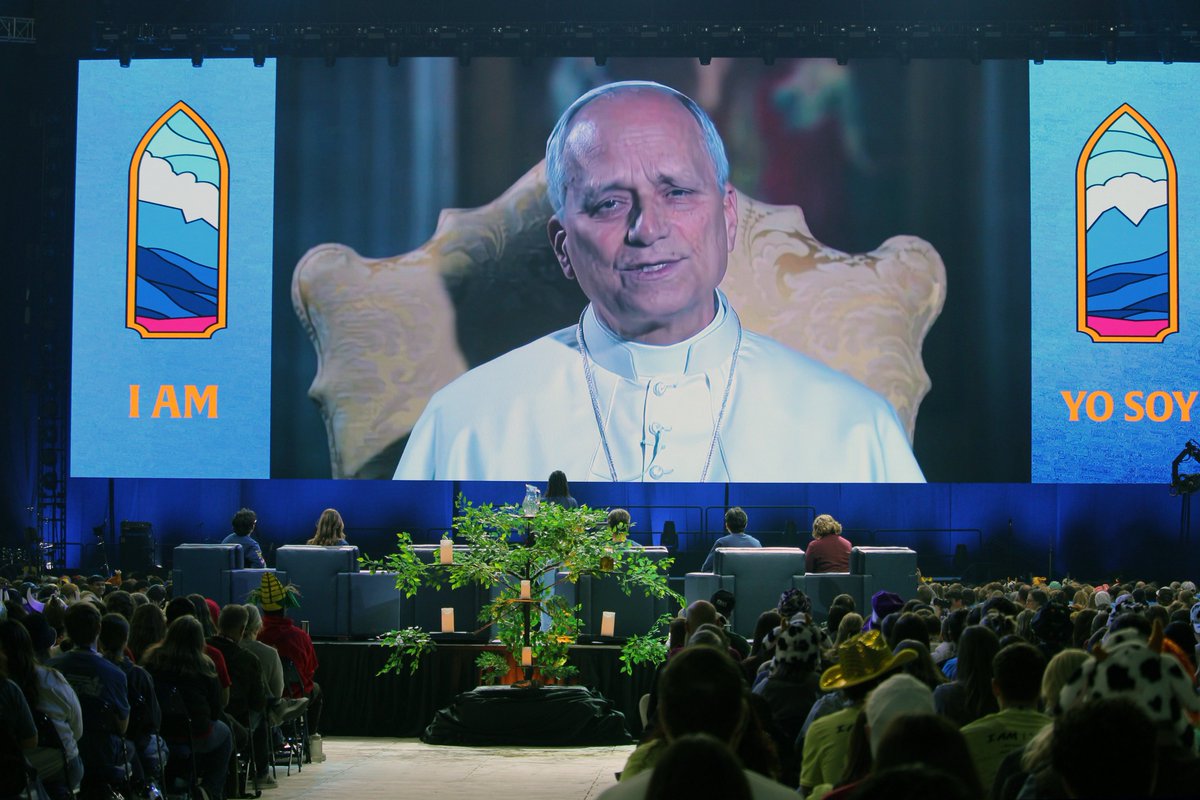
Here is Pope Leo's full answer to the question he received this morning about AI at #NCYC25. It speaks to each one of us, no matter our age, and it will be quoted for years to come.
"Safety is not only about rules. It's about education, and it's about personal responsibility. Filters and guidelines can help you, but they cannot make choices for you. Only you can do that. These years of your life are meant to help you grow into mature adults. Spiritually, this means deepening your friendship with God and becoming more like Him. Intellectually, it means learning to think clearly, to think critically, to examine reality and to search for truth, beauty and goodness. It also means strengthening your will, with God's grace, so you can freely choose what helps you grow, avoid what harms you. Every tool we're given, including AI, should support that journey, not weaken it. Using AI responsibly means using it in ways that help you grow, never in ways that distract you from your dignity or your call to holiness. In your education, make the most of this time. AI can process information quickly, but it cannot replace human intelligence -- and don't ask it to do your homework for you. It cannot offer real wisdom. This is a very important human element: AI will not judge between what is truly right and wrong, and it won't stand in wonder, in authentic wonder, before the beauty, the beauty of God's creation. So be prudent. Be wise. Be careful that your use of AI does not limit your true human growth. Use it in such a way that if it disappeared tomorrow, you would still know how to think, how to create, how to act on your own, how to form authentic friendships. Remember, AI can never replace the unique gift that you are to the world."
@OSVNews 📷: Margaret Murray
Special Pastoral Message on Immigration by the Bishops of the United States
As pastors, we the bishops of the United States are bound to our people by ties of communion and compassion in Our Lord Jesus Christ. We are disturbed when we see among our people a climate of fear and anxiety around questions of profiling and immigration enforcement. We are saddened by the state of contemporary debate and the vilification of immigrants. We are concerned about the conditions in detention centers and the lack of access to pastoral care. We lament that some immigrants in the United States have arbitrarily lost their legal status. We are troubled by threats against the sanctity of houses of worship and the special nature of hospitals and schools. We are grieved when we meet parents who fear being detained when taking their children to school and when we try to console family members who have already been separated from their loved ones.
Despite obstacles and prejudices, generations of immigrants have made enormous contributions to the well-being of our nation. We as Catholic bishops love our country and pray for its peace and prosperity. For this very reason, we feel compelled now in this environment to raise our voices in defense of God-given human dignity.
Catholic teaching exhorts nations to recognize the fundamental dignity of all persons, including immigrants. We bishops advocate for a meaningful reform of our nation’s immigration laws and procedures. Human dignity and national security are not in conflict. Both are possible if people of good will work together.
We recognize that nations have a responsibility to regulate their borders and establish a just and orderly immigration system for the sake of the common good. Without such processes, immigrants face the risk of trafficking and other forms of exploitation. Safe and legal pathways serve as an antidote to such risks.
The Church’s teaching rests on the foundational concern for the human person, as created in the image and likeness of God (Genesis 1:27). As pastors, we look to Sacred Scripture and the example of the Lord Himself, where we find the wisdom of God’s compassion. The priority of the Lord, as the Prophets remind us, is for those who are most vulnerable: the widow, the orphan, the poor, and the stranger (Zechariah 7:10). In the Lord Jesus, we see the One who became poor for our sake (2 Corinthians 8:9), we see the Good Samaritan who lifts us from the dust (Luke 10:30–37), and we see the One who is found in the least of these (Matthew 25). The Church’s concern for neighbor and our concern here for immigrants is a response to the Lord’s command to love as He has loved us (John 13:34).
To our immigrant brothers and sisters, we stand with you in your suffering, since, when one member suffers, all suffer (cf. 1 Corinthians 12:26). You are not alone!
We note with gratitude that so many of our clergy, consecrated religious, and lay faithful already accompany and assist immigrants in meeting their basic human needs. We urge all people of good will to continue and expand such efforts.
We oppose the indiscriminate mass deportation of people. We pray for an end to dehumanizing rhetoric and violence, whether directed at immigrants or at law enforcement. We pray that the Lord may guide the leaders of our nation, and we are grateful for past and present opportunities to dialogue with public and elected officials. In this dialogue, we will continue to advocate for meaningful immigration reform.
As disciples of the Lord, we remain men and women of hope, and hope does not disappoint! (cf. Romans 5:5)
May the mantle of Our Lady of Guadalupe enfold us all in her maternal and loving care and draw us ever closer to the heart of Christ.
https://t.co/wQrOVq8kIJ