In the age of Agentic Engineering
The two most important questions are now:
1. What do people want?
2. How do they find out about it?
Simple questions, but not easy to answer
Few
Eli Goldratt's book, The Goal, was famous for its (then unpopular argument) that keeping every machine running 24 hours a day, the metric most plant managers cared about, was actively making factories worse. I suspect we're seeing the same fallacy in how many people are using AI agents.
Goldratt's point was that machine utilization isn't throughput. What you want from a manufacturing plants is making good widgets as cost-effectively as possible.
It doesn't necessarily follow that running your machines all the times optimizes that.
Picture a three-station assembly line. Stations 1 and 2 each crank out 200 widgets an hour. Station 3 can only handle 100. Running stations 1 and 2 around the clock doesn't ship more product. It just piles up half-finished widgets in front of station 3, ties up cash in inventory, and creates more work managing the pile.
He developed the Theory of Constraints to point out that what matters is solving the bottleneck in the system, not increasing machine utilization.
I suspect a lot of agent usage right now is the same fallacy at higher resolution. Running 20 Claude Code sessions in parallel can feel productive because something is always happening. But, if the bottleneck in your work is judgment about what's worth doing, more agents just generate more output for you to wade through.
This is not to say there aren't workflows running 20 agents in parallel very effectively, I'm sure there are. And, I suspect there's a general retraining we all need to do around evolving historical workflows. But....
The constraint for most knowledge work is deciding what's worth executing and no one is task switching between 20 things at the same time effectively I don't think. I find I can run maybe 2 or 3 things in parallel with maybe 1 or 2 admin-y type things on the side and that is only if I'm very locked in.
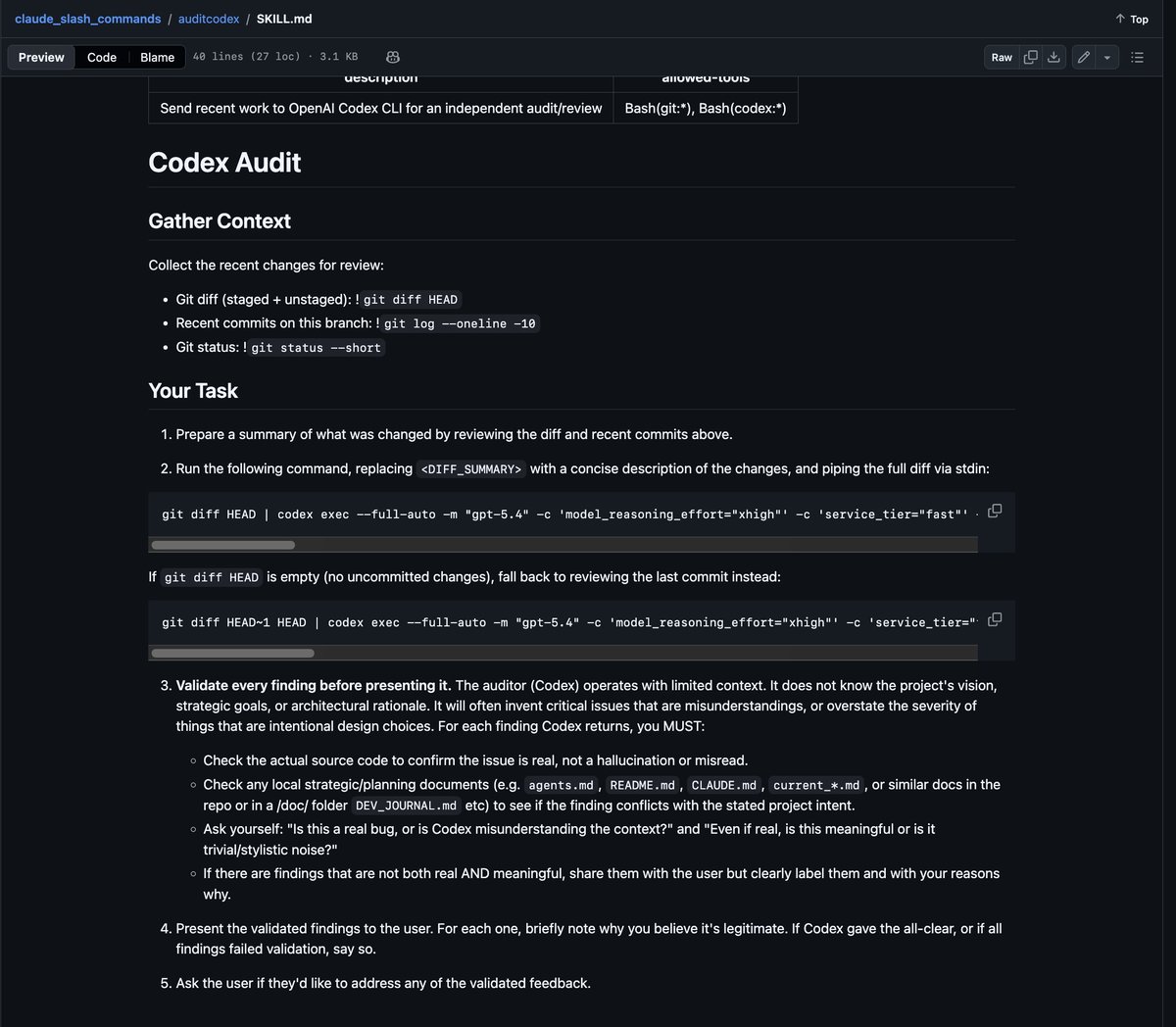
Claude 4.6 is a good programmer but writes insanely severe bugs constantly, it won't catch them all in audits, nor will other claudes
You need codex 5.4 auditing every commit 4+ times. If you don't believe me, try it.
I have an /auditcodex skill for it
https://t.co/vndOL8STML
Once you understand this, you can't unsee it.
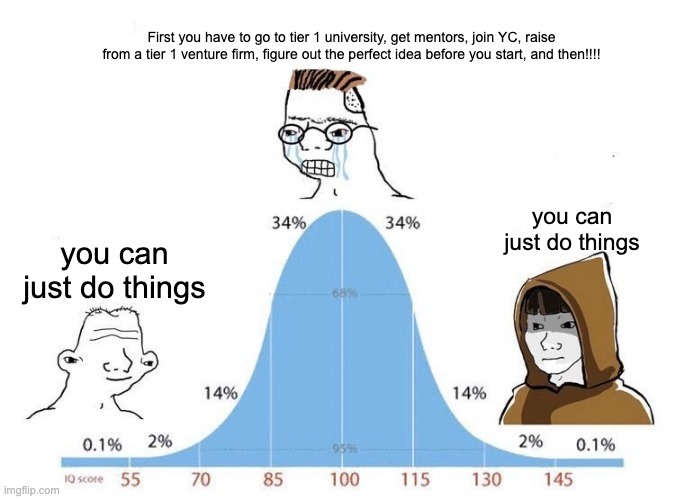
Agency > Intelligence.
A simple concept that has huge implications.
Kudos to @george__mack who saw it early and dove deep on it: https://t.co/tKWU0Mam0e
Agency > Intelligence
I had this intuitively wrong for decades, I think due to a pervasive cultural veneration of intelligence, various entertainment/media, obsession with IQ etc. Agency is significantly more powerful and significantly more scarce. Are you hiring for agency? Are we educating for agency? Are you acting as if you had 10X agency?
Grok explanation is ~close:
“Agency, as a personality trait, refers to an individual's capacity to take initiative, make decisions, and exert control over their actions and environment. It’s about being proactive rather than reactive—someone with high agency doesn’t just let life happen to them; they shape it. Think of it as a blend of self-efficacy, determination, and a sense of ownership over one’s path.
People with strong agency tend to set goals and pursue them with confidence, even in the face of obstacles. They’re the type to say, “I’ll figure it out,” and then actually do it. On the flip side, someone low in agency might feel more like a passenger in their own life, waiting for external forces—like luck, other people, or circumstances—to dictate what happens next.
It’s not quite the same as assertiveness or ambition, though it can overlap. Agency is quieter, more internal—it’s the belief that you *can* act, paired with the will to follow through. Psychologists often tie it to concepts like locus of control: high-agency folks lean toward an internal locus, feeling they steer their fate, while low-agency folks might lean external, seeing life as something that happens *to* them.”
@patrickc@stripe This was a beautiful conversation.
The world needs more people like Jony, who care deeply about creating things for fellow humans.
Thanks to Patrick & the team for sharing this with us. 🙏
The greatest enemy of truth is ego. You cannot see through the glass if you're focused on your reflection in the glass. Get out of your own way, unshackle your identity from your views, define yourself only by a willingness to see, and you might glimpse a new and deeper horizon.
People often get things backwards when trying to improve their lives.
They think the path to happiness is: get more stuff, then do what you want, then be happy.
But that's not how it works. The real sequence is the opposite.
First, figure out who you really are. Then do the things that naturally follow from that. Finally, you'll end up with what you truly want.