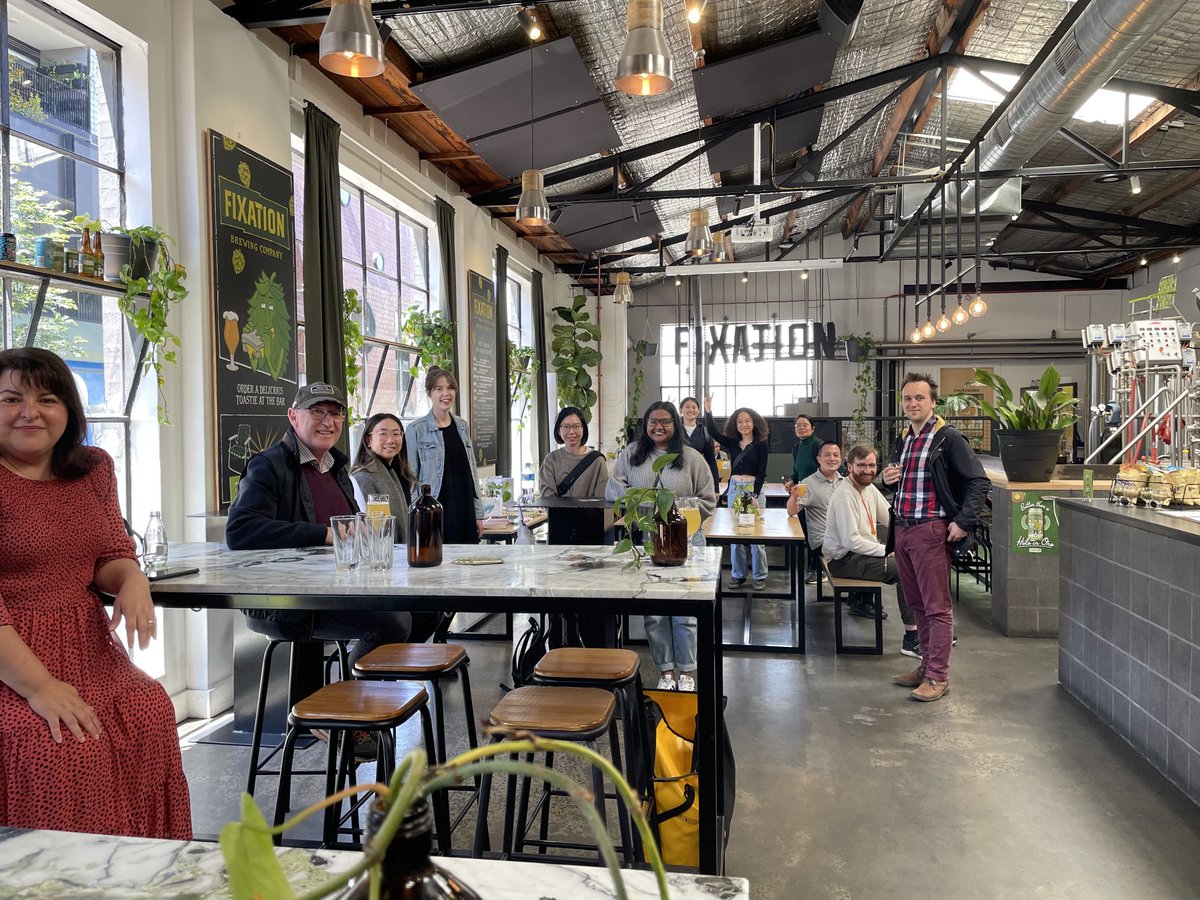
Celebrating the retirement of my mentor and friend @PearsonRick He worked for @PeterMacRes 40% of his life and I worked with him 32% of my life! The best work comes when we work with people we like, trust &. respect. We celebrated @SVIResearch where he started as a PhD student
Have spatial tissue data but not sure what methods or R packages to use for the analysis? Our paper describing SPIAT for spatial analysis and spaSim to simulate tissue spatial data is now out in Nature Communications! @PeterMacRes@PMPostdocs@PearsonLab1 https://t.co/idMuFeuEDF
I'm so grateful for having received an NHMRC Ideas grant to study cancer ecosystems in prostate cancer using spatial technologies and developing new methods. Looking forward to the years ahead! @PeterMacRes@PearsonLab1@PMPostdocs@PCF_Science@gu_onc https://t.co/fDLqdq4OIr
Congratulations to our two Honours students Sirui (Cathy) Weng and Yuxi Cao for presenting their final talks this week. Both have accomplished a lot this year and we are very proud of them! @PearsonRick@anna_t_g@JianKan60899540@elaine_sanij@KeefeChan1
Our work using spatial analysis to investigate the tumour immune microenvironment of prostate cancers with DNA repair mutations is now out in @jitcancer -> https://t.co/m36aKRVcyz
Let's talk about how 😴 can stop some cells forming cancers.
Firstly, many cancers are driven by the inappropriate activation of molecules that control the growth of normal cells.
In this study, @PearsonLab1 showed that the enzyme cystathionine-beta-synthase (or CBS for short) is required to keep sleeping cells asleep rather than turning cancerous.
We are delighted to share our latest work "Cystathionine-ß-synthase is essential for AKT-induced senescence and suppresses the development of gastric cancers with PI3K/AKT activation" published in @eLife today! https://t.co/IpJTQVWlQL /1
Our study highlights the role of CBS in regulating AIS and raises the possibility that manipulating CBS can be a metabolic strategy to target PI3K/AKT-driven cancers. /10