The TurboQuant paper (ICLR 2026) contains serious issues in how it describes RaBitQ, including incorrect technical claims and misleading theory/experiment comparisons.
We flagged these issues to the authors before submission. They acknowledged them, but chose not to fix them. The paper was later accepted and widely promoted by Google, reaching tens of millions of views.
We’re speaking up now because once a misleading narrative spreads, it becomes much harder to correct. We’ve written a public comment on openreview (https://t.co/nDVjmNhATM).
We would greatly appreciate your attention and help in sharing it.
I’m so tired of writing rebuttals to this kind of “lack of novelty” review: “This paper trivially combines A, B, and C, so the algorithmic novelty is limited.”
Technically, most (if not all) robotics papers are convex combinations of existing ideas.
I still deeply appreciate A+B+C papers—especially when they deliver:
- New capabilities: the “trivial combination” unlocks behaviors we simply couldn’t achieve before
- Sensible & organic design: A+B+C is clearly the right composition—not some arbitrary A′+B+C′
- Nontrivial interactions: careful analysis of the dynamics, coupling, or failure modes between A, B, C
- Rehabilitating old ideas: A was dismissed for years, but paired with modern B/C, it suddenly works—and teaches us why
- System-level & "interface" insight: the contribution is not any single piece, but how the pieces talk to each other
- Scaling laws or regimes: identifying when/why A+B+C works (and when it doesn’t)
- Engineering clarity: making something actually work robustly in the real world is not “trivial”
- New problem formulations: sometimes the real novelty is in the reformulation—only under this view does A+B+C make sense.
Maybe worth keeping these in mind when reviewing the next A+B+C paper : )
🥳 3DV2026 is almost there!
📣 We are at 𝗣𝗼𝘀𝘁𝗲𝗿 𝗦𝗲𝘀𝘀𝗶𝗼𝗻 𝟮 𝘁𝗼𝗺𝗼𝗿𝗿𝗼𝘄 𝗮𝗳𝘁𝗲𝗿𝗻𝗼𝗼𝗻!
🤗 Come discuss the opportunities for applying interactive digital twins in robotics!
#3DV2026#AI#ComputerVision#DigitalTwin#Robotics
🎉Our new work, "iTACO: Interactable Digital Twins of Articulated Objects from Casually Captured RGBD Videos" got accepted to 3DV 2026!
💡Existing methods for reconstructing articulated objects often require significant human effort to align all views to the same coordinate system. We instead propose building digital twins of articulated objects from casually captured RGBD videos, which is much more practical and scalable.
💡We therefore propose iTACO, a training-free pipeline for building digital twins of articulated objects from casually captured RGBD videos.
💡At the same time, we build a large dataset for robust benchmarking, which contains 20x more objects than existing datasets.
🪩The full dataset and source code are released. Visit our website for more details: https://t.co/NBTGBDeQVF
📣 𝗘𝘅𝘁𝗿𝗮 𝗯𝗼𝗻𝘂𝘀 𝗳𝗼𝗿 𝟯𝗗𝗩 𝗮𝘁𝘁𝗲𝗻𝗱𝗲𝗲𝘀!
🎉 𝗡𝗼 𝘀𝗲𝗽𝗮𝗿𝗮𝘁𝗲 𝗿𝗲𝗴𝗶𝘀𝘁𝗿𝗮𝘁𝗶𝗼𝗻 𝗼𝗿 𝗲𝘅𝘁𝗿𝗮 𝗳𝗲𝗲 𝗻𝗲𝗲𝗱𝗲𝗱, 𝗷𝘂𝘀𝘁 𝗰𝗼𝗺𝗲 𝗶𝗳 𝘆𝗼𝘂 𝗵𝗮𝘃𝗲 𝗿𝗲𝗴𝗶𝘀𝘁𝗲𝗿𝗲𝗱 𝟯𝗗𝗩!
✨ Come to discuss and share 𝗿𝗲𝘀𝗲𝗮𝗿𝗰𝗵 𝗷𝗼𝘂𝗿𝗻𝗲𝘆𝘀, 𝗶𝗻𝘀𝗶𝗴𝗵𝘁𝘀, 𝗮𝗻𝗱 𝗸𝗲𝘆 𝗯𝗿𝗲𝗮𝗸𝘁𝗵𝗿𝗼𝘂𝗴𝗵𝘀 𝗶𝗻 𝟯𝗗 with leading researchers in this field. Particularly if you are (under)graduate students and want to do great research, definitely come join us!
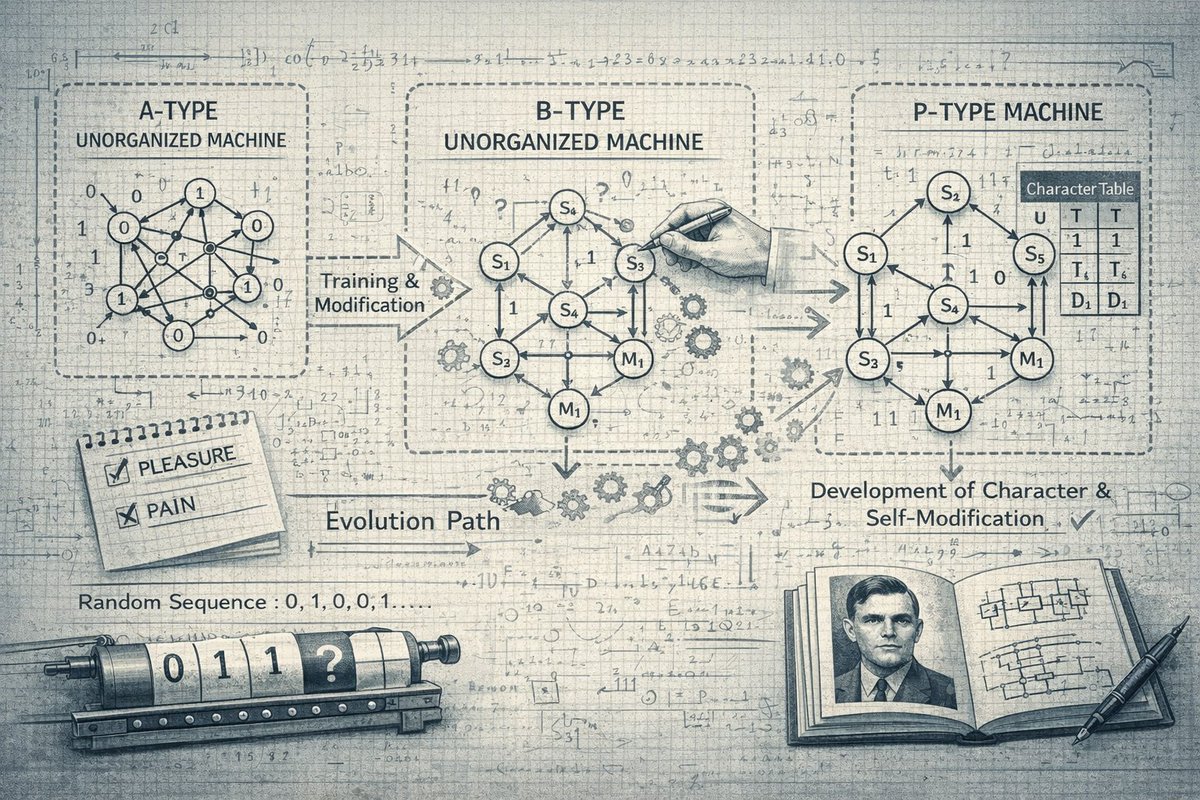
How AI looks like in 1948?
When mentioning Alan Turing, the first thing that comes to mind may be the Turing Test. But before Turing proposed the Turing Test in 1950, he presented an idea of a mathematical model of building AI, which I believe all modern AI approaches we have developed do not go beyond the scope of that model.
I put down my thoughts on this paper in the blog post: https://t.co/4PSS9UPj9S
Also, I highly recommend everyone to read the original paper: https://t.co/oPiEEfGeMW
Enjoy reading and feel free to discuss with me!
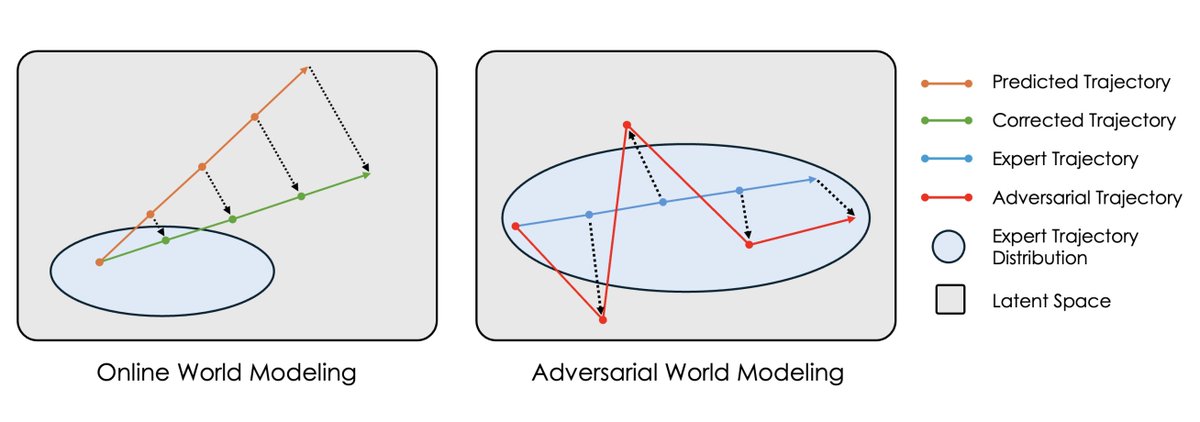
For a long time, Yann LeCun and others believed in gradient-based planning, but it didn’t work very well … until now. Here’s how we did it using incredibly simple techniques. But first, an introduction to gradient-based planning: 🧵1/11
🎉Our new work, "iTACO: Interactable Digital Twins of Articulated Objects from Casually Captured RGBD Videos" got accepted to 3DV 2026!
💡Existing methods for reconstructing articulated objects often require significant human effort to align all views to the same coordinate system. We instead propose building digital twins of articulated objects from casually captured RGBD videos, which is much more practical and scalable.
💡We therefore propose iTACO, a training-free pipeline for building digital twins of articulated objects from casually captured RGBD videos.
💡At the same time, we build a large dataset for robust benchmarking, which contains 20x more objects than existing datasets.
🪩The full dataset and source code are released. Visit our website for more details: https://t.co/NBTGBDeQVF
📢Still struggling with building digital twins of articulated objects in your robotics project? Try our new method for producing replicas of articulated objects with casually captured RGBD videos!! All you need is just an iPhone with LiDAR.
🪩website: https://t.co/jkSJWVNnN1