Filecoin Warm Storage
-$2.50 per TiB / month per copy
-Minimum two independent copies
-Sub-second retrieval via Filecoin Beam
-$0.014 per GiB egress
-Providers continuously verified via cryptographic challenges
-Smart contract-based service agreements
As AI shifts value toward infrastructure and data layers, Palantir grew 70% year-over-year.
Databricks crossed a $5.4B revenue run-rate. The properties that matter most are verifiability, provenance, and sovereignty over your data.
That's what Filecoin was built to provide.
LLM Knowledge Bases
Something I'm finding very useful recently: using LLMs to build personal knowledge bases for various topics of research interest. In this way, a large fraction of my recent token throughput is going less into manipulating code, and more into manipulating knowledge (stored as markdown and images). The latest LLMs are quite good at it. So:
Data ingest:
I index source documents (articles, papers, repos, datasets, images, etc.) into a raw/ directory, then I use an LLM to incrementally "compile" a wiki, which is just a collection of .md files in a directory structure. The wiki includes summaries of all the data in raw/, backlinks, and then it categorizes data into concepts, writes articles for them, and links them all. To convert web articles into .md files I like to use the Obsidian Web Clipper extension, and then I also use a hotkey to download all the related images to local so that my LLM can easily reference them.
IDE:
I use Obsidian as the IDE "frontend" where I can view the raw data, the the compiled wiki, and the derived visualizations. Important to note that the LLM writes and maintains all of the data of the wiki, I rarely touch it directly. I've played with a few Obsidian plugins to render and view data in other ways (e.g. Marp for slides).
Q&A:
Where things get interesting is that once your wiki is big enough (e.g. mine on some recent research is ~100 articles and ~400K words), you can ask your LLM agent all kinds of complex questions against the wiki, and it will go off, research the answers, etc. I thought I had to reach for fancy RAG, but the LLM has been pretty good about auto-maintaining index files and brief summaries of all the documents and it reads all the important related data fairly easily at this ~small scale.
Output:
Instead of getting answers in text/terminal, I like to have it render markdown files for me, or slide shows (Marp format), or matplotlib images, all of which I then view again in Obsidian. You can imagine many other visual output formats depending on the query. Often, I end up "filing" the outputs back into the wiki to enhance it for further queries. So my own explorations and queries always "add up" in the knowledge base.
Linting:
I've run some LLM "health checks" over the wiki to e.g. find inconsistent data, impute missing data (with web searchers), find interesting connections for new article candidates, etc., to incrementally clean up the wiki and enhance its overall data integrity. The LLMs are quite good at suggesting further questions to ask and look into.
Extra tools:
I find myself developing additional tools to process the data, e.g. I vibe coded a small and naive search engine over the wiki, which I both use directly (in a web ui), but more often I want to hand it off to an LLM via CLI as a tool for larger queries.
Further explorations:
As the repo grows, the natural desire is to also think about synthetic data generation + finetuning to have your LLM "know" the data in its weights instead of just context windows.
TLDR: raw data from a given number of sources is collected, then compiled by an LLM into a .md wiki, then operated on by various CLIs by the LLM to do Q&A and to incrementally enhance the wiki, and all of it viewable in Obsidian. You rarely ever write or edit the wiki manually, it's the domain of the LLM. I think there is room here for an incredible new product instead of a hacky collection of scripts.
The biggest names in digital assets are converging in Miami this May.
CoinDesk Live will be on the ground with @Hedera at #HederaCon2026 on May 4th at the Faena Forum. Over 90 speakers will discuss RWA tokenization, AI and the infrastructure powering the next financial system.
Over 1 million artifacts from groups like the Digital Public Library of America, Prelinger Archives, and Earth Species Project are stored on Filecoin.
When data matters, storage needs to do more than hold files.
Data is distributed across providers with a verifiable history.
AI teams rarely notice egress, storage looks cheap, then data starts moving across clouds and regions, and the bill changes.
A 10TB dataset can turn into tens of terabytes of transfer each month.
@AkaveCloud, built on Filecoin, removes that dependency on per-GB transfer math.
Research and compute marketplaces can run on verifiable infrastructure.
Scientists can submit simulations, model training, or data labeling jobs to Filecoin Onchain Cloud.
When proofs of computation post onchain, payment settles automatically, and work links to the proof.
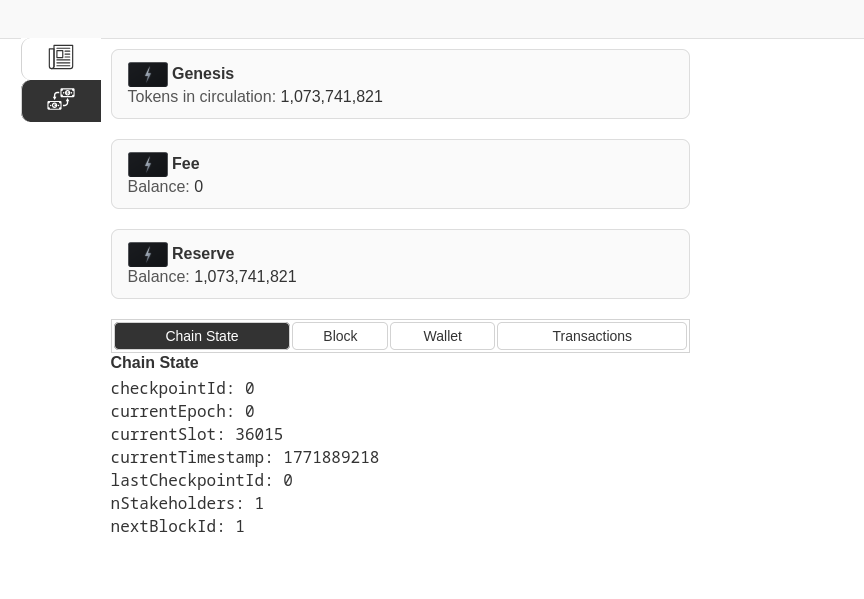
Our time chain is getting into shape.
Here is the architecture:
It is a decentralized blockchain with centralized coordination. Upon loss of the main node, any other node can take over as the new main node. The takeover process is semi-automatic, requiring human input to decide which node steps up.
The main node is strictly forbidden to produce any new block. It serves as the arbitrator to determine chain sequencing to avoid chain splitting.
As a truly decentralized social network, user has full control of their own data. To get a common agreement on user’s posting history, a decentralized ledger is essential for time-stamping.
Working on our own ledger just for this purpose: a time chain.
https://t.co/6SATWjO1vX
As a truly decentralized social network, user has full control of their own data. To get a common agreement on user’s posting history, a decentralized ledger is essential for time-stamping.
Working on our own ledger just for this purpose: a time chain.
https://t.co/6SATWjO1vX
We're happy to share that Anonymous Chromium Developer is now sponsoring Ladybird with a generous donation of $5,000! 😃
Thank you so much for supporting our mission! For the open web! 💙
.@storachanetwork works with @ionet to connect decentralized storage and decentralized compute.
Storacha relies on Filecoin for storage, while io[.]net supplies compute.
Workloads that require persistent data and execution span independent networks.
As Filecoin grows, so does the need for governance that scales with it
Michael Matto, Head of Governance at Filecoin Foundation, introduces the Constellation Program and the principles guiding governance reform.
Watch the full overview: https://t.co/hXWsAoZfnH
Synapse SDK gives a simple JavaScript path into Filecoin Onchain Cloud.
Apps can upload, fetch, and pay for storage via high-level APIs. Synapse runs in Node.js or a browser, so dApps can treat storage and payments as first-class code from day one.
.@Cardano developers that build with @blockfrost_io already have the option to store data on Filecoin.
Blockfrost archives IPFS gateway data on Filecoin, which adds redundancy through cryptographic hashes and onchain storage proofs, and reduces reliance on a single storage.