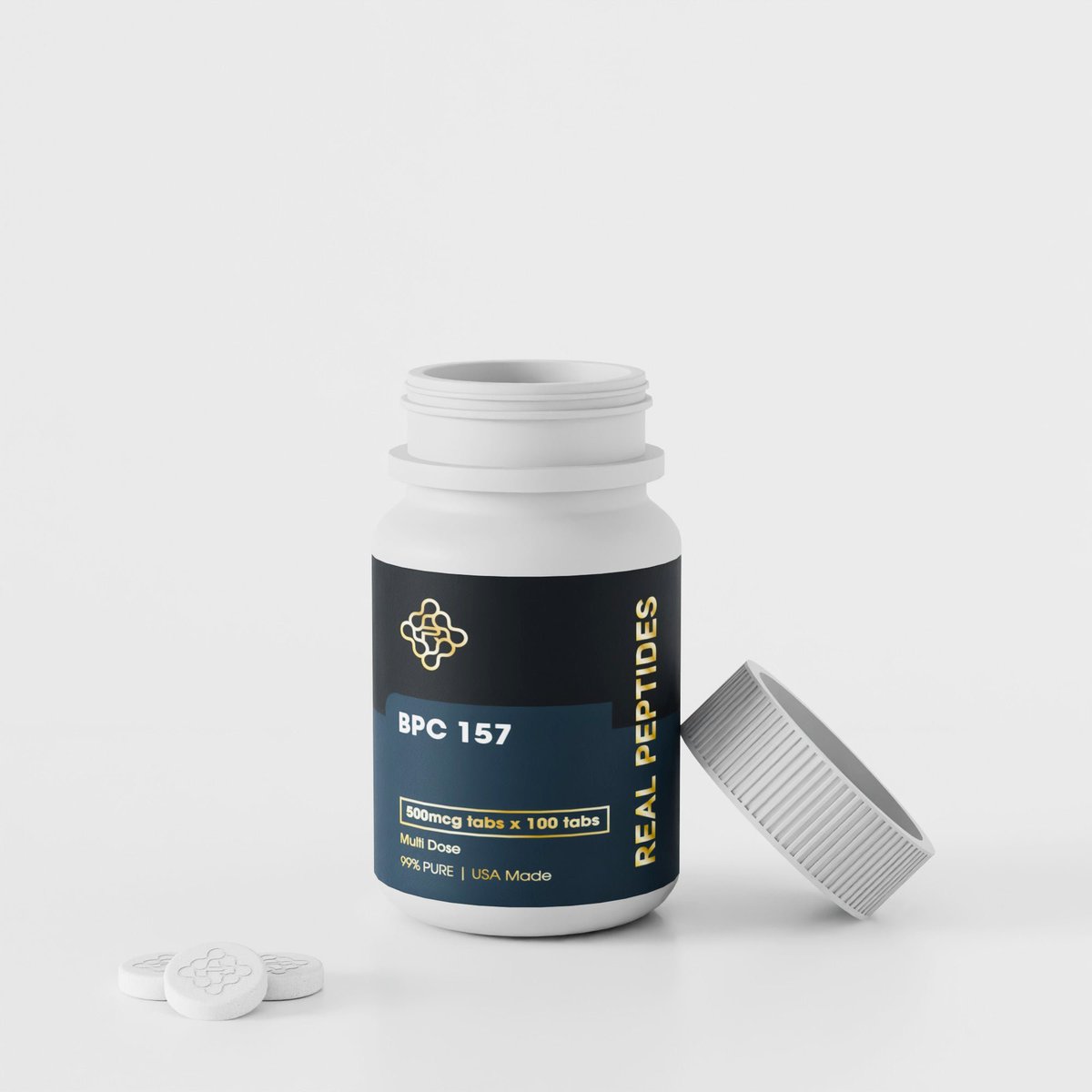
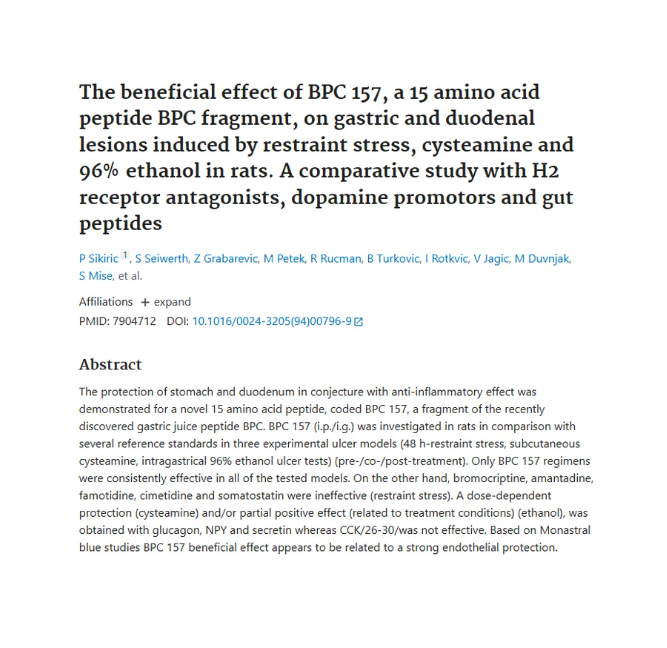
Many people using BPC-157 are doing so for the wrong reasons.
They’ve heard it can help heal tendons, fix injuries, and repair joints, which it certainly does.
However, if you’re ignoring its impact on your gut, you’re missing out on something much bigger.
BPC-157 is a peptide made of 15 amino acids, derived from a larger compound known as a “body protection compound” that was initially discovered in human gastric juice.
This is the same harsh environment your stomach uses to shield itself from acid, enzymes, and daily irritation.
In simpler terms, BPC-157 is based on a peptide system tied to the body’s own protective biology.
The versions found in research and supplements are typically synthesized, but the idea comes from a compound first identified in the human gut.
This is part of what makes oral BPC-157 so intriguing.
What many people fail to realize about the gut is that it’s only one cell thick, held together by proteins known as tight junctions.
Animal studies indicate that BPC-157 directly boosts these tight junction proteins (occludin, claudin, ZO-1), effectively reconstructing the gut wall’s structure at a molecular level.
You can think of tight junctions like the seals between tiles. When those seals break, bacteria, toxins, and undigested food can leak right into your bloodstream.
And the damage doesn’t just stay in one place.
Those toxins can cause systemic inflammation that can reach the brain, leading to symptoms like brain fog, low mood, poor memory, and disrupted sleep.
Your gut produces 90% of your body’s serotonin, and studies show that BPC-157 directly influences serotonin and dopamine pathways, addressing both sides of the gut-brain connection simultaneously.
That’s why many people experience an improved mood and clearer thinking from a compound they originally started using for a stomach ulcer.
It’s being researched as a stable gastric peptide that could impact tissue protection, gut integrity, inflammation, and repair signaling.
The animal research is also quite promising.
In animal studies, BPC-157 has shown better results than famotidine (a top prescription medication for ulcers), demonstrating significant healing in just a few days.
When paired with ibuprofen, it nearly eliminated the stomach damage typically linked to those drugs.
Gut fistulas were completely closed in all treated animal patients, while those who didn’t receive treatment continued to worsen.
A thorough review done in 2025 by the American College of Gastroenterology looked at 36 studies and found improvements in IBD, ulcers, and injuries caused by NSAIDs.
This is why BPC-157 is way more than just a “joint peptide.”
Its origins, stability, and much of the research all trace back to the gut.
And when you realize how closely the gut is tied to inflammation, mood, sleep, and overall body repair, the bigger picture starts to make sense:
BPC-157 might not only assist the body in healing from injuries.
It could also help establish the internal environment that recovery relies on.
NOTE: This is not medical advice. Peptides are intended for research purposes only, not for human consumption.
Starting a 30 day challenge tracking my progress using peptides.
Started last month but wasn’t too consistent and wasn’t tracking it.
Will be using a great new app I found by @PepIntelligence where everything is in one place and easy to track.
Stay tuned for tomorrows report🫡
Ghostfeed CLI agent just one shotted this creative for our enterprise client - @PepIntelligence
Its currently in Beta, not open to the public, we are testing it rigorously to make sure it a banger at launch.