Why isn't Nigeria rich?Bad government? Corruption?
Or is there a more uncomfortable explanation: the way we think about money itself?
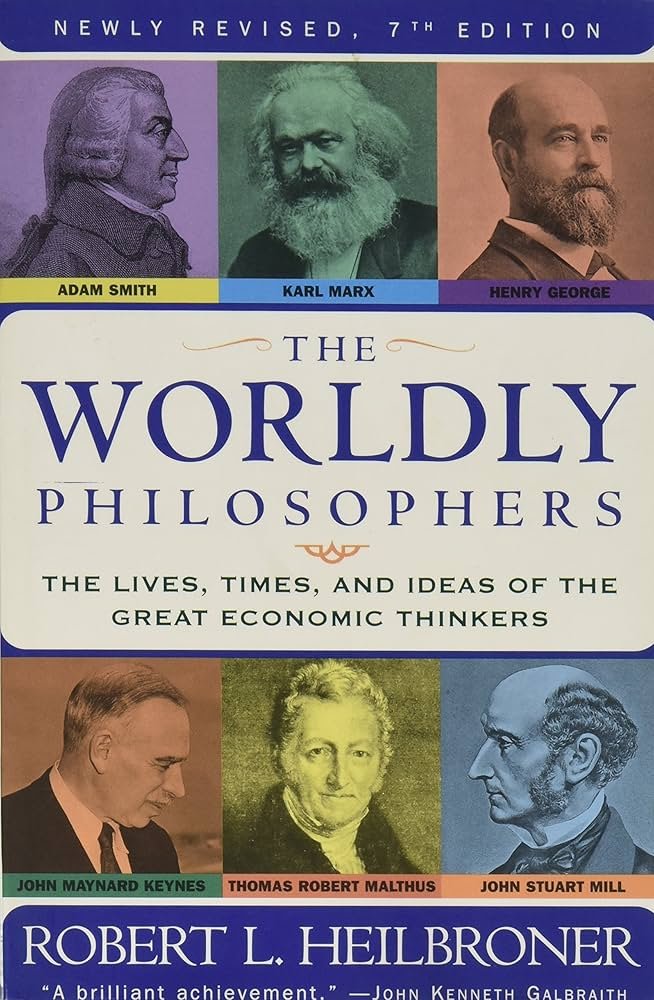
In my new article, I explore why some societies turn money into capital,while others struggle .
Find the link here: https://t.co/FVIMeohKMp
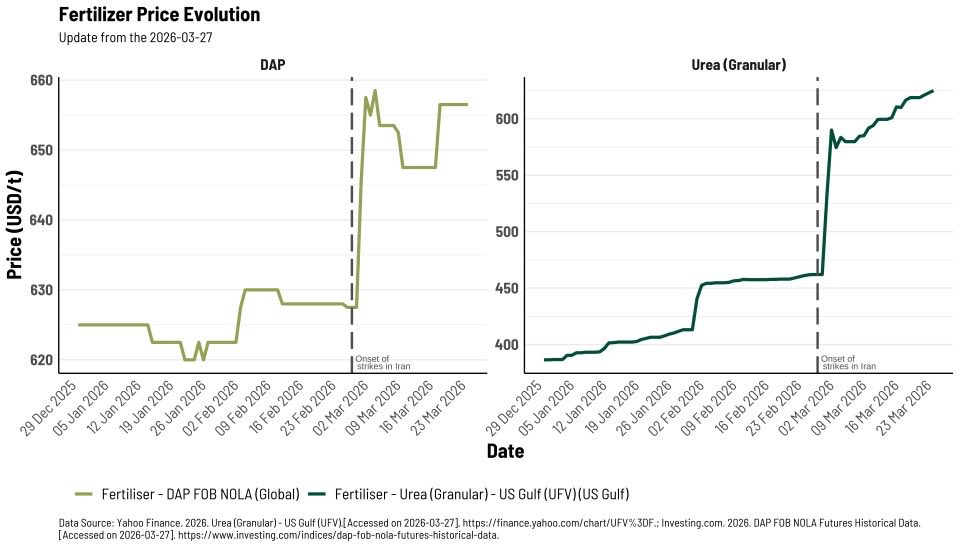
Smallholders in Africa already underuse fertilizer due to high costs. Even small price increases can cut application, lower yields & raise food insecurity. Example: Kenya is exposed w/ high import bills & 40% reliance on Gulf fertilizer. Nations & farmers need urgent support.
Date - 04/02/2026
CBN NFEM rate - N1,358.28/$
Customs FX rate - N1,451.63/$
Parallel Market Rate - N1440/$
In a clean system, the Customs FX rate should track the official window, perhaps with a small lag not overshoot the parallel market.
Yet here, Customs is:
+6.9% above NFEM
₦12 above parallel
That’s not accidental. It appears to be deliberate and here is why it is a concern to me.
When Customs prices FX above both NFEM and the parallel market, it’s quietly admitting two things:
- It doesn’t trust the official rate to hold and,
- Importers are sourcing or will ultimately source FX at worse-than-NFEM prices
So Customs hedges. Revenue is protected. Importers carry the risk.
The implication?
1. The introduction or reintroduction of multiple FX regime. Call it a third FX regime. Even if unintentionally, we now have:
- NFEM for some transactions
- Parallel market for others
- Customs FX rate as a third, punitive benchmark.
This undermines the entire narrative of FX unification.
2. Imported inflation pressure is back. A higher Customs rate means:
- Higher landed costs
- Higher VAT base
- Higher working capital needs
Even if parallel FX softens, prices won’t adjust downward, because Customs has already locked in a higher cost base. This is inflationary especially for manufacturing inputs, FMCG
and Capital goods.
3. And finally, it sends a credibility signal problem. FX policy is not just about rates, it’s about who believes which rate.
When a core government agency prices FX above the market, it tells investors and traders: The state itself does not fully believe the official FX narrative.
Which leaves us with the question - If government agencies don’t believe the official rate, why should the market?
Cc @proshare@OlufemiAwoyemi@cenbank
🚨 New Publication Alert...
Our latest Policy Memo posits that the co-existence of local self-sufficiency and high prices of cement in Nigeria arises from failure of competition, not cost structure; and is at the expense of consumers and the country.
https://t.co/rwVkcwb67j
I wrote about Nigeria’s bungled CPI rebasing in April 2025. Today, I am writing about the corrections the NBS has made. I raise another big issue that is unresolved with big implications in January and February 2026.
The NBS Backtracks, by @Adheydayor https://t.co/296tfdkNvq
When the Old Bodija explosion ripped through Ibadan in January 2024, Nigerians focused instantly on the tragedy. Yoruba states like Oyo Empire mined gold in Iseyin & Iganna. The Anka–Yauri–Iseyin (AYI) Complex is Nigeria’s most powerful illegal gold corridor, linking Zamfara bandit mines, Kebbi smuggling routes, and Oyo’s historic gold fields into a single criminal extraction economy. The AYI Complex exists because all three locations sit on the same ancient gold-bearing rock system, Tomorrow by God’s infinite mercies I’ll dive deeper into the AYI world in Nigeria 🇳🇬.
Today I’ll concentrate on Oyo and Mali’s 🇲🇱 connections, beneath the headlines lay a deeper story, one that stretches back decades into Oyo State’s forgotten mining history, it migrates across the Sahel, and converges in the quiet arrival of Malian artisanal miners, whose expertise would eventually feed an underground economy hiding in plain sight. To understand how water-gel explosives ended up in a residential home, you must understand the journey of a people, of a trade, and of a state that never truly understood the mineral wealth sitting beneath its soil. Most Nigerians would not list Oyo among the country’s mining powerhouses. And yet, long before oil redefined national priorities, the Yoruba hinterland, particularly Oyo north, played a steady, often overlooked role in West Africa’s mineral landscape.
In the early 1900s, British geological surveys documented gold traces stretching across, Saki, Iseyin, Igboho, Iwere-Ile, Ilero and Olorunsogo. Colonial authorities focused more aggressively on cocoa and cash crops, but they noted the presence of “native gold panning communities” in riverbeds and shallow pits, and all the way to today in Ibadan (hidden gold offices in Bodija, Dugbe, Mokola).
By the 1940s–60s, pockets of artisanal miners, mostly Yoruba farmers supplementing their income, were active in Oyo, Osun, and Kwara. Unlike the formal mining fields of Plateau or Enugu, Oyo’s deposits were smaller, scattered, and largely overshadowed by agriculture. When Nigeria shifted to oil in the 1970s, whatever rudimentary mining governance existed in Oyo dissolved entirely. Mines were abandoned, records vanished and oversight evaporated. For decades, Oyo’s gold slept under soil and silence.
The Modern Rediscovery
It wasn’t until the 2010–2020 wave of geological mapping that Oyo’s forgotten gold belts resurfaced. Suddenly Oke Ogun, long considered a food basket, became a mining frontier. Poverty and unemployment in rural communities drew locals into small-scale mining again. But something else happened. Oyo’s rediscovery coincided perfectly with the displacement of tens of thousands of artisanal miners from Mali and Burkina Faso and that collision changed everything. Across Mali and Burkina Faso, artisanal gold mining is not a side activity, it is culture. Generations grow up understanding rock veins, groundwater behavior, shaft depth, blasting ratios, and gold washing. These are inherited skills, not learned from textbooks. it is a birthright. In towns like Kéniéba, Yanfolila, Kangaba, and Sikasso, boys grow up with shovels, blasting wires, and gold pans.
Their expertise is generational, a knowledge system more refined than anything Nigeria teaches formally. Then came the wars. Mali’s northern goldfields became battlegrounds. Burkina Faso’s mining towns fell under insurgency. Artisanal miners fled, not as refugees with paperwork, but as craftsmen with tools, instincts, and networks. They moved toward stability, opportunity, and silence. Oyo offered all three.
By the late 2010s, Malian miners began appearing in villages around Saki, Iseyin, Ilero, and Olorunsogo. Their arrival was not dramatic; it was quiet and methodical. They brought, decades of technical blasting experience, knowledge of hard-rock gold extractions read more here pls https://t.co/lwcxsXuV12
Many people foolishly think availability is what is most important, but it is not.
Availability at competitive prices is what is valuable.
The consensus is always "let's have it first" but it's a stupid plan because you end up net poor.
If you're selected for the second cohort of The https://t.co/fC0pNfV3wq Fellowship, you get:
- ₦500k/month stipend
- At least ₦1m in project support
- Access to our archives and tools
- And more.
Applications open till October 31.
Have you applied?
https://t.co/KWHveyy6h4
We’re thrilled to celebrate #Rsif scholar Dr. Joseph Manzvera for successfully defending his PhD on Economic Valuation of Weather and Climate Services for Maize Farmers in Zimbabwe and graduating from the University of Ghana! 🌾
I get bored talking about it these days but as someone who has called quite a number of companies BEFORE they went up (a feat I think @Rufyb is one of the best at) and someone who identifies great companies for a living: here is what I think.
These polarising conversations about the impropriety of speaking ill of the dead are merely a reflection of the moral pluralism that governs us. We are a people of clashing orientations, but I believe these contrasts should not invite the chaos of perspectives and the name-calling that often follows.
For the religious, the line between public service and posthumous accounts of those entrusted with leadership will always be an uncomfortable subject. The contradiction, however, lies in expecting silence on the legacy of a person whose decisions influenced the welfare of society, whether for good or bad.
To submit yourself to public service is to subject yourself to a lifetime of scrutiny. I think supporters of public servants need to come to terms with this. While it is noble to draw the line when even your worst adversary passes on, we must understand that our moral code is not the law of the universe.
A public servant is not a private citizen, and so his story does not end with his demise. He is already a character in the story of his society, and whether you like it or not, his place can never be vacant in the records of his nation.
Your religion’s aversion to speaking ill of the dead does not mean that lies should be told about them, or that their chapters should be erased. It’s also not a denial of their actions. It simply means that the deceased has gone on to face the highest form of judgment. This is a complex issue because not everyone believes in life after death, so now you understand those who pursue earthly judgment for those who had wronged them.
Two truths can exist side by side. There is the truth of those who have outsourced final judgment to God, and that of those who refuse to be bound by the sentimentality of never speaking ill of the dead. In the end, it is the truth of the latter that sparks debate on the legacy of past leaders, whether they are remembered as heroes or villains. This should also remind discerning future leaders to live in ways that earn them favourable eulogies when their Creator calls them home.
We should not live with the confidence that society will forgive us when we are gone. We should strive to be fair in all our dealings and ensure that the imperfections we leave behind are unintentional, rather than the outcome of a deliberate resolve to harm those we were entrusted to protect.
These are the issues, Olumide. These are the issues.
You borrow money, spend on refineries that we all know are no longer viable. The refineries were generating negative cash flows (while 'workers' continued to get paid), and fictitious capital expenditures were incurred.
Now, there is zero output. Zero productivity, but the fiscal deficit is now higher.
You have now injected liquidity into the economy (increased borrowings) without a corresponding increase in output (no working refinery). We have been doing this for years.
So, let us ask ourselves: Do you really think there are no implications?
Let us ask ourselves: With liquidity injected into the system without a corresponding value, do you genuinely expect macroeconomic stability?
Do you know who is paying the price for the anomaly? You and I.
For every Indomie (70g) we buy for ₦300 today, for every bag of rice we buy for ₦60k+ today, for every FX we buy for ₦1.5k today, the above anomaly is the reason.
These things happen quietly, and instead of everyone collectively asking questions, probing these things, and demanding accountability, we instead address non-issues. At the end of the day, we see people parrot that 'economic theories don't work in Nigeria'.
How do you, as a country, have scarce resources and then decide to spend like this?