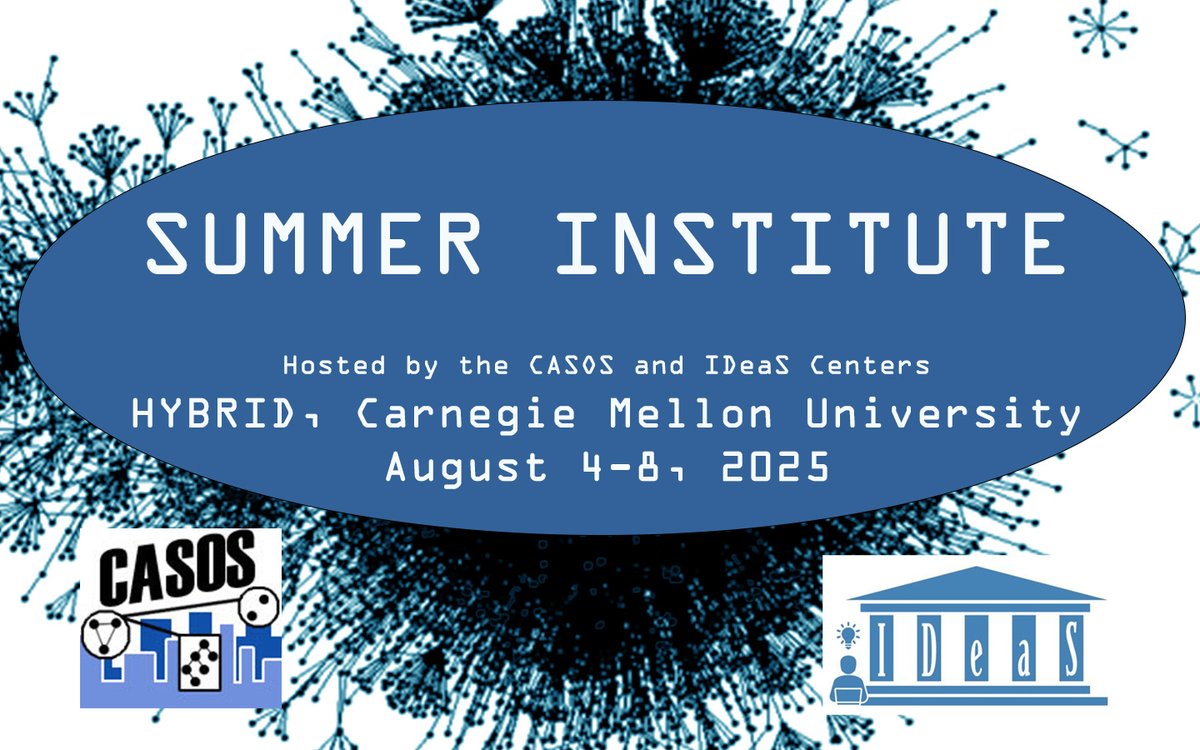
📢 Our annual Summer Institute training workshop has been rescheduled to August 10–14, 2026. Join us for a week of learning, collaboration, and connection.
Registration is now open!
🔗 https://t.co/SCyWBivycA
We hope you can join us!
📢 Call for Papers: The 2nd Workshop on Misinformation Detection 🔗Details: https://t.co/HBqN6cFLLp
📅 Submission Deadline: March 24
Join us at ICWSM 2026 on May 26, 2026, in Los Angeles, CA!
@icwsm
📢 Call for Papers: Workshop on Misinformation Detection
We welcome papers focusing on multidisciplinary collaboration in misinformation detection.
📅 Submission Deadline: March 24, 2026
📅Notification: April 15, 2026
🔗Details: https://t.co/G9HuYUlOZv
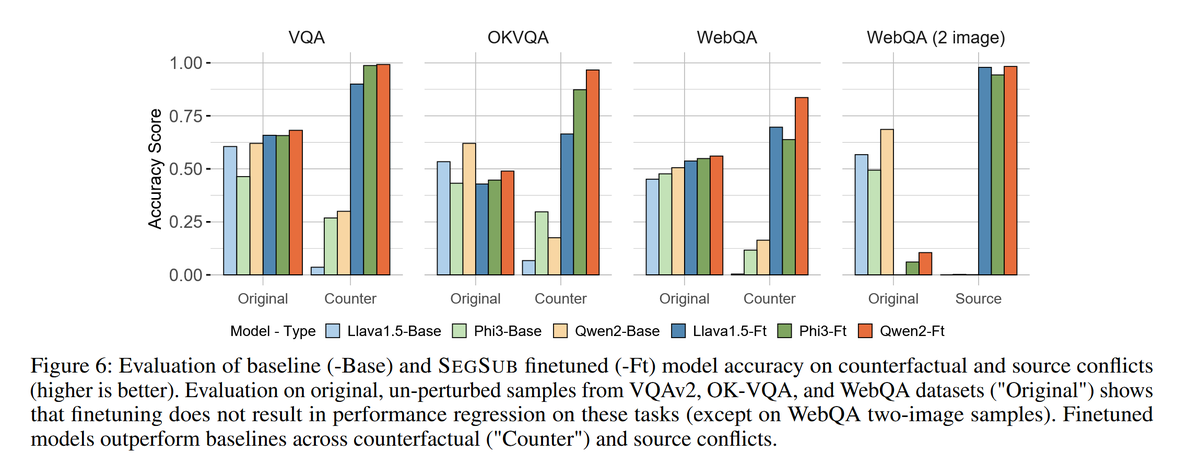
Last week, I presented my recent paper on memorization and hallucination in LVLMs at
@l2m2_workshop#ACL2025NLP.
TLDR: model memorization may be more prevalent over image sources vs. text! Details here: https://t.co/kNzT2VtkFd
Just wrapped up my first IC2S2 conference with a talk on our ongoing research into how broadcasting companies influence editorial decisions in news outlets.
Check out our News Guessing game at https://t.co/IjWIrmBrDR and contribute to our research on media ownership!
That’s a wrap on IC2S2’25! 🎉 Thank you for an unforgettable week of ideas and discussions. Congratulations to our award winners, and safe travels home. Mark your calendars: #ic2s2 ’ 26 heads to Burlington, Vermont, in the US. See you next year!
Excited to have two workshop papers and one main conference paper that I've been involved in being presented at @icwsm! Thanks @CatherineKing77 and @ZupEvan for letting me tag along. Details below.
Will AI revolutionize Network Science? Come and find out at this year's CASOS and @IDeaSCMU Center's Summer Institute! Registration is still open for the week-long event August 4-8th at Carnegie Mellon University. Find out more at https://t.co/QFgN7qFqos
Check out the full paper here, which is upcoming at @icwsm MisD workshop (see you in Copenhagen): https://t.co/s5eiyNnYvN
Thanks to my co-authors!
@nikitharao006
Preprint! Vision-language models like GPT-4o fail to identify multimodal knowledge conflicts and frequently hallucinate on counterfactual samples. Try out the batsman example below (promt = "what is he holding?").
Our recent paper on source credibility and link spam in Webgraphs got featured on the @CommonCrawl site after being included earlier this year in a special issue on responsible recommender systems in TIST. Check it out here: https://t.co/ip6quhfqMB
@ZupEvan
We also discussed the possibility of building weighted Webgraphs using the open source tools that CommonCrawl develop. You can checkout the GitHub issue here: https://t.co/kOzuw5E1KN
The 2025 Summer Institute from Aug 4-8 at CMU. The introduction to network science will use AI to generate synthetic network data, label groups & identify missing links in networks. @IDeaSCMU More info: https://t.co/FHBaDgj35a
Center Director Kathleen M. Carley is interviewed by Sophie Perryer for the Logically Facts article entitled, "The 'pink slime' sites sharing sanctioned Russian content with readers in Europe". Read the full article.
https://t.co/w3Izg1PwdD