Google acaba de presentar Open Knowledge Format.
Un estándar abierto para compartir conocimiento entre humanos y agentes de IA usando Markdown.
La idea es que sea una wiki viva de tu negocio. Y que la IA pueda leerlo y actualizarlo en todo momento.
🎉 #SEMANTiCS 2026 Accepted Papers Are Here!
We congratulate all authors of accepted papers on their excellent work and look forward to seeing their presentations in Ghent, Belgium.
Find out the papers that will appear at the SEMANTiCS 2026: https://t.co/RJuaRoJPXX
Germany vs Ivory Coast goals report from the just concluded match. Note, @FIFAcom offers an open data feed that's used to progressively update a Virtuoso-hosted Knowledge Graph from which these reports are dynamically generated.
https://t.co/XohTCMQUUc
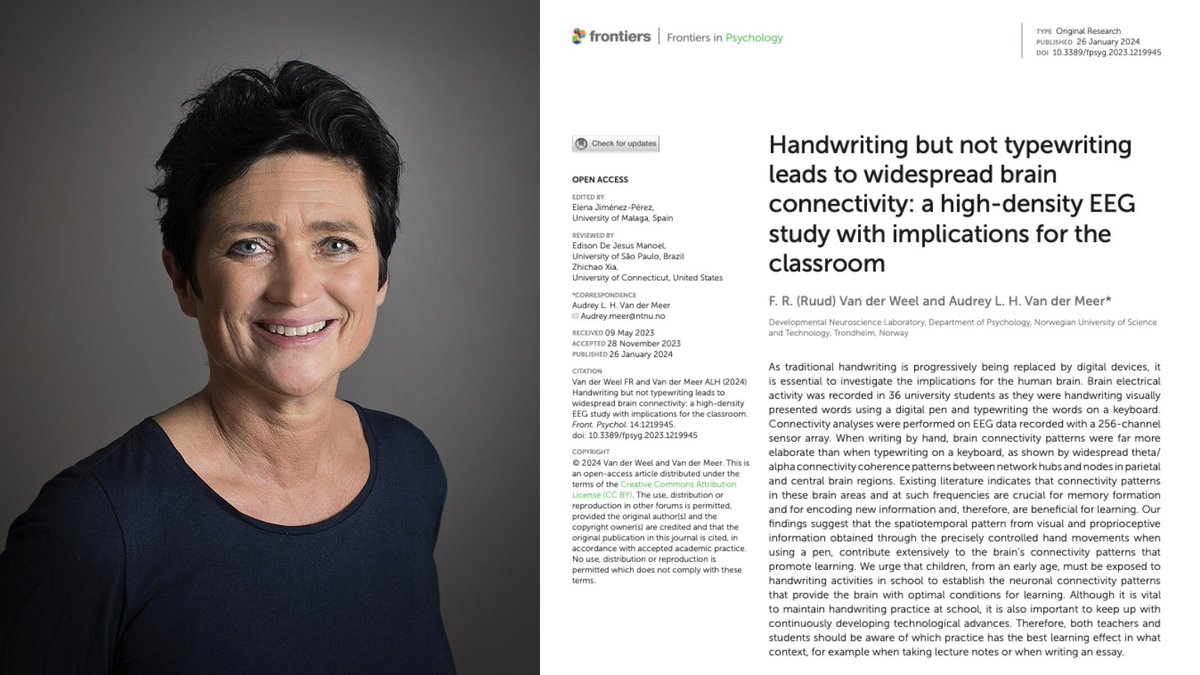
A Norwegian neuroscientist spent 20 years proving that the act of writing by hand changes the human brain in ways typing physically cannot, and almost nobody outside her field has read the paper.
Her name is Audrey van der Meer.
She runs a brain research lab in Trondheim, and the paper that closed the argument was published in 2024 in a journal called Frontiers in Psychology. The finding is brutal enough that it should have changed every classroom on Earth.
The experiment was simple. She recruited 36 university students and put each one in a cap with 256 sensors pressed against their scalp to record brain activity. Words flashed on a screen one at a time.
Sometimes the students wrote the word by hand on a touchscreen using a digital pen, and sometimes they typed the same word on a keyboard. Every neural response was recorded for the full five seconds the word stayed on screen.
Then her team looked at the part of the data most researchers had ignored for years, which is how different parts of the brain were communicating with each other during the task.
When the students wrote by hand, the brain lit up everywhere at once.
The regions responsible for memory, sensory integration, and the encoding of new information were all firing together in a coordinated pattern that spread across the entire cortex. The whole network was awake and connected.
When the same students typed the same word, that pattern collapsed almost completely.
Most of the brain went quiet, and the connections between regions that had been alive seconds earlier were nowhere to be found on the EEG.
Same word, same brain, same person, and two completely different neurological events.
The reason turned out to be something nobody had really paid attention to before her work. Writing by hand is not one motion but a sequence of thousands of tiny micro-movements coordinated with your eyes in real time, where each letter is a different shape that requires the brain to solve a slightly different spatial problem.
Your fingers, wrist, vision, and the parts of your brain that track position in space are all working together to produce one letter, then the next, then the next.
Typing throws all of that away. Every key on a keyboard requires the exact same finger motion regardless of which letter you are pressing, which means the brain has almost nothing to integrate and almost no problem to solve.
Van der Meer said it plainly in her interviews.
Pressing the same key with the same finger over and over does not stimulate the brain in any meaningful way, and she pointed out something that should scare every parent who handed their kid an iPad.
Children who learn to read and write on tablets often cannot tell letters like b and d apart, because they have never physically felt with their bodies what it takes to actually produce those letters on a page.
A decade before her, two researchers at Princeton ran the same fight using a completely different method and ended up at the same answer. Pam Mueller and Daniel Oppenheimer tested 327 students across three experiments, where half took notes on laptops with the internet disabled and half took notes by hand, before testing everyone on what they actually understood from the lectures they had watched.
The handwriting group won by a wide margin on every question that required real understanding rather than surface recall.
The reason was hiding in the transcripts of what the two groups had actually written down.
The laptop students typed almost word for word, capturing more total content but processing almost none of it as they went, while the handwriting students physically could not write fast enough to transcribe a lecture in real time, which forced them to listen carefully, decide what actually mattered, and put it in their own words on the page.
That single act of choosing what to keep was the learning itself, and the keyboard had quietly skipped the choosing and skipped the learning along with it.
Two studies. Two countries. Same answer.
Handwriting makes the brain work. Typing lets it coast.
Every note you have ever typed instead of written went into your brain through a thinner pipe. Every meeting, every book highlight, every idea you captured on your phone instead of on paper was processed at half depth.
You did not forget those things because your memory is bad. You forgot them because typing never woke the part of the brain that would have made them stick.
The fix is the thing your grandmother already knew.
Pick up a pen. Write the thing down. The slower road is the faster one.
🚨 Federated SPARQL queries over public SPARQL endpoints are becoming increasingly difficult to execute, which brings the fundamental motivations behind #RDF, #SPARQL, and #KnowledgeGraphs into question.
In my new blog post, I explore this problem.
https://t.co/5anFOozXU6
Claude Code is not AGI, but it is the single biggest advance in AI since the LLM.
But the thing is, Claude Code is NOT a pure LLM. And it’s not pure deep learning. Not even close.
And that changes everything.
The source code leak proves it. Tucked away at its center is a 3,167 line kernel called print.ts.
print.ts is a pattern matching. And pattern matching is supposed to be the *strength* of LLMs.
But Anthropic figured out that if you really need to get your patterns right, you can’t trust a pure LLM. They are too probabilistic. And too erratic.
Instead, the way Anthropic built that kernel is straight out of classical symbolic AI. For example, it is in large part a big IF-THEN conditional, with 486 branch points and 12 levels of nesting — all inside a deterministic, symbolic loop that the real godfathers of AI, people like John McCarthy and Marvin Minsky and Herb Simon, would have instantly recognized.*
Putting things differently, Anthropic, when push came to shove, went exactly where I long said the field needed to go (and where @geoffreyhinton said we didn’t need to go): to Neurosymbolic AI.
That’s right, the biggest advance since the LLM was neurosymbolic. AlphaFold, AlphaEvolve, AlphaProof, and AlphaGeometry are all neurosymbolic, too; so is Code Interpreter; when you are calling code, you are asking symbolic AI do an important part of the work.
Claude Code isn’t better because of scaling.
It’s better because Anthropic accepted the importance of using classical AI techniques alongside neural networks — precisely marriage I have long advocated.
It’s *massive* vindication for me (go see my 2019 debate with Bengio for context, or to my 2001 book, The Algebraic Mind), but it still ain’t perfect, or even close.
What we really need to do to get trustworthy AI rather than the current unpredictable “jagged” mess, is to go in the knowledge-, reasoning-, and world-model driven direction I laid out in 2020, in an article called the Next Decade in AI, in which neurosymbolic AI is just the *starting point* in a longer journey.*
Read that article if you want to know what else we need to do next.
The first part has already come to pass. In time, other three will, too.
Meanwhile, the implications for the allocation of capital are pretty massive: smartly adding in bits of symbolic AI can do a lot more than scaling alone, and even Anthropic as now discovered (though they won’t say) scaling is no longer the essence of innovation.
The paradigm has changed.
—
*Claude Code is plainly neurosymbolic but the code part is a mess; as Ernie Davis and I argued in Rebooting AI in 2019, we also need major advances in software engineering. But that’s a story for another day.
Denmark is investing $83,754,486 in textbooks and turning away from its digital-first approach to education. This follows research showing that screens reduce concentration, impact mental health, and hurt student performance. Yet another dynamic to the EdTech debate.
RDF 1.2 vs. Neo4j/OpenCypher: A Comparative Architecture Analysis
This article provides a comprehensive architectural comparison of RDF 1.2 (including SHACL 1.2 and the new reification model) with Neo4j and the OpenCypher/GQL property graph ecosystem.
Rather than a feature checklist, the analysis examines each system’s philophical foundations, data modelling patterns, constraint and validation approaches, serialization and ingestion pipelines, reasoning and inference capabilities, performance and scalability characteristics, and practical use case fit.
The central argument is that these two architectures are not competing implementations of the same idea but expressions of two distinct epistemological commitments — one to operational graph traversal, one to knowledge representation — and that the right choice between them depends on correctly identifying which commitment matches a given problem domain.
"The graph is not the architecture. The epistemology is the architecture."
That's the sharpest line in Kurt Cagle's deep-dive comparing RDF 1.2 and Neo4j/OpenCypher.
Most comparisons ask: which is faster? Which has better tooling? Which query language is easier?
Cagle's analysis asks a different question: what does each system believe a graph actually is?
Neo4j's graph is an operational structure — you load it, traverse it, query what's there. Its meaning lives in its topology. It's optimized for "start here, find what's connected."
RDF's graph is a knowledge structure — a set of propositions from which new propositions can be derived. It doesn't just store what you tell it. It reasons from it.
That single philosophical difference cascades into every technical distinction:
→ Open World vs. Closed World Assumption
→ Global IRI identity vs. internal node IDs
→ OWL inference vs. transactional constraint enforcement
→ SHACL's advisory validation vs. Neo4j's write-time guarantees
→ Federated cross-org SPARQL vs. sub-100ms local traversal
And RDF 1.2 is closing the ergonomic gap — the new reification syntax makes triple-level provenance annotation practical for the first time. But the ecosystem tooling is still catching up.
The article's decision framework is clean: four questions that cut through the noise:
* Does your data have meaningful existence outside your application?
* Does your system need to know things it wasn't told?
* What's the dominant query pattern — local traversal or global pattern matching?
* What's your team's actual expertise?
Get those four right, and the architecture follows.
The most underrated insight: hybrid architectures are increasingly the answer. RDF as the semantic knowledge layer. Neo4j as the traversal-optimized serving layer. A materialization pipeline connecting them. It's more complex — but for domains like pharma, digital twins, and MDM, it may be the only architecture that actually works.
https://t.co/0fyjaAgtYT
#RDF #Neo4j #EnterpriseAI #DataArchitecture #SemanticWeb #DataModeling #DataEngineering
--
Connected Data London 2026 has been announced! 11-12 November, Leonardo Royal Hotel London Tower Bridge
📝 https://t.co/gvl7A1CuFD
Join us for all things #KnowledgeGraph #Graph #analytics #datascience #AI #graphDB #SemTech #Ontology
🎟 Ticket sales are open. Benefit from early bird prices with discounts up to 30%. https://t.co/A5DC4llVKv
📺 Sponsorship opportunities are available. Maximize your exposure with early onboarding. Contact us at [email protected] for more.
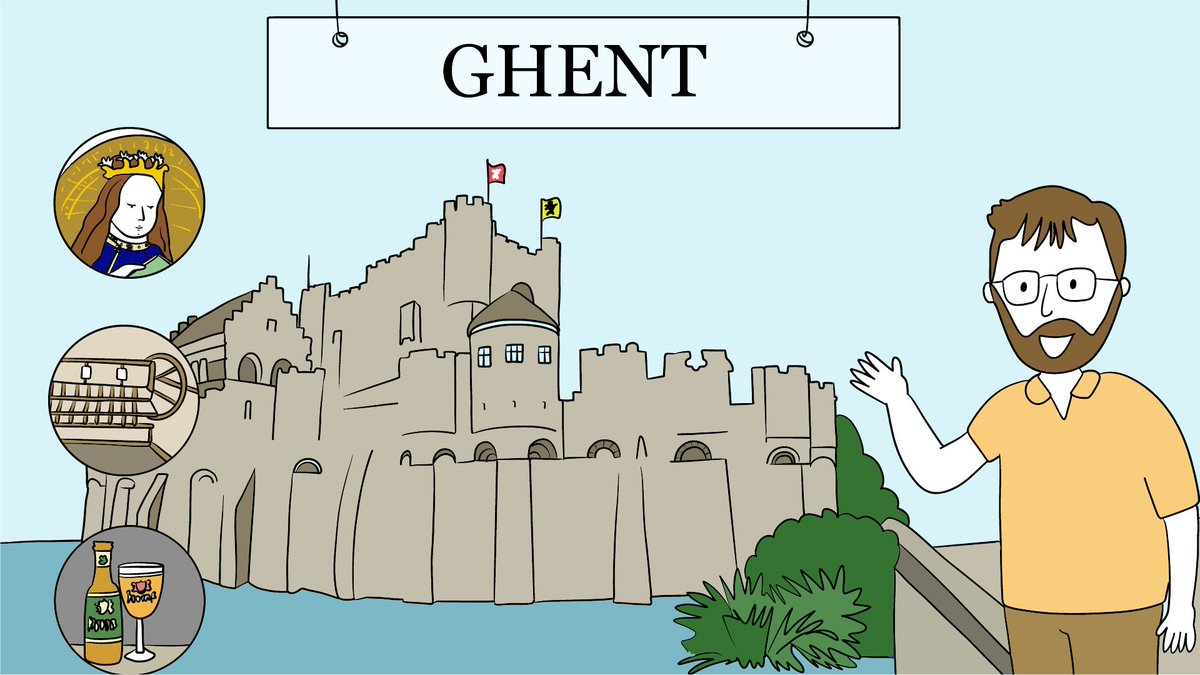
📍#SEMANTiCS 2026 is coming to 🏰 #Ghent :🇧🇪!
From medieval roots to #Belgium’s tech capital, #Ghent is where history meets the future of #LinkedData and #AI. Join us 15–17 Sept 2026.
🔗 https://t.co/RYIsfB5cgI
The Ontology issue: From knowledge to graphs and back again
Enterprise and data architects, data modelers, GenAI adopters, analysts, thought leaders, Graph RAG application builders, Microsoft, Palantir – everyone is talking about ontologies. Why, what is an ontology actually, and how is it related to graphs?
In the Winter 2025 – 2026 issue of the Year of the Graph Newsletter, the "O" word is in the centerfold.
If you talk to people working with data, AI, or enterprise architecture and ask, “what is an ontology?”, you’ll get different answers.
For some, ontology is a kind of clever data schema. For others, it’s a business glossary. For others still, the heart of a knowledge graph.
They’re all right, and that's part of the problem - and the opportunity.
Like ontologies, what has largely contributed both to popularizing and creating confusion around knowledge graphs is their use for #GenAI, specifically to support #LLMs in #GraphRAG.
In this issue of the Year of the Graph, we identify ontology and knowledge graph definitions, applications, tools, and educational resources:
* The “O” word
* From knowledge to graphs and back again
* Knowledge graph applications at scale
* #Ontology and #knowledgegraph insights, tools and education
* Two meanings of “Semantic Layer” and why both matter for #AI
* #Graphdatabases: growing market, intensifying competition, more options
* New #tools and #research
Brought to you by @metaphacts , @ProcessTempo, @Linkurious , @oxfordsemantic, @TENTRIS_DB, @Connected_Data, State of the Graph and Pragmatic AI Training
https://t.co/sviXFOwPPj
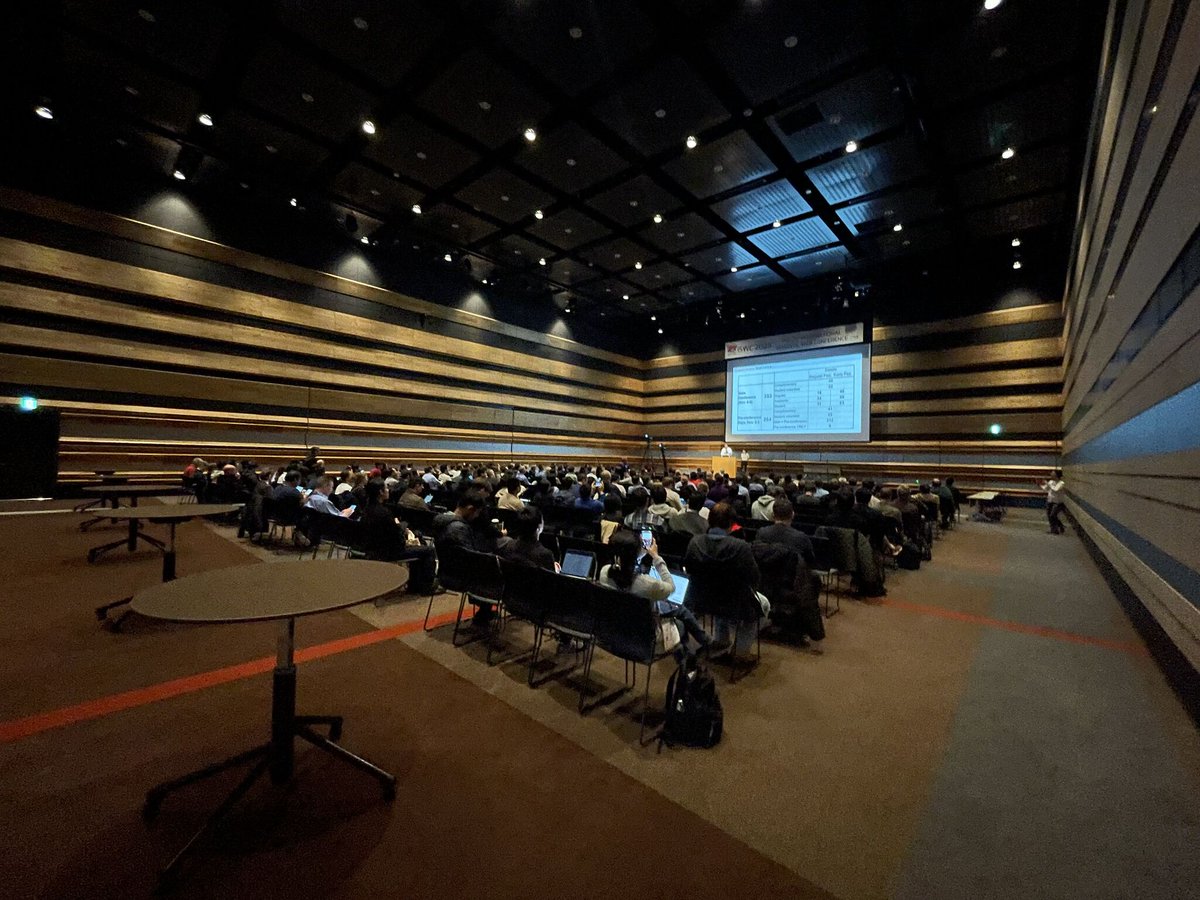
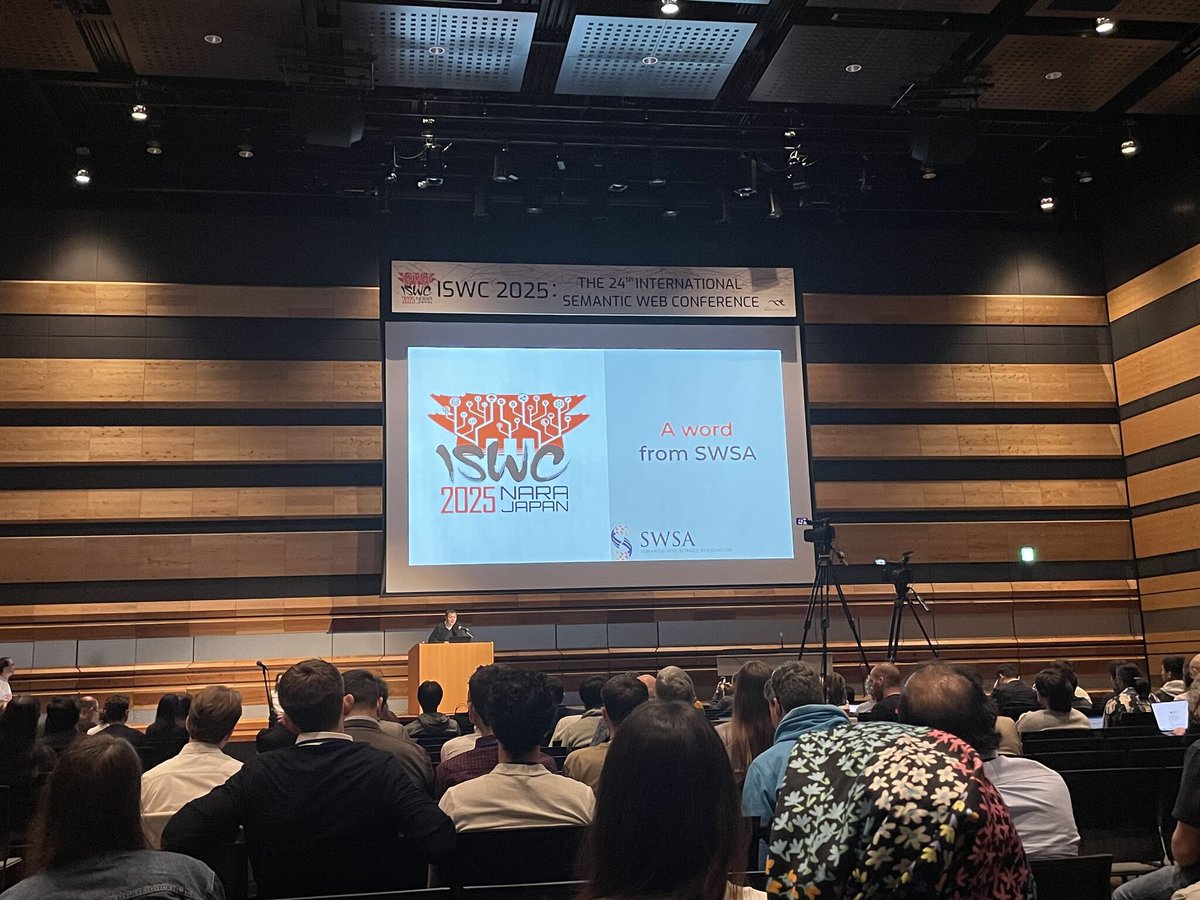
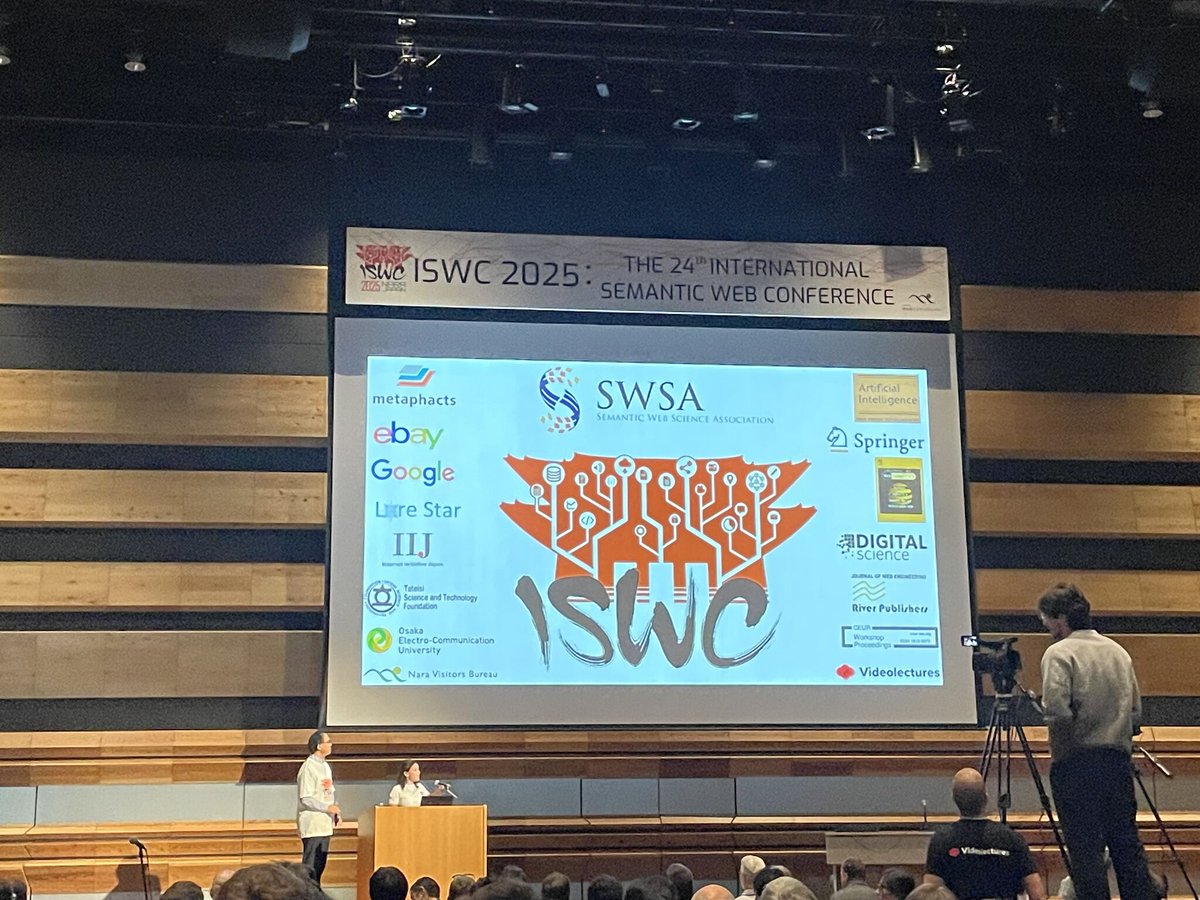
🎉 The #ISWC2025 Main Conference is officially open!
After 2 days of workshops & tutorials, we’re kicking off in beautiful #Nara.
Opened by @AnLiGentile & @koujikozaki, with a word from @esimperl (representing #SWSA) - here's to 3 days of ideas, collaboration & community!
🔔If you would like to participate with a presentation on Sept 3, 2025, at #DBpediaDay, which is co-located with @SemanticsConf & will take place in Vienna, you now have time until 29th of July to submit your proposals! #SemanticsConf https://t.co/2Yg0rb2A4T
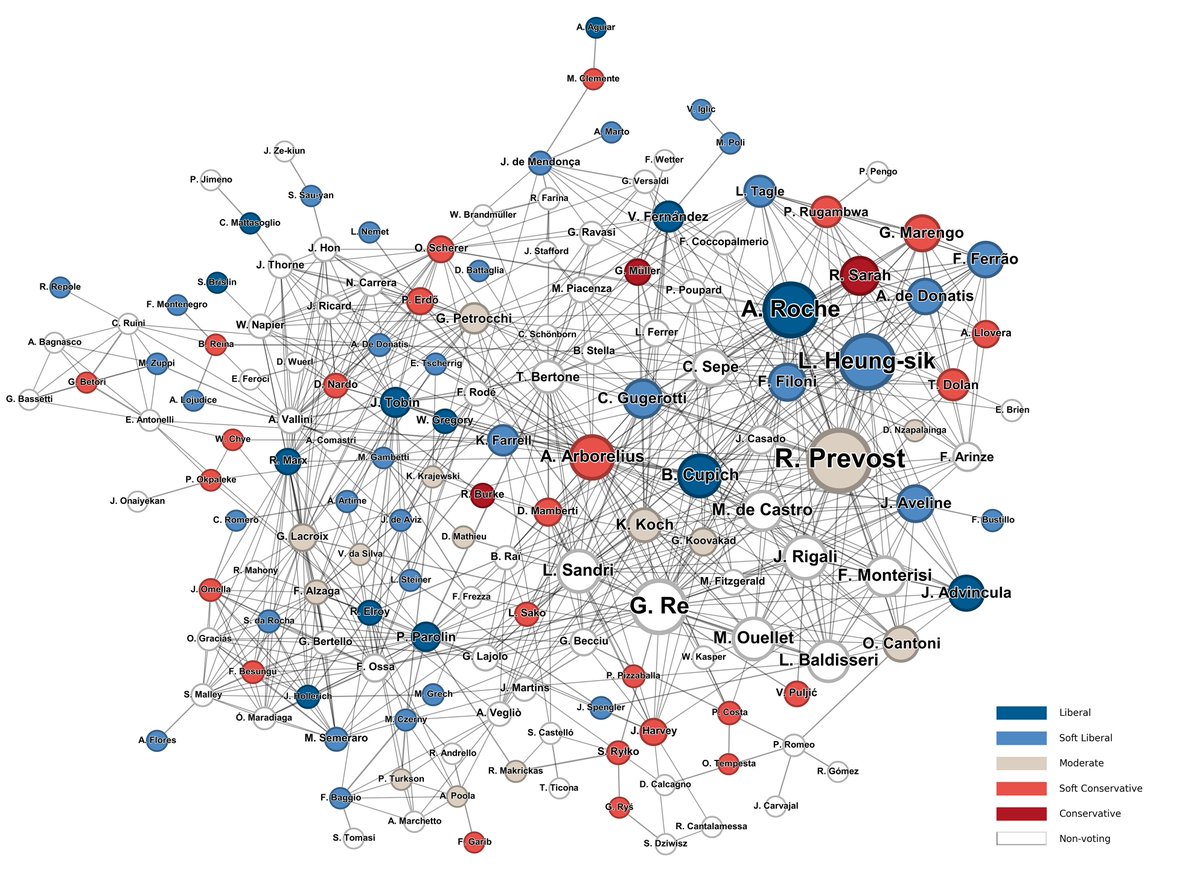
How we "guessed" the Pope using network science: inside the cardinal network. A study by me, Beppe Soda and Alessandro Iorio. Article: https://t.co/xQ0fTmpVxb @Unibocconi
One schema to rule them all: How https://t.co/8s1fRLwg0j models the world of search
Andrew Iliadis, Amelia Acker, Wesley Stevens, Sezgi Başak Kavakli
https://t.co/cn54LZr4ap
More than 130,000 government pages have gone dark in a purge that one scientist likened to a “digital book burning.” A group of librarians and archivists are fighting back. https://t.co/X5i38gRGzB