Our heartfelt congratulations to 3 of our colleagues who have been been honored with Faculty Teaching Awards
Dr. Tamrin Veldsman - Biokinetics.
Dr. Clement Gambelli - Sport Science
Dr. Samantha Kahts-Kramer - HMS/Coaching Science
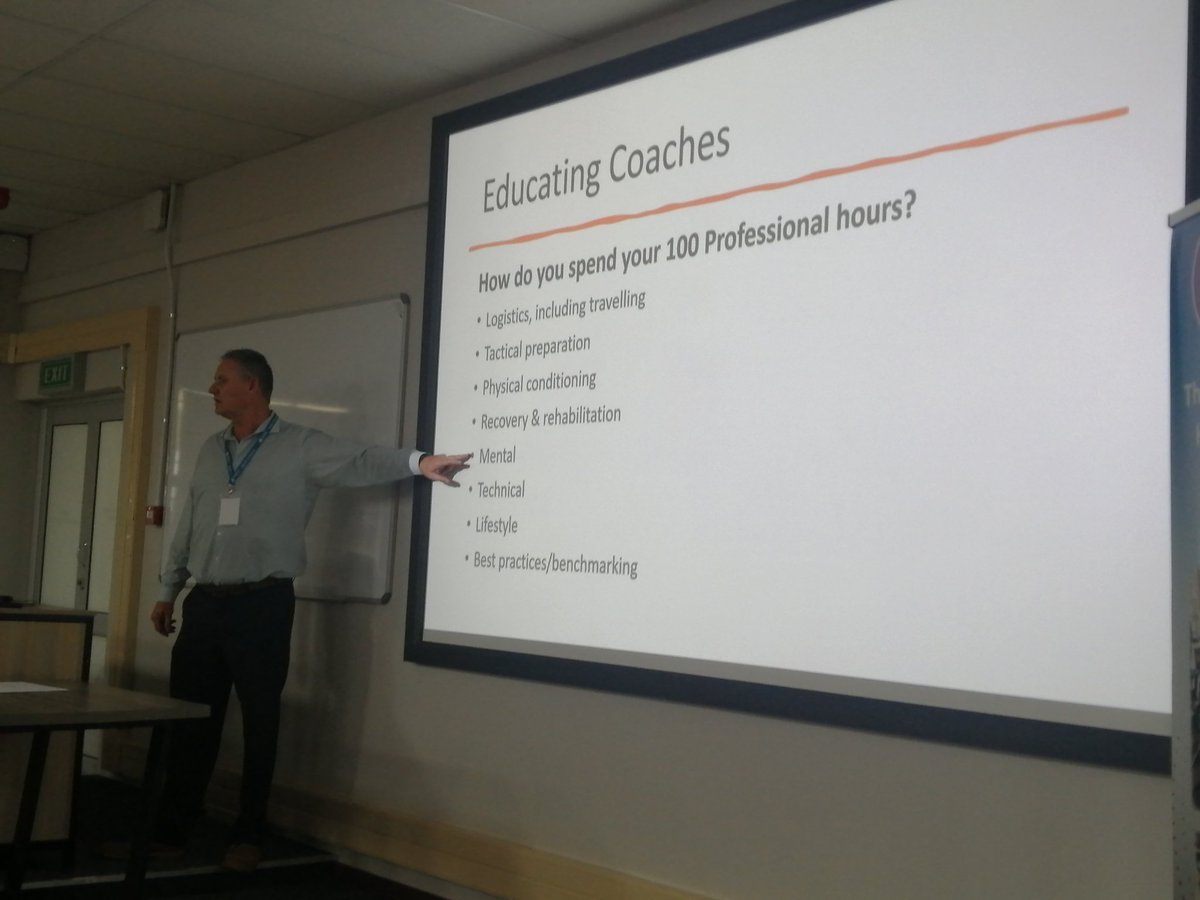
Great informative session by prof Jacques Faul. Scientists should be a key player as stakeholder. Where, with who and how do you spend 100 hours @PhASRec@nwuCHHP
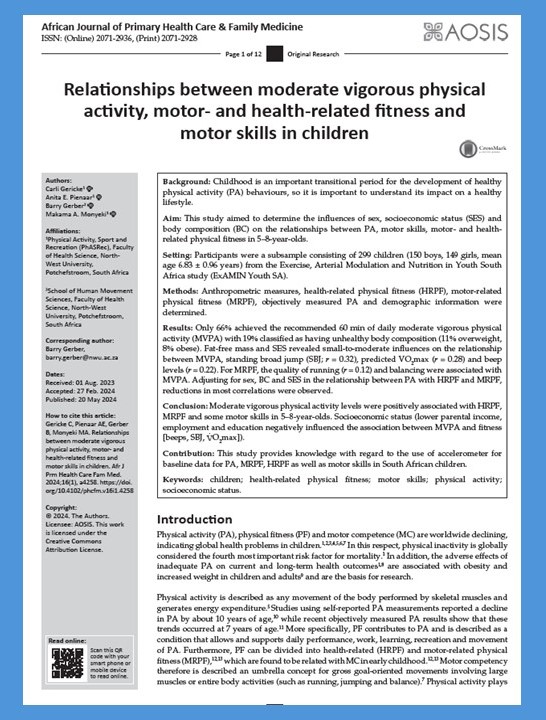
Published Paper: Relationships between moderate vigorous physical activity, motor- and health-related fitness and motor skills in children.
Authors: Carli Gericke, Anita E. Pienaar, Barry Gerber,
Makama A. Monyeki,
#MyNWU#DiscoverNWU#PhASRec#Research#PostGrad#Past3amSquad
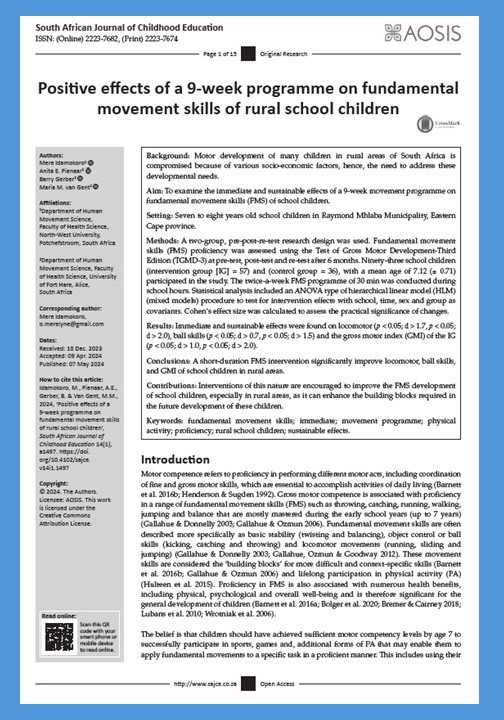
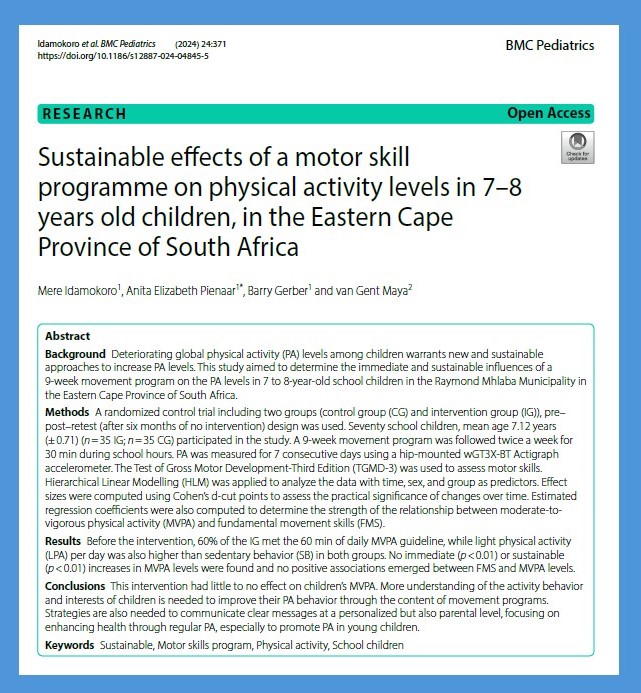
Congratulations to the following authors for their published paper: Mere Idamokoro, Anita Elizabeth Pienaar, Barry Gerber and van Gent Maya
Find the paper here: https://t.co/RW0fAPlY1Y
#MyNWU#DiscoverNWU#PhASRec#Research#PostGrad#Past3amSquad
Congratulations to Dr. Mere Idomakoro and her Promotors Prof Anita Pienaar, Dr. Barry Gerber and Dr. Maya van Gent with her graduation and receiving her PhD in Human Movement Sciences.
#MyNWU#DiscoverNWU#PhASRec#Research#PostGrad#Past3amSquad
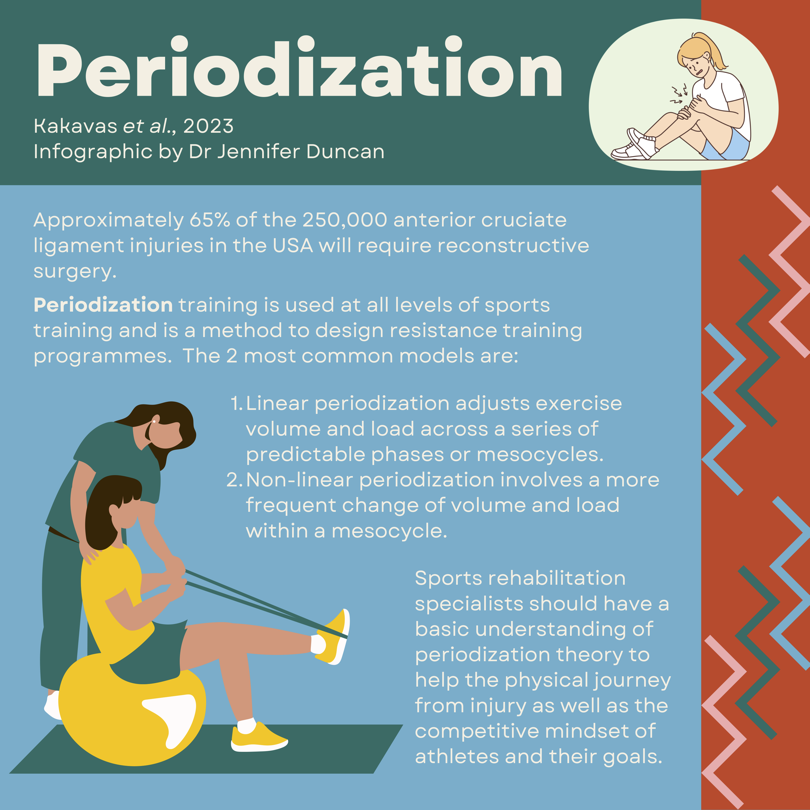
🚨 Periodization in rehabilitation of the MSK conditions: Plan your rehab 📝
Covered in this new #BJSMBlog:
❓ What is periodization in rehab?
💪 Practical applications
🧠 The neurocognitive mesocycle
Learn more ➡️ https://t.co/kLlxQYh2KS
IMHO, 150min/week of “aerobic” exercise are insufficient for long-term longevity and metabolic health gains/maintenance…I would say that ~300min/week should be the goal.
Furthermore (and very important), the concept of Zone 2 training is NOT about cardiorespiratory improvements (aka VO2max) but about metabolic improvements at the cellular and bioenergetic level, driven by an improvement of mitochondrial function. At least this is how I have seen it since I “coined” my definition of Zone 2 almost 30 years ago and have always used it the same way.
Also, I encourage people to start talking more about metabolic training instead of “cardio” training. We have been doing it already for at least 2 decades in the world of high sports performance.
All exercise intensities improve cardiorespiratory adaptations. However different training zones stimulate different bioenergetic systems leading to different cellular and metabolic adaptations. Targeting the right metabolic adaptations can have significant improvements in longevity and metabolic health.
Research-backed ways to prevent running injuries:
- stretching: ✖️
- the "right" shoe: ✖️
- strengthening: ❓
A new review assesses the evidence for exercise programs to reduce running injuries. It's weak, but there are few reasons for optimism.
More:⬇️
https://t.co/ZmKlpQgP8t
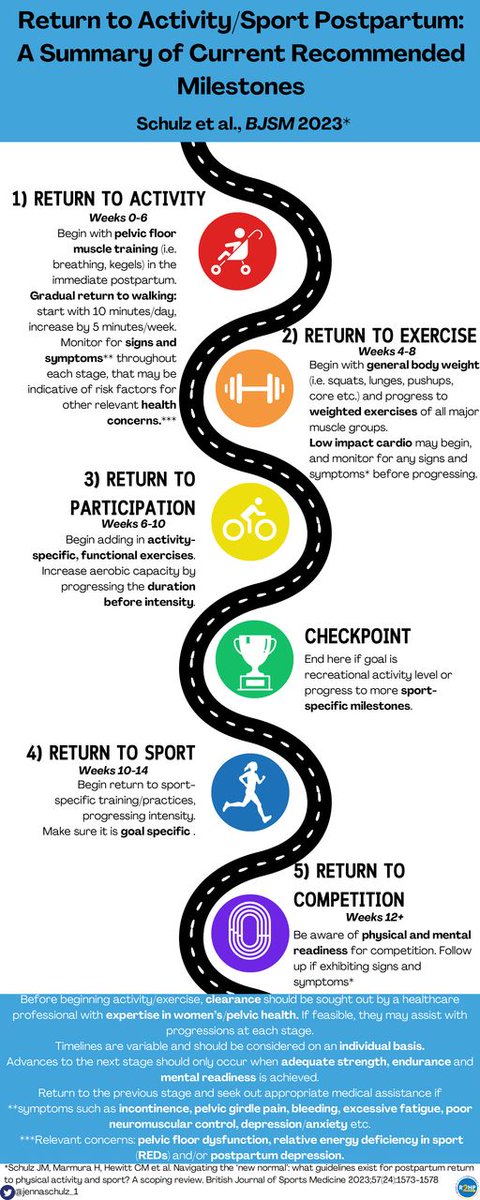
Return-to-Sport Postpartum: A Summary of the Current Recommendations 🤰🏃♀️
This infographic aims to summarise the results of the latest scoping review and suggest a framework for RTS postpartum
➡️ https://t.co/2nfRBthWC0
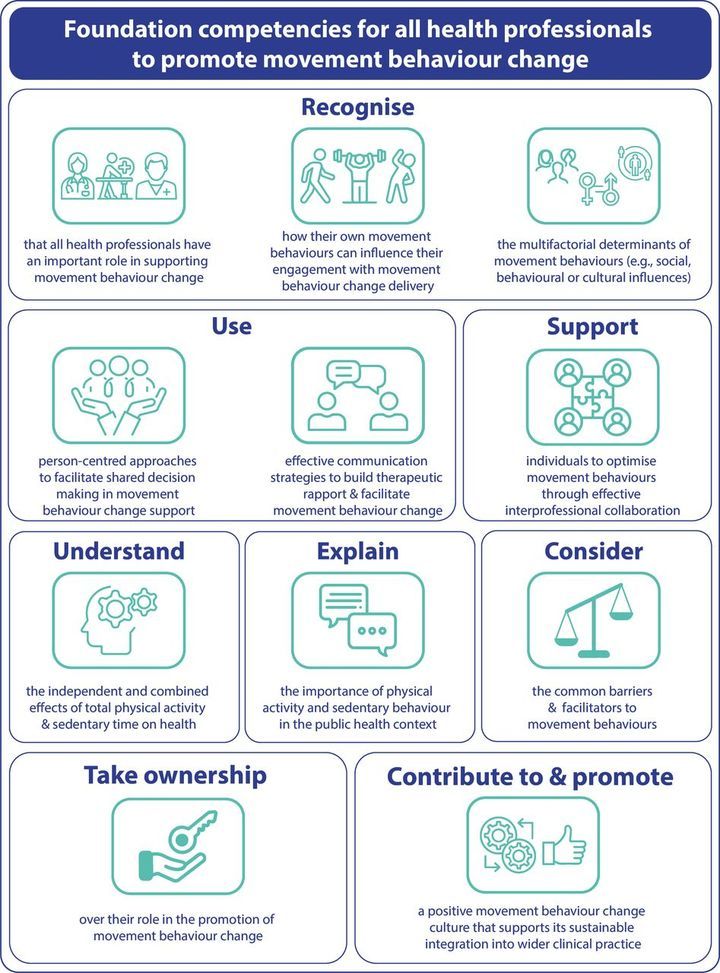
🚨What should all health professionals know about movement behaviour change? 🤷♂️ 🏃♀️ #EditorsChoice article ✅
An international Delphi-based #ConsensusStatement 📄
#Infographic on the 11 agreed competencies👇
#FREE article ➡️ https://t.co/Z1ucnpFdNq