Forget the $100,000 investing courses.
In 1998, Warren Buffett quietly explained how to never lose money in just one hour. Almost nobody paid attention. The company built on those principles is now worth nearly $1 trillion. This is the closest thing to a cheat code you’ll ever see. Bookmark and save this before it vanishes from your feed forever.
TRADING IN THE ZONE
A must-watch to truly understand market psychology.
This video explains how the market really works.
It helped me become profitable and grow a small account.
A full course by Mark Douglas.
ENJOY ❤️ $SPY
First off, - master your edge.
If you don’t know your way around the chart, you’re a liability to yourself. A profitable edge is the only real insurance policy in this game.
Second: run real risk–reward.
If your R:R can’t deliver a high recovery factor, you’re dead on arrival. I don’t touch anything below 4R, it’s just not worth the capital exposure.
Third: stop setting emotional targets.
Flow with market rhythm. Targets push you into overtrading and forcing setups in conditions that are clearly suboptimal. That’s how accounts get clipped.
Fourth: compounding isn’t optional; it’s the engine of scale.
One good month with disciplined compounding will outperform a whole year of vibes trading.
Fifth: always aim for draw on liquidity.
If you’re not trading toward where price must go, you’re basically placing hope trades and praying for TP. This market doesn’t reward hope.
Sixth: your prop account is not your laboratory.
If you’re still “testing,” you’re not ready. Backtest. Forward test. Stress test. Then go live.
And finally,
I spent only $1,099 on challenges.
That’s proof of concept, not luck.
Shalom.
Traders
There is only one legit reason for speculating in stocks/futures/crypto in my opinion
That is to build wealth and maybe develop trading into a full time gig
If your goal is to just have fun - then good luck. I have no time for you
If your goal is do repeated 2X, 5X, 10X returns, then I hope you are trading zero sum markets because you will be my competition
IMO, developing a long-term trading approach capable of consistent 20-40% returns without crazy asset volatility is a fabulous goal to have
If this is your goal, then you have five major phases to go through
Phase 1 - figure out what asset class is for you
Phase 2 - learning how trading in that asset class works
Phase 3 - developing an approach that can become your starting point for real-time forward testing and refining
Phase 4 - Adopting an approach only after proving it to be profitable over several hundred trades
Phase 5 - overcoming doubt and learning trust
Battling ongoing is the biggest challenge career traders have -- every pro trader that has been fully transparent with me has admitted the same
Battling doubt ongoing is basically what speculation is all about. Having doubt and second guessing is not a negative -- they come with the territory
This is all about DELAYED gratification.
Every time I tried to size up too fast, the drawdown came just as fast.
I didn’t travel overseas until I was 30 years old. I couldn’t afford it. I mean, I COULD, but it just wasn’t the wisest decision with my money.
I didn’t buy my first Rolex until I owned two properties. One of them 75% paid off.
I didn’t buy a new car until I could easily pay it off with cash 10x over.
This is for all the traders hitting their first big payouts.
If you’re not thinking 5-10 years in advance, you’ll likely be digging your own financial grave.
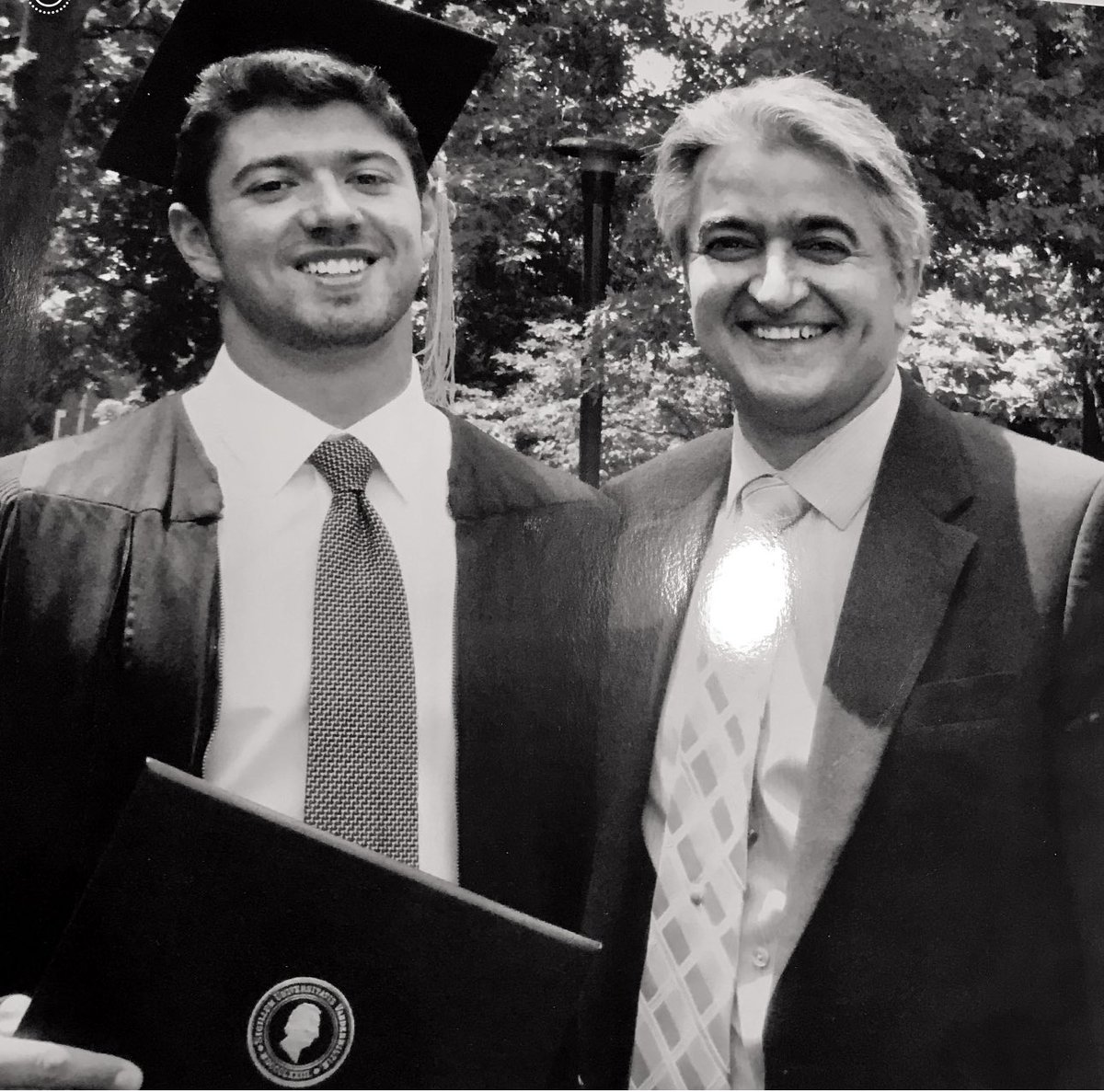
My father fled Iran during the revolution.
He landed as a young man in Paris and decided to become a doctor.
But…he failed his first year of medical school. Because he didn’t speak French.
Then, he retook the first year again…and failed for a second time (because he still barely spoke french and was taking organic chemistry in a language with a different alphabet).
He decided to move to Brussels to give it a third try and start over.
And on his third try, he’d learned enough French to pass. He went on and graduated top of his class.
Then, he met my mother and she convinced him to come to the U.S.
He came here with $1000, a suitcase, and, yet again, didn’t speak the native language (now English).
They wouldn’t recognize his foreign MD and no one would give him a residency because he was a foreigner.
So he spent 2 years as a technician working barely above minimum wage.
Then finally, he was finally given a
residency in the U.S.
After residency, he joined my grandfathers practice (moms dad).
Just as he began to develop a reputation, he found himself locked out of his own office. The locks changed on him overnight.
My mother decided to get a divorce.
He had to start over, again, this time on his own.
But he didn’t have the money.
And - to build a surgery center was $250,000 (in 1995 dollars).
He didn’t have that kind of money.
So looked up the legal requirements and he built his own. The entire thing. Himself. To code. Actually. Out of sheer will. And built it for under $30,000 (all the money he had at the time).
Finally, he was on his own.
This time, he kept growing and growing his practice until he became the top eyelid surgeon in Maryland. And eventually, in the U.S.
He’s done more than 16,000 cases meaning somewhere upwards of 50,000+ eyelids.
And every year he (on his own) does more eyelid cases than all of John’s Hopkins eye department combined.
My father taught me many lessons. Most of them through example, not preaching. He’s not a man of many words.
But the few things he did say, he’d say with his actions over and over again:
Failures are just detours.
Don’t let anyone tell you you aren’t good enough for what you want.
Whatever you do, be the best.
God gave you the power to ignore, use it.
It’s better to be envied than pitied.
You won’t even remember their name in 20 years.
You’re only stressed because you’re underprepared.
There’s nothing anyone can put you through that you haven’t already put yourself through that was worse.
And finally…
You only get one name, tell the world what you want it to mean by what you do with it.
****
Whenever I go through hard times I like to remember what he went through to make my life possible.
And somehow, everything always falls into focus.
PS - I get a lot credit for what I’ve done. But I often think what he accomplished was far harder than what I have. And - I don’t want his sacrifice to be in vain.
PPS - Whats the best piece of advice your father (or father figure) gave you?