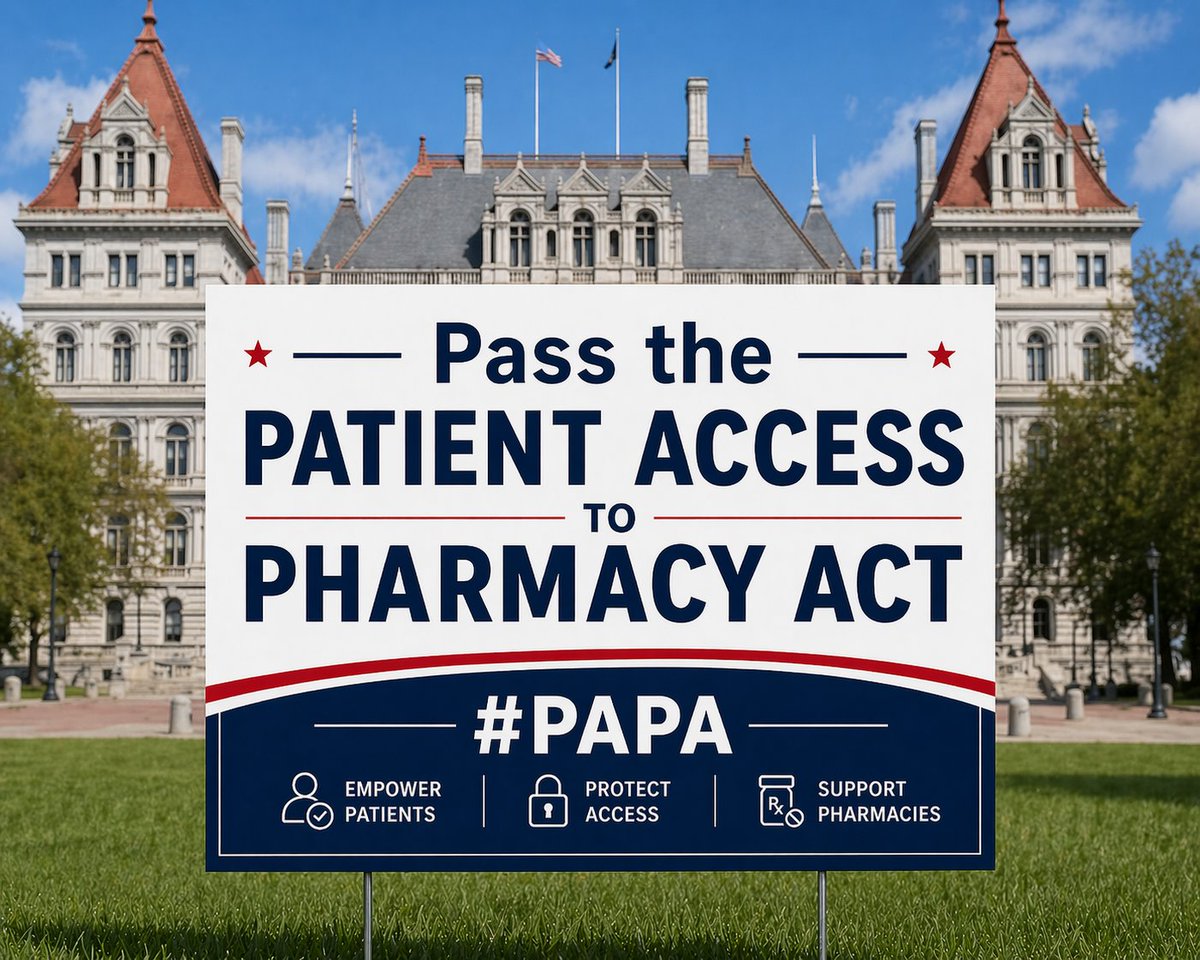
The Patient Access to Pharmacy Act (PAPA) is legislation aimed at protecting patient access to community pharmacies across New York by reforming how Pharmacy Benefit Managers (PBMs) reimburse pharmacies. The bill would establish a fairer and more transparent “cost-plus” reimbursement model to stop PBMs from paying pharmacies below the cost of acquiring and dispensing medications, helping independent and neighborhood pharmacies remain open and continue serving patients. PAPA has earned overwhelming bipartisan support in the New York State Assembly, with 112 Assembly Member sponsors backing the bill, yet despite this strong support, it still has not been called to the Assembly floor for a vote. With pharmacies continuing to close across the state and the legislative session running out of time, supporters are confused as to why the bill still sits stagnant in the Assembly. Lawmakers must act now before more patients lose access to their local pharmacy care.
Private equity now owns roughly three out of every four veterinary clinics in America.
The same private equity firms own the dentist your daughter sees, the orthodontist your son sees, and the urgent care clinic your husband walked into last month.
The price of cleaning your dog's teeth has doubled in five years.
The price of a child's filling has doubled in three.
The exact same financial engineering that took the staff out of nursing homes is being applied to the place you take your golden retriever for surgery.
The largest dental chain is Aspen Dental, owned by Leonard Green Partners and Ares. They run more than 1,100 offices.
The second-largest is Heartland Dental, owned by KKR. They run more than 1,800 practices.
In the veterinary world, Mars owns Banfield, BluePearl, and VCA. JAB Holding Company owns NVA Compassion-First Pet Hospitals. EQT owns IVC Evidensia. Together they own about 75 percent of all American clinics.
The pattern is identical to PE hospitals.
The fund borrows money to buy the practice. The debt is loaded onto the practice. The dentist or the veterinarian is required to hit revenue targets that previously did not exist. The targets are met by adding procedures the patient or the pet does not need.
A 2023 Department of Justice investigation found that Aspen Dental had been pressuring patients to take out interest-bearing financing for procedures that were not medically necessary. The financing was through a captive lender owned by the same fund.
Heartland Dental settled a multi-state class action over unnecessary stainless steel crowns and pulpotomies on children, performed under sedation, at scale.
In veterinary care, the same model produces a different word for the same outcome. A surgery your dog does not need is recommended. The estimate is six thousand dollars. The financing is offered by a company owned by the same fund that owns the clinic. The pet owner cannot afford it. The dog is euthanized.
Pet euthanasia for treatable conditions is now rising at a rate that public health experts cannot explain through medicine. The explanation is financial.
The dentist who used to own the practice now works for the fund. They are required to refer the patient up the chain to a financing department they are not allowed to question. They burn out. They quit. The fund replaces them with a younger dentist who has $400,000 of student loans and no negotiating power.
You cannot opt out. There are no independent practices left in many American zip codes.
HOW TO MAKE MONEY FROM THIS:
1. Long Idexx Laboratories (IDXX). Sells the diagnostic instruments and recurring tests every veterinary clinic in America runs every day. 90 percent gross margin. Compounded at over 17 percent annually for two decades. They get paid regardless of which fund owns the clinic.
2. Long Zoetis (ZTS). Largest veterinary pharmaceutical company in the world. Dominant. The pricing power flows through to the consumer regardless of clinic ownership.
3. Long Henry Schein (HSIC) and Patterson Companies (PDCO). Dental and veterinary supply distributors. The picks and shovels of every chain. Audited. Public. Sticky customer relationships.
4. Long Chewy (CHWY). The only large pet retailer in America with no veterinary clinic ownership conflict. Now expanding into telehealth and pharmacy. Direct-to-consumer pricing pressure on the chains.
5. Long Mars Inc indirectly through its strategic partners and avoid the publicly traded specialist roll-ups. The DOJ antitrust investigation will hit specific names. Mars is private and built before the financialization wave.
I'm hosting a once-in-a-lifetime free webinar where I go over the exact things I know as a former banker and world class investor.
100 percent free to join.
Sign up at https://t.co/1j7Dmb4qHR
Link is also in my comments.
(your dog is on a stainless steel table at a chain veterinary clinic owned by a hedge fund. the bill is six thousand dollars. the surgery is necessary. the price is not. the same hedge fund owns the dentist your daughter goes to next tuesday and the urgent care your husband visited last month. you cannot opt out. there are no independent practices left in your zip code. the money does not stay in your town. it leaves on a wire transfer the same day.)
I'll say this Rebecca Lobo: It doesn't matter how many times he's been to the show, what matters is how you leave it. And MY coach left it better than she found it. Yours just pissed all over his legacy. As we all knew he would.
@TPNdustries@kpharmd12@SilverScriptPDP Have you seen this video? It was making the rounds a month or two ago. It shows how the PBMs are funneling funds to off-shore "shell" companies (Zinc, Emisar, etc): https://t.co/q2yoK5EYOt
1866: Cotton seeds are agricultural waste. After extracting cotton fiber, farmers are left with millions of tons of seeds containing oil that's toxic to humans. Gossypol, a natural pesticide in cotton, makes the oil inedible. The seeds are fed to cattle in small amounts or simply discarded.
1900: Procter & Gamble is making candles and soap. They need cheap fats. Animal fats work but they're expensive. Cotton seed oil is abundant and nearly worthless. If they could somehow make it edible, they'd have unlimited cheap raw material.
The process they develop is brutal. Extract the oil using chemical solvents. Heat to extreme temperatures to neutralise gossypol. Hydrogenate with pressurised hydrogen gas to make it solid at room temperature. Deodorise chemically to remove the rancid smell. Bleach to remove the grey color.
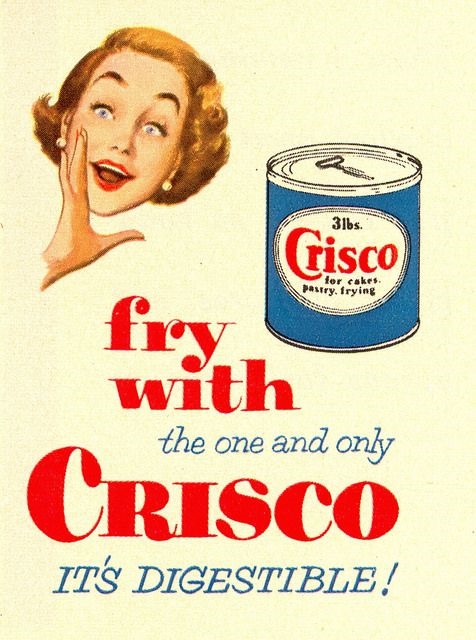
The result: Crisco. Crystallised cottonseed oil. Industrial textile waste transformed through chemical processing into something white and solid that looks like lard. They patent it in 1907, launch commercially in 1911.
Now they have a problem. Nobody wants to eat industrial waste that's been chemically treated. Your grandmother cooks with lard and butter like humans have for thousands of years. Crisco needs to convince her that her traditional fats are deadly and this hydrogenated cotton-seed paste is better.
The marketing campaign is genius. They distribute free cookbooks with recipes specifically designed for Crisco. They sponsor cooking demonstrations. They target Jewish communities advertising Crisco as kosher: neither meat nor dairy. They run magazine adverts suggesting that modern, scientific families use Crisco while backwards rural people use lard.
But the real coup happens in 1948. The American Heart Association has $1,700 in their budget. They're a tiny organisation. Procter & Gamble donates $1.7 million. Suddenly the AHA has funding, influence, and a major corporate sponsor who manufactures vegetable oil.
1961: The AHA issues their first dietary guidelines. Avoid saturated fat from animals. Replace it with vegetable oils. Recommended oils: Crisco, Wesson, and other seed oils. The conflict is blatant. The organization issuing health advice is funded by the company that profits when people follow that advice.
Nobody seems troubled by this. Newspapers report the guidelines as objective science. Doctors repeat them to patients. Government agencies adopt them into policy. Industrial cotton-seed oil, chemically extracted and hydrogenated, becomes "heart-healthy" while butter becomes "artery-clogging poison."
1980s: Researchers discover that trans fats, created by hydrogenation, directly cause heart disease. They raise LDL, lower HDL, promote inflammation, and increase heart attack risk more than any other dietary fat. Crisco, as originally formulated, is catastrophically unhealthy. This takes 70 years to officially acknowledge.
Procter & Gamble's response: Quietly reformulate without admission of error. Remove hydrogenation, keep selling seed oils, never acknowledge that their "heart-healthy" product spent seven decades actively causing the disease it claimed to prevent.
Modern seed oils remain. Soybean, canola, corn, safflower oils everywhere. Same chemical extraction process. Same high-temperature refining. Same oxidation problems. Just without hydrogenation so trans fats stay below regulatory thresholds.
These oils oxidise rapidly when heated. They integrate into cell membranes where they create inflammatory signalling for months or years. They're rich in omega-6 fatty acids that promote inflammation. They've never existed in human diets at current consumption levels.
But they're cheap. Profitable. And the food industry has spent a century convincing everyone they're healthy. The alternative, admitting that industrial textile waste shouldn't have been turned into food, would require acknowledging the last 110 years of dietary advice was fundamentally corrupted from the start.
Your great-grandmother cooked with lard because that's what humans used for millennia. Then Procter & Gamble needed to sell soap alternatives and accidentally created the largest dietary change in human history.
We traded animal fats that built civilisations for factory waste that causes disease.
The soap company won. Your health lost.
In 1962, a 37-year-old man from England named Brendon Grimshaw suddenly quit his job and bought a small island in the Seychelles for about $10,000.
The island was called Moyenne and, at the time of purchase, had been abandoned for 50 years.
Everyone thought the man was crazy. Brendon eventually moved to the island permanently as its sole inhabitant.
While most people tend to buy islands for luxury, Brendon had a broader vision. He wanted to restore the island to its raw beauty, creating a natural paradise completely uncontaminated by man and tourism.
For the next 40 years, Brendon lived alone on the island; he managed to plant 16,000 trees by hand, built 5 km of nature trails and attracted around 2,000 new birds to the island.
Brendon had transformed a desert land into an island of incredible beauty, Moyenne was so beautiful that Brendon was offered 50 million dollars by a Saudi prince, but he turned it down.
Since Brendon died in 2012, the island has been owned by the Moyenne Island Foundation and is now a national park available to all thanks to his efforts.
Photos that will restore your faith in humanity: https://t.co/60XnAFPt3Y
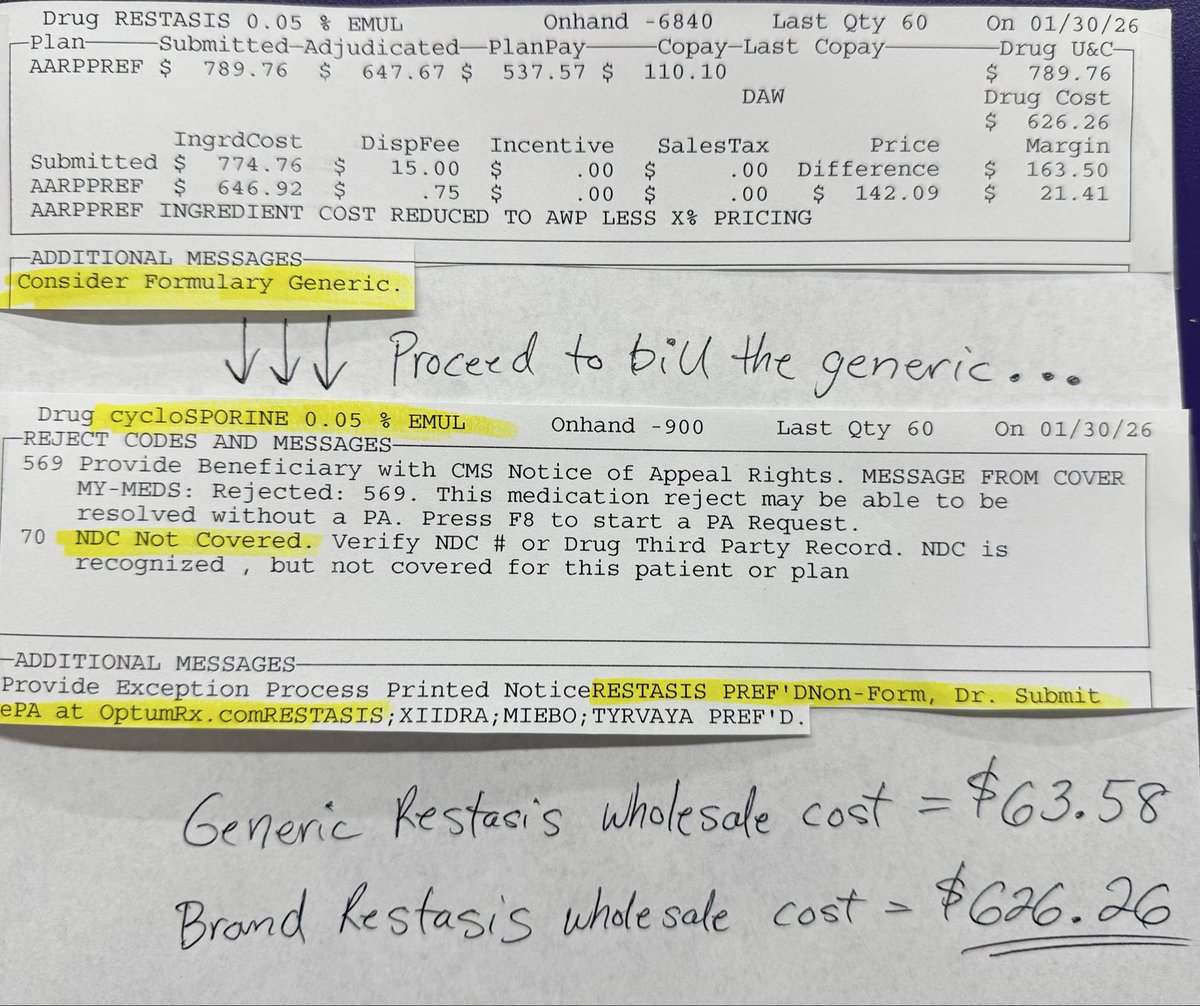
What kind of a rebate is @OptumRx demanding from the maker of Restasis to continue blocking the generic from being on formulary for Medicare patients?
When the generic costs $63 and the Brand name costs $626, it really makes you wonder.
The patient is also stuck with a higher copay since they must utilize the Brand name over the generic.
I would say the patient could just pay cash for the generic, but this patient will no doubt hit the catastrophic for the year due to the cost of other medications they have been prescribed.
So, that wouldn’t necessarily be fair to them would it?
𝐔𝐒 𝐃𝐄𝐏 𝐎𝐅 𝐋𝐀𝐁𝐎𝐑 𝐏𝐑𝐎𝐏𝐎𝐒𝐄𝐒 𝐇𝐈𝐒𝐓𝐎𝐑𝐈𝐂 𝐏𝐁𝐌 𝐅𝐄𝐄 𝐃𝐈𝐒𝐂𝐋𝐎𝐒𝐔𝐑𝐄 𝐑𝐔𝐋𝐄
Yesterday, the US DOL proposed a ground-breaking rule requiring PBM disclosure to self-insured group health plans of:
✔ Rebates and other payments from drug manufacturers
✔ Compensation received when plan price exceeds the pharmacy reimbursement
✔ Payments recouped from pharmacies
The rule also permits auditing of these PBM disclosures. Comments from the public are due by Mar. 31. Proposed rules and comment instructions can be found here: https://t.co/XjLb2j7GHb
@EPotterMD Hopefully in network status reimburses you appropriately for your expertise! Not like Medicare Advantage, where the advantage goes to UnitedHealthcare.
Americans are paying more than ever for health care — yet outcomes keep getting worse. We spend more than any other country while major insurers are reporting billions in profits funded by taxpayers and families.
Americans deserve lower costs, better health, and real accountability.
@RepSmucker
AOC: This is quite a bit of market concentration. Wouldn't you agree?
CVS HEALTH CHAIR DAVID JOYNER: No. I'd suggest it's a model that works really well for the consumer
AOC: I think it works well for CVS. Health insurance gets a cut, pharmacy benefit manager gets a cut, drug manufacturer gets a cut, and the patient gets screwed
I’m the one who had to look patients, like Andrea, in the eye and tell them their medication was denied.
Not the executives. Not the insurance companies. The pharmacist.
"Rep. Ocasio-Cortez is absolutely right to call for a Glass-Steagall Act for health care so we can finally address the vertical integration issues at the heart of our country’s healthcare crisis."
@freer_emma in our statement urges Congress to follow @RepAOC's lead and Break Up Big Medicine.
https://t.co/RTOm1zGssf
Insurance companies do not want you to fully understand this story. Because if you do, you will understand exactly how American healthcare needs to change.
When my patient Rachel needed breast reconstruction, her insurance company required that I operate at a hospital that was not equipped to provide the safest care for her recovery.
Rachel has spent over 20 years in healthcare as a nurse and nurse practitioner. She understands hospitals. And despite that, she was deeply traumatized by what she experienced.
On Monday morning in Austin, she showed up for surgery and was turned away because the operating rooms were not safe to use. We pleaded with her insurance company to allow her surgery to be performed at @redbudsurgerycenter, a center designed specifically for breast reconstruction. They refused.
On Tuesday, we went to a different hospital. The nurses were skilled, compassionate, and doing their best. But they did not have the tools or systems to support this kind of recovery.
Rachel spent the night advocating for herself because she could tell things were not right. IV access issues. Monitoring gaps. Basic safety checks missed. Things patients should never have to catch on their own.
Rachel asked me to share her story because when doctors and patients are forced into unsafe situations with no ability to choose better care, something is very wrong.
After more than a decade of caring for people affected by breast cancer, I built a surgery center specifically for this work. It is CMS certified. It exists for patient safety. And yet, like so many Americans, Rachel’s insurance company decided where she was allowed to receive care.
Insurance companies are no longer just making payment decisions. They are making medical decisions.
We cannot change what happened to Rachel. But we can listen, learn, and do better for the next patient.
Because the next person may not know how to advocate the way she did. And that is how people get hurt.