📢 Neural Point Cloud Diffusion for Disentangled 3D Shape and Appearance Generation #CVPR2024
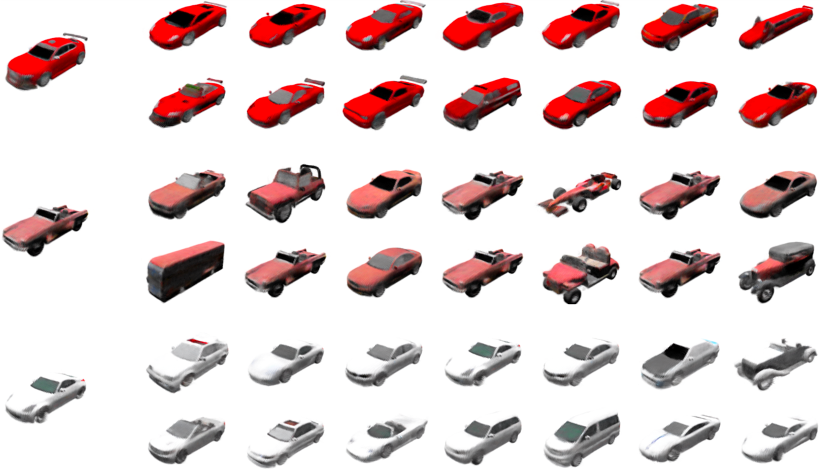
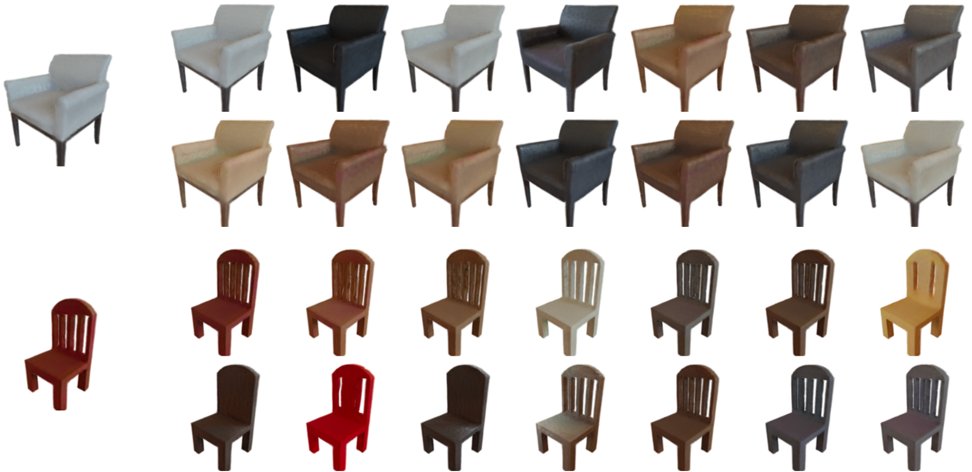
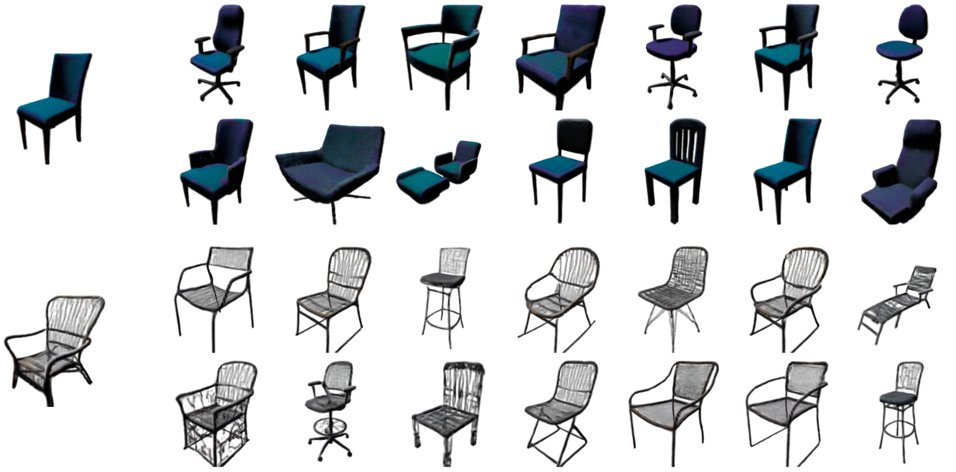
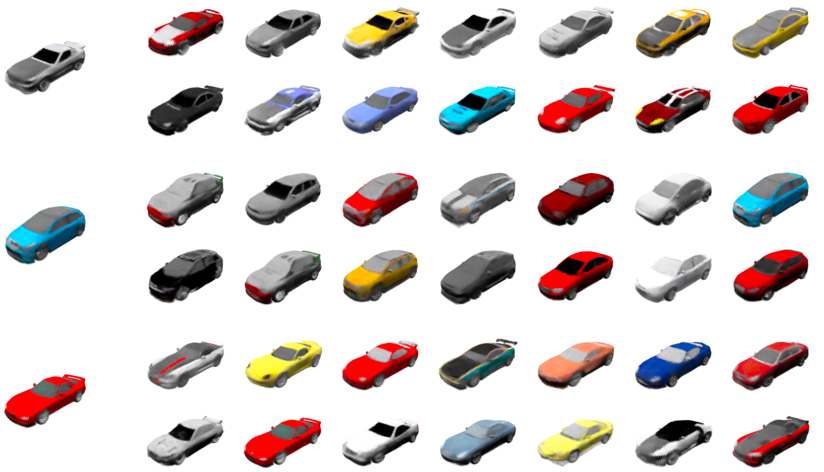
We apply diffusion to a neural point cloud representation. It disentangles shape and appearance, which allows to generate both of them individually.
Page: https://t.co/OQ97XTbvaL
Check our paper for details on the method, more results, and insights into many-to-one mappings in auto-decoded latent spaces and how to tame them for the application of diffusion models.
Project page: https://t.co/fNbDdbUiQc
@ChrisWewer@janericlenssen@EddyIlg@ThomasBrox
📢 Neural Point Cloud Diffusion for Disentangled 3D Shape and Appearance Generation #CVPR2024
We apply diffusion to a neural point cloud representation. It disentangles shape and appearance, which allows to generate both of them individually.
Page: https://t.co/OQ97XTbvaL
The point positions represent the coarse shape and the point features represent the local shape and appearance of the object.
This can be used to re-sample only the coarse shape or only the local appearance of an object:
A neural point cloud represents the shape and appearance of an object by a point cloud, where each point has a 3D position and a higher-dimensional feature. It can be rendered to images with Point-NeRF.
The image shows the diffusion process and the Point-NeRF rendering:
#NAS has seen 1000+ papers over the last few years but rarely found new architectures.
In our #NeurIPS2023 paper w/ @DannyStollAI, Robin Ru, @RheaSukthanker, @ThomasBrox & @FrankRHutter, we take a step in that direction and find signs to move beyond usual search spaces!
A 🧵1/n
Very excited to share our OVAD paper accepted at #CVPR2023 !!!
We introduce an Open-vocabulary Attribute Detection (OVAD) task and the corresponding OVAD benchmark.
Check out the webpage: https://t.co/DXiof1rPfk
1/6
Climate change at your doorstep: Changes in hourly thermal comfort conditions modelled over 60 years across entire city with 2m resolution made possible using a deep convolutional encoder-decoder. Great collaboration with @ThomasBrox@UniFreiburg and DWD. https://t.co/T2y6dR2FD2
Thrilled that our workshop on "Generative Models for Computer Vision" got accepted to #CVPR2023!
We have a fantastic speaker lineup with whom we will discuss how image synthesis can benefit image analysis.
Stay tuned! :-)
Join us today for the 𝗥𝗼𝗯𝘂𝘀𝘁 𝗩𝗶𝘀𝗶𝗼𝗻 𝗖𝗵𝗮𝗹𝗹𝗲𝗻𝗴𝗲 𝗮𝗻𝗱 𝗪𝗼𝗿𝗸𝘀𝗵𝗼𝗽 at #ECCV2022! @eccvconf
Come and hear from our invited speakers and challenge winners about the state-of-the-art in robust vision!
https://t.co/2gzzsaWbyv
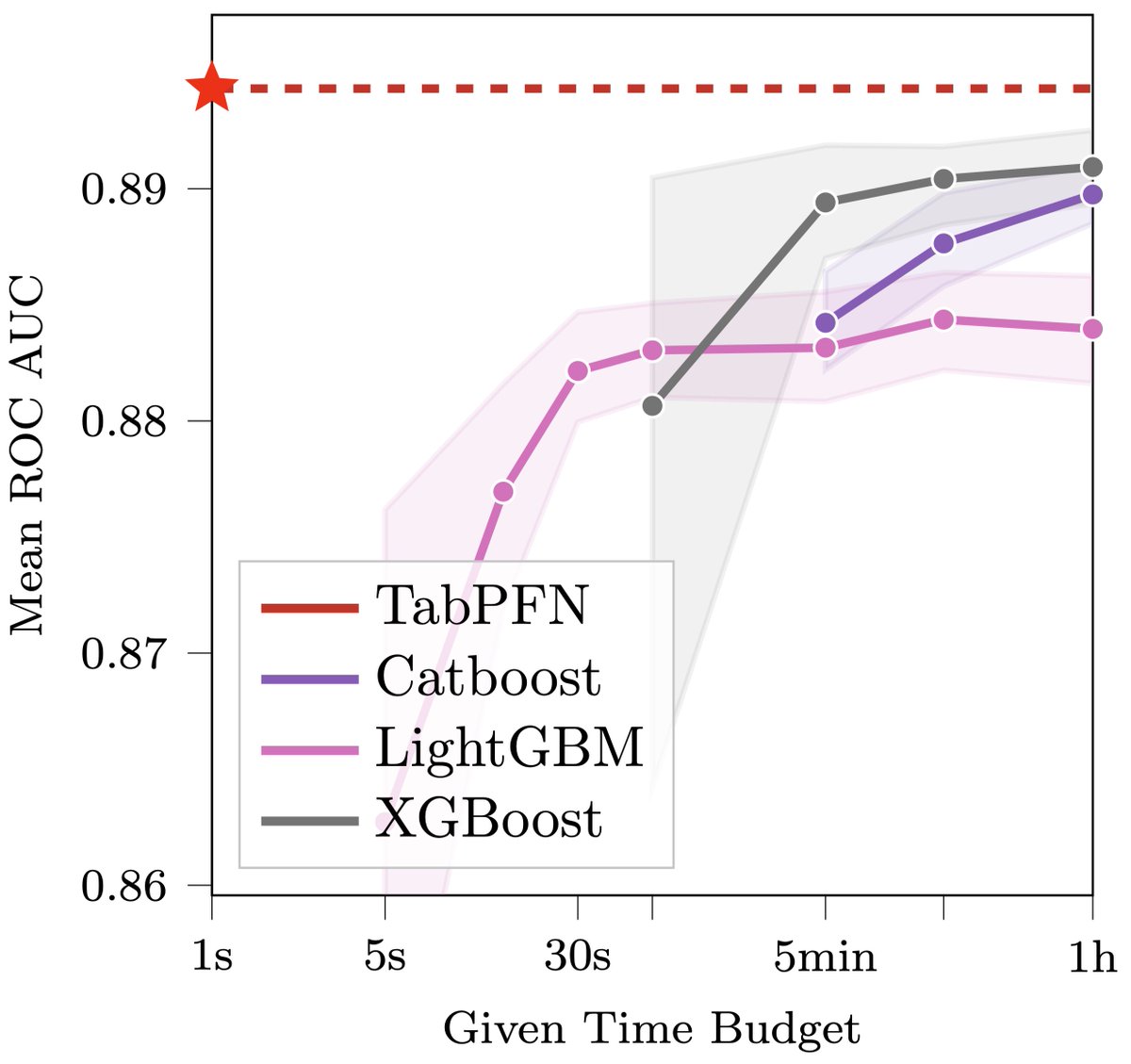
This may revolutionize data science: we introduce TabPFN, a new tabular data classification method that takes 1 second & yields SOTA performance (better than hyperparameter-optimized gradient boosting in 1h). Current limits: up to 1k data points, 100 features, 10 classes. 🧵1/6
With the proposed benchmark the described problems can be measured and improved.
We therefore encourage future work to evaluate on the benchmark in addition to the existing evaluation protocols.
Evaluation code is available and a leaderboard is coming soon. Stay tuned!
Happy to announce the 𝗥𝗼𝗯𝘂𝘀𝘁 𝗠𝘂𝗹𝘁𝗶-𝘃𝗶𝗲𝘄 𝗗𝗲𝗽𝘁𝗵 𝗕𝗲𝗻𝗰𝗵𝗺𝗮𝗿𝗸 #3dv2022.
It evaluates robust depth estimation in an open world setting. Code is available for an easy evaluation of your model!
Paper: https://t.co/Rx2P7o7266
Code: https://t.co/5gJFU21k77
1/N
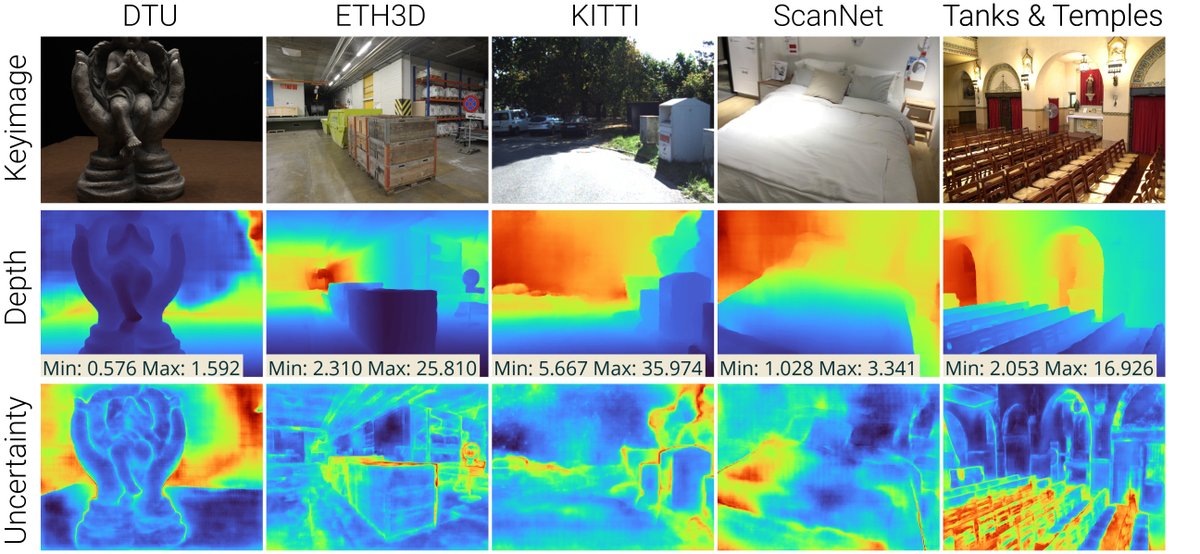
Finally, we introduce a new model that we call Robust MVD Baseline model.
It shows more consistent performance across domains and works in the absolute scale setting:
It can be used for robust depth estimation and as baseline for future evaluation on the benchmark.