We used to take music like this for granted back in the 70’s and 80’s. Now, when you hear it decades later, it seems to have an extra depth of colour and quality…
A man spent his entire life chasing a ghost.
Not a mystery. Not a theory. A prediction made by Albert Einstein a hundred years earlier — that the universe itself ripples when massive objects collide, sending invisible waves across the fabric of space and time.
Einstein believed it. But even he doubted humanity would ever be sensitive enough to detect something so impossibly faint.
He was almost right.
On 14 September 2015, Kip Thorne and a collaboration of over 1,000 physicists finally caught it — the signal of two black holes colliding more than a billion light years away. A whisper from the universe, arriving after travelling further than the human mind can truly comprehend.
For that, Thorne was awarded the 2017 Nobel Prize in Physics.
And when he went to collect his medal, something broke open inside him.
He found himself looking at a photograph of Einstein — the man whose hundred-year-old idea had given Thorne his life's purpose. The man who set it all in motion, yet never lived to see it proven.
And he wept.
Not from sadness. But from the weight of it all. The decades of work. The impossible precision required. The moment a century of wonder finally collapsed into fact.
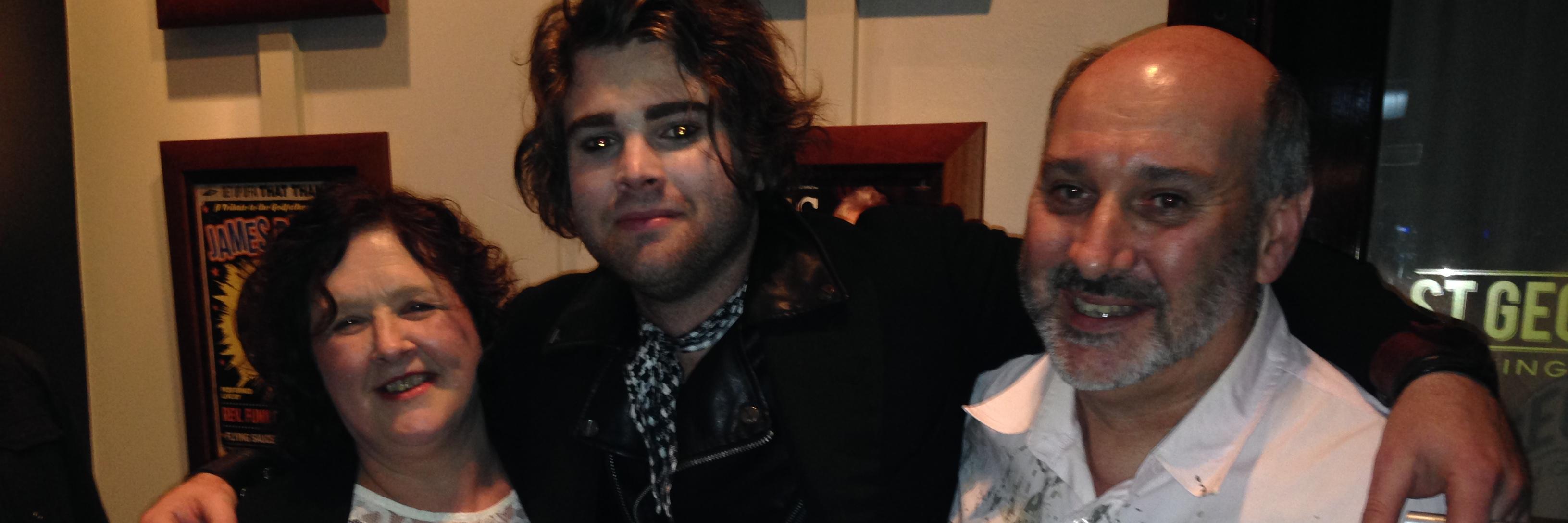
This photograph captures that moment. A Nobel laureate, surrounded by the hands of people who love him, quietly overwhelmed in the presence of the man who started it all.
Science doesn't always look like equations on a blackboard.
Sometimes it looks like this.
Starting with some energy, and my inability to write brief updates, I am just extremely proud of the NASA crew, our industry, and our international partners. We are getting into a rhythm here at NASA. Earlier this year, setbacks put the Artemis II rocket back in the VAB for repairs, and we determined it was necessary to add another mission, Artemis III in 2027. Since then, we have unveiled the Ignition plans to build a Moon Base and nuclear-powered spaceships, launched a highly successful mission around the Moon, brought the crew home safely, and now watched the torch pass to Artemis III. There will be no shortage of major milestones to celebrate in the months ahead as we build the Moon Base and launch the Nancy Grace Roman telescope. I am beyond proud of the team and all the momentum and excitement around the space program.
I do want to take this moment to address two of the questions I have been seeing since the crew announcement.
Why are there no women assigned to Artemis III?
I have seen reactions ranging from disappointment to outrage. I have personally been to space twice with 50% female crews. My closest advisors and some of the smartest engineers I know are women. In our latest NASA leadership organization, nearly 50% of the Center Directors and Mission Directorate leadership are women. The last astronaut candidate class selected under this Administration was majority female because they were the best of the best, including one astronaut I previously went to space with.
In a world with so much controversy, I hope this can be a moment where we celebrate the astronauts selected, respect the integrity of the process, and recognize the extraordinary depth of talent across the entire corps. The crew selection does not involve any political appointees. The Astronaut Office assigns the crew that gives the mission the best chance of meeting its objectives, taking into account many factors, including the background and expertise of the astronauts, such as test pilot experience, development work on specific programs, and availability. For example, those raising this concern may not be aware of the pipeline of crews already preparing to launch to the Space Station, or those who have been undergoing lunar-specific training that would be a better fit for a future surface mission.
The Artemis III astronauts are experienced, qualified, and deserve to be celebrated for the mission they have been assigned, just as the crews that follow will be celebrated when their time comes. We have an extraordinary astronaut corps, and every mission and every crew is part of a larger campaign to get America back to the Moon and to build the future we all dreamed about as children.
What are the objectives for Artemis III if both landers will not be fully ready?
Coming off a highly successful lunar mission like Artemis II, it is not surprising that the bar is set high for Artemis III. I think it is important to understand how difficult and dangerous it is to land astronauts on the Moon. We have not done it in a very long time, and we want to draw from a past playbook for success. That means getting into a cadence of launching, learning, and rolling improvements into the next mission.
First and foremost, it is imperative for SLS to be flying with some frequency for operational currency and, honestly, safety. Earlier this year, it was very clear across NASA leadership that an additional mission was necessary in 2027. It is also imperative to gain interoperability data from rendezvous and docking with landers in Earth orbit. We do not need those landers that are still in development to be fully capable and certified for landing on the Moon on Artemis III, but we do need to test certain systems and controllability. Not to mention, we are moving quickly into a future where we do not require a single rocket to bring everything necessary for a mission to space, and as such, gaining experience with multi-launch campaigns and on-orbit assembly is directionally correct.
The Blue Origin test lander for Artemis III will incorporate many of the most important systems and subsystems that have not previously been operated by the provider, including ECLSS in a crew cabin, and other avionics. With SpaceX, they have demonstrated many of those capabilities continuously on Crew Dragon, but other controllability tests are important based on the negative-X axis acceleration that will be necessary when Starship undertakes the TLI burn to the Moon with a docked Orion.
After Artemis III, we will learn a lot and roll in further improvements, be that hardware, software, or procedural updates, as both providers undertake end-to-end uncrewed demonstrations to the surface in 2028, in advance of Artemis IV, where NASA astronauts will finally complete the grand return to the Moon.
As I said in my remarks yesterday, when Gene Cernan left the lunar surface on Apollo 17, he said, “We leave as we came, and, God willing, we shall return, with peace and hope for all mankind.” We are returning, and we are doing so with the fire carried forward from Apollo, the lessons learned from Artemis II, the crew of Artemis III, and all those who will follow. NASA will send the very best crews for the right missions. If the composition of our astronaut corps and our latest class of candidates says anything, it is that we have exactly the talent required to get the job done.
Godspeed Artemis III, and all those who will follow.
Voyager hit a 90,000°F wall at the solar system’s edge
NASA’s Voyager 1 spacecraft crossed a boundary called the heliopause — the outer edge of the Sun’s influence, where the solar wind meets interstellar space. But what it found there surprised scientists: a region of intensely heated plasma reaching temperatures of 30,000–90,000°F (17,000–50,000°C).
This wasn’t a solid wall. It was a turbulent boundary zone where particles from the Sun slow down and pile up against the pressure of interstellar space. As they compress, their energy increases, heating the plasma to extraordinary temperatures.
But here’s the strange part: despite those extreme temperatures, this region wouldn’t feel hot to a human. The plasma is incredibly sparse — far emptier than any vacuum we can create on Earth — so there are too few particles to transfer heat effectively. In other words, it’s a “hot” region that wouldn’t actually burn you.
Voyager’s instruments detected a sharp drop in solar particles and a rise in cosmic rays, confirming it had crossed into interstellar space. At the same time, it picked up subtle vibrations in the plasma — like ripples traveling through an invisible ocean — allowing scientists to measure its density and temperature for the first time.
This boundary acts as a protective shield. The heliosphere deflects a large fraction of harmful cosmic radiation, helping make life on Earth possible. Beyond it lies the raw environment of the galaxy.
Now more than 15 billion miles (24 billion kilometers) from Earth, Voyager 1 continues to send back data from this frontier. It’s the most distant human-made object ever built — still exploring a region no spacecraft had ever reached.
At the very edge of our solar system, space isn’t empty or calm.
It’s a violent, invisible boundary — and we’ve only just begun to understand it.
Learn more:
“Voyager 1 Observes Low-Energy Galactic Cosmic Rays in a Region Depleted of Heliospheric Ions.” Science, 2013.
📸Credit: NASA/JPL
Freddie Mercury met Mary Austin in 1969 when she was 19 and working at the Biba clothing store. Freddie was 24 and selling secondhand clothes at a market in Kensington.
They started dating shortly thereafter and moved in together into a small apartment. In 1973, Freddie proposed to her and gave her an engagement ring. They were engaged for several years.
Around 1976, Freddie confessed to her that he was bisexual. Mary replied that she believed he was actually gay. The romantic relationship ended at that point, but their emotional bond never broke. They separated as a couple but remained extremely close until the end of Freddie’s life. He considered her his great love and his closest confidante.
Freddie made some very revealing comments about her in several interviews, such as: “All my lovers asked me why they couldn’t replace Mary, but it’s simply impossible. The only friend I have is Mary, and I don’t want anyone else. To me, she was my de facto wife. To me, it was a marriage.” He also stated that he couldn’t fall in love with a man the same way he had fallen in love with Mary.
Even after their romantic separation, Mary remained by his side. She was there when Freddie died in 1991 and was the person he trusted most throughout his life. In his will, Freddie left her approximately half of his fortune, including the Garden Lodge mansion in Kensington and the copyrights to many songs. He once told her: “If things had been different, you would have been my wife, and this would have been yours anyway.”
Mary has stated that she felt they had lived a marriage, even if it wasn’t conventional. The song “Love of My Life” was inspired by her. Their relationship was a deep love that transcended sexuality, labels, and time. Mary took care of his ashes, the exact location of which remains a secret to this day.
In 1970, a 23-year-old physics student at Imperial College London found himself at a life-altering crossroads.
Brian May was deep into his doctoral research on cosmic dust—specifically the zodiacal dust cloud, the tiny particles that drift through the solar system and scatter sunlight. His PhD was well underway, and a promising academic career in astrophysics lay ahead.
But there was another path calling him.
May was also the lead guitarist of a newly signed rock band named Queen. With a record deal secured and tours on the horizon, the band’s momentum was building fast. Faced with an impossible choice between the guitar and the telescope, May made his decision: he paused his studies and bet everything on music.
Queen’s ascent was meteoric. By the mid-1970s, they had become a global phenomenon. Timeless anthems like “Bohemian Rhapsody” and “We Will Rock You” exploded onto the charts, while May’s iconic homemade guitar, the Red Special, helped define the band’s legendary sound. Stadiums sold out worldwide, and millions of albums flew off the shelves.
Yet throughout his rock stardom, May never fully let go of his scientific passion. Even at the height of Queen’s fame, he stayed connected to astrophysics—reading journals, attending lectures when possible, and maintaining contact with his former supervisor, Professor Michael Rowan-Robinson, who had once told him: “You can always come back and finish.”
Thirty-six years after stepping away, in 2006, May decided the time had finally come. He reached out to Rowan-Robinson, and together they revived the long-dormant project. Though the field had moved forward and his original data needed updating, his early observations still held real scientific value.
Balancing his ongoing music career with late-night research sessions, May updated his work, incorporated new findings, and refined his analysis. In 2007, at the age of 60, Imperial College London officially awarded him a PhD in astrophysics—not an honorary title, but one earned through rigorous research and peer review.
Dr. Brian May had finally completed what he started more than three decades earlier.
His journey is a powerful reminder that passion has no expiration date. Whether on stage under stadium lights or studying the dust between the planets, Brian May proved it’s never too late to finish what you began.
Freddie Mercury at Live Aid wasn’t just a performance — it was a miracle. In just 21 minutes, with no autotune, no backing tracks, and a voice that could shake the heavens, he turned 72,000 people into one single beating heart… it still gives me chills decades later. No one has ever commanded a stage like that before or since. Freddie didn’t just sing — he possessed the crowd, lifted them, and left an immortal mark on music history. Queen didn’t just steal the show that day. Freddie Mercury BECAME the show. The greatest frontman who ever lived. The King. The Legend. Forever!
#FreddieMercury #Legend
@jk_rowling One of the defining characteristics of an individual’s rights, is that those rights cannot infringe of someone else’s rights. The idea of trans rights is problematic for that very reason.
Yesterday while driving to the airport for a training flight I heard @NASAAdmin talking about the impact flashes observed by Artermis II crew on the dark side of the moon. Specifically I heard these described as 'Micrometeorites' and thought they would be bigger, so it got my brain running on estimating the actual size of these objects based on what I knew.
By the time I got to the airport 10 minutes later I had concluded the mass of these impactors is kilograms, so not 'micro' meteors, and that's not a dig at Jared by any means, for his EVA on Polaris Dawn he had almost certainly discussed micrometeorites, things the size of a grain of sand, that could damage the suit.
But, what I really want to talk about is the mental arithmetic I did while driving, because I do these order of magnitude estimates for all sorts of questions.
So I don't have any deep understanding of how bright the flashes would have been to be visible to the crew, I don't have a deep understanding of human visual acuity. But I started from the assumption that this is comparable to a faint star appearing for a second or so.
I know the absolute magnitude of the sun is 4.8, that's how bright the sun appears at 10 parsecs. That's towards the fainter end of stars, and if one appeared for a fraction of a second it might register.
I know a Parsec is 206265AU. (and 206265 is number of arc seconds in a radian). I also know the solar constant at earth is about 1370W/m^2.
So to get the solar flux at 10 parsecs I'd have to divide by 2062650^2 - but that's too much math, just approximate to (2*10^6)^2 - or 4x10^12.
dividing 1370 by 4 is roughly 350 or 3.5x10^2
Which puts solar illumination at 10parsecs at about 3.5x10^-10 W/m^2
So that's my standard light flux for 'faint star'.
Let's now assume the flash lasts 1 second to avoid adding extra math, change watts into joules.
Now, reverse this and figure out the energy of the object on the moon, for that we'd need to know how far they were from the moon. And I didn't carry that around in my head, but, I knew the closest approach was about 4000 miles, and the eclipse was past closest approach.
So I used the number of 10,000km because that's 10^7m making the math easy - I need the square of that so 10^14.
To figure out the energy emitted we take the energy per square meter and multiply it by the surface area of the sphere with a radius equivalent to astronaut's viewing distance.
Take that 3.5x^-10J and multiply it by 4xPIx10^14
4 Pi is about 12.5, so I use 3.5x12.5 as about 40 (because I know 12.5x4 = 50). It's about 7% low but I don't care for small errors.
So total energy is 4x10^5J.
But that's just the energy that comes out as light, the energy of an impactor mostly goes into other forms, I learned this while making my video on @NASAAmes Vertical Gun Range.
I know it's between 0.01-1% of the kinetic energy that comes out as light.
So, using 10^-3 that gives impactor energy of 4x10^8J
Now figure out the impactor mass, impact speeds are 10-15km/sec, remember kinetic energy goes as v^2.
Now you might think that 10km/sec gets you a nice factor of 10^8, but then you need to multiply the mass by a factor of 2 (because of 1/2 m v^2).
But if you use 14.14km/sec then that eliminates the factor of 2, and puts the velocity closer to the high end.
So, point is I just adjust the energy by 10^8 and leave the 4 part as my mass estimate.
4kg of course. Not a micrometeorite.
So, my mass estimate for an impactor is on the order of a few kilograms, but there's massive error bars here, because I don't know how bright the flashes looked to the astronauts, I don't have a detailed model of the human visual system or the luminance conversion efficiency of meteorites.
I have an order of magnitude estimate I did in my head while driving, and 90% of the process is just multiplying by powers of 10, simply adjusting the exponent. Sure you have to carry numbers around like the solar constant, absolute magnitude of the sun etc. But I bet many of you have esoteric numbers you carry around in your heads.
I then proceeded to go flying and feel soundly humbled by ATC overloading my brain.
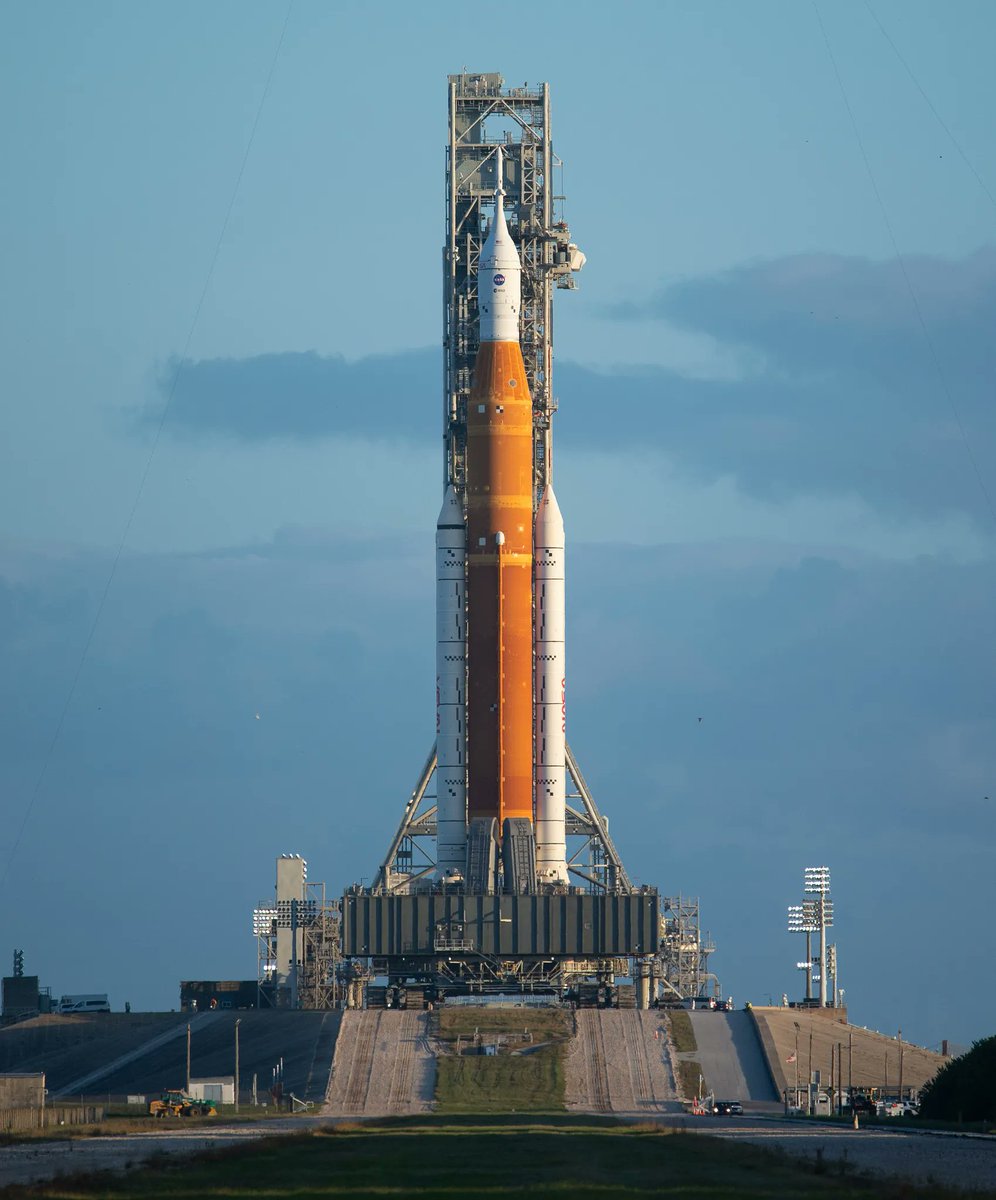
Artemis II is officially on the move, heading back to the VAB to address a helium issue on the upper stage. The journey will take about 12 hours. Hoping they can get the fix done in time for the April 1st window 🤞