Hydrogen is the most abundant element, but its a logistical nightmare to store and move.
Pure hydrogen is incredibly light. To get any meaningful energy out of it you have to compress it to extreme pressures (700 bar) or chill it to -253°C. In contrast, a liquid hydrocarbon - like oil - is stable at room temperature and packs a massive amount of hydrogen into a dense, easy-to-carry liquid.
We already have trillions of dollars invested in the pipelines, tankers and tanks - all designed for hydrocarbons. But switching to pure hydrogen requires replacing almost everything in the world - because hydrogen embrittles steel and leaks through the tiniest seals.
You can frame the carbon atom as the essential scaffolding that holds hydrogen in place so we can actually use it. Without that carbon spine, hydrogen is just a chaotic gas that wants to escape into space.
Nature already solved the logistical nightmare of handling pure hydrogen (H2) millions of years ago. The core of this argument is energy density and infrastructure.
It's called hydrocarbons.
The rapid deflation of green hydrogen came suddenly - a cautionary tale like that of the ill-fated Hindenburg.
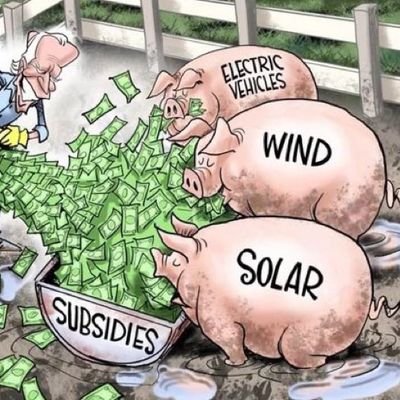
Ambition is grand, but the physics are volatile and the economics prohibitive. After millions in taxpayer subsidies, the sudden, quiet rehabilitation of natural gas - rebranded as a temporary measure - reveals the fragility of the Net Zero script. It's a tacit admission that intermittent sources cannot yet anchor a modern industrial economy.
Australia's electricity grid is getting redesigned by climate ideology instead of science. It risks the nation falling into a state of permanent energy poverty, once unthinkable in such a resource-rich nation.
The code red rhetoric demands ever more economic sacrifice. The market deserves energy density, where coal’s reliability is still mathematically significant. Instead, we are stumbling into a mandated mono-culture of renewables on stilts.
This isn't a shift in technology, it's a change of governance. Australia is trading its world-class energy potential for a junkyard of failed technology.
This approach sees the energy rich fuels that built the West as ideological kryptonite.
The oceans are so vast that even a fractional shift in temperature or circulation can move more CO₂ than all human activity combined.
The CO₂ we track in the atmosphere is just the visible surface of a massive, ongoing exchange with the deep sea—a process governed by the laws of thermodynamics, not political deadlines. The oceans are the world's true thermal engines.
It's a story of sheer scale. Water covers 71% of the Earth to an average depth of 2.3 miles; it's 1,000 times denser than the air and holds 91% of the planet's retained heat energy. This means 90% of the climate story is written in the abyss, where we have the least amount of historical data and zero control.
The current crisis narrative focuses almost entirely on the atmosphere, treating a film of gas as a closed loop. This 'thin film fallacy' ignores the fact that when oceans warm, even slightly, they release CO₂ via outgassing; when they cool, they pull it back in.
This is Henry’s Law in action: the atmosphere and the ocean constantly seeking equilibrium. With 86% of the world's carbon reservoir held in the water and only 1-2% in the air, the ocean dictates the terms of the arrangement.
To claim we can 'fix' the climate by micro-managing a human fraction of atmospheric CO₂ is like trying to steer an ocean liner by blowing on its sails. The biosphere is driven by the thermal power and fluid entropy of the saltwater that encircles the Earth.
Any agenda that ignores the 98% of the system that dictates long-term equilibrium is, by definition, deeply flawed.
“A gallon of jet fuel contains 34 kilowatt-hours of energy in a package weighing six pounds. A lithium-ion battery storing the same energy weighs 250 pounds. That density gap is why every military on earth runs on liquid hydrocarbons, why every container ship crossing the Pacific burns bunker fuel, why every combine harvester in Iowa runs on diesel, and why every 747 landing at Heathrow runs on kerosene. The fact that nobody wages war over solar panels is evidence of their limitations not superiority.” —@Shellenberger https://t.co/D2NxnfwvqU
The Hormuz crisis is the precipitating factor in the current energy crisis, but the underlying cause is too little oil and gas production outside the Persian Gulf.
Had the world spent the past decade building the oil, gas, LNG, pipeline, and fertilizer infrastructure that engineers designed and companies proposed, the Hormuz crisis would still be a serious geopolitical event, but it would not threaten to cause a recession.
North America
— The Atlantic Coast Pipeline, a 600-mile natural gas line from West Virginia to North Carolina, saw its cost double from $4.5 billion to $8 billion during years of environmental litigation before Duke Energy and Dominion Energy cancelled it in July 2020.
— The Constitution Pipeline from Pennsylvania to New York died the same year.
— The PennEast Pipeline won its case at the United States Supreme Court in 2021 and still could not get built because New Jersey refused to issue state permits.
— In Canada, TransCanada abandoned the $15.7 billion Energy East pipeline in 2017 after the National Energy Board required an unprecedented review of upstream and downstream emissions.
— In January 2024, the Biden administration paused all pending approvals for LNG export terminals shipping to non-free-trade-agreement countries, freezing projects representing tens of billions of cubic feet per day of potential capacity.
— Venture Global’s CP2 terminal in Louisiana, designed for 20 million tonnes per annum, sat in regulatory limbo for over a year.
— NextDecade’s Rio Grande LNG in Texas, with 48 MTPA of planned capacity, stalled alongside it.
— PTT Global Chemical’s proposed $10 billion ethane cracker in Belmont County, Ohio, first announced in 2015, remains on indefinite hold after failing to attract financing partners amid climate-driven investor sentiment.
— Across the US Gulf Coast, nearly 60% of planned plastic and petrochemical production projects sit on hold.
— LNG Canada, the Shell-led terminal at Kitimat, British Columbia, took over six years from construction start to first cargo, with its pipeline running 263% over budget. Environmental review, Indigenous disputes, and contractor cost escalation all contributed.
— Pieridae Energy’s Goldboro LNG project in Nova Scotia, a 10 MTPA facility first proposed in 2012, was abandoned in November 2023 after more than a decade of permitting and financing obstacles.
Australia
— Australia’s Santos’s Barossa gas project was halted midway through construction after a Federal Court ruling overturned its environmental approval.
— Woodside’s Scarborough project faces ongoing litigation from the Australian Conservation Foundation seeking to block it on climate grounds.
Africa
— Perhaps nowhere has the damage been more consequential than in Africa. At COP26 in 2021, wealthy nations pledged to halt overseas development finance for gas projects, a commitment that fell hardest on the continent least responsible for climate change and most in need of energy infrastructure.
— The World Bank stopped financing oil and gas extraction in 2019 and imposed restrictive conditions on downstream gas projects.
— The European Investment Bank announced a complete ban on unabated fossil fuel financing by the end of 2021, with its president declaring that “gas is over.”
— At least 21 other development finance institutions followed suit.
As a result:
— TotalEnergies’ Mozambique LNG project sat under force majeure for four and a half years after the UK Export Credit Agency and other backers withdrew climate-motivated financing.
— The East African Crude Oil Pipeline lost financing commitments from more than 30 major international banks under pressure from climatists.
Europe
— France prevented the completion of a third gas interconnector with Spain, citing climate neutrality goals.
— The United Kingdom imposed a moratorium on fracking in 2019 despite sitting atop one of Europe’s most promising shale gas formations.
— Germany, which shuttered its last three nuclear plants in April 2023, compounded its gas dependency by refusing to develop domestic shale resources.
— CF Industries permanently shut the UK’s largest ammonia plant at Billingham, a facility that also produced 60% of Britain’s food-grade CO2.
— Yara International curtailed output across plants in France, Italy, and Belgium before permanently closing its 400,000 tonne per year ammonia facility at Tertre, Belgium, in October 2024.
These closures occurred because European climate policy made gas too expensive for the domestic industry to survive.
@WillTatton@PeterDClack I don't know the orbital calculations. My claim is that basic physics of air and water leads me to the conclusion that 1C of atmospheric warming can only contribute to a trivial average temperature change of the oceans. That's the bit of solid science I'm standing on.
@WillTatton@PeterDClack There are 3 orbital Milankovitch cycles. Although they have long periods, a change begins over 100 - 200 years. Its a driver worth exploring before full oceanic warming is blamed on 1C of CO2 atmospheric warming over 175 year.
@WillTatton@PeterDClack Certainly other contenders. The Sun. The earth's orbit and inclination relative to Sun, the earth's own internal heat sources. The atmosphere just doesn't have the muscle (mass/heat capacity) to be a main driver of overall oceanic warming.
@wingod@JBPritzker I'm seeing more and more windmills in my province (New Brunswick), and have only experienced increased electricity bills. Is there a connection....maybe...I certainly have my suspicion that wind assets are not helping slow the growing cost of electricity.
@PeterDClack A really great summary Peter. When I read about the Milankovitch cycles, I always think how lowest of the periods (Precession) is 1% into its change in ~ 200 years - the order of a life time - and not insignificant. Is Jupiter the main driver of these cycles?
I am frequently offered hundreds of thousands of dollars to advocate for some policy or other.
I reject all such offers, and tell everyone the same thing: Anyone can get me to advocate for their proposal; just convince me it's a high-leverage way to promote energy freedom.
@davidhamiltons1@PeterDClack Not an addiction. Do you have an addiction to oxygen? It isn't logical - this aggressive race to eliminate fossil fuels now while advocating for something inferior (wind/solar/bat), and not appreciating just how much coal, oil, gas remains.
Satellite records since 1982 show leaf area and grass cover around the world is ballooning. Global crop yields have risen 15-20% since 1960, largely attributable to CO₂ fertilisation. There's been a more than 18% increase in global leaf cover in 40 years, the largest gains in India and China from CO₂ fertilisation. Warmer, more temperatures are lengthening growing seasons, a feature of rising levels of water vapour and cloud cover around the world. Famine deaths have plunged while the world's population doubled.
CO₂ deserves much of the credit. CO₂ has recovered from the edge of plant extinction during the glacial maximum 20,000-26,000 years ago, when it fell to 180 ppm. The recovery is due largely to the current warm interglacial period, which led to this explosion in plant life. Science says 600–1000 ppm of CO₂ plus 1 to 2°C extra warming is the ideal 'sweet spot' for life, including us.
Best way I know of to prepare for a new year:
Go through your calendar last year and look at what you actually did.
Identify what uses of time you are most and least happy with.
Figure out what caused the bad uses and resolve to do less of that.
Vice-versa for the good uses.
How you actually spent your time last year is the most accurate reflection of the actual tendencies and conditions in your life, and thus the best starting point for real, practical insights about growth in the new year.
If you do this, let me know what you learn!
@AlexEpstein Happy New Year Alex! Good advice here. Keep up the great work advocating for energy freedom, and thank you for the help this past year with my new energy/climate course.