And a big thank you and shout out to @EricSkaar@kh_oliver @VI4Research @bwfund for creating and supporting this great program to bring scientists and artists together!
Check out VUMC reporter piece on @jjroetman @CIR_AACR paper featuring amazing artwork by senior Halle Borowski @williamandmary created during the @ArtLab_Vandy @VI4Research Summer 2023 program!
https://t.co/4Hm780toMw
We welcome feedback and suggestions, and a big thank you to our colleagues
@VUMC_VCI @VUMC_Cancer @VUMCDIsoveries @Vandy_Biomed
for all their support! 7/7
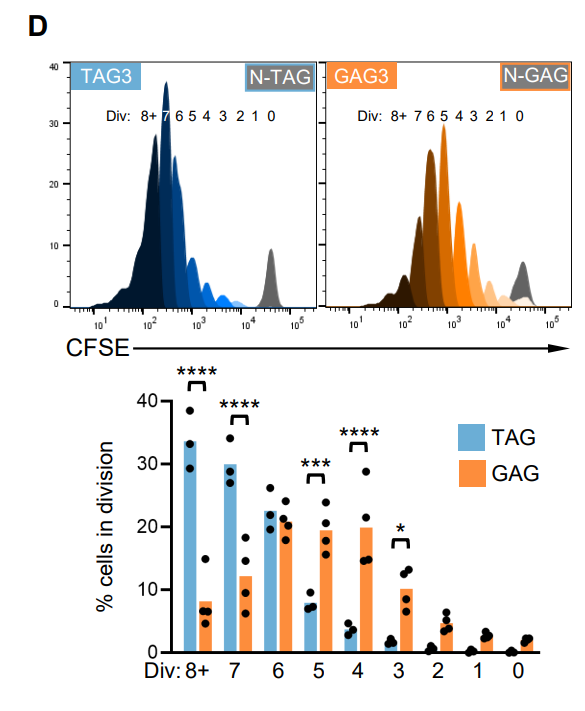
We hypothesize that peptide/MHC-TCR affinity may play a role in the divergent antigen-dependent differentiation we observed as self-shared antigens are usually lower affinity. 6/7
Immune checkpoint blockade (ICB) can unleash T cell responses against tumors but can also cause unwanted toxicity, or immune-related adverse events (irAE), when T cells attack self/shared antigens in non-cancerous tissues. 3/7
Congratulations Endeavor team at Vanderbilt, University of Tennessee, University of Pennsylvania: Jeffrey Rathmell, Alyssa Hasty, Liza Makowski, Kathryn Wellen @jeffrathmell@hasty4@MakowskiLab @WellenLab @vumc_cancer @PennMedicine
Congratulations to Dr. Andrea Schietinger, who received the AACR-Irving Weinstein Foundation Distinguished Lectureship. https://t.co/XNQWARoPMx #Immunology
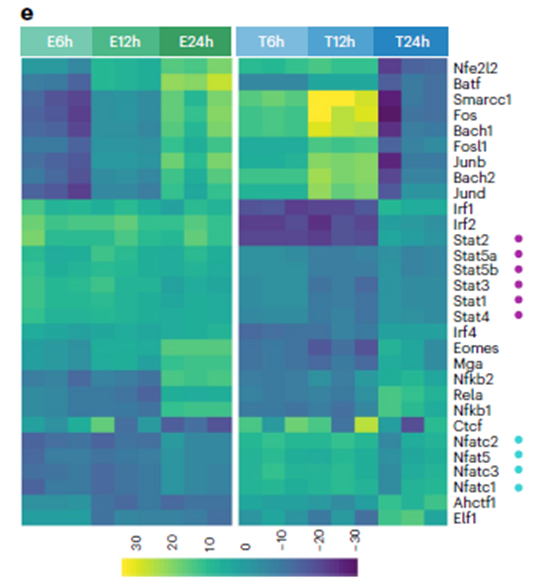
@acerobed @VUMC_VCI @VUMC_Cancer @JeffRathmell@SchietingerLab We found that E-TAG show evidence of greater inflammation-driven TF (IRFs and STATs, Fig. 5e shows nice TF motif analysis by Paul Zumbo @DBetel), which may induce functional differentiation in E-TAG. There are likely other factors, and we're working is to figure those out.
We are excited to share our work published today in @NatImmunol by @MRudloffMSTP, the whole @PhilipLabVandy team @VUMCDiscoveries, and in collaboration with our fantastic computational biology collaborators @dbetel and his group @WeillCornell. 1/7
https://t.co/zaXpn9sF91
@acerobed @VUMC_VCI @VUMC_Cancer @JeffRathmell@SchietingerLab The E-TCRTAG were TAG-specific CD8 T cells in Listeria-infected mice, and as these T cells gain effector function, we abbreviated them as E-TCRTAG. The T-TCRTAG are TAG-specific T cells in tumor-bearing mice, and these become dysfunctional.