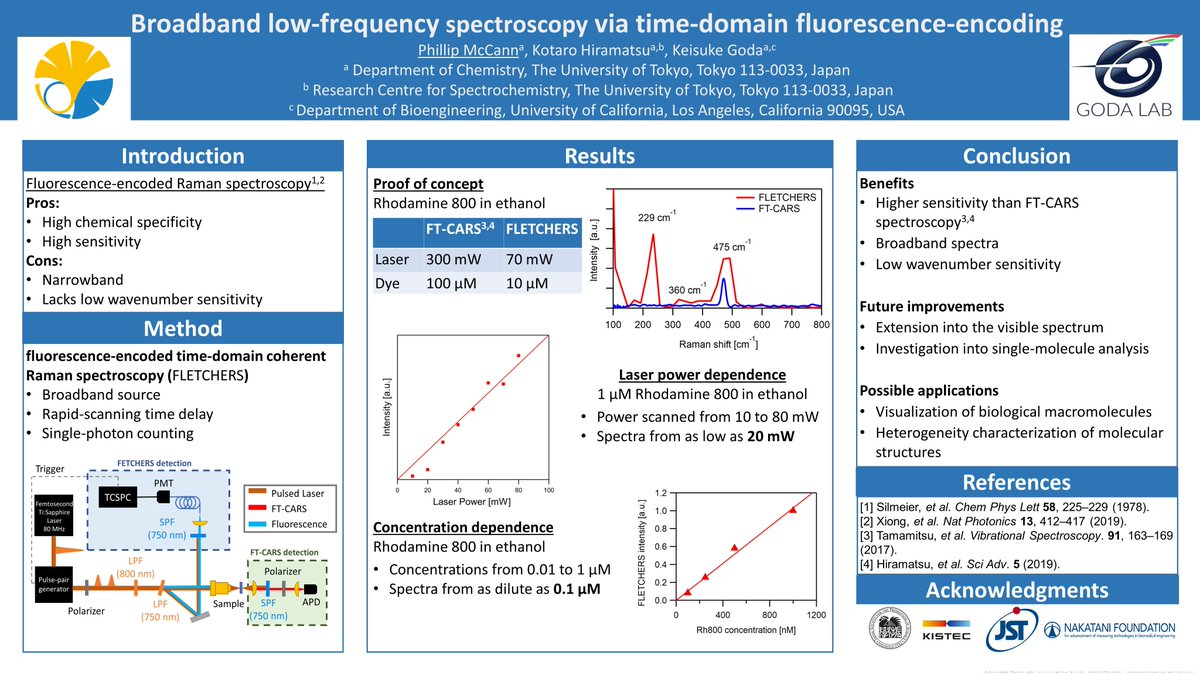
@YutaNakagawa5@SerendipityWrk Good question. We have been interested in using FLETCHERS to identify fluorescent proteins due to its sensitivity (due to incorporated Raman), and its ability to break the color barrier of traditional fluorescence microscopy.
@YutaNakagawa5@SerendipityWrk Good question. The easiest way would be to just change the laser from Ti:Sapphire (750-850 nm) to something that emits in the visible range. Of course, we would need to replace the other filters in the system as seen in the first figure. But that should be all that is required!
Welcome everyone to the Serendipity workshop 2020. I am one of the two chairs for this session. The poster A session is now open. Let's get started your posters presentation! #Serendipityworkshop2020@Serendipitywrk#SerendipityPoster
@HenryMicro36@SerendipityWrk Ahh, that make sense. Very important findings using just a FV3000 confocal! People recently (even in our lab) have been focusing more on yeast so this kind of discovery is impactful to our work!
@GuolinYun@SerendipityWrk Haha, I am a huge fan of projects like these. You have to merge a little bit of fun into the science every once in awhile to get peoples attention!
What does that say "WOW" or "VOW"? and if "VOW" what does that stand for?
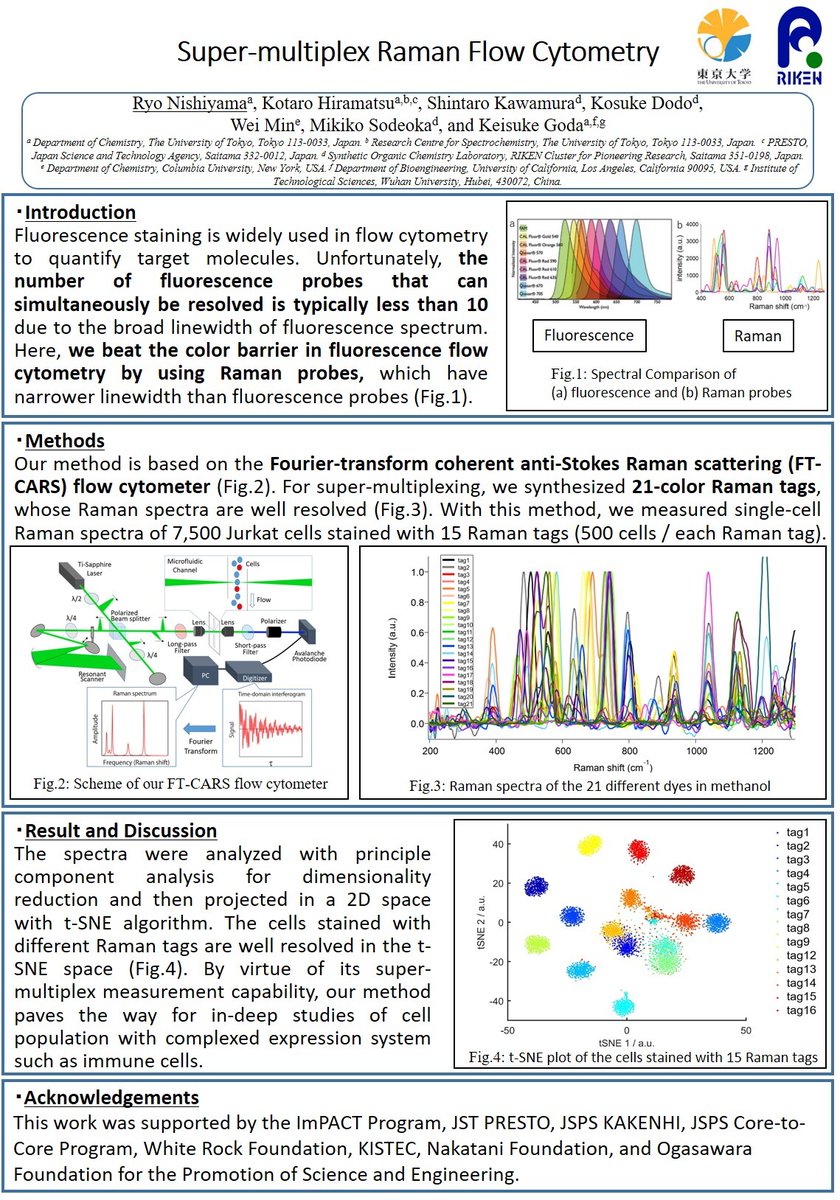
@Nishiyama323@SerendipityWrk Nishiyama, how many tags have you made up to now? I thought it was more than 15?
Also, how long does it take to make a single tag?
@JGaladePablo@SerendipityWrk We are still looking into that. As of now, we can resolve a Raman spectrum from samples as dilute as 100 uM (far better than other CARS processes) however, we have reason to believe that single-molecule detection might also be possible and is something we are trying to reach!
@KangHee_snow @SerendipityWrk Thank you for the question! The best benefit of the visible range is that there are many more dyes to use compared to the NIR range. This would allow for more dye colors and a broader application with this method