We choose to do things, not because they are easy, but because they are hard, because that goal will serve to measure the best of our energies and skills, because that challenge is one that we are willing to accept, one we are unwilling to postpone, and one we intend to win.
A patient has shown involuntary movements. What is the underlying mechanism?
A. Substantia nigra lesion
B. Rhythmic muscle hypertonia
C. Intermittent loss of muscle tone
D. Enhanced physiological activity
What's your answer?
Sister Mary Joseph nodule represents metastasis most commonly from:
A. Lung carcinoma
B. Gastric carcinoma
C. Renal cell carcinoma
D. Prostate carcinoma
You might think it’s a seizure… but the truth is: after a group A streptococcal (GAS) throat infection, the immune response can misfire—cross‑reactive antibodies can disrupt the basal ganglia, leading to involuntary, dance‑like movements..😳😳
What is the diagnosis and treatment ?!
Active hemorrhage or incidental finding? It is easy to mistake pre-existing pathology for acute trauma in the ED. Watch Daniela Galan, MD break down a hepatic imaging pitfall.
https://t.co/9Jp1977sao
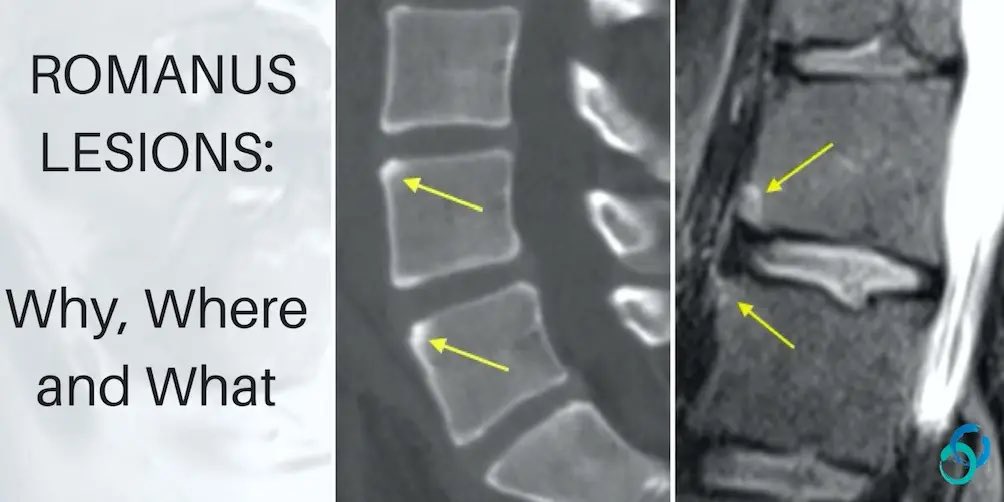
@hemo_shk Romanus' sign (or the "shiny corner sign") is an early spinal finding in ankylosing spondylitis. It indicates active inflammation at the discovertebral junction, the area where intervertebral discs attach to the bone.
The clinical sign shown is asterixis (flapping tremor).
Asterixis is a subtype of negative myoclonus, characterized by brief, arrhythmic lapses in sustained posture caused by involuntary pauses in muscle contraction. The resulting downward flap is followed by a rapid return to the original position.
In this case, the most likely diagnosis is uremic encephalopathy, where accumulation of uremic toxins impairs brain function and produces bilateral asterixis.
Facts:
🟩Asterixis is a clinical sign, not a disease.
🟨 It is commonly associated with toxic-metabolic encephalopathies and is most often seen in:
- Hepatic encephalopathy
- Uremic encephalopathy (renal failure)
- Hypercapnic respiratory failure
- Electrolyte disturbances
- Drug toxicity (e.g., phenytoin, valproate, benzodiazepines)
How to examine for asterixis:
Ask the patient to extend both arms, spread the fingers, and dorsiflex the wrists while maintaining the posture. Wait at least 30 seconds, as the flapping movements may not appear immediately.
Asterixis is usually asymptomatic and often goes unnoticed by patients. Its presence should prompt a search for an underlying toxic or metabolic disorder because it is often reversible when the underlying cause is treated.
Recognizing asterixis at the bedside can lead to early diagnosis of potentially life-threatening but treatable encephalopathies.
Reference:
Rissardo JP, Muhammad S, Yatakarla V, Vora NM, Paras P, Caprara ALF. Flapping Tremor
A man develops this 6 hours after being bitten by a mosquito. What is the most likely diagnosis❓
A. Malaria
B. Contact Dermatitis
C. Skeeter Syndrome
D. Erysipelas
Spot Diagnosis ❓
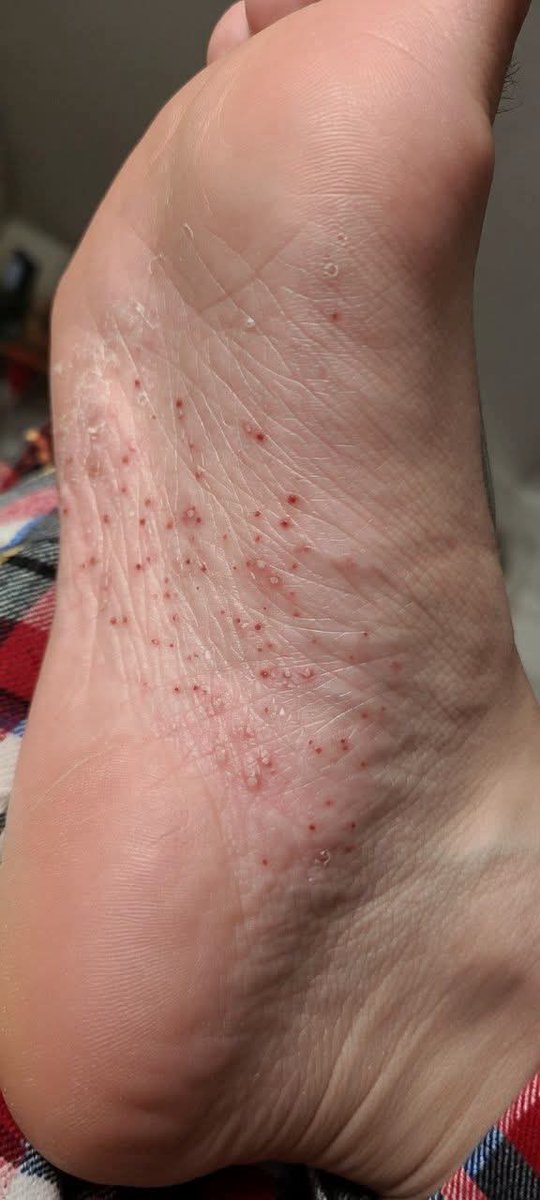
A 46-year-old woman presents with a 6-month history of recurrent painful eruptions involving both palms and soles.
On examination:
- Symmetrical involvement of the palms and soles.
- No obvious signs of bacterial infection.
❓What's your diagnosis
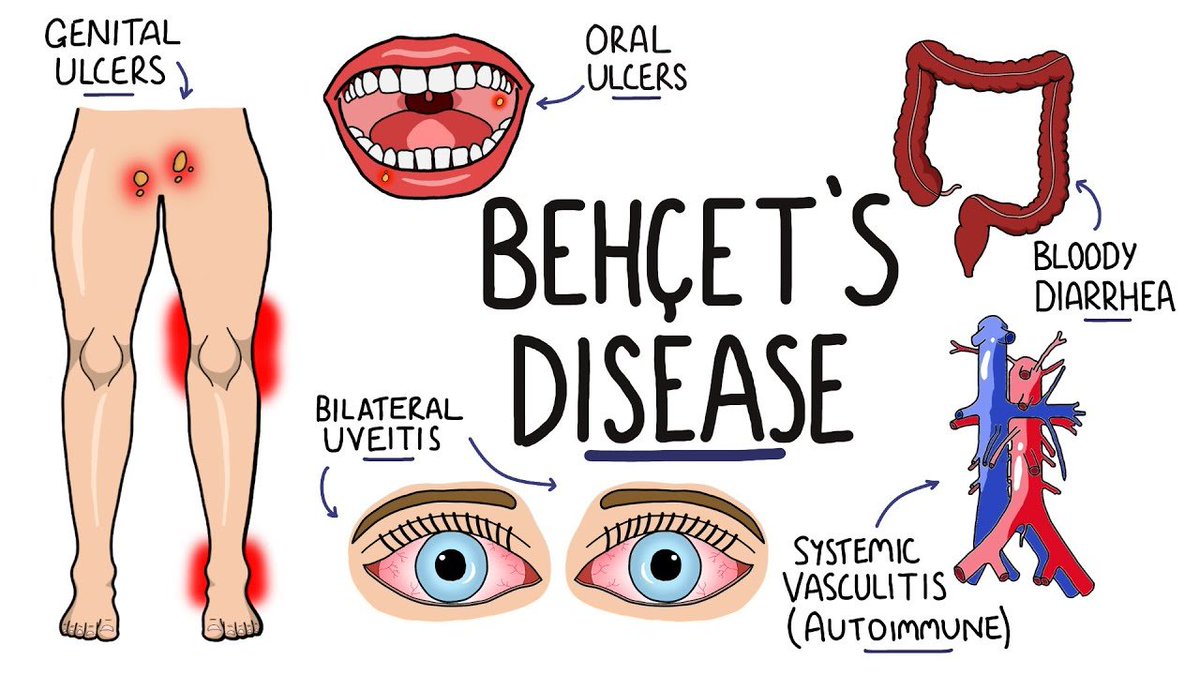
Behçet Disease - a rare, chronic, relapsing systemic vasculitis of unknown etiology, associated with HLA-B51.
Key features:-
Recurrent oral aphthous ulcers (hallmark, almost always present)
Genital ulcers
Uveitis (can cause blindness) / other ocular involvement
Skin lesions: erythema nodosum, pseudofolliculitis, pathergy reaction (papule/pustule at needle prick site - used diagnostically)
Vascular involvement: both arterial and venous thrombosis (unusual among vasculitides)
Can involve GI, CNS, and joints.
Diagnosis:
Clinical (International Study Group criteria) - recurrent oral ulceration + 2 of (genital ulcers, eye lesions, skin lesions, positive pathergy test).
Treatment: Colchicine (mucocutaneous), corticosteroids, azathioprine/immunosuppressants for severe organ involvement, biologics (anti-TNF) in refractory cases.