AMFI Registered Mutual Fund Distributor.
Past performance may or may not be sustained in the future. Mutual Fund investments are subject to market risks.
WHY PICKLE-JAR?
The Philosophy Behind Our Brand:
A pickle develops in taste after all the ingredients have properly soaked in the pickle juices. Similarly, our philosophy behind investing is to invest for the long-term by circumnavigating around the risks involved.
SEBI introduces 'Life Cycle Funds' with maturities of 5-30 years (e.g. 'Life Cycle Fund 2055'). Equity exposure starts high (65%-95%) and shifts to debt as maturity nears. Up to 10% can be in gold, silver or InvITs. Exit loads apply, reducing over 3 years.
⚡ Electric SUV Showdown: Who Delivers the Longest Range?🚗🇮🇳
Maruti Suzuki e-Vitara — 543 km
MG Windsor EV — 449 km
VinFast VF6 — 468 km
Tata Curvv EV — 585 km
MG ZS EV — 461 km
Hyundai Creta Electric — 510 km
Mahindra BE 6 — 683 km
(News Report)
When markets swing, balance wins.
Mr. Sankaran Naren, Executive Director & CIO at ICICI Prudential AMC, explains why a SIP in multi-asset funds can smooth your long-term journey, because when one asset slows, another steps up. Watch the full video to see how disciplined investing can help protect and grow your money.
#ICICIPrudentialMutualFund #SIPInvestment #MultiAssetFund #SystematicInvestmentPlan #WealthCreation #LongTermInvesting #MutualFundsIndia #FinancialPlanning #InvestSmart #MoneyManagement
Not every pause means missing out.
Sometimes, it means staying in the game longer.
That’s the idea behind ELSS.
A 3 year lock-in designed to help investors stay invested.
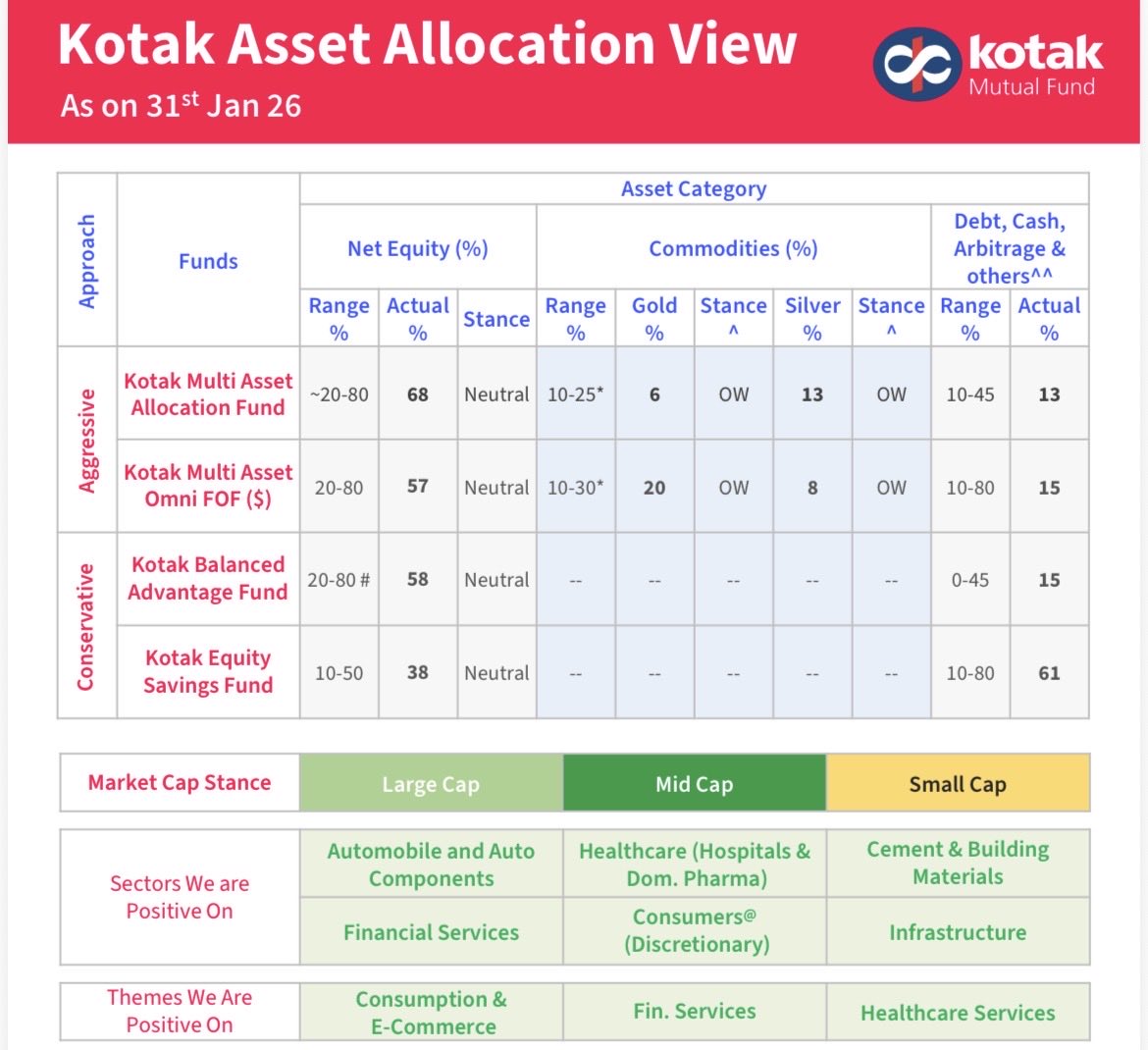
Our House view on the asset allocation.
Equity is Neutral Allocation with marginal overweight towards Mid and Large Caps
Precious Metal long term view is bullish but we expect high volatility.
Debt is biased towards carry than yield movement.
A Note to SIP Investors (Not for Lumpsum & Market Timers)
Many of you have started your SIP journey in the last five years. Data shows that nearly 3 in 4 existing SIPs were initiated during this period. Many who began investing in the aftermath of the pandemic have enjoyed extraordinary and, in some cases, unbelievable returns. While the long-term historical return for Indian stocks has ranged between 10% and 13%, some investors—particularly those focused on Small & Midcap segments—have registered over 20% CAGR. Congratulations!
Equity markets have corrected by about 10% to 15%, depending on the index you consider. Similarly, the funds you invest in may have performed slightly better or worse within this range. At this juncture, it is important to remember three critical lessons:
1. The First Rule of SIP Investment: NEVER Stop
If you start a SIP (Systematic Investment Plan) and never stop, you don’t have to do anything else. You don’t need to follow expert opinions or read reports (including #DSPNetra). By averaging your investments over the long term, you automatically accept average valuations, average returns, and average volatility. Ironically, most investors don’t even achieve average returns due to emotional decision-making. SIP provides a structured approach that removes the need for timing the market. Stopping your SIP disrupts this compounding effect and negates its mathematical advantage.
2. Past Returns Are Irrelevant to Future Performance
The returns you have made (or missed) are in the past—they may or may not be replicated in the next five years. Through #DSPNetra, we have repeatedly emphasized that holding overvalued equity investments is similar to owning bonds with stock-like volatility. Small & Midcap segments have been expensive in recent quarters and are only now beginning a mean reversion, with some way to go.
There have been extended periods when Smallcaps, Midcaps, or even Largecaps have delivered little to no returns. These rough patches often lead investors to stop their SIPs. Consider an investor who started Dollar Cost Averaging or SIP in Japan in 1989—could they continue investing for nearly two decades with minimal returns? Probably not. But those who did emerged better off than market timers and those who quit. (See Image 1 for instances where broader markets remained flat, yet SIPs delivered results.)
3. Investing Has Been Gamified—Resist the Urge to Swipe Start or Stop
In recent years, investing has been gamified—it’s now extremely easy to swipe and invest in seconds. Unfortunately, this convenience has also increased impulsive activity. Many investors, driven by adrenaline, news, opinions, and rapid market movements, end up making frequent transactions, which only increase costs and reduce returns. Do not mistake the ease of investing for the ability to time the market.
4. If You Started a SIP Recently, Timing Is Irrelevant in the Long Run
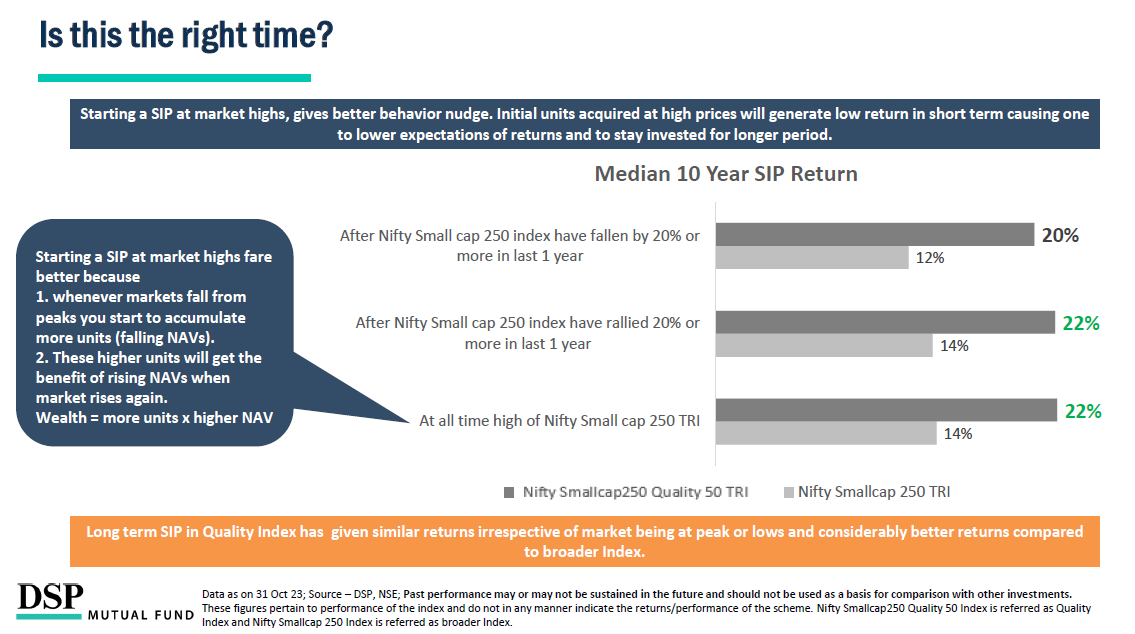
For those who started a SIP in the last year or are considering starting now, remember: if you stay invested long enough—i.e., over decades—timing becomes irrelevant. Take the case of Smallcaps. History shows that even starting a SIP at market peaks, provided you focus on quality investments, allows you to stay invested longer. Why? Because initial low or negative returns help reset expectations, making it easier to remain committed. Lower expectations = higher probability of staying invested. (See Image 2 for data on SmallCap indices at recent peaks.)
5. A Bear Market in NAVs Is a Bull Market in Units
If you are leveraged, overexposed to equities, or if SIP forms an insignificant part of your portfolio, these pointers may not be helpful. However, for disciplined investors, even bad initial outcomes should not deter you. When equity prices fall and NAVs decline, you accumulate more units for the same SIP amount. Bear markets in prices are bull markets in units. They allow you to accumulate more investments, potentially leading to better long-term returns—provided your underlying investments are sound.
Stay the Course. Happy Investing!
Three golden rules to succeed with mutual funds:
Successful investors are those who reach their goals without undue risks. Become one by following these simple yet powerful rules
https://t.co/CY0DuuznRz
@Iamsamirarora Absolutely! Let’s show them how it’s done. A strong Indian market would be the best kind of morning coffee for global investors.
Let’s make it happen!