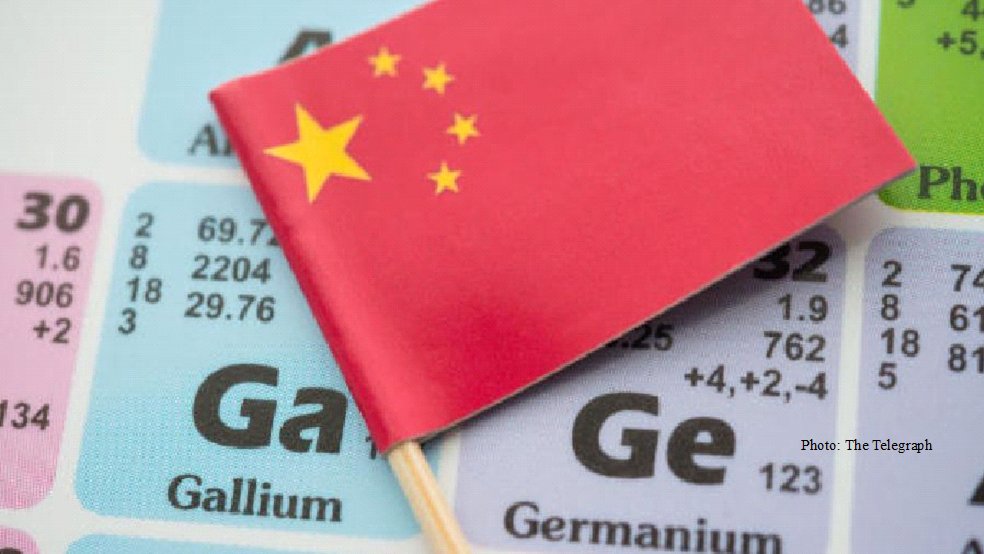
India's vulnerability lies less in the availability of critical minerals than in the absence of commercial-scale, ultra-high-purity processing and refining capabilities.
NCAER research staff members @PohitSanjib and @mondal_sovini argue that future technological competitiveness will depend not only on access to critical minerals but also on the ability to recover, refine and manufacture semiconductor-grade materials domestically. Developing this midstream ecosystem should therefore be a strategic policy priority.
Read more: https://t.co/A0WeOpcIp1
The clean energy sector has transitioned from dependence on lithium batteries for storage to a multi-chemistry ecosystem that uses both physical material & AI—with opportunities for India to have a self-reliant energy future: @PohitSanjib & Mitra @ncaer
https://t.co/Xb7iaQBWSn
Nitin Gadkari’s blind obsession with E20 fuel blending is another example of headline-driven policymaking replacing evidence-based governance.
Millions of Indians own vehicles that were never designed for E20. Instead of addressing compatibility concerns, consumer costs, fuel efficiency, and long-term engine performance through transparent data, the Government is asking citizens to bear the burden of its policy experiments.
NCAER IEPF Chair Professor @csmohapatra_dr has edited the volume Claiming the Unclaimed: Unlocking the Potential of Idle Financial Assets in India, published by @authorityiepf and @theicai.
The book proposes a citizen-centric, interoperable national framework for managing unclaimed financial assets by integrating asset discovery, verification, settlement, institutional coordination, digital financial literacy, and assisted support services to facilitate the return of unclaimed financial assets to their rightful owners with transparency, dignity, and trust. @Depannita2 has also co-authored a chapter in this volume.
📊 Strengthening Research for Smarter Infrastructure
@NCAER and @NHAI_Official have signed an MoU to establish the NHAI Centre for Economics of Transportation, Mobility and Logistics.
The new research centre at NCAER will be a dedicated platform for applied research across key areas, including highway economics, freight logistics, toll policy, asset monetisation, road safety, technology adoption, and mobility systems.
Drawing our seven decades of policy-relevant economic research and data capabilities, the new centre will generate rigorous evidence to support decision-making across India's transportation and logistics ecosystem.
Read the press release: https://t.co/72ZXcXf9Df
#Transportation #Mobility #Logistics #Infrastructure #EvidenceBasedPolicy #NHAI #BuildingANation
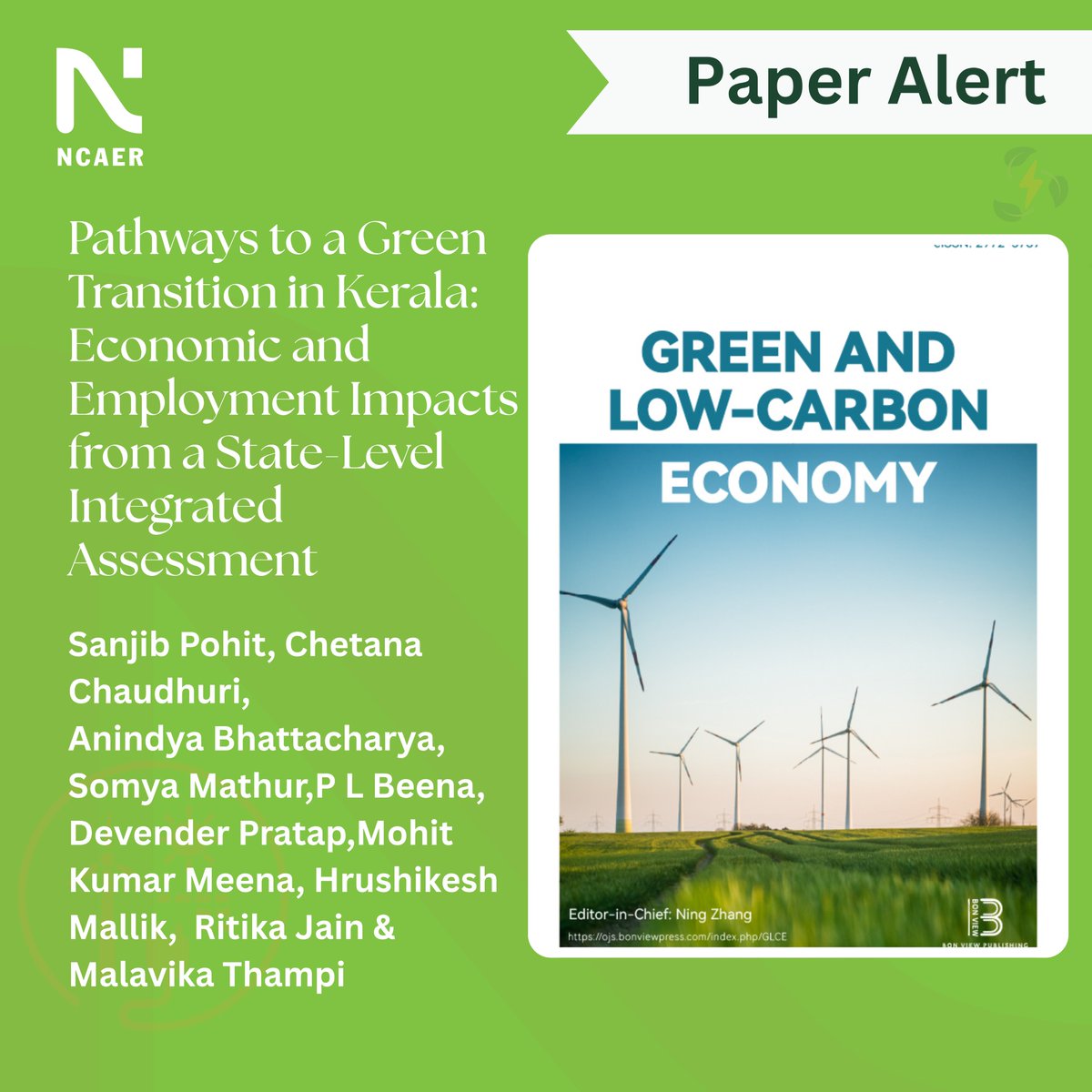
NCAER faculty members @PohitSanjib, @chetana_c1, @DEV_6309 and their co-authors have published India’s first state-level Integrated Assessment Model for Kerala, linking CGE & MESSAGEix models. Results show that green investments can reduce emissions while supporting growth, jobs, energy security & sustainable development.
Read more: https://t.co/Qaj7leUlLh
"India's DPI usage is better than most technology usage by many advanced countries in the world."
But the next challenge is productivity, jobs, and mass prosperity.
🎥 Watch the full episode:
https://t.co/kTOI8ciPkk
NCAER Consultant @RaktimavaBose was awarded the Best Paper Award at the International Conference on Contemporary Issues of Economic Development, jointly organised by National Stock Exchange(NSE) India and Visva-Bharati University, Shantiniketan.
The paper, titled “Building Water Accounts: Physical Supply and Use Tables for India’s Water Resources,” was co-authored with @PohitSanjib and @chetana_c1 and presents a comprehensive framework for tracking the physical supply and sectoral use of India’s water resources.
At the NCAER Workshop on Climate Finance and Clean Energy Transition, NCAER faculty member, @chetana_c1, presented a paper titled “Binding Constraints in India’s Renewable Energy Transition.”
The paper emphasised the need for improved access to finance, expanded storage infrastructure, and the promotion of green employment.
🔗 https://t.co/9V9jagpMyk
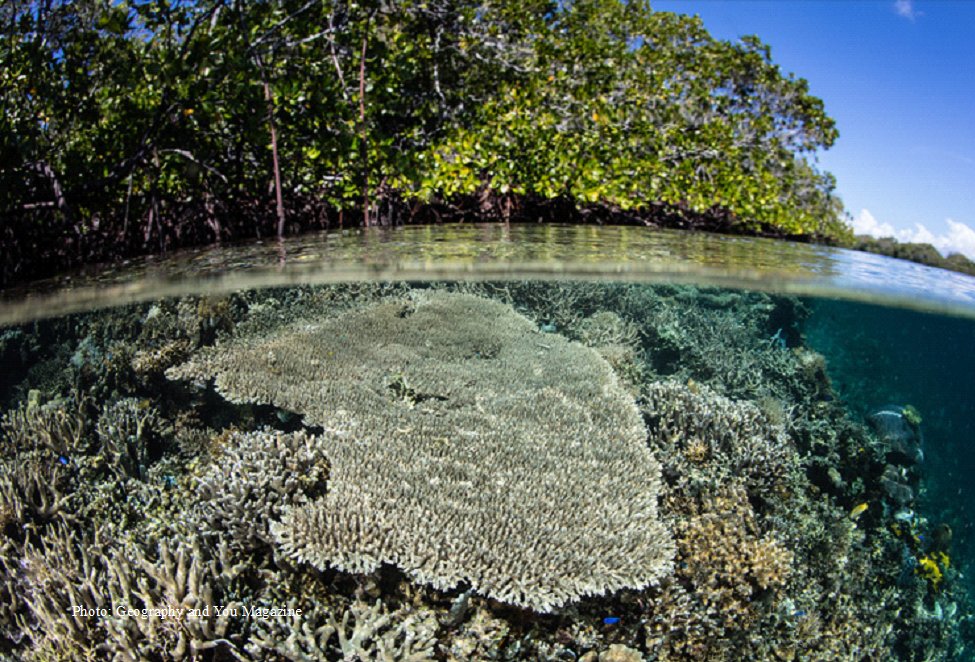
What if India’s path to net zero begins where land meets the coast, not just in factories?
NCAER researchers @mondal_sovini and @PohitSanjib argue that protecting ocean health is essential to unlocking the blue economy’s carbon storage potential – offering India a practical, low-cost pathway to net zero that can no longer be ignored.
Read more: https://t.co/MrNlfgntVS
NCAER faculty member Sanjib Pohit and his co-author Stutii Srivastava argue that India is building the regulatory architecture, sovereign bond market, and startup ecosystem needed to lead the climate economy, yet major funding gaps persist. The stakes are exceptionally high, but so is the opportunity. Green finance may be imperfect, but its direction is unmistakable.
Read more: https://t.co/uLpmz0aQKE
A new study published in Margin—The Journal of Applied Economic Research by Amit Mitra, Souryabrata Mohapatra, Sovini Mondal, Srija Basu Chaudhury, and @PohitSanjib finds that rising temperatures have severe effects on staple crops such as rice and wheat, while pearl millet and cotton appear comparatively more climate resilient.
The study also warns that, by the late 21st century, combined shifts in temperature and precipitation could substantially reduce yields of pigeon pea and maize.
🔗 https://t.co/wAFOI2Yvxu
IMPORTANT: a day before Bengal votes in second and final phase, ONLY 1,468 names are believed to have been added back to the electoral roll (source: Indian Express). Total 34 lakh applications are pending before 19 tribunals. As Justice Bagchi of SC said: ‘This election, we understand. More valuable right to remain on the rolls, we will examine.’ Well, your Lordship, in 99% of cases NO examination done yet and election is tomorrow. Repeat: a RIGHT TO VOTE your Honour is not a post-dated cheque. I guess only when a family member is denied the right, will we all wake up 🙏
With patchy digital infrastructure at border points and limited real-world access to TIR corridors, seamless paperless trade is still more promise than practice.
NCAER researcher @mondal_sovini & @PohitSanjib argue that if India wants the India-EU FTA to lift exports and draw deeper into value chains, it must reduce the time and cost of moving goods across borders.
🔗https://t.co/iHuxoo86a7
Dear mainland Indians,
We, the people of the Northeast, are not your jokes, not your stereotypes, and not your slurs. We are not ‘spa-wali,’ not ‘momo-wali,’ and never objects of exploitation. We are Indians—born of this land, bound by its Constitution, and equal in dignity, identity, and rights.
Our faces may look different, our cultures may be distinct, but our patriotism is no less, our pain is no less, and our belonging is unquestionable. Respect us. Recognize us. We are India. 😢🙏
Can you recognise him?
He is Amir Shaikh from Malda, West Bengal.
He went to Rajasthan to earn a livelihood. Rajasthan Police detained, tortured, and pushed him back to Bangladesh — his “crime”? He speaks Bengali. He is a Bengali by birth. A Bengali Muslim from West Bengal.
Yes, for being Bengali, he suffered humiliation and injustice.
We from @Bangla_EkataM took to the streets in protest, and our representative stood by his family then. Today, at the Book Fair, Amir shared his story himself — leaving everyone shaken.
Though he was later brought back to India, the insult and trauma he endured must not be forgotten. We will stand against every Bangla-birodhi force.
#आरएंडडीनिवेश राष्ट्रीय रणनीति के रूप में नवाचार : क्या पर्याप्त निवेश ‘विकसित भारत’ बना सकता है? | संजीब पोहित @PohitSanjib, सोविनी मंडल (@ncaer)
पूरा आलेख यहाँ पढ़ें :https://t.co/x50nBNsnEU
My father served this state as a government employee for nearly 38 years.
An honest life. A clean record. A lifetime of duty.
I was born in a private nursing home. I have my birth certificate, school records, and identity proofs... every document a citizen is expected to have. And yet today, because of a buggy software, I have been served a notice by the ECI claiming there is a “mismatch” in my father’s name between 2002 and now.
Let me state the truth clearly.
In 2002, I was underage. That is why my name did not appear on the voters’ list then.
Today, my father is no longer with us. He is not here to walk beside me, to answer for me, to stand up for me.
And still, irony cuts deep.
When I visited the BLO’s house today, his father recognised me instantly by my face, because my face carries my father in it. The system failed. Human memory did not.
On the 27th January, I have been called for a hearing.
Not because I am illegal.
Not because I do not belong.
But because a machine cannot read a life lived with honesty and dignity.
I will prove my name.
I will prove my father’s name.
Not quietly. Not fearfully. But with dignity.
Because before the Bangla-birodhis, before faulty software, before paperwork, before so-called “logical discrepancies” —
I am a child of this soil.
And my father’s 38 years of service, my votes over the years, and my constitutional rights will not be erased by a glitch.