1/ When you have clarity of thought, you can have conviction in non-obvious strategies. This is @t_xu’s superpower.
Check out these slides from the @DoorDash Series A pitch deck. 🧵 👇
In 2010, YouTube had 800M active users + streamed 2B+ videos daily.
But internally, we were flying by the seat of our pants.
One burning question was on our minds:
How were people actually using YouTube?
Here's the story of how one UX researcher ignited sweeping changes to how the company approached building the product:
—
I joined YouTube in 2009 and still recall my first planning meeting with the search team.
We sat around a table and the PM asked:
“So what do you all think would be cool to build?”
In asking a few questions of my own, I realized the team had been building without understanding how people experienced the product.
We lacked the information to make informed choices about what to prioritize across YouTube.
And so we started to grow the research team.
—
In 2010, we convinced @kerryrodden (they/them), Google’s first Quantitative UX Researcher, to join YouTube.
To get oriented, Kerry started asking PMs, Designers, Engineers, Execs, and other UX Researchers what their most pressing questions were. One question came up again and again:
How were people actually using YouTube?
Kerry combed through existing qualitative research, and honed in on understanding how people navigated through the site.
To do this, Kerry jumped into YouTube’s user logs and was delighted to discover that YouTube’s data showed a user’s entire session — revealing a user’s navigation across all the pages they visited.
(Note: User sessions were completely anonymized, so no session data was attached to an identifiable person.
Also, usage data was separated from video content, so we analyzed only page types e.g., watch page or search results page, but not the actual videos or search queries.)
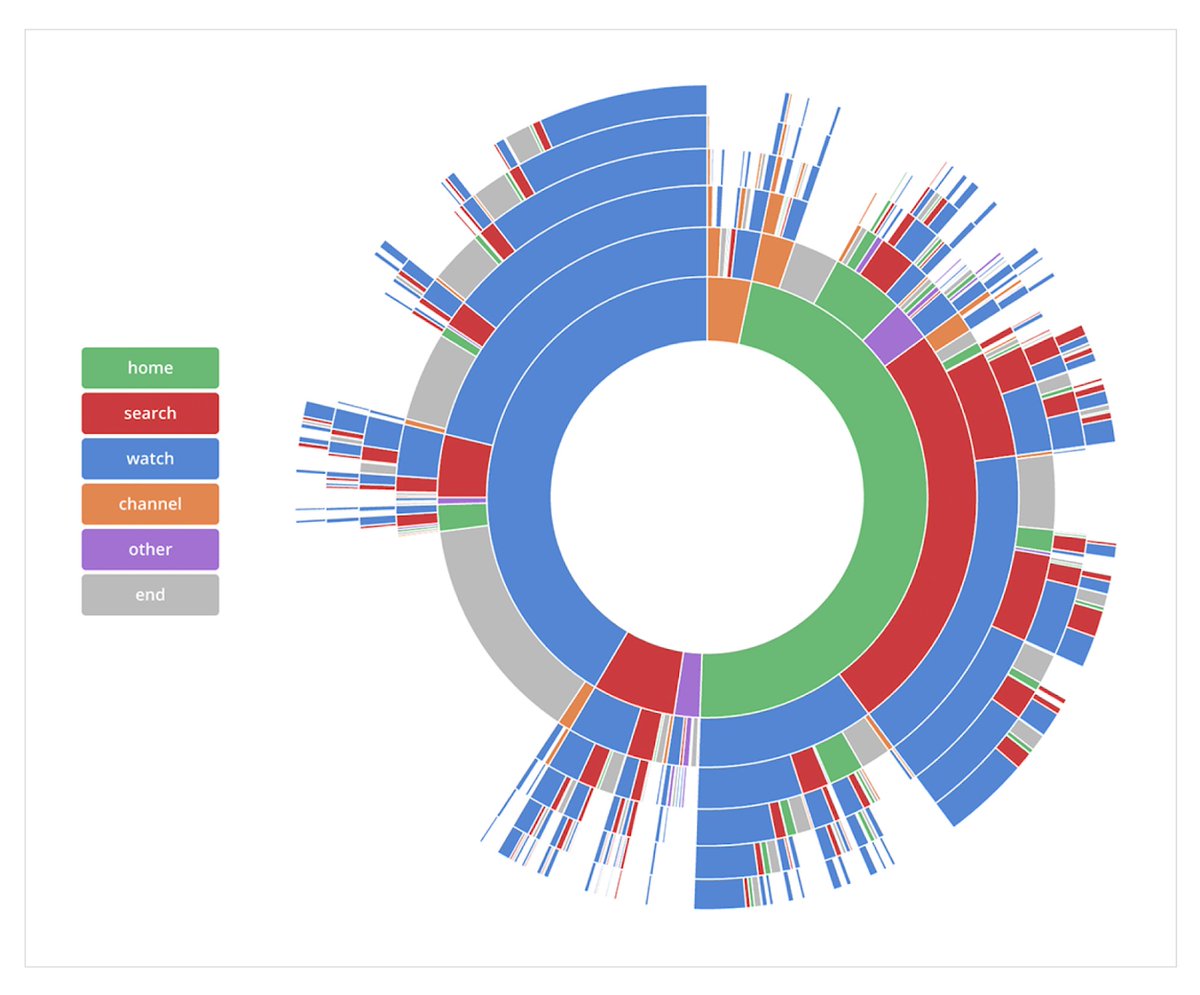
To simplify the data, Kerry categorized all the pages of YouTube into five page types: Home, Search, Watch, Channel, and Other (account, settings, etc.).
Kerry counted usage for each page type and then likelihood of the next page to visit.
e.g. If someone was on the home page, what percentage of the time did they search vs watch a video?
When sharing these eye-opening findings with PMs, Designers, and Engineers, Kerry was met with a barrage of additional questions:
- Where were people most likely to start?
- Where did they go?
- What did a typical session look like?
- How/when/where did sessions end?
These questions led Kerry to analyze whole sessions.
So they calculated where people started, and from each page, where they were most likely to go next.
—
Kerry had overcome the first challenge of making sense of the data.
But their goal was not only to understand how people navigated YouTube, it was also to show the data in a way that everyone inside of YouTube could easily understand.
After exploring several formats, Kerry landed on a radial sunburst format to visualize the data.
In this view, it was easy to see the relative % of sessions that started with each page type and it was also easy to follow a user’s path across an entire session.
Kerry built an interactive version that allowed us to hover and trace any path from start to end, with the percentage of sessions that followed that exact path.
The image below is static, but shows the breakdown of paths people took through YouTube.
(Starting from the inside and working your way to the outermost ring)
—
Kerry’s visualization went viral inside YouTube.
It was turned into posters and hung up on the walls, printed onto t-shirts, and referenced in exec strategy decks and new hire orientation.
The mystery of how people used YouTube had been unlocked.
—
We had all assumed YouTube’s homepage was important.
The homepage had 45M+ visits per day and companies were doing home page buyout ads for huge sums of money.
But Kerry’s research revealed less than half of sessions started on the homepage and people mostly came to the home page to search.
The homepage showed a bunch of videos that were driven by a mass algorithm (and was pretty much the same experience whether a person was logged in or not).
We were missing the opportunity to show 45M people the content they wanted to watch each day.
Kerry’s visualization was an inflection point in YouTube’s history.
Their findings created lasting ripple effects that elevated how well we understood users’ experiences, how we approached building products, and how so many subsequent video-first companies shaped their products.
Ultimately, the team invested in building personalized recommendations, which helped transform the homepage from a search portal into a destination for finding content to watch.
This transition was especially pivotal later, when everyone shifted to mobile.
Personalized recommendations set YouTube up to become the dominant mobile video app, where “homepage” discovery was foundational to its success.
Today, we open the YouTube app and start watching videos without even thinking — it just works.
—
This story has stuck with me for the past 15 years.
It is a great example of what can happen when a single person is devoted to understanding the full user experience and is willing to put in the effort to cross traditionally accepted boundaries.
It is so important to have a clear picture of how people experience your product — both qualitatively and quantitatively.
Understanding this fuller picture can open your eyes to gaps and unexpected behaviors as well as focusing on perfecting the parts of your product where the magic happens.
—
A big thanks to @kerryrodden, as well as @shivar + @mags to jog my memory of different facets of this story.
For more on design insights + stories, follow me at @elizlaraki.
Typically love @benthompson and @stratechery stuff, but one thing yesterday's Reddit article gets very wrong is that Reddit's ads products are mostly contextual advertising and that Reddit has done well because of Facebook's struggles with Apple ATT. They are not, and this is not why Reddit has done well.
The vast majority of Reddit ads are behavioral, not contextual (e.g. you engaged with a post from the bowling subreddit at some point so here are some bowling ads).
Furthermore, the reason that Reddit has done well is not because Apple ATT killed Meta's ability to behaviorally target. What ATT killed was Meta's ability to "close the loop" on conversions, thus enabling them to better understand which user would convert from what ad, and from there better serve targeted ads. This is not what Reddit excels at anyway, and in-fact is the antithesis of Reddit's whole ads business (and Snap's, and X's, at least historically).
Reddit/Snap/X are mostly brand advertising businesses (which is partly why X's advertiser boycotts hurt them so badly, performance advertisers don't get scared of bad press and run usually). Apple ATT is completely irrelevant to brand ad serving because the ads are typically getting served based on demographic or behavioral data ONLY, and not based on if they are going to convert (which is the whole thing that Apple ATT messes with).
Reddit has mostly done well because it has graduated over time from test budgets within the Big 5 ad agencies, to real budgets. For the uninitiated, the Big 5 ad agencies make up something like 80%+ of total annualized US ad spend. They mostly *do not care* about direct conversions. They care about things like brand lift studies or video views, which are immune to Apple ATT as they are "conversions" that can be measured on-site anyways.
Reddit is going IPO as $RDDT, the first social media IPO in some time. As someone who spent some substantial time running a social media company, my takes on the Reddit IPO:
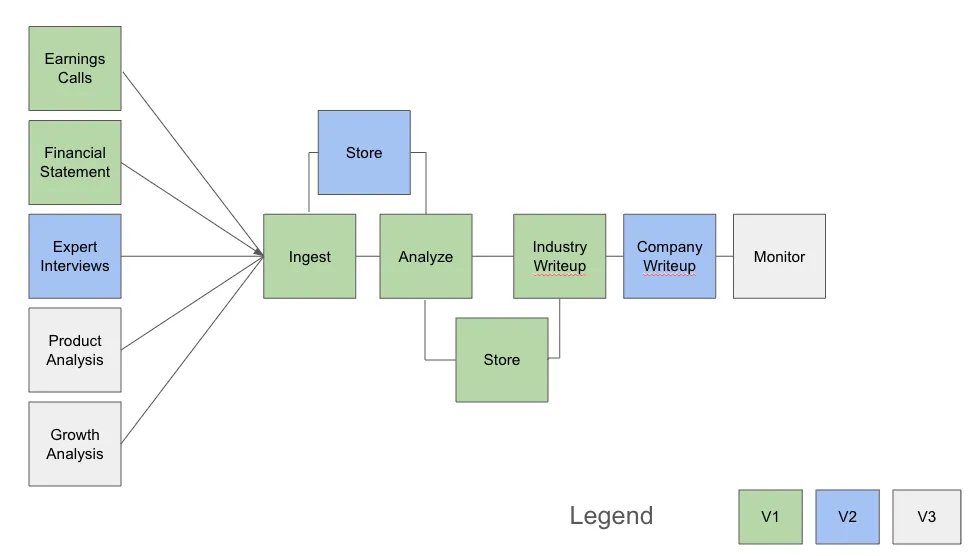
I'm "solving" this by building a "financial agent" LLM project (this also helps me do more with LLMs and build something).
My basic approach is mapped out in this image (store = write to risk):
@ScottieWild24@ScottMendelson@PuckNews They need to every ~6 years, which they have been doing w/ core characters. But there's a world of difference between the time/care/effort put into Spider-Verse films vs these live-action side stories that aren't held to a high standard & tarnish the brand (while losing $)
this AMA with @eugenewei was great! check it out below - covers everything from social network design, to the future of X, to crypto, to films
https://t.co/zerZhXXOTf
You are very confused.
Sora is trained to generate pixels.
The underlying architecture/method is totally irrelevant to the argument.
There is nothing wrong with that *if* your purpose is to actually generate videos.
But if your purpose is to understand how the world works, it's a losing proposition.
Good @NFX article on potential durability / defensibility for Generative AI companies. One thing this is missing is workflow lockin.
All of us have workflows that we are comfortable with - both at work and in our life - and it takes a tremendous lift to change these workflows.
This is the challenge for AI startups, but also the opportunity. If they can co-opt the workflow, it's a massive source of value and defensibility.
A common refrain I hear from parents: Why do you invest in games? Isn’t that toxic for kids? My kid is always on Roblox!
A few common myths:
👯♀️ Games aren’t social
🕙 Games are a waste of time
📚 Games don’t teach anything
💸 Games are a money pit
Thread 🧵
@_t0n_ In this way all sites from all companies using Shopify as an e-commerce provider get a network effect, and (from my perspective as the customer) they’re all better for me than they would be if using Magneto or whatever other e-commerce solution with individual per-site accounts.
@bandanjot Good analysis…a key piece that may be missing here is how googles main cash cow (search rev) is challenged by AI, thus posing challenges to execution
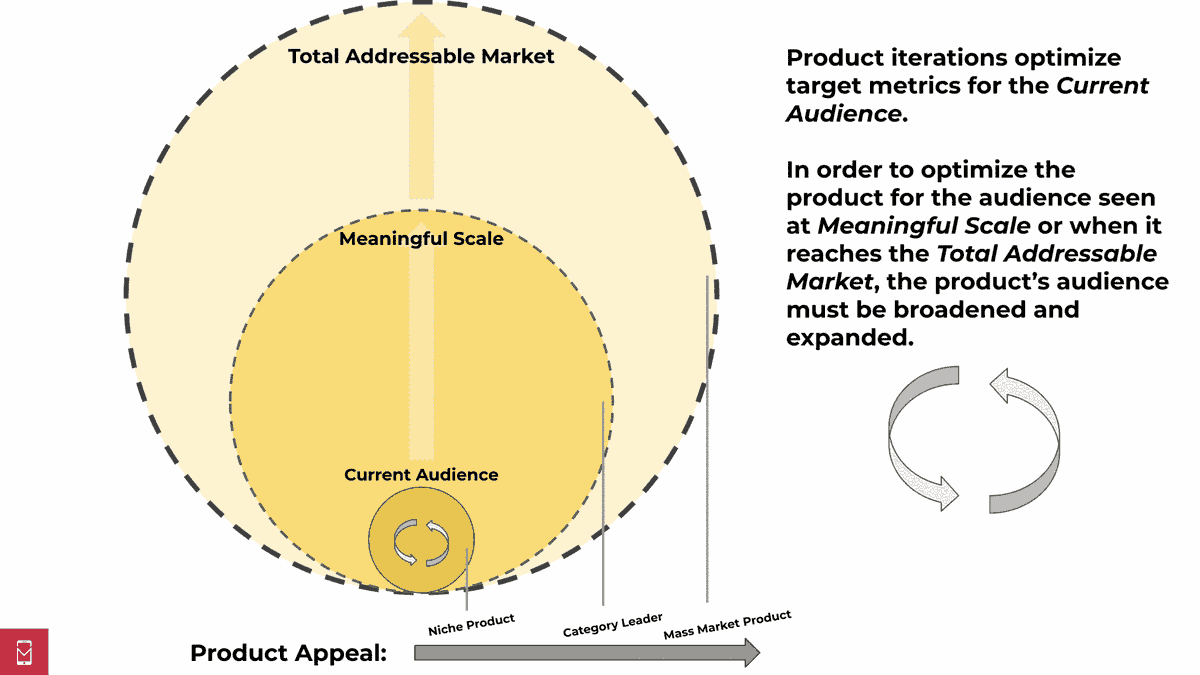
Marketing and product teams are susceptible to the Growth Trap with early products: they optimize a product to the Golden Cohort or to organic users, making it less enticing or relevant to potential users that exist outside of that specific, limited audience. (1/X)
1/ While much of antitrust world is focused on the Google Search trial, the Kroger/Albertsons merger is slowly chugging away.
Even so, the FTC has sent some fairly clear signals that they intend to block the merger.
A 🧵…
Amazon just reached a $1.3 TRILLION market cap.
But they got there with less than $10mm of VC funding…
How?
They hijacked and took FULL advantage of this largely ignored (but important) financial metric…
~cash conversion cycle~
It’s probably THE most overlooked financial metric out there.
And there are 3 types of CCC scenarios you as a biz owner should know about…
1. When revenues come after expenses...this is common.
2. When revenues come simultaneously with expenses…not many businesses fall into this situation.
3. When revenues come before expenses...the holy grail of business.
Now imagine you’re a supermarket owner…
When you buy goods from your suppliers, you have to pay them immediately. Leaving you with no cash to grow your business. To overcome this, you have to go get debt or equity financing, which involves paying interest or share dilution.
NOT ideal.
On the other hand, the store across from yours has a different arrangement w/ their suppliers. They get up to 30 days to pay up.
Meaning they can:
1. Use the cash they earn from selling products to fuel the growth of their business
2. Which creates a positive feedback loop where the more the business expands, the more capital they have
3. They NEVER have to get outside funding
Your supermarket might be screwed…
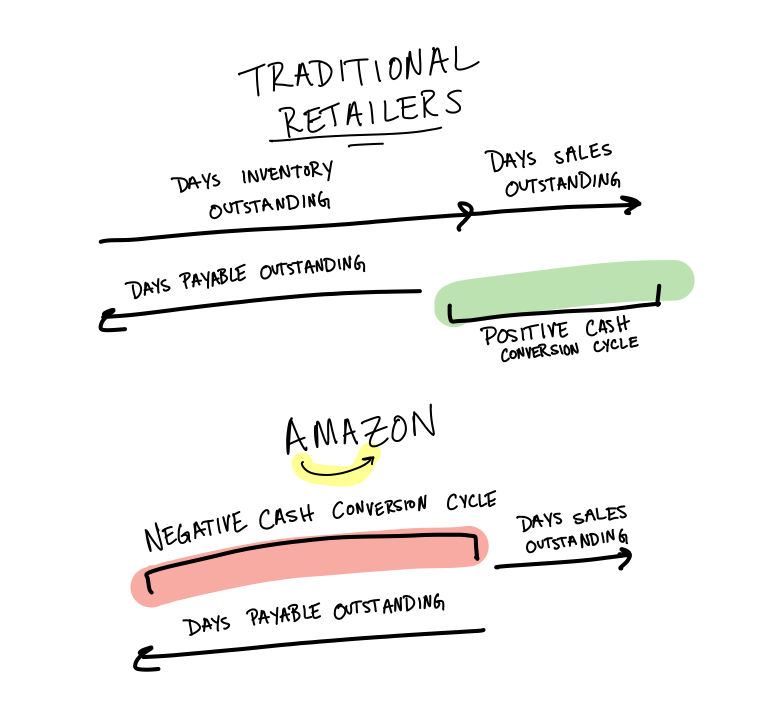
…Anyway, in Amazon’s case, they fall into bucket #3. A customer buys something on Amazon and their credit card is charged immediately. BUT…Amazon doesn’t need to pay out its suppliers until a few months later.
They earn revenue BEFORE paying expenses = holy grail of cashflow.
And something finance bros call “a NEGATIVE cash conversion cycle”. So now, Amazon has cash on hand that can be used to finance its growth interest-free. It’s one of the key drivers behind Bezos being able to take Amazon public with less than <$10M in VC raised.
In fact, Amazon has ALWAYS had a negative CCC.
And when looking at retailers like Costco and Walmart they also have low CCC’s at 3 days and 2 days respectively… BUT Amazon has a CCC of -33 days.
….Getting to CCC this low, includes:
1. selling of your inventory quickly (DIO)c
2. Collecting payments from customers immediately (DSO)
3. And extending the time until you have to pay suppliers. (DPO)
And the equation used to find Cash Conversion Cycle is (CCC) = Days Inventory Outstanding (DIO) + Days Sales Outstanding (DSO) - Days Payable Outstanding (DPO))
So remember… the shorter your cash conversion cycle gets, the better.
Follow me for more finance metric breakdowns like this one!
6 months ago it looked like AI / LLMs were going to bring a much needed revival to the venture startup ecosystem after a few tough years.
With companies like Jasper starting to slow down, it’s looking like this may not be the case.
Right now there are 2 clear winners, a handful of losers, and a small group of moonshots that seem promising.
Let’s start with the losers.
Companies like Jasper and the VCs that back them are the biggest losers right now. Jasper raised >$100M at a 10-figure valuation for what is essentially a generic, thin wrapper around OpenAI. Their UX and brand are good, but not great, and competition from companies building differentiated products specifically for high-value niches are making it very hard to grow with such a generic product. I’m not sure how this pans out but VC’s will likely lose their money.
The other category of losers are the VC-backed teams building at the application layer that raised $250K-25M in Dec - March on the back of the chatbot craze with the expectation that they would be able to sell to later-stage and enterprise companies. These startups typically have products that are more focused than something very generic like Jasper, but still don't have a real technology moat; the products are easy to copy.
Executives at enterprise companies are excited about AI, and have been vocal about this from the beginning. This led a lot of founders and VC's to believe these companies would make good first customers. What the startups building for these companies failed to realize is just how aligned and savvy executives and the engineers they manage would be at quickly getting AI into production using open-source tools. An engineering leader would rather spin up their own @langchain and @trychroma infrastructure for free and build tech themselves than buy something from a new, unproven startup (and maybe pick up a promotion along the way).
In short, large companies are opting to write their own AI success stories rather than being a part of the growth metrics a new AI startup needs to raise their next round.
(This is part of an ongoing shift in the way technology is adopted; I'll discuss this in a post next week.)
This brings us to our first group of winners — established companies and market incumbents. Most of them had little trouble adding AI into their products or hacking together some sort of "chat-your-docs" application internally for employee use. This came as a surprise to me. Most of these companies seemed to be asleep at the wheel for years. They somehow woke up and have been able to successfully navigate the LLM craze with ample dexterity.
There are two causes for this:
1. Getting AI right is a life or death proposition for many of these companies and their executives; failure here would mean a slow death over the next several years. They can't risk putting their future in the hands of a new startup that could fail and would rather lead projects internally to make absolutely sure things go as intended.
2. There is a certain amount of kick-ass wafting through halls of the C-Suite right now. Ambitious projects are being green-lit and supported in ways they weren't a few years ago. I think we owe this in part to @elonmusk reminding us of what is possible when a small group of smart people are highly motivated to get things done. Reduce red-tape, increase personal responsibility, and watch the magic happen.
Our second group of winners live on the opposite side of this spectrum; indie devs and solopreneurs. These small, often one-man outfits do not raise outside capital or build big teams. They're advantage is their small size and ability to move very quickly with low overhead. They build niche products for niche markets, which they often dominate. The goal is build a saas product (or multiple) that generates ~$10k/mo in relatively passive income. This is sometimes called "mirco-saas."
These are the @levelsio's and @dannypostma's of the world. They are part software devs, part content marketers, and full-time modern internet businessmen. They answer to no one except the markets and their own intuition.
This is the biggest group of winners right now. Unconstrained by the need for a $1B+ exit or the goal of $100MM ARR, they build and launch products in rapid-fire fashion, iterating until PMF and cashflow, and moving on to the next. They ruthlessly shutdown products that are not performing.
LLMs and text-to-image models a la Stable Diffusion have been a boon for these entrepreneurs, and I personally know of dozens of successful (keeping in mind their definition of successful) apps that were started less than 6 months ago. The lifestyle and freedom these endeavors afford to those that perform well is also quite enticing.
I think we will continue to see the number of successful micro-saas AI apps grow in the next 12 months. This could possibly become one of the biggest cohorts creating real value with this technology.
The last group I want to talk about are the AI Moonshots — companies that are fundamentally re-imagining an entire industry from the ground up. Generally, these companies are VC-backed and building products that have the potential to redefine how a small group of highly-skilled humans interact with and are assisted by technology. It's too early to tell if they'll be successful or not; early prototypes have been compelling. This is certainly the most exciting segment to watch.
A few companies I would put in this group are:
1. https://t.co/VA35Jn2sti - an AI-first code editor that could very well change how software is written.
2. https://t.co/DdZYB0H7Hq - AI for legal practices
3. https://t.co/ppAFpUNSHo - an AI-powered video editor
This is an incomplete list, but overall I think the Moonshot category needs to grow massively if we're going to see the AI-powered future we've all been hoping for.
If you're a founder in the $250K-25M raised category and are having a hard time finding PMF for your chatbot or LLMOps company, it may be time to consider pivoting to something more ambitious.
Lets recap:
1. VC-backed companies are having a hard time. The more money a company raised, the more pain they're feeling.
2. Incumbents and market leaders are quickly become adept at deploying cutting-edge AI using internal teams and open-source, off-the-shelf technology, cutting out what seemed to be good opportunities for VC-backed startups.
3. Indie devs are building small, cash-flowing businesses by quickly shipping niche AI-powered products in niche markets.
4. A small number of promising Moonshot companies with unproven technology hold the most potential for VC-sized returns.
It's still early. This landscape will continue to change as new foundational models are released and toolchains improve. I'm sure you can find counter examples to everything I've written about here. Put them in the comments for others to see.
And just to be upfront about this, I fall squarely into the "raised $250K-25M without PMF" category. If you're a founder in the same boat, I'd love to talk. My DMs are open.
If you enjoyed this post, don't forget to follow me, Sam Hogan. I share one long-form post per week covering AI, startups, open-source, and more.
That's all folks! Thanks for reading. See you next week.