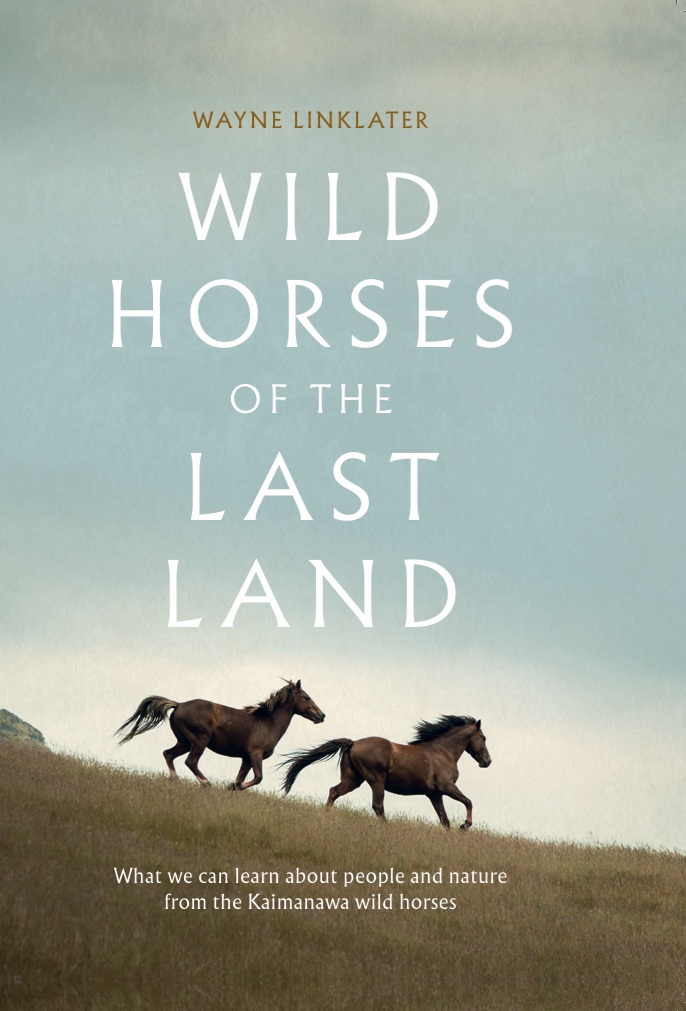
A Q & A with the author of Wild Horses of the Last Land. Q1: You spent four years living with the Kaimawana horses on the central North Island’s volcanic plateau. What kept you there for so long? Read more here: https://t.co/b379mYNecB
An excellent piece, highly relevant to the debate about wild horses, from Robert Lackey at Oregon State, about hidden norms in conservation science: The Emergence of Religious Ecology https://t.co/QPN2o0Ho9E
"We are at a critical time to prioritize the conservation of our open spaces and natural resources that benefit #wildhorses and all wildlife. Together, we can ensure they remain protected, respected, and free.”
— Ed Harris, actor and advocate
Learn more: https://t.co/0i5mgGz8mk
Remotely tracking animals in their natural habitats has become a central pillar of wildlife research. But on land, the process often involves fitting a collar around an animal’s neck that contains a GPS tracker and various sensors. This requires capturing the animal, which isn’t just expensive—it’s also stressful and dangerous for everyone involved.
But a biologist sees a better way forward for this field of study, known as wildlife telemetry.
He’s now building and experimenting with devices, described in a recent preprint, that would allow researchers to apply collars on animals without needing to capture them.
Rethinking how we put collars on animals, he argues, could bring many benefits to wildlife research, such as improving animal welfare and the quantity and quality of data collected at the same time.
Learn more: https://t.co/FyW68eZpXU @NewsfromScience
What’s the cost of pushing farmers off grazable conservation land? In our latest podcast, Simon Cameron and James Hurst discuss the risks, and why DOC’s grazing licence system urgently needs a reset.
🎧 Ep 92 out now!
On Spotify: https://t.co/HQnZpgMqka
On Apple: https://t.co/9l3dtl824c
Our paper on using games to understand illegal hunting behavior is out. Games are useful models for complex socio-ecological systems. https://t.co/PDmbG6tmq3
What a neat idea #NACCB2022 that the ecological concept of "landscapes of fear" can be applied to understanding conservationists decision about what and where they study.
After a long absence its great to be back at a Conservation Biology conference #NACCB2022 . Food is amazing this year - thank you (but wish I'd known ahead of time). Love it when talk in first session and can relax to enjoy the remaining sessions.
Take home: emotion and reason, objective and subjective are not separate and different in the brain. They work together. The idea that anything people do, like science, can be only objective is false. https://t.co/sdIY9lSZ9L
A conversation with Paul Boyce about Kaimanawa Wild Horses of New Zealand (among other things) on "Talking Feral" with Paul Boyce who currently works with free-ranging horses in Canada: https://t.co/G68ibspadE