continuing my war on paid software that should be free, today's victim is: granola.
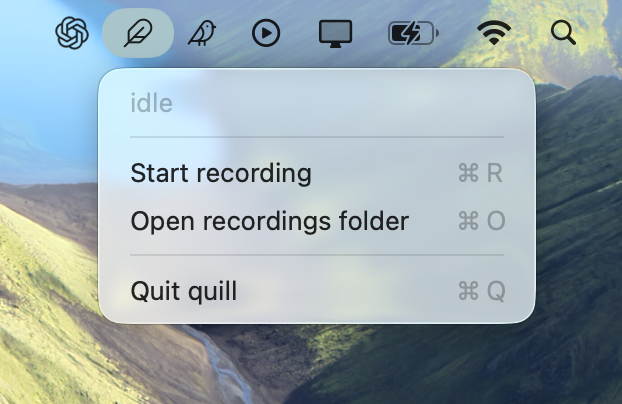
quill gives you the same thing for free and completely private, just start recording and after you stop it, the entire audio gets transcribed into a default folder.
completely open source as always
People keep asking me why Italy.
Because the talent is world-class and the cost of living is half of SF.
Because nobody is looking here, which means less competition for the best people.
Because when you tell an Italian founder the odds are against them, they work harder.
Italy is the most undervalued startup market in Europe right now.
Italy is now classified as a forest nation after one of the most successful reforestation efforts in human history.
Over 1/3 of Italy's territory is now covered in trees, the most trees they've had since the middle ages.
Everyone's been waiting for "the European Amazon" for 20 years.
Turns out it might be a discount grocery chain.
Dutch Central Bank just picked Lidl as its cloud provider. Not AWS. Not Google. Not Microsoft. Lidl.
The reason: trust in US tech is eroding across European institutions. Data sovereignty rulings, the political climate, tariff drama. Every quarter the case for sitting on top of US infrastructure gets harder to defend.
So Europe is decoupling. Quietly. Contract by contract. While everyone watches the political theatre.
Lidl pulled in nearly €2B from cloud last year. All infrastructure built inside the EU.
The "European alternative" people have been waiting for?
Turns out it's a grocery chain that's been quietly investing for years.
If a discount supermarket can win central bank cloud contracts, is US big tech's moat in Europe thinner than anyone admits?
Last place anyone was looking. First to deliver.
The New York Times charges $17/month.
The Wall Street Journal charges $38/month.
Nature charges $199/year.
Someone just open sourced a proxy that bypasses all of them for $0. And publishers cannot shut it down.
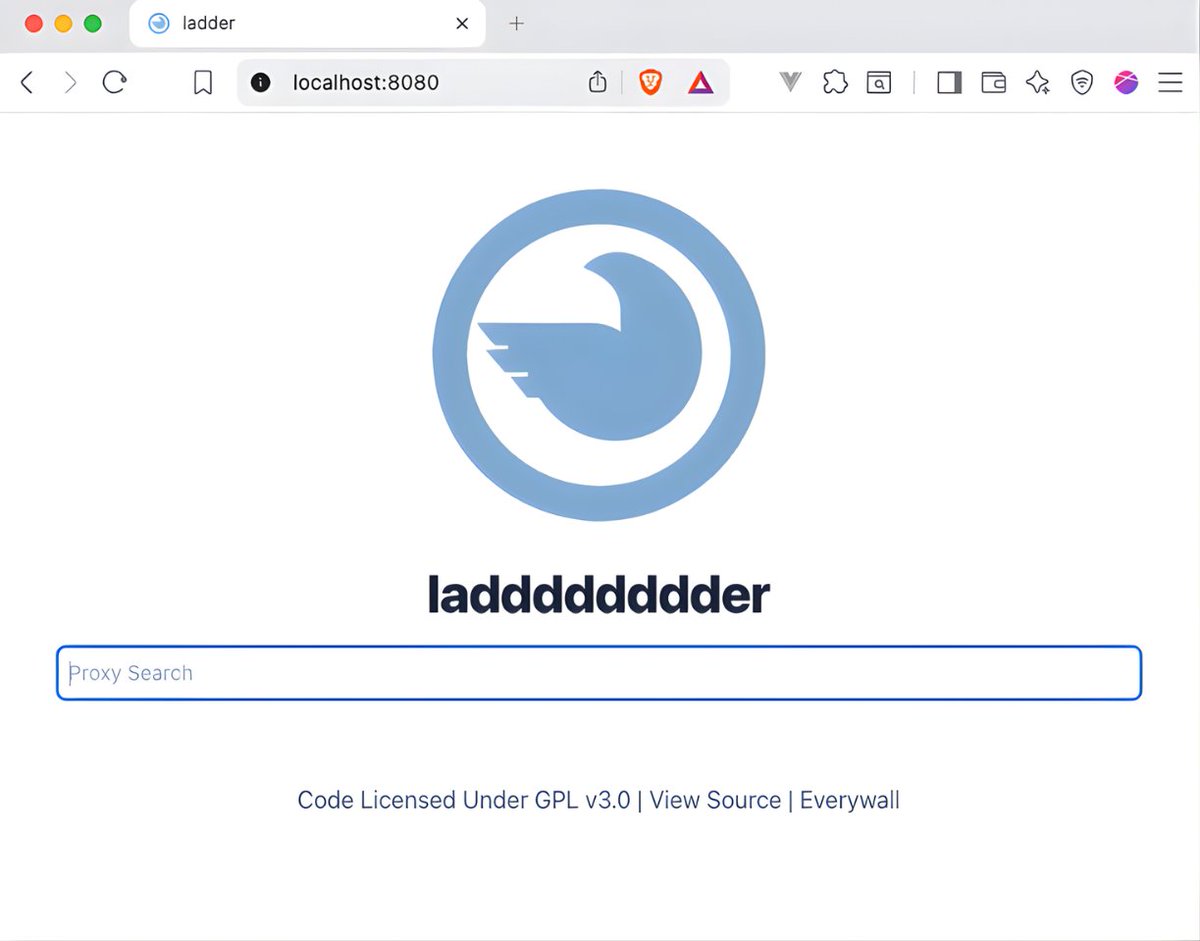
It's called Ladder.
Here's the trick that makes it work:
Every news site and academic journal on earth shows Google the full article text for free. They have no choice. Block Googlebot and you disappear from search results overnight.
Ladder pretends to be Googlebot.
Same headers. Same fingerprint. Same access Google gets.
→ Paste any paywalled URL
→ Full article loads instantly
→ No account. No subscription. No credit card.
→ Works on NYT, WSJ, Bloomberg, Nature, Science, The Lancet, The Atlantic, and hundreds more
→ Also strips CORS headers from any URL, which saves developers a stupid amount of time
Publishers got 12ft killed by pressuring the domain registrar.
Ladder runs on your own server. There's no domain to seize. No company to pressure. No central server to shut down.
One Docker command. Your machine. Your rules.
6.3K stars. MIT License. 100% Opensource - https://t.co/5N0gwHcw9y
Introducing TurboQuant: Our new compression algorithm that reduces LLM key-value cache memory by at least 6x and delivers up to 8x speedup, all with zero accuracy loss, redefining AI efficiency. Read the blog to learn how it achieves these results: https://t.co/CDSQ8HpZoc
this is nuts!
Mark Cuban just said something every young person should hear.
AI agents are GOING to run through every small and mid-size business in the country.
not a single one of those owners will know how to build them.
his advice is to learn claude. learn agentic workflows. just learn AI and how it works.
then go to these businesses and help them because they won’t know how to do any of this shit.
they have money to spend. they have deep problems.
they don’t have you!
Jensen Huang just told every AI leader in the room to grow up.
Stop scaring the public with science fiction.
Start communicating like the weight of civilization is on your shoulders.
Because it is.
Huang: “AI is not a biological being. It is not alien. It is not conscious. It is computer software.”
That single statement dismantles half the panic surrounding this industry.
The mainstream conversation is dominated by people projecting human malice onto math. Alien consciousness onto code. Existential dread onto a software architecture we built, we trained, and we can read.
Huang: “We say things like, ‘We don’t understand it at all.’ It is not true. We understand a lot of things about this technology.”
When builders tell the public they don’t understand their own creation, the public hears threat.
The state responds with control.
That is already happening.
Palihapitiya asked Huang what he would have told Anthropic during their regulatory clash with the Department of Defense.
Huang didn’t attack the technology.
He attacked the communication.
Huang: “The desire to warn people about the capability of the technology is really terrific. We just have to make sure that we understand that the world has a spectrum, and that warning is good, scaring is less good because this technology is too important to us.”
Warning shows risks, mitigation, why upside overwhelms downside.
Scaring says we might be building something that destroys us and we can’t stop it.
One builds trust.
The other invites regulation written in panic.
Huang: “To say things that are quite extreme, quite catastrophic, that there’s no evidence of it happening, could be more damaging than people think.”
Projecting catastrophe without evidence is not caution.
It is sabotage.
When your technology is embedded in national defense, the financial system, and healthcare infrastructure, your words carry structural weight.
If the architects act terrified of their own product, the response is predictable.
Governments step in. They restrict. They seize control of something they don’t understand because the builders told them to be afraid.
Huang: “There was a time when nobody listened to us, but now because technology is so important in the social fabric, such an important industry, so important to national security, our words do matter.”
Most tech founders have not internalized this.
You are no longer a startup founder disrupting an industry.
You are running infrastructure that nations depend on.
Your statements move policy. Your framing shapes legislation. Your tone determines whether governments treat you as partner or threat.
Huang: “We have to be much more circumspect, we have to be more moderate, we have to be more balanced, we have to be far more thoughtful.”
Huang did not ask for silence.
He asked for precision.
The leaders who cannot tell the difference will not be leading for long.