COMPREHENSIVE MYELOMA and PLASMA CELL DISORDERS REVIEW ARTICLE THREAD. Bookmark.
A collection of our recent review articles on the spectrum of plasma cell disorders.
1/ MGUS @NEJM
Link: https://t.co/y9cHVaPZgH
A new review summarizes the pathogenesis and treatment of myeloproliferative neoplasms, highlighting the role of driver mutations, inflammation, and emerging targeted therapies that may achieve durable disease modification.
Read the Review Article “Myeloproliferative Neoplasms” by Isabelle Plo, PhD, and William Vainchenker, MD, PhD: https://t.co/PZ3PeTPJm4
My 2026 Update on Diagnosis, Risk Stratification, and Treatment of Myeloma is out! #OpenAccess
It’s current including all recent advances in immunotherapy. Managed to squeeze in iberdomide approval from 6 days ago! Bookmark!
https://t.co/VUheu7xlMr
Congratulations to the @remap_cap investigators for conducting this important clinical trial, which will undoubtedly change clinical practice and treatment guidelines (or at least it should). Free link in first reply. @NEJM
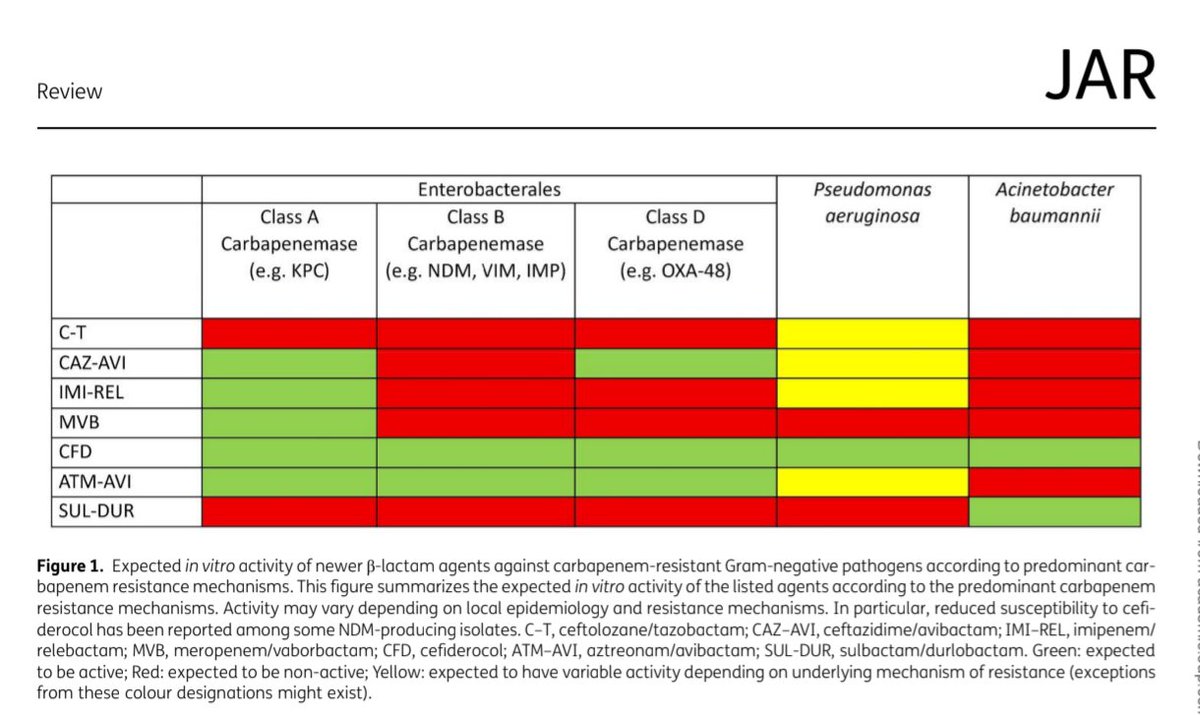
🆕🔥🟢 Review @jac_amr
When might we consider using the newer β-lactam agents as empirical therapy against presumed carbapenem-resistant gram-negative infections? #idxposts https://t.co/4mGMKoU20W
“Ischemic stroke in young adults without traditional vascular risk factors should prompt evaluation for nonatherosclerotic mechanisms...” Read the Morning Report by M. Martínez Sánchez et al.: https://t.co/NFfLU8lGow
@hgermanstrias
Clinical characteristics and outcomes of invasive Listeria monocytogenes infection: a 45-year retrospective study at a U.S. Tertiary Center
✅ Just Accepted
https://t.co/n84Rb000iN
Islatravir–lenacapavir has potential to be the first once-weekly complete oral single-tablet regimen for HIV-1 treatment, suggests ISLEND-2 trial in The Lancet.
Explore the research: https://t.co/N7dDNh3kx1
Long-Term Clinical Outcomes, Adherence, Persistence, and Adverse Event Management in Patients With Chronic Lymphocytic Leukemia Treated With Ibrutinib
https://t.co/u8TJLzkZfY
Global guidelines for the treatment of HIV-associated cryptococcal meningitis were dramatically transformed in 2022 after decades of relative stability, following the landmark AMBITION-cm trial.
Excellent editorial by @boulware_dr highlighting the US experience published by @BradSpellberg et al
🔺Knowledge gap :: the relevance of the AMBITION-cm regimen to HIV-negative cryptococcal meningitis remains an important unanswered question #idxposts
https://t.co/nGQgVExi48
💬 Editorial by JAMA Executive Managing Editor Annette Flanagin, RN, MA, @JAMAplusAI Editor in Chief, Roy Perlis, MD, MSc, JAMA and JAMA Network Editor in Chief Kirsten Bibbins-Domingo, PhD, MD, MAS:
Updated JAMA Network guidance on use of #AI in medical publication permits some uses by authors with disclosure, including manuscript preparation, translation, literature search, and research reporting, while reaffirming that authors are responsible for the accuracy and integrity of all submitted content.
The guidance does not permit use of #AI to draft Opinion manuscripts, Letters to the Editor, or online Comments.
🔗 Read the editorial: https://t.co/ouKcQpXZo2
🧬 HIV-ASSOCIATED LYMPHOMAS — HEMATOLOGY PEARLS 🧵
1️⃣ Why increased?
🦠 HIV does not directly infect B cells
📉 CD4 loss → impaired immune surveillance
🔥 Chronic B-cell activation + cytokine stimulation
🧫 Oncogenic viruses: EBV & HHV‑8/KSHV
💊 ART markedly reduced DLBCL/PCNSL incidence—but lymphoma remains an important cause of death.
2️⃣ Major lymphoma spectrum
🔹 DLBCL—most common
🔹 Burkitt lymphoma
🔹 Primary CNS lymphoma
🔹 Classical Hodgkin lymphoma
🔹 Plasmablastic lymphoma
🔹 Primary effusion lymphoma
🔹 HHV‑8–positive DLBCL
🔹 Rare T/NK-cell lymphomas
⚠️ NHL is AIDS-defining; Hodgkin lymphoma is not formally AIDS-defining.
3️⃣ DLBCL
🧬 Usually aggressive, frequently extranodal
🎯 GI tract, marrow, liver, CNS
🦠 EBV more frequent than in HIV-negative DLBCL
🔬 CD20+, PAX5+, CD79a+; variable MYC/BCL2
📊 PET-CT staging; assess CNS risk—not HIV status alone
💊 R-CHOP or DA-R-EPOCH + concurrent ART
✅ Rituximab should generally be included when CD20+
⚠️ CD4 <50/µL → greater infection risk, but not an automatic reason to omit rituximab.
4️⃣ Burkitt lymphoma
⚡ Extremely rapid growth; MYC rearrangement
🧫 EBV association ≈30%-40% in HIV-related cases
🩸 Often marrow/CNS/GI involvement
🧪 Tumor-lysis emergency!
💊 Options:
🔹 DA-R-EPOCH
🔹 R-CODOX-M/R-IVAC
🔹 Other intensive Burkitt protocols
🧠 CNS-directed therapy is mandatory—not optional.
5️⃣ Primary CNS lymphoma
📉 Typically profound immunosuppression/CD4 <50
🦠 Strongly EBV-associated
🧠 Cognitive change, focal deficit, seizure, headache
🖥️ Often enhancing brain lesion(s)
🔍 Differential: toxoplasmosis, PML, abscess
🧪 CSF cytology/flow + EBV PCR may support diagnosis
⚠️ CSF EBV positivity alone does not always replace tissue diagnosis.
💊 High-dose methotrexate-based therapy ± rituximab + ART
🚫 Avoid routine upfront whole-brain RT when effective systemic therapy is feasible because of neurotoxicity.
6️⃣ Plasmablastic lymphoma
👄 Classic site: oral cavity; also GI, skin, nodes
🦠 Frequently EBV+
🔬 CD138+, MUM1+, CD38+
❌ Often CD20−/PAX5−
📈 Ki-67 usually very high; MYC rearrangement common
⚖️ Important DD: plasmablastic myeloma
➡️ Check paraprotein, FLC, marrow, lytic lesions and hypercalcaemia.
💊 CHOP- or EPOCH-based treatment
📍 Add radiotherapy for localized disease
🧪 Bortezomib-containing approaches are reasonable but supported mainly by limited evidence.
7️⃣ Primary effusion lymphoma—PEL
🦠 HHV‑8/KSHV positivity is essential
🧫 Frequently EBV co-infected
💧 Pleural/pericardial/peritoneal effusion
🚫 Usually no solid mass
🔬 Plasma-cell phenotype; often CD20−
💊 ART + EPOCH/CHOP-like chemotherapy
❌ Rituximab has little role unless CD20 is expressed
📉 Prognosis remains relatively poor.
8️⃣ HHV‑8–positive DLBCL
🦠 HHV‑8+, frequently HIV-associated
🏥 Usually arises with HHV‑8 multicentric Castleman disease
🔬 Plasmablastic cells; often IgM-λ restricted
📍 Nodes/spleen ± extranodal or blood involvement
⚠️ Distinguish from PEL and plasmablastic lymphoma.
9️⃣ Classical Hodgkin lymphoma
📈 HIV increases incidence despite ART
🦠 Usually EBV-associated
🔬 Often mixed-cellularity or lymphocyte-depleted subtype
🌡️ B symptoms, extranodal and marrow disease are common
💊 Treat with curative intent: usually ABVD-based, stage/PET-adapted therapy
✅ Outcomes approach those of HIV-negative patients when ART and supportive care are optimized.
🔟 Universal management rules
✅ Start/continue effective ART during chemotherapy
💊 Prefer an unboosted integrase-inhibitor regimen when feasible
🚫 Avoid zidovudine because of marrow toxicity
⚠️ Avoid strong ritonavir/cobicistat interactions with vinca alkaloids and other anticancer drugs
🛡️ Provide PJP ± antiviral/antifungal prophylaxis according to CD4 count and regimen
🧪 Check HIV viral load, CD4, HBV/HCV, renal/liver function and drug interactions
💉 Use G-CSF liberally with myelosuppressive treatment
♻️ HIV alone does not exclude auto-SCT, allo-SCT, bispecific antibodies or CAR-T in suitable patients.
The #IntentionToTreat principle in randomized clinical trials addresses the effect of choosing a medical treatment by analyzing participants in the groups to which they were randomized, regardless of treatment adherence or receipt.
Michelle Detry, PhD, and JAMA Senior Statistical Editor Roger Lewis, MD, PhD, discuss how this approach supports an unbiased comparison between randomized groups for the primary efficacy analysis.
🎧 Listen now: https://t.co/iMWyEXfPk7
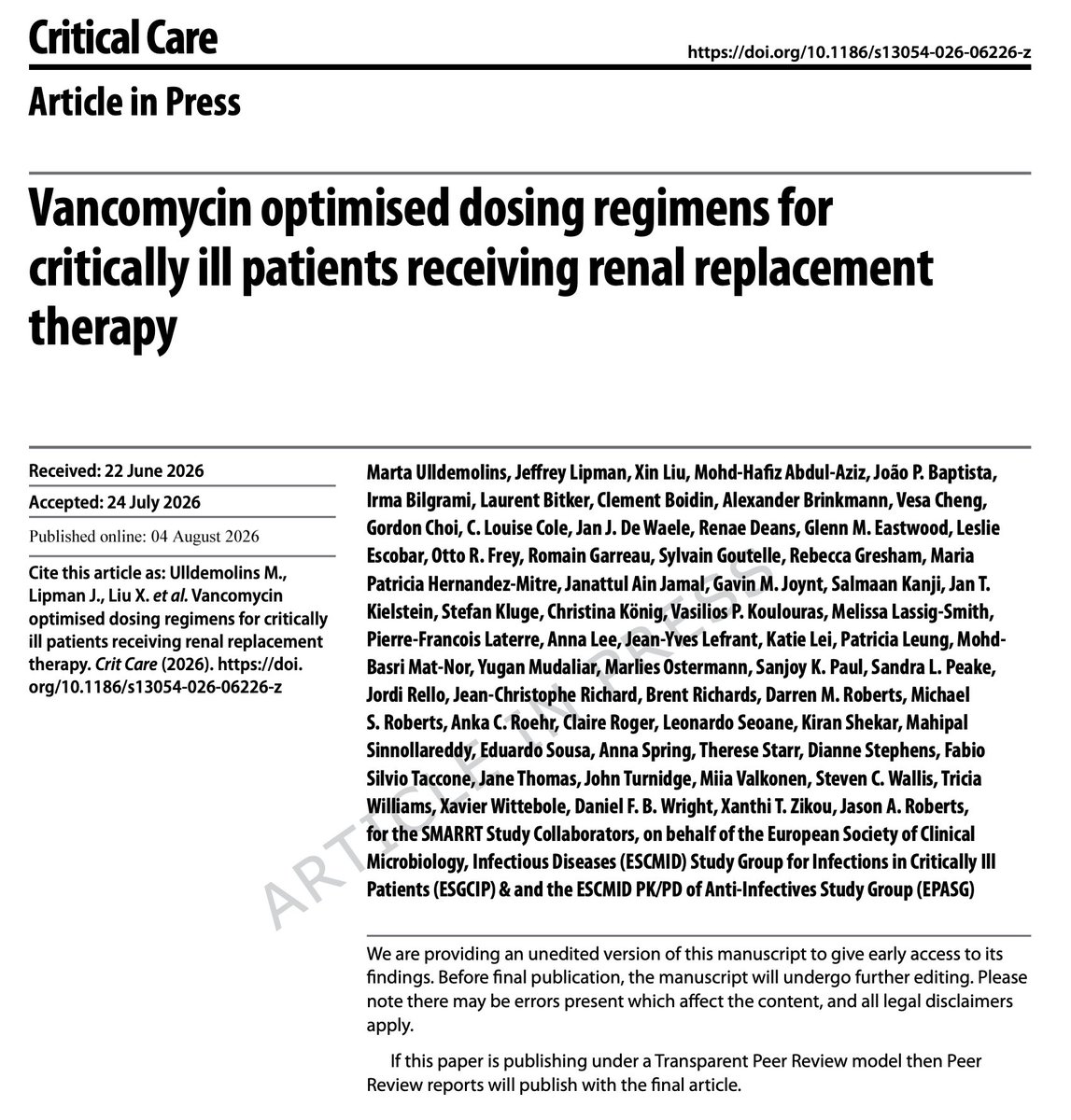
If you use vancomycin in patients requiring renal replacement therapy (RRT), you have to read this study 👇
Actual body weight and RRT intensity and duration are the main determinants of vancomycin dosing requirements in critically ill patients treated with RRT
I am biased here because I always use a *large* loading dose of vancomycin (when I use vanco instead of linezolid or daptomycin!) but I have not been able to use continuous vancomycin infusion (rare practice in US hospitals but fairly common in other countries)
Kudos to the authors!
Leishmaniasis is a parasitic infection that is transmitted by sand flies and caused by multiple leishmania species, with different species capable of causing cutaneous, visceral, or mucosal forms of the disease. 👉 https://t.co/ezm9gi6ZM8
Cutaneous leishmaniasis usually manifests as slowly progressing nodules that can evolve to painless ulcers at the site of the sand-fly bite. Lesions can heal spontaneously or be treated with local cryotherapy or thermotherapy (such as a “hot metal”), topical agents, or systemic therapy. In either case, they usually leave a residual scar. Cases can occur among family members who share the same environment and exposures.
Certain species of leishmania can persist in a latent state after apparent resolution of cutaneous disease and can later lead to mucosal leishmaniasis. This manifestation is most commonly associated with, although not exclusive to, 𝘓𝘦𝘪𝘴𝘩𝘮𝘢𝘯𝘪𝘢 𝘣𝘳𝘢𝘻𝘪𝘭𝘪𝘦𝘯𝘴𝘪𝘴 and other members of the viannia subgenus, which are endemic in parts of Latin America, particularly Bolivia, Brazil, and Peru (seen in figure). Because local therapies may not completely eradicate the parasite, systemic treatment is recommended for known or suspected cutaneous infections with these species in order to reduce the risk of subsequent mucosal disease. Mucosal leishmaniasis may occur concurrently or emerge months to decades after inadequately treated cutaneous infection.
Learn more in “A 37-Year-Old Woman with Persistent Nasal Ulceration,” a Case Record of the Massachusetts General Hospital (@MassGeneralNews), by Stacey T. Gray, MD, Carolina D. Geadas, MD, and Peter M. Sadow, MD, PhD: https://t.co/ezm9gi6ZM8