Doubtful these subjects will be as fun for others to listen to as they were to talk about, but appreciate the opportunity none the less. Also failed to mention the ways surfing and neurosurgery are alike…
As he prepares to run his 14th consecutive Boston Marathon, Dr. David King, trauma surgeon at #MGHsurgery and combat surgeon in the Army Reserve, reflects on his experience caring for the victims of the 2013 #BostonMarathon at @MassGeneralNews: https://t.co/MM51pNouaq
After operating with one of our superstar graduating chiefs this week, @VictoriaEClark, we were debriefing on our cases and speaking about post residency career strategies. This is the time of the year where post-residency considerations are at the forefront for those soon to graduate. One domain for all of us to think about and plan for as surgeons is "how will I continue improve as a surgeon?".
I like to encourage our graduates to plan for a very active phase of professional development that will occur immediately post residency. Residency has set the foundation for you to rapidly accelerate your surgical skills, particularly in the first 5-10 years after residency training. Naturally, you will likely notice greater speed and confidence with tissue handling, micro-dissection, a better understanding of high risk factors influencing surgical outcomes, and develop better surgical planning. But your skills can be further enhanced with a model of 'deliberate practice', in and out of the operating room. @geoffcolvin described this in his book, "Talent is Overrated". In this clip, Colvin highlights the thesis, and describes the reception his ideas received from the neurosurgical community.
https://t.co/44S4dXqkuz
During this early post-residency phase, your 'coaches' are neurosurgical colleagues and mentors, the courses and offerings from @cns_update, @aansneuro, @thejns, @NeurosurgeryCNS and online resources like @neurosurgatlas. Your inner drive to improve, gain feedback, and perform at the highest level will set the stage for professional fulfillment and this will all be to the benefit of your patients.
I look forward to seeing everyone at the upcoming #AANS2023 meeting as you continue your journey of #neurosurgicallearning. Feel free to drop by our Friday evening @mghneurosurg reception at the AANS in the Diamond Ballroom from 6-8 pm if you’d like to connect with me or any of the @mghneurosurg team and share your neurosurgical journey.
We are excited to welcome our 2023 Match class: Drs. Adrian Rodrigues, Grace Ng, and Jacob Kosyakovsky! Congrats to all those to matched in Neurosurgery this year. We look forward to your many future contributions to Neurosurgery #MatchDay2023#Neurosurgery@MGHNeurosurg
Nice lessons from friend and colleague @MyronRolle at @spinesection spine summit bringing in learnings from the playing field to the operating room! Be coachable and have short term memory when it comes to the losses. @JohnHShinMD @MGHNSResidency @MGHNeurosurg
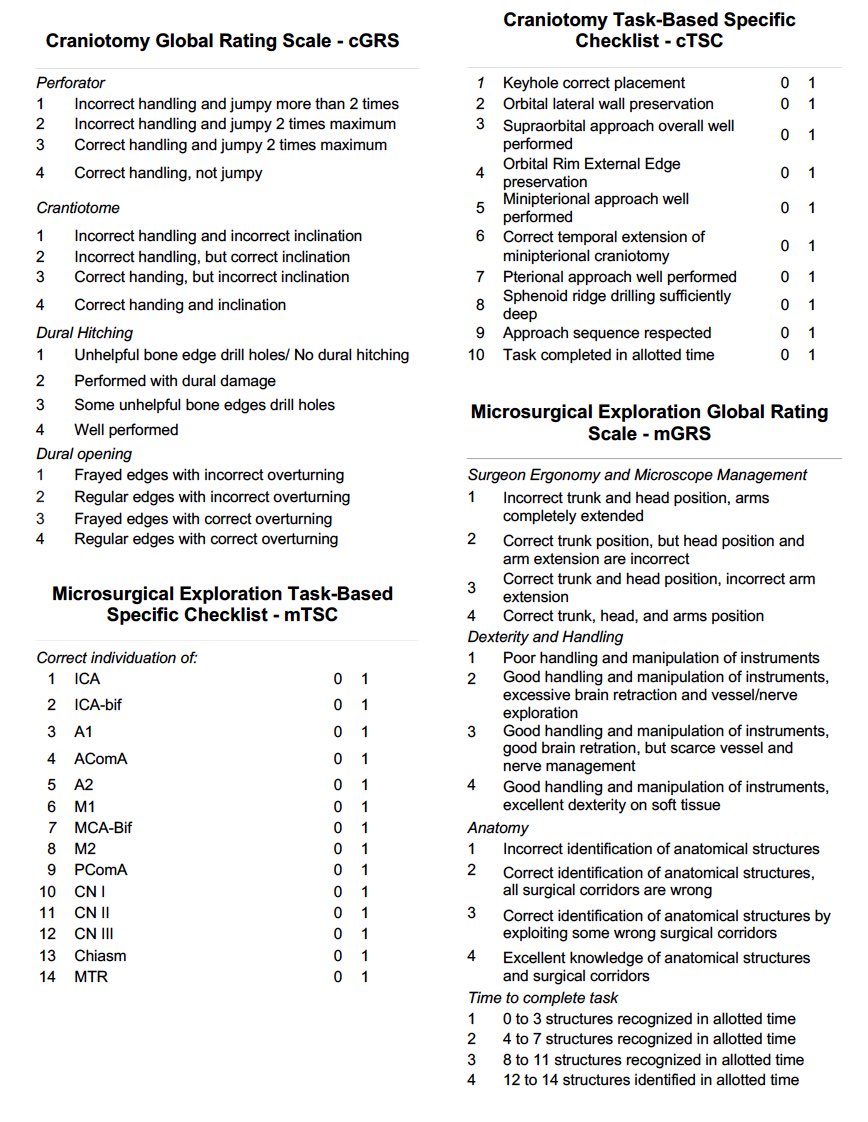
You can’t manage what you don’t measure. In #neurosurgery, would we benefit f/ objective metrics for technique? Simulation can facilitate focused practice & track improvement via spaced repetition learning. See our paper in @TheJNS
https://t.co/fyDxBv6oRX
@BrianNahed@jvcoumans
Energizing @MGHNeurosurg Sub-I prep session today for promising @harvardmed and @YaleMed students ready to take the NSGY sub-internship circuit by storm this summer! Looking forward to working with these future leaders of the field!
Thanks to @HsuehBrian, @kmaessuman, Amy Wang, @FaithCRobertson, and Briana Prager for spending a Saturday to teach! Grateful for our culture of mentorship and paying it forward at @MGHNSResidency
Invigorated by @DrScottHadland’s call to action at #SAHM23 to prevent opioid overdose deaths in youth. We MUST do better than 67% of youth dying with a bystander present and naloxone administration in <1/3 of cases.
The MGH Neurosurgery Sub-Internship is an incredible opportunity to work with and learn from incredible neurosurgical faculty and residents. Our community is dedicated to surgical excellence, innovation, teaching and advancing #Neurosurgery. Check out Mass General Hospital, Harvard Medical School, and the entire Boston community. Apply now! Interested applicants please feel free to reach out to us to learn more. @MGHNeurosurg @MGHNSResidency @harvardmed
Happy to break the news: this October, we're starting a new network neuromodulation-themed @stimbrains talk series where you can also get a glimpse of the people behind the science! Learn all about the idea behind it 👇 and sign up for the initial round: https://t.co/DhqpXymEWA
Contributing nationally and at @MGHNeurosurg in powerful ways, our residency program director delivers 110% in educating the next generation. Congrats on this well deserved recognition @BrianNahed !
“The creative process in art and science involves two phases—generating/exploring new and wild ideas (building castles in the sky) and then…focusing on the most tractable and useful ones (building houses of cards that don’t topple over).” https://t.co/nA6VV49YSm
“Don't give up!” Dr Saadi Ghatan shares successes in thalamic responsive neurostimulation & how it helps kids who weren’t thought as surgery candidates. We must work towards faster neuromodulatory efficacy, especially in kids. #2022CNS@ASSFNeurosurg@CNS_Update@MountSinaiNeuro
Groundbreaking day in surgical epilepsy! 🤞🏽 that this cutting-edge therapy proves viable for a tenacious disease.
Excited for @MGHNeurosurg's involvement under @RMarkRichardson
At @VUMChealth we recently implanted the first patient in the country in the NAUTILUS trial of @NeuroPace RNS for idiopathic generalized epilepsy. Hoping for a game changer for debilitated patients with few surgical options.
@VUMC_Neurosurg @VUMCneurology
https://t.co/op9mSTCE6e
On October 6th 2020, @Cronutt1 a domoic acid poisoned epileptic sea lion was the recipient of a first-of-its-kind porcine #MGE progenitor cell transplant | a 🧵 on his remarkable journey nearly two years later /1