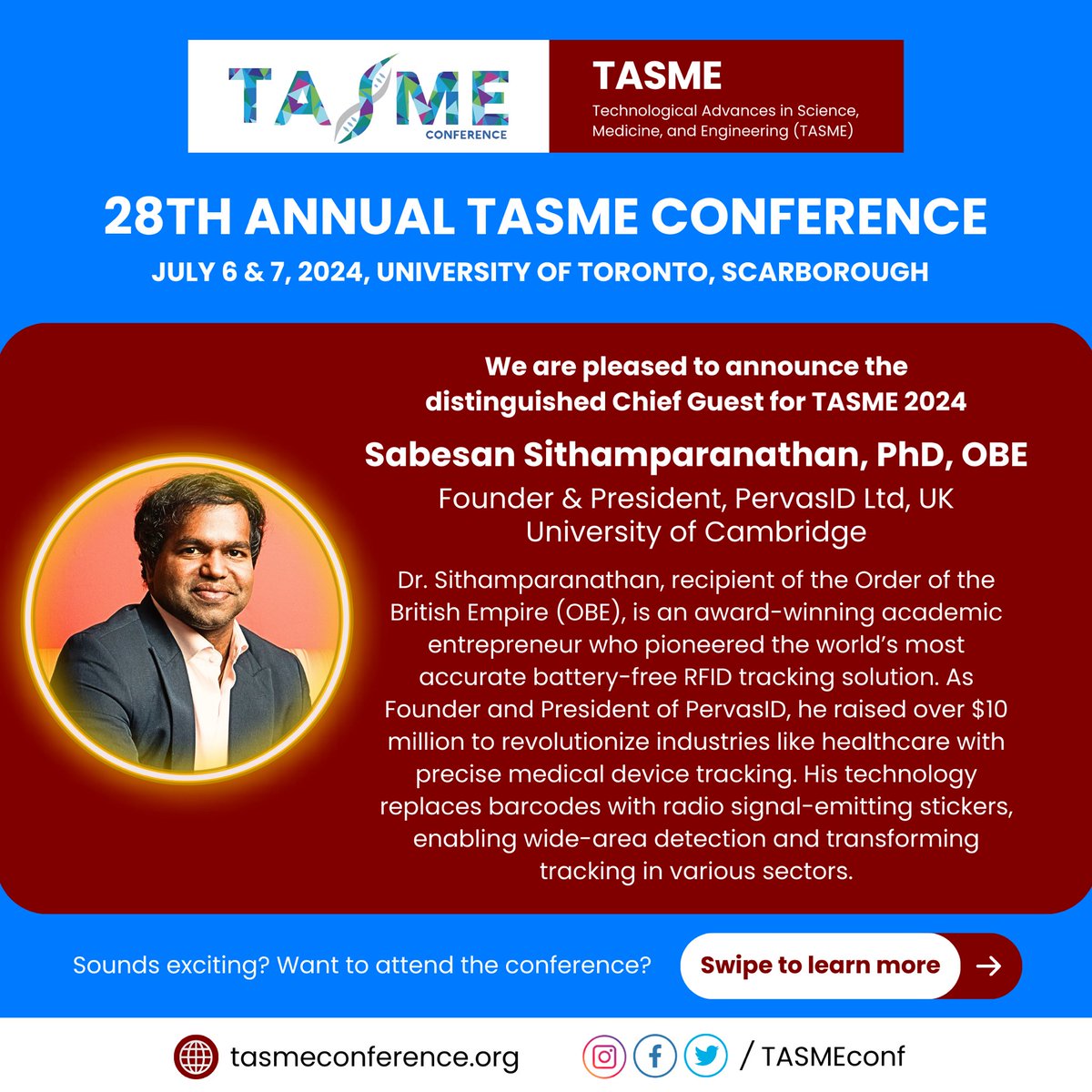
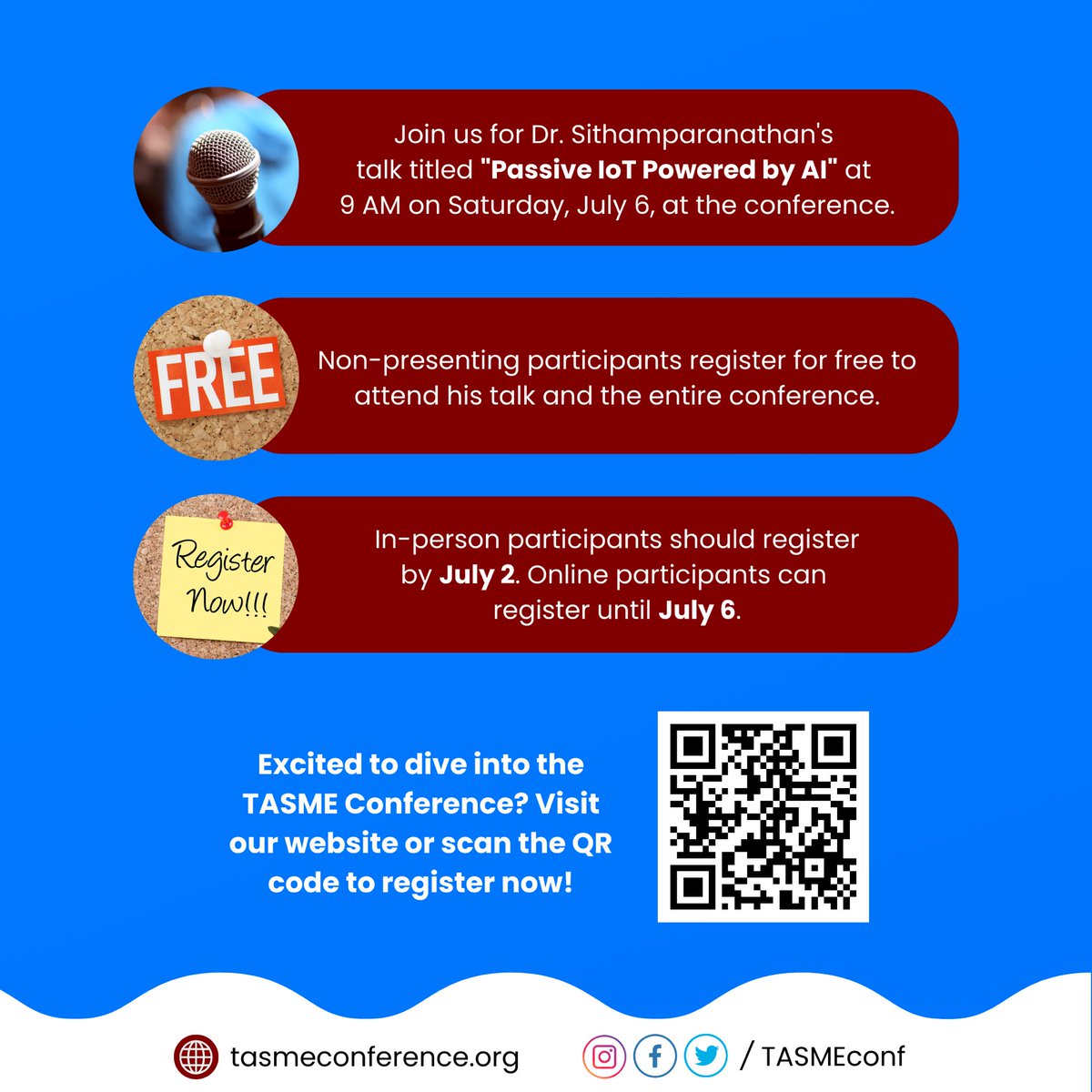
We're thrilled to announce our distinguished Chief Guest, Sabesan Sithamparanathan, PhD, OBE, Founder & President of PervasID Ltd., UK.
Don't miss his insightful talk on "Passive IoT Powered by AI" at 9 AM on July 6th.
#TASME2024#Conference#TorontoEvents#RFID#Technology
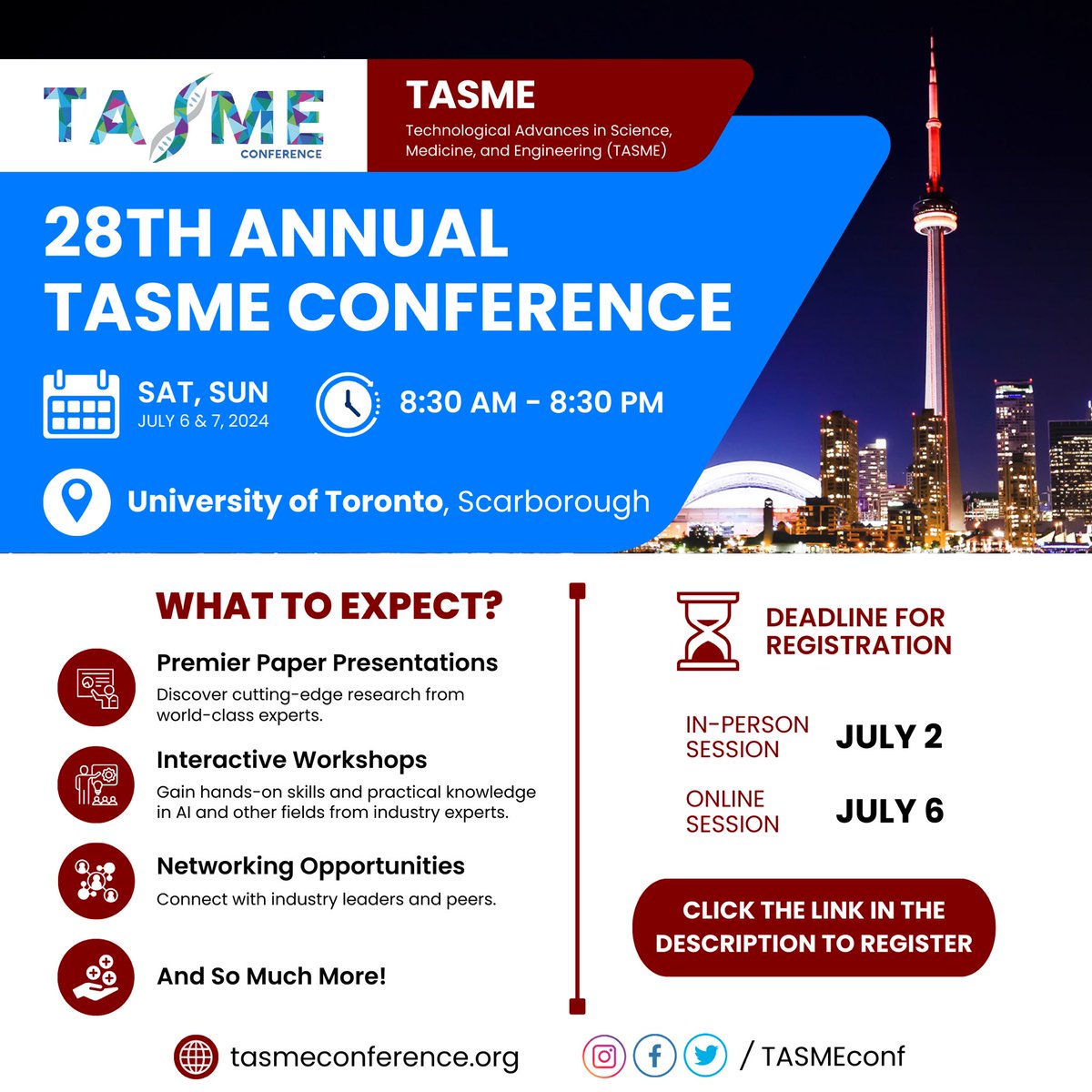
Join us at the 28th Annual TASME Conference! Free for virtual non-presenting attendees, with in-person tickets starting at just $28.52!
📅 July 6-7, 2024
🏫 University of Toronto, Scarborough
Limited spots. Click this link to book your spot now! 🚀 - https://t.co/2q7SnMJBO1
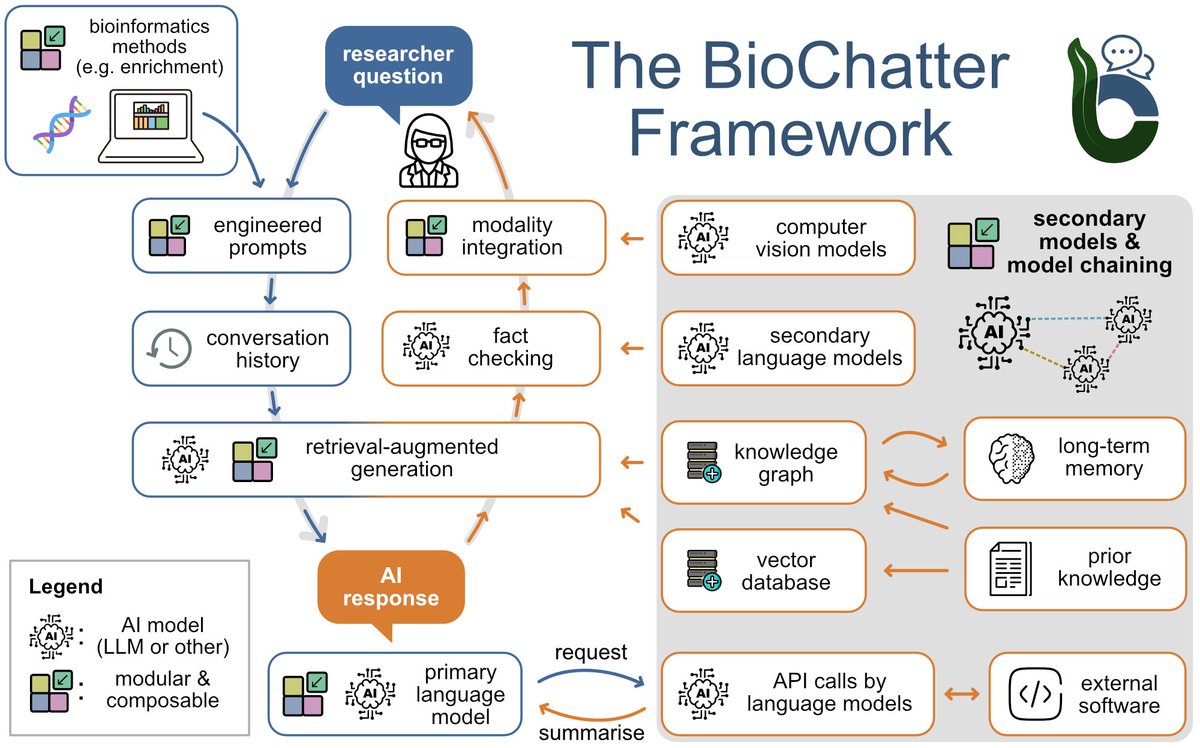
Are you looking to apply Large Language Models to biomedical questions? You may want to take a look at our new framework (https://t.co/CY8x9n1n9p) and the updated preprint (https://t.co/IZrXmgFHNy). 🧵👇
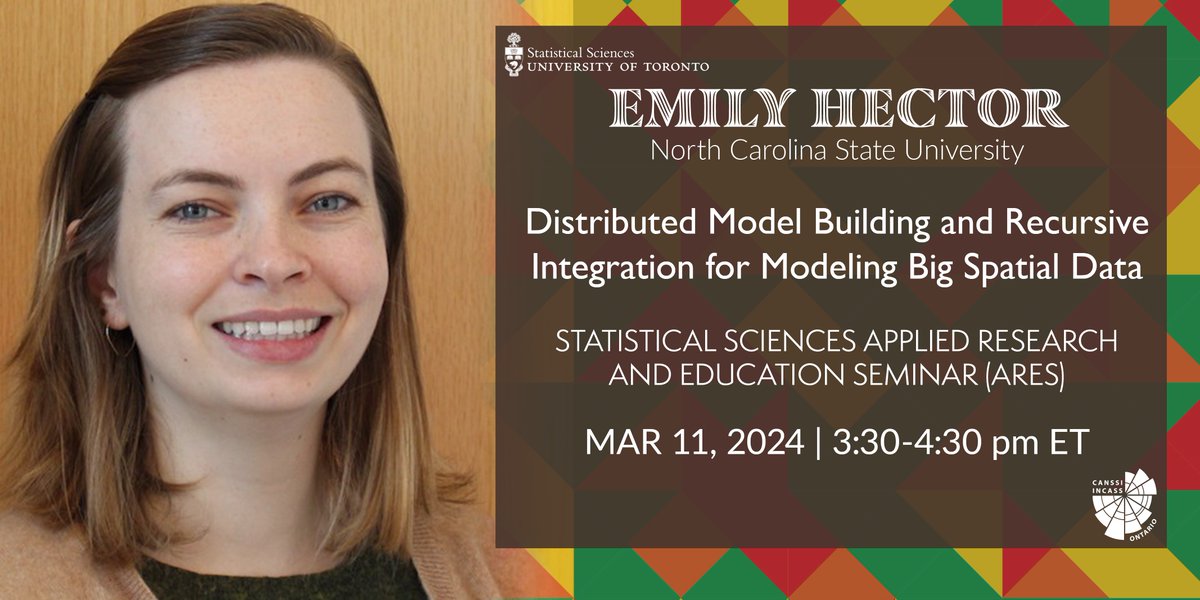
Prof. Emily Hector from @NCState will dive into "Distributed Model Building and Recursive Integration for Modeling Big Spatial Data" @CANSSIOntario#ARESeminars.
#StatisticalSciences
🗓️ March 11, 2024 | 3:30-4:30 pm ET
🔗 Register here: https://t.co/SOs6suyDCH
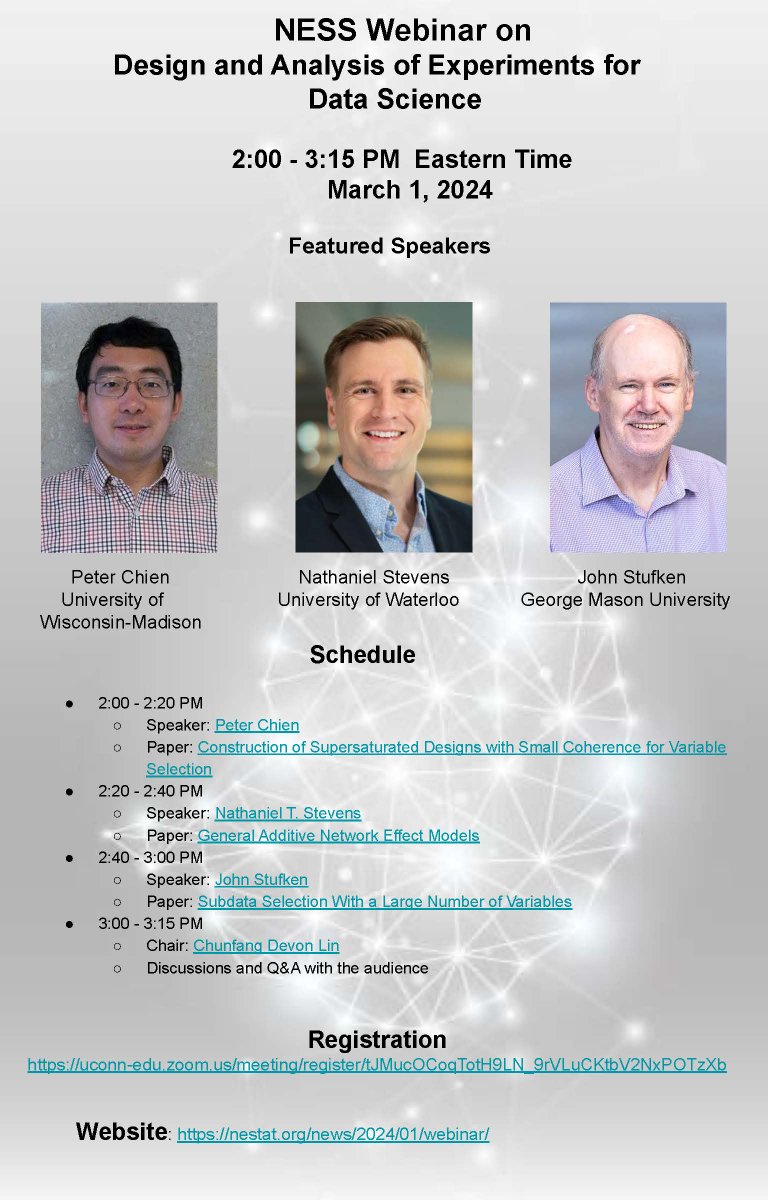
Make time on Mar 1 for "Design and Analysis of Experiments for Data Science," a New England Statistical Society webinar chaired by Devon Lin @queensu featuring Peter Chien @uwisconsin, Nathaniel T. Stevens @UWaterloo & John Stufken @GeorgeMasonU. Details: https://t.co/T554x0j3I5
The Department of Statistics at UBC is organizing the 2024 Constance van Eeden seminar!
Title: Ethical AI is More than Loss Functions
Date: Thursday, April 4, 2024 - 3 to 5 pm PT
Speaker: Dr. Sherri Rose, Professor, Stanford University
Registration: https://t.co/vhiRHbpnWG
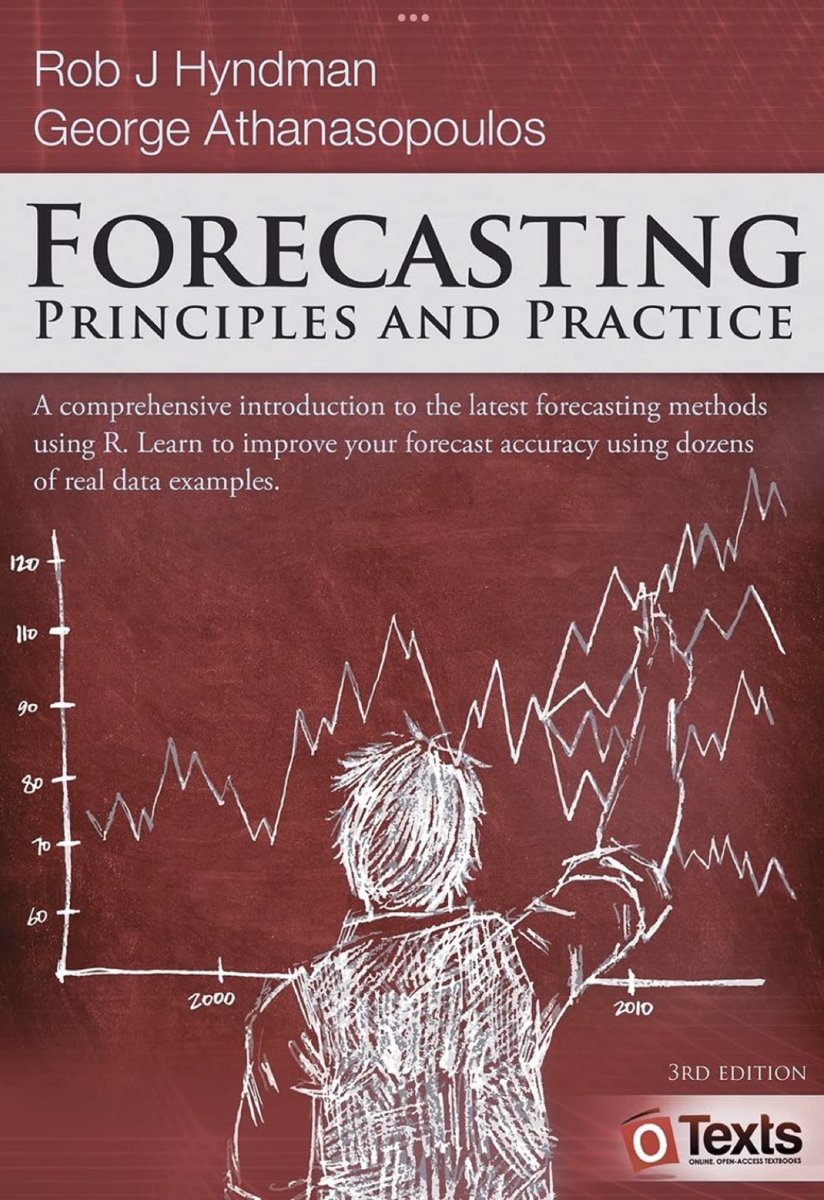
People often ask me what is the best way to start with time series and forecasting in 2023.
Well the answer is still the same as in 2022 and 2021, the best way to start with forecasting in 2023 is to learn the fundamentals from a great book by @robjhyndman
https://t.co/WNQTARXKSU
#timeseries #forecasting #machinelearning
Microbiome + transfer function + intervention analysis + boosting + inference with mirror statistics
"Microbiome Intervention Analysis with Transfer Functions and Mirror Statistics"
https://t.co/JZFdBWiYrW
🏆 Congratulations to our four Bioconductor 2023 Award winners!! 🎉
Matt Ritchie @mritchieau, Susan Holmes, Constantin Ahlmann-Eltze @const_ae, Simone Bell
Thank you for your outstanding contributions to the Bioconductor community!
#Bioinformatics#RStats
Shiheng Huang will present about combining cell features and spatial transcriptomics to uncover spatial structure. @Bioconductor#BioC2023 Short Talks - Spatial Transcriptomics (Thurs).
I'm thinking about moving from RStudio to VSCode.
#rstats folks: What are good resources to make the transition as smooth as possible? Any obstacles I should be aware of?
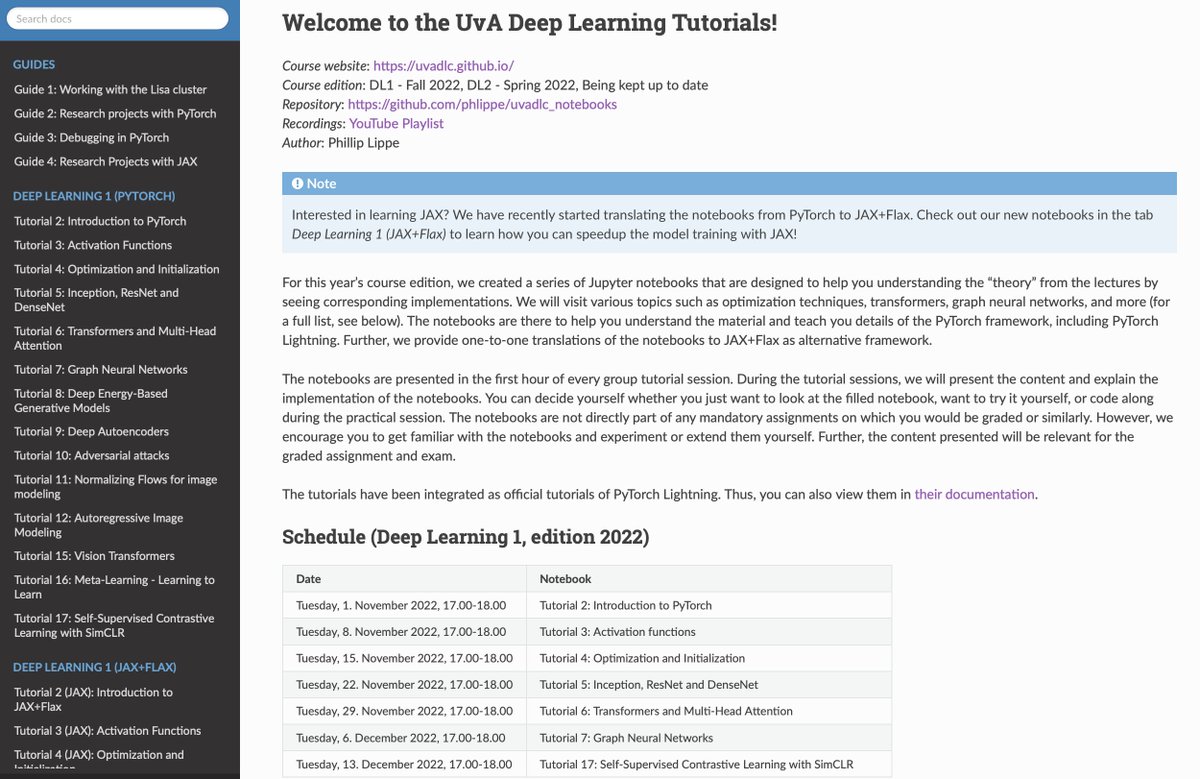
Deep Learning with PyTorch - University of Amsterdam(UvA)
A fantastic series of tutorials covering a wide array of topics from PyTorch basics, basics of neural nets, architectures(CNNs, transformers, GNNs), generative networks, and contrastive learning.
https://t.co/d6E9K1NYwC
DAGs, Golems, and Owls: Statistical Rethinking 2023 Lecture 1 (of 20). No hard work in this introductory lecture, just a conceptual outline and some dank memes. Lecture 2 later this week introduces Bayesian inference. Globes will be tossed. https://t.co/RFRUkjeT3Z
A CANSSI-funded Collaborative Research Team is developing models to improve the analysis of urban-mobility data and study the effects of longer-term disruptions such as road work. Read the story here: https://t.co/Boohf4RzFs @HEC_Montreal@mcgillu
https://t.co/pGzb7urH2P
New preprint from Mengying on scalable modeling of (multidimensional) spatiotemporal data. We introduce Bayesian Complementary Kernelized Learning, combing two popular grid-based probabilistic missing data imputation techniques, MF/TF and GP, in one model.