Author of Geniuses at War (digital pioneers @ Bletchley Park), The Pixar Touch, Love and Hate in Jamestown, all from Knopf. New comic fiction: The Underachiever
Life vs. fiction:
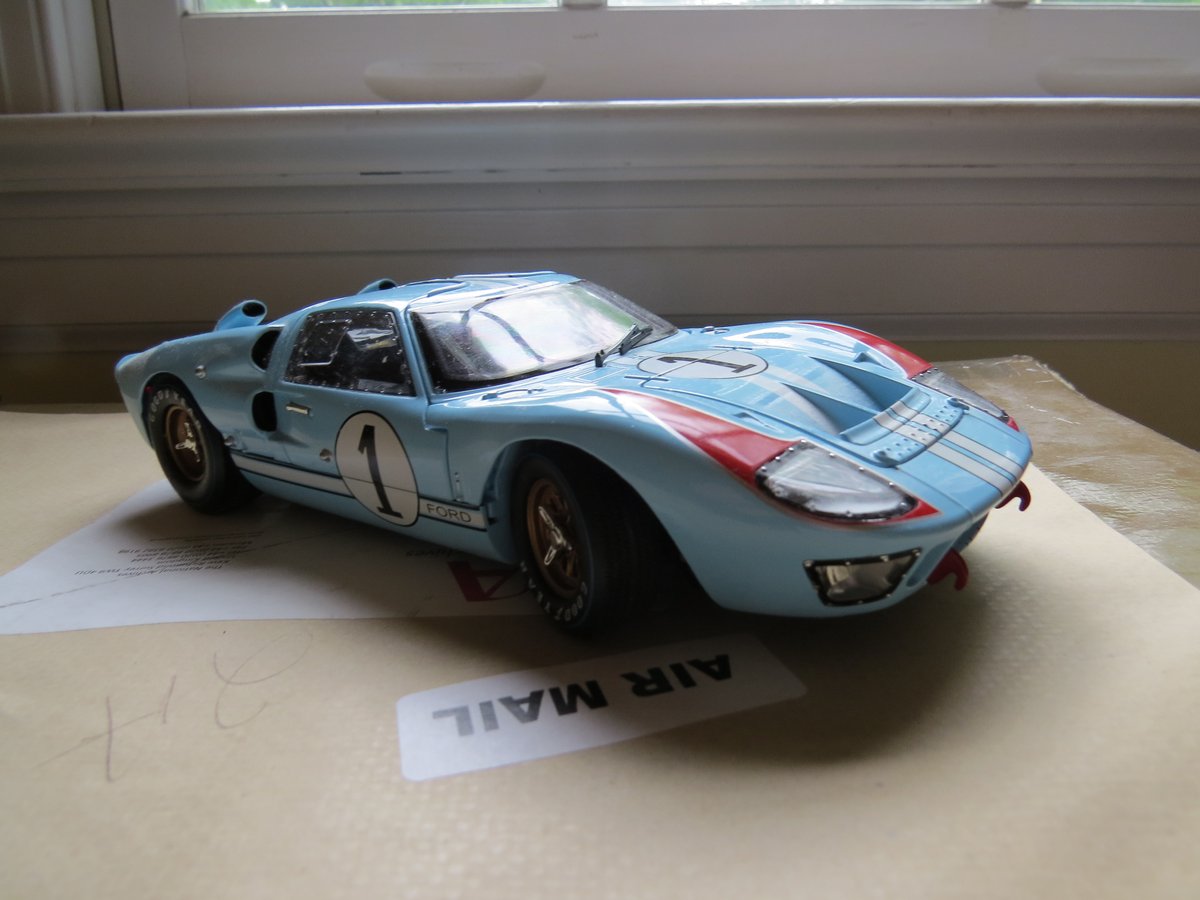
Adversarial patterns are designs that exploit weaknesses in AI image recognition. In my novel The Underachiever, teens paint an adversarial pattern on a car to elude detection by AIs. Russian forces are reportedly now attempting an extremely crude version of this. (No, they didn't get the idea from me.)
Russians have started painting their logistics vehicles with dazzle camouflage in an attempt to confuse AI-assisted targeting systems used by Ukrainian mid-range strike drones.
@MattEvantic For the tech sector, at least, California's policy (which dates to the 19th century) seems to work very well. No enforcement of noncompetes in labor contracts.
New work with @AlecRad and @DavidDuvenaud:
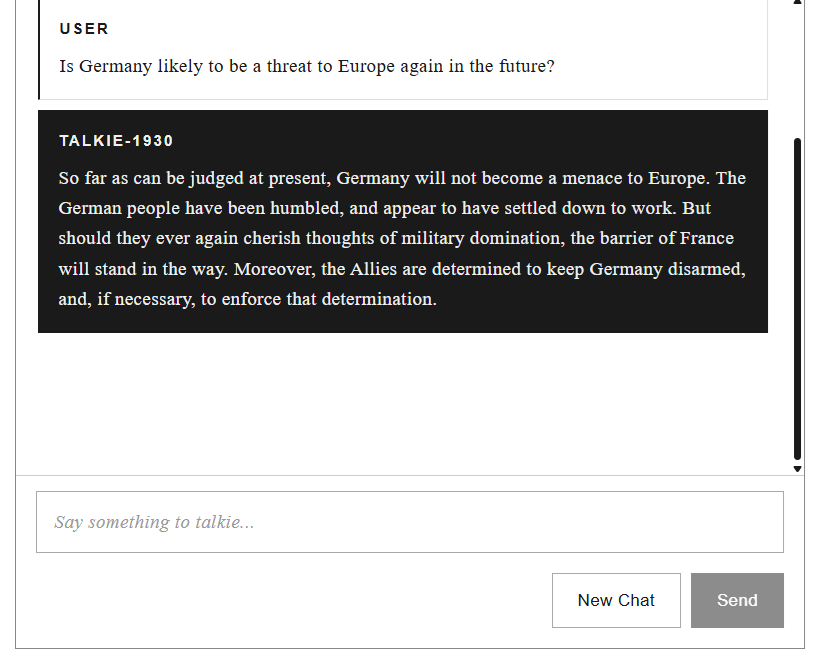
Have you ever dreamed of talking to someone from the past? Introducing talkie, a 13B model trained only on pre-1931 text.
Vintage models should help us to understand how LMs generalize (e.g., can we teach talkie to code?). Thread:
@JosephKahn At the premiere of "Adventures of Andre and Wally B.," the first of Pixar's shorts, at SIGGRAPH in 1984, an audience member asked John Lasseter: "It was so funny. What software did you use?"
Suno just released a new model and I'm finding it to be a big shocking improvement where it's becoming very hard to detect the hints that it's AI music. Here's "I am actually scared of linear algebra"
Here's my big new story on Pixar's “reluctant leader” Pete Docter and the radical changes he’s making to get the “Toy Story” studio back on track. And I've got lots of exclusive details, including about 2 unannounced films. 🧵 https://t.co/ubyZ3crGzX
Are we spending anywhere near enough on preventing AI disasters?
Stanford economist Chad Jones did the back-of-the-envelope math: Assuming policymakers’ standard $ values for avoiding human deaths, and with conservative assumptions about the risks, the U.S. should be spending ~1% or more of GDP per year to mitigate catastrophic AI risk (from bad actors or misaligned models).
With 2025 GDP ≈ $30.5 trillion, that’s $305 billion annually.
If he's right, we're way off. No one knows current AI safety spending—but it’s hard to believe it’s even 1% of that 1%.😬
Oh, and his 10-million-run Monte Carlo analysis yielded, on average, a far higher 8.1% share of GDP as the optimum.
And one last thing. . . None of these calculations assign any value to the lives of future generations.
The big picture: While there's huge uncertainty about AI risks and the effectiveness of mitigation, even low-end estimates of risk justify a large effort (or direct regulation, which the paper doesn't address).
https://t.co/xVQv29Fem8
For someone who has looked specifically at optimal taxation in the context of a growing role for AI (not nec. AGI), you could consider Ryota Nakatani or Spencer Bastani. For high-profile economists who've worked on optimal taxation and whose analysis could be an *input* into a discussion of post-AGI taxation, maybe Emmanuel Saez or Stefanie Stantcheva. (Stantcheva won the John Bates Clark Medal last year, a big deal, and Saez won it some years back.)
https://t.co/zr2EYq09o7
https://t.co/OmFyyoGCfn
I can't vouch for how any of them would fare as podcast guests, tho.