The @nytimes reports Trump has directed a broad policy of non-enforcement of federal rules. Citing to Heckler v. Cheney, a SCOTUS decision from 40 years ago, the article reports that non-enforcement decisions may be unreviewable by courts. Not exactly.
https://t.co/c26J9veHYf
Importantly, Heckler leaves open the door for judicial review "where it could justifiably be found that the agency has 'consciously and expressly adopted a general policy' that is so extreme as to amount to an abdication of its statutory responsibilities."
"If there’s an energy emergency...then you would want to produce energy, including wind and solar energy ... It’s such a clear and obvious inconsistency that it lays bare what’s really driving this, which is fossil fuel interest.” @chlobo_ilo@Inc
https://t.co/yiNrGdFTqz
In a major decision MT Supreme Ct affirms fact and law findings in Held v. Montana: Climate change is real, emissions attributable to MT are a cause, state law that bans GHG analysis in setting energy policy violates plaintiffs' environmental rights. See: https://t.co/6e03AtUn3g
To those reporting on Elon Musk and Vivek Ramaswamy's so called "Department of Government Efficiency" - this would be, if it operates in any official fashion, a federal advisory committee subject to the reqts of federal law (FACA). Public Citizen explains
https://t.co/w33yNpi3Af
Digesting decision from the Hague Court of Appeals this morning, in Milieudefensie v. Shell, which reversed lower court and held (a) yes Shell has an obligation to reduce Scope 3 emissions but (b) court does not have a basis to determine by how much:
https://t.co/gGT4vMq7mV
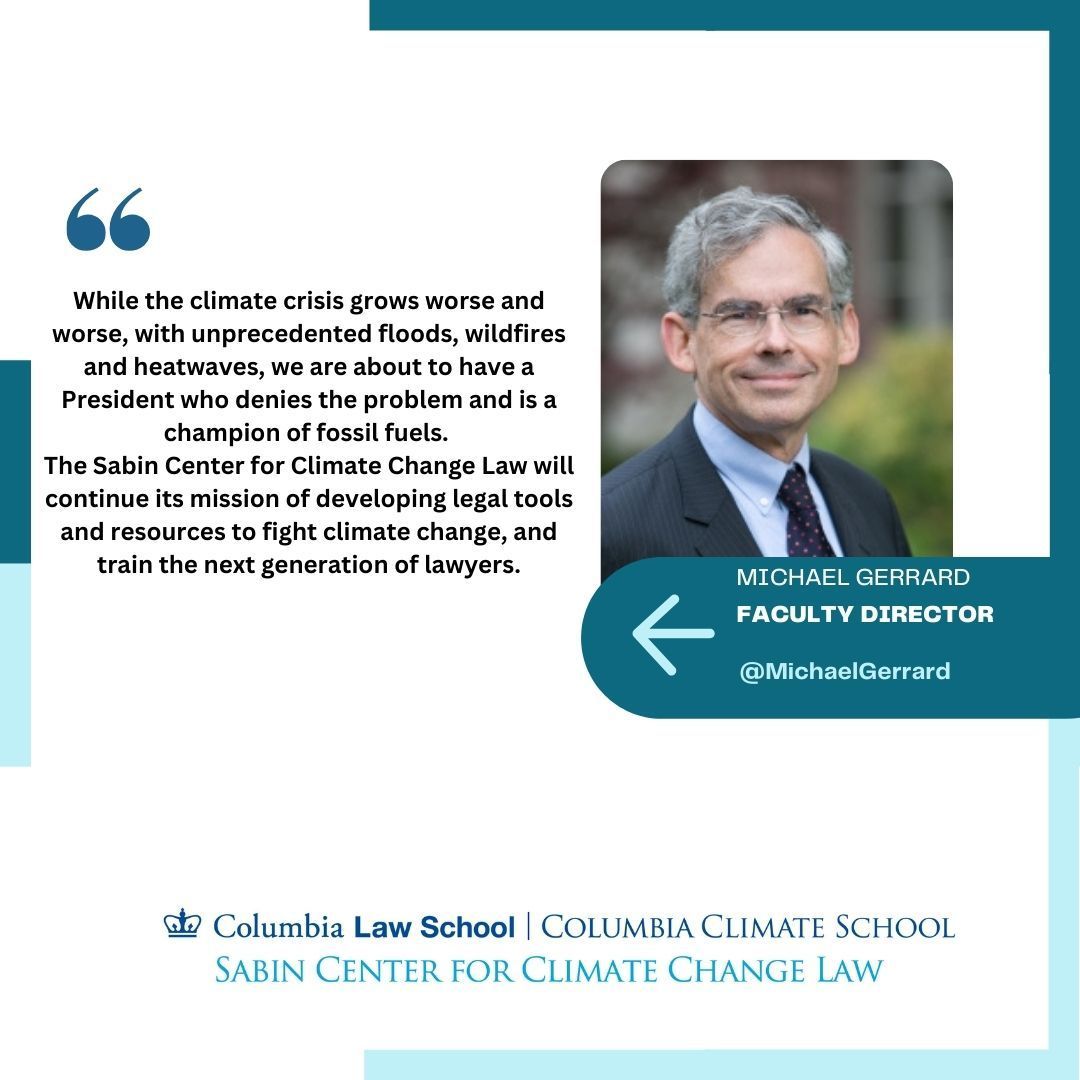
🌍 ⚖️ 🌱 We are disheartened by the #USelection news. The @SabinCenter is as committed as ever to carrying out our work: developing legal tools, engaging w/ agencies & courts, and training the next generation of lawyers to combat the #climatecrisis. @MichaelGerrard@ProfBurger
Chevron is dead. Loper-Bright reigns. The opinion grants judges hearing cases brought by individuals - companies/states/NGOs - power to overrule agency decisions made via public processes just by calling them legal rather than policy, factual or technical decisions. Impact TBD
Today I published a new @SabinCenter white paper: Cities, E-commerce & Public Health: 3 Legal Pathways to Limiting Freight Vehicle Emissions.
In it I explore 3 emerging tools: drayage truck rules in CA’s ACF; indirect source rules; & Z-E delivery zones. https://t.co/Ch3S08ytf5
Rather than defer to EPA's expertise in the fact-intensive, technically-complex area of interstate air pollution the majority credits an incomplete, untimely argument that EPA has refuted and gives States resistant to regulation a fast track to interlocutory review by the Court
In the first big decision of the day, a #SCOTUS five-justice majority in Ohio v. EPA creates a new end-run around longstanding presumptions and standards in judicial review of federal agency action, and stays EPA's Good Neighbor Plan
https://t.co/VOt6kbVwcE
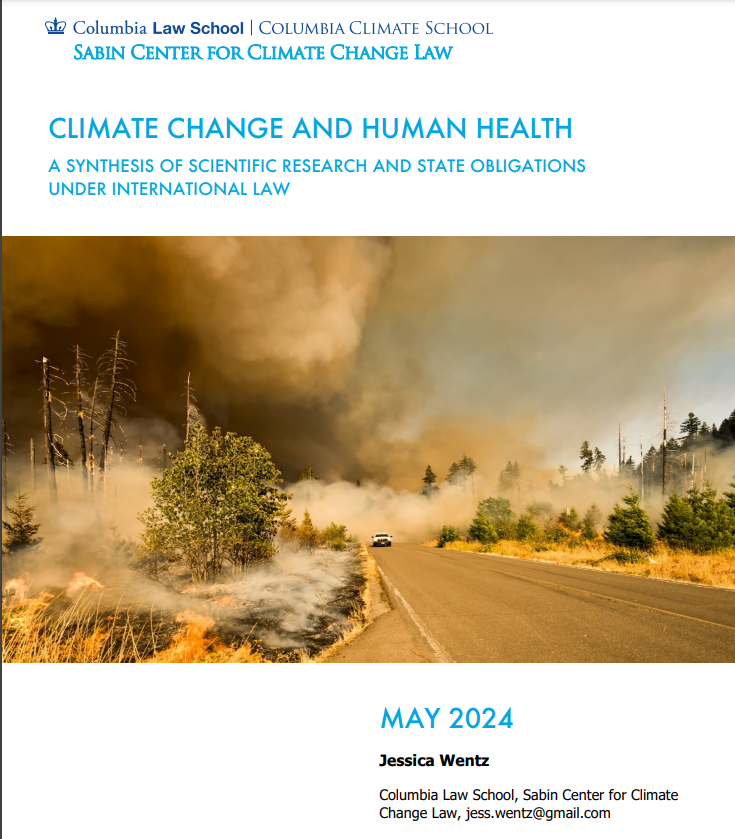
Very happy to share these two outstanding reports on #climate, #PublicHealth, human health and international law - the first from @jess_wentz is a survey across multiple domains, the latter from @amaruthfrancis and Julia Neusner hones in on displacement, migration & mobility
🚨🌏 📈 The @SabinCenter published two NEW reports on the connection between #climatechange, health impacts, and State obligations under #internationallaw.
Blog post ➡️https://t.co/X0XwV6B0Rr
Full papers:
1️⃣ https://t.co/1jpVum31k5 2️⃣https://t.co/rHjztrTlAp
@ColumbiaClimate
SOCTUS granted cert in Seven County Infrastructure Coalition v. Eagle County, Colo., teeing up a major environmental case for next term, which could have signficant consequences for how federal agencies assess climate change in environmental reviews:
https://t.co/4zPCleanFz
⚖️🏢📑Today, the @SabinCenter filed an amicus brief, emphasizing the role that local governments play in reducing GHG emissions statewide & the chilling effect that a lack of certainty about preemption by the CLCPA could have on local climate policies. ⤵️https://t.co/O7z4Ik2RVH
Big decision: UK Supreme Court holds that environmental impact assessments for new fossil fuel extraction projects must account for downstream - “scope 3” - emissions. This brings UK law in line with intl law, and with the clear trend in courts worldwide. https://t.co/XJlZzGXEtW