Anwar Shaikh’s brilliant teaching and scholarship helped an entire generation understand the inner logic of capitalism.
He will be missed not only by colleagues and students in the field, but by the countless people whose understanding of the world was enriched by his work.
Reminder that there is no class on October 13th due to CUNY's academic calendar. Our next class will meet on October 20th when we will discuss Chapter 8: The Production of Space, Time and Place.
You can catch up on past classes here:
https://t.co/iZJY3lUhtQ
The video from the 4th class of my course, The Story of Capital, is now available. We discussed Chapter 6, The Equalization of the Profit Rate & Chapter 7, Masses in Motion.
https://t.co/F8azeEs0JE
We lost our colleague and friend Anwar Shaikh yesterday. The moment is still too shocking and raw to offer a fitting celebration of his contributions to critical and radical economic thinking across five decades. For now, let his own words to @histmat journal describe the analytical and political visions Anwar left for us.
@NSSRNews
https://t.co/G5bR5TtBqS
Anwar Shaikh has left this world.
He was so clear in his thinking that he left a deep imprint on the thinking of generations of New School students and readers behind.
He would always insist that we had to get the first principles right. If you start from an absurd model and then argue the world is imperfect measured against that standard from cloud cuckoo land, you have gone astray with no way to return but to start anew.
He wanted to rebuild economics from scratch going back to the classics and in this process became a classic himself.
It’s hard to picture economics without Anwar. As we are challenged to rebuild the basics, we need his thinking more than ever. Thank you for leaving your writing for us. May you rest in peace.
and is thereby condemned to live and work under such appalling conditions in the midst of astonishing privatized affluence. In other words, the value theory is about the production and reproduction of class relations, not about relative price formation.
Marx’s value theory is not aimed at deriving relative prices (Marx explicitly says so in a number of places). It is primarily designed to explain the mechanisms by which a working class which produces the value receives so little of it
Today at 4:15 pm [ET] we will discuss the Story of Capital Chapter 6, The Equalization of the Profit Rate & Chapter 7, Masses in Motion.
https://t.co/oGwl2LFXM8
Today at 4:15 pm [ET] we will discuss the Story of Capital Chapter 6, The Equalization of the Profit Rate & Chapter 7, Masses in Motion.
https://t.co/oGwl2LFXM8
Our next class will meet tomorrow, Tuesday October 6th at 4:15 pm [ET] when we will discuss the Story of Capital Chapter 6, The Equalization of the Profit Rate &
Chapter 7, Masses in Motion.
In the Grundrisse, Marx says, “This is in every respect the most important law of modern political economy, and the most essential for understanding the most difficult relations.
‘This’ is often cited as if it refers to the theory of the falling rate of profit on its own. But the original text (and the referent of ‘this’ in it) indicates that it is the relation between a falling rate and a rising mass that is ‘the most important law’.
The video from the 3rd class of my course, The Story of Capital, is now available. We discussed Chapter 4: Marx in Manchester, and Chapter 5: The Falling Rate and Rising Mass of Profit.
https://t.co/UKrOSJy79u



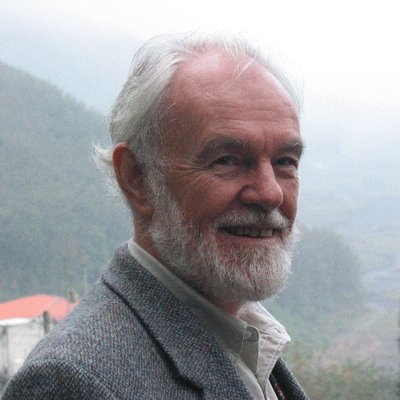





![profdavidharvey's tweet photo. Our next class will meet tomorrow, Tuesday October 6th at 4:15 pm [ET] when we will discuss the Story of Capital Chapter 6, The Equalization of the Profit Rate &
Chapter 7, Masses in Motion. https://t.co/Aeko5sLtDt](https://pbs.twimg.com/media/HT3mfKHW8AAky6_.jpg)


