Our paper just came out in @Nature! A new wearable bioelectronic device for pressing, twisting, and vibrating virtual reality: https://t.co/lRyuxlwHp4. Amazing mentorship and support from @ProfJohnARogers
Check out my new lab at @GeorgiaTech_ECE: https://t.co/yNr8T56AHc
I am excited to announce a new class in ECE at Georgia Tech (@GeorgiaTech_ECE), coming Fall 2025! This will be one of the first lab-based courses offered at the grad level, and it will give students a chance to advance their own research projects (and start something new). ECE 8873 will focus on the development of augmentative wearables for patient care.
⚡ Get hands-on experience designing, fabricating, and testing flexible electronics. Learn how to wirelessly connect sensors and actuators in wearable bioelectronic systems.
⚡ Grad students: This class may satisfy Group I and II credits for Bio-TIG students (discuss with your academic advisor) and free elective credits for other TIGs.
⚡Undergraduate students: Although this is a grad-level course, we may be able to take on some undergraduate students. If you are interested, please reach out by email ([email protected]).
⚡Register for ECE 8873 now on Banner: https://t.co/c0C1iSlSr7
I am excited to announce a new class in ECE at Georgia Tech (@GeorgiaTech_ECE), coming Fall 2025! This will be one of the first lab-based courses offered at the grad level, and it will give students a chance to advance their own research projects (and start something new). ECE 8873 will focus on the development of augmentative wearables for patient care.
⚡ Get hands-on experience designing, fabricating, and testing flexible electronics. Learn how to wirelessly connect sensors and actuators in wearable bioelectronic systems.
⚡ Grad students: This class may satisfy Group I and II credits for Bio-TIG students (discuss with your academic advisor) and free elective credits for other TIGs.
⚡Undergraduate students: Although this is a grad-level course, we may be able to take on some undergraduate students. If you are interested, please reach out by email ([email protected]).
⚡Register for ECE 8873 now on Banner: https://t.co/c0C1iSlSr7
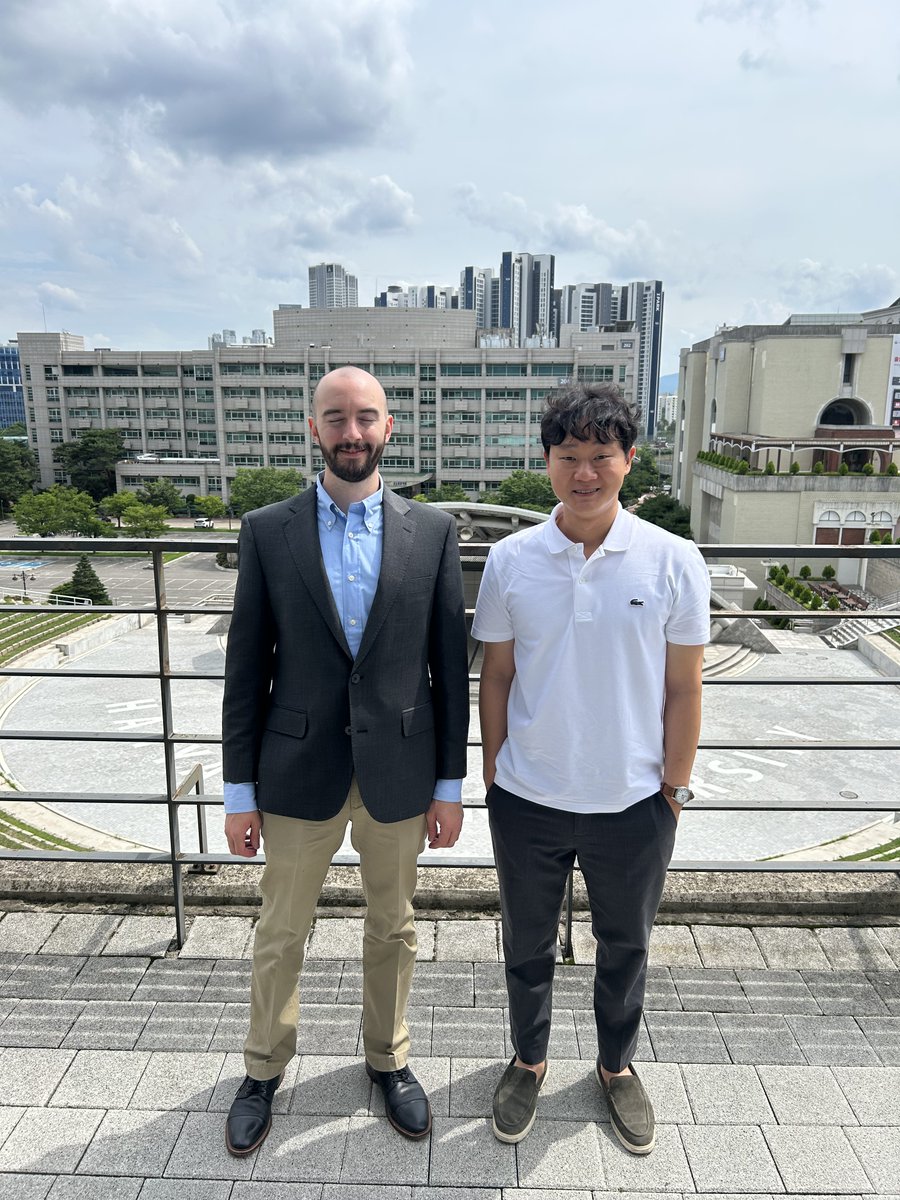
Congratulations to my brother in law, Junhyung Cho, who just got married! I had an opportunity to give a talk to his colleagues at Seoul National University. It was a pleasure meeting Prof. Jong-Ho Lee, Prof. Min-Kyu Park, and their groups.
It’s been a long and exciting trip to Korea—now back to the U.S.!
I am sincerely honored to get an award for my poster at the 19th U.S.-Korea Forum on Nanotechnology. Thank you so much to Jinho Ahn, Myung Jhon, and Inhee Lee for putting on a great event and inviting me! I had a great time meeting Sung Kyu Lim (colleagues in ECE at GT), Douglas Weber, Margaret Kim Seongsin, and many others.
Yei Hwan Jung and I both went to UIUC as undergrads and worked in the Rogers Research Group at Northwestern as postdocs, but missed each other by a year each time. Great to meet for the first time at GCIM last week, and thanks for the opportunity to give a talk at Hanyang University.
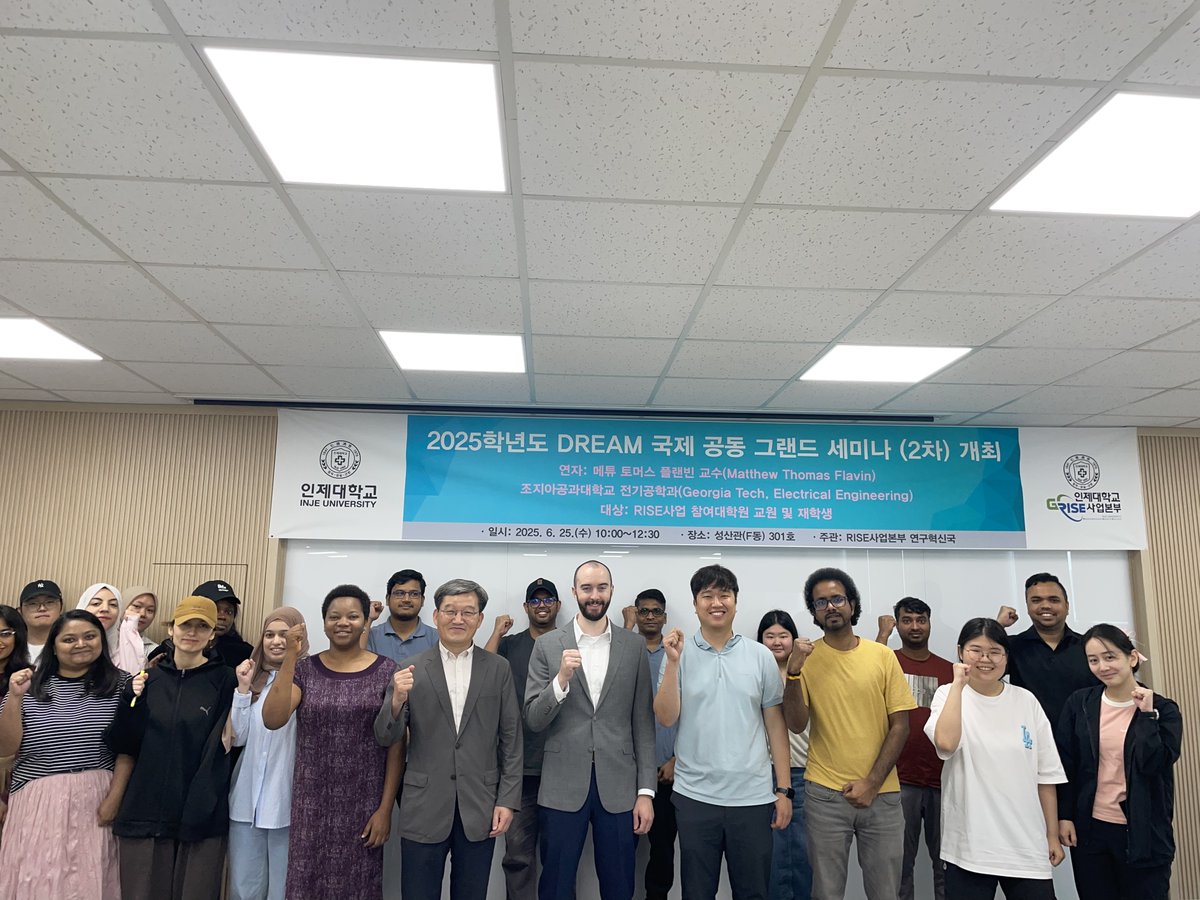
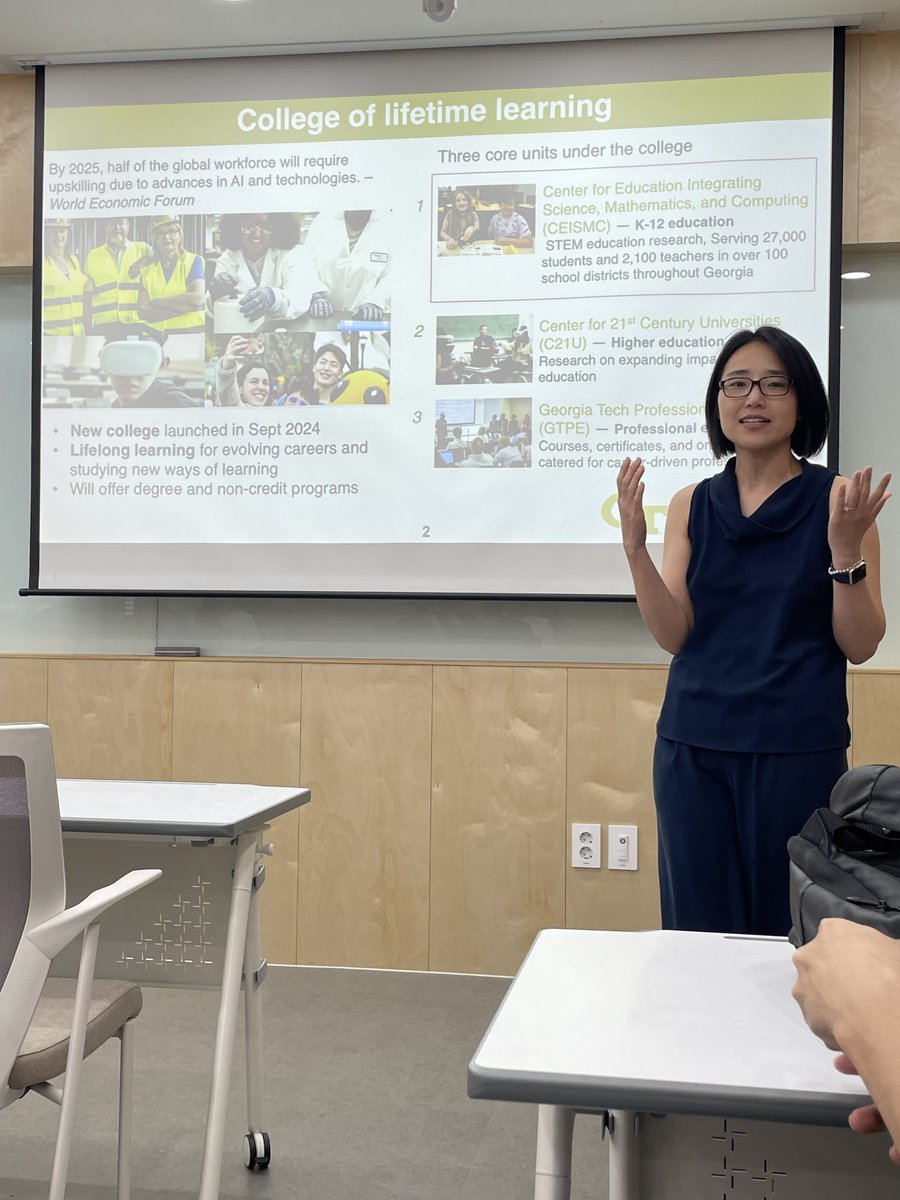
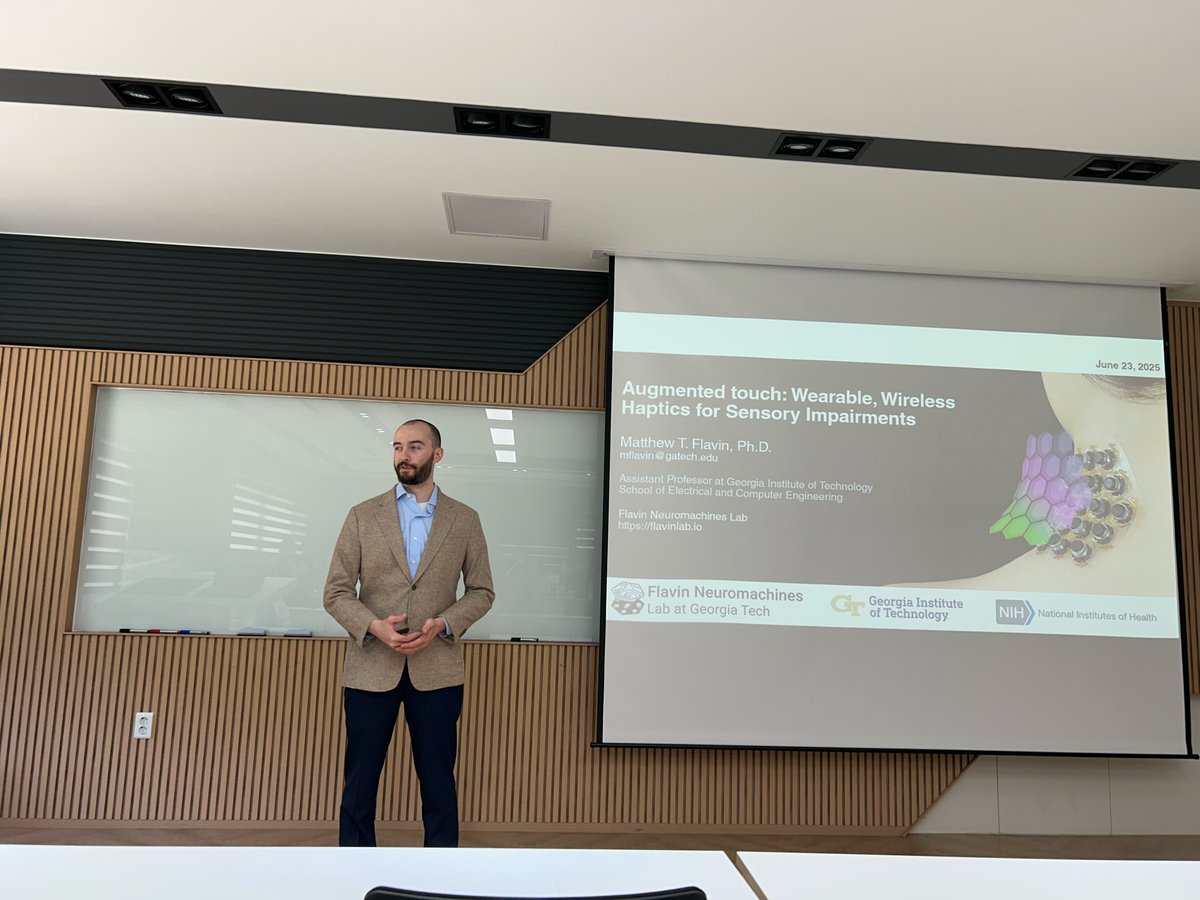
I just met Seonggwang Yoo at his new lab at Inje University, enjoying seeing their awesome facilities at the top of the mountain. Thank you for the chance to meet your students and colleagues!
Continuing on to Pohang, where my wife, @ProfessorFlavin, and I gave talks at @postech2020. Thank you for the warm reception, and thank you to Jin-Tae Kim for the invite!
We discussed some of our recent work, including https://t.co/L2iozr2TUY and https://t.co/7HIg8u8kWk
Shaking off jet lag after landing in Korea. Thank you Jaeyoung Yoon for inviting me to GCIM2025 this year, and to Hong-Joon Yoon for running a great session!
Just a quick post to announce the publication of two collaborative papers led by other groups, with our team in support. One, appearing in Nature Reviews Electrical Engineering (https://t.co/INeCyGYo81), summarizes emerging bioelectronic approaches for pain management – from our previously published bioresorbable nerve stimulators (https://t.co/oXd42cRzob) and coolers (https://t.co/VnioxtkWwJ) for pain block, to haptic interfaces (https://t.co/dXWtJQLiBg and https://t.co/8DPqdSCySL) and many others – led by Prof. Matthew Flavin @ProfMattFlavin (former postdoc in the group, now at @GeorgiaTech ) and Prof. Samuel J. Lin (@harvardmed). The other, published in Advanced Science (https://t.co/UJp0ytGLvu), introduces a fully implantable, battery-free spinal stimulator for small animal model studies – led by Prof. Robert Gereau (Washington University at St. Louis) and Prof. @PhilippGutruf (former postdoc in the group, now at the @uarizona ) and their students. We’re very happy to have played a supporting role on these two excellent papers!
Pain management is unresolved in humans, and the last decade has seen major advances in bioelectronics that may address long-standing challenges. Read more in our new review published in Nature Reviews Electrical Engineering! https://t.co/DYOkZ9oFvP
What is the largest organ in the body? The skin of course. The skin is a great place to develop haptic sensors so we can engage with the (skin’s) receptors to treat the symptoms of human disease. Since we are closing out Parkinson awareness month it is worth mentioning Parkinson is a whole body disease, inclusive of the skin. Dr. Flavin has published a series of papers including a recent one in Nature. Great talk at Interface Neuro @GeorgiaTech@crozSciTech@ParkinsonDotOrg@FixelInstitute@Nature
Listening to some great presentations at #InterfaceNeuro at @gt_neuro. I just gave my talk on our haptic wearables that was recently published in Nature (check out my new lab https://t.co/yNr8T56AHc).
Thank you to @crozSciTech for your invitation!
Check out another successful collaboration with the other @ProfessorFlavin (my wife, Eunhye Grace Flavin). This video shows a student using our AR app to learn area and volume (link to paper below). Thank you to @CEISMC and @GeorgiaTech_ECE!
https://t.co/8bUmPgngLX
. @GeorgiaTech_ECE researcher @ProfMattFlavin has developed a novel wearable device that can monitor the flux of vapors through the skin — offering new insights into skin health and wound healing, and a major advancement in wearable microelectronics. https://t.co/vyqdYyyfXK
We just published another paper in @Nature! It is easy to think about our skin as being an impermeable barrier, but we actually have gases flowing in and out. Our wearable device measures these fluxes! See our paper: https://t.co/NEOqhZWJeU
Jaeho Shin, Joseph Song, and I led this project with @ProfJohnARogers . This work could not have been done without Seunghee H. Cho, Shupeng Li, Aaron Huang (now a PhD student in my lab at @GeorgiaTech_ECE ), Jan-Kai Chang, Yonggang Huang, Amy Paller, and many more.