🟠 Linear thinking: I know the logic, rules, and norms surrounding this problem.
🔵 Lateral thinking: This hasn't been solved traditionally, what's possible?
Linear thinking helps us rationalize. Lateral thinking helps us overcome.
@JamesT50518111 Agree with your model. This was more alluding to applying what you're thinking rather than being stuck in "analysis paralysis". Rather learn from doing something wrong, than do nothing at all. Obviously, depending on the severity of the consequences
When working towards a goal, we can get caught up in imagination land; projecting the outcomes, speculating possibilities that might not happen, and become paralysed in decision-making. By constantly applying what we're thinking, we learn from reality. To think better, we must do
A rare, but powerful tool is introspecting, and adapting. Observing and mimicking what others do well is a start. But by understanding the intention and outcome of their behaviour, and evaluating your own strengths, you can tailor a powerful approach that's uniquely you
@growthhub_ 💯 And it all begins with making an intention, an action. Get it out of your head and into the real world, no matter how small the first step is
When leading a team, small or large, it is important to have a deep understanding of what it takes to make things happen. Although we learn from our past experiences, every encounter is different. The map is not the territory, and the best way to know the territory is to walk it.
When solving problems, we can blindly favour rigid processes without questioning the value. Not only does this eat time, but it blocks against learning and course corrections; leading to poor solutions, and unfulfilled teams. Problem solve like a scientist by testing assumptions.
We're showered with information from countless channels, at different abstractions - news in the world, influencers telling you what to think, opinions from others. Find the meaningful signal in the noise by assessing its value towards your goals and ignore the rest. Focus is key
When solving hard problems, it's paramount to unpack the human experience in the journey. Everything we do aims to support someone in achieving a goal. By deeply understanding and mapping the steps involved, and the pain points, we can create as better fitting solutions.
When embarking on a new project, we can feel overwhelmed; not knowing what to do first, and assume there's a clear-cut process to follow. By imagining what a positive outcome looks like, we can mould a purpose-fit process, cut the waste, and ruthlessly focus on high-value outputs
@orangebook “We regret the things we don’t do more than the things we do.” — Mark Twain. In his famous writing, Huckleberry Fin, Huck learns to break away from society's expectations, and charter a course that's true to him, even though the future is uncertain.
When rallying groups of people around a goal, a sense of certainty and conviction is always necessary. People need direction, a clear plan of action, and a sense of purpose in whatever they're doing.
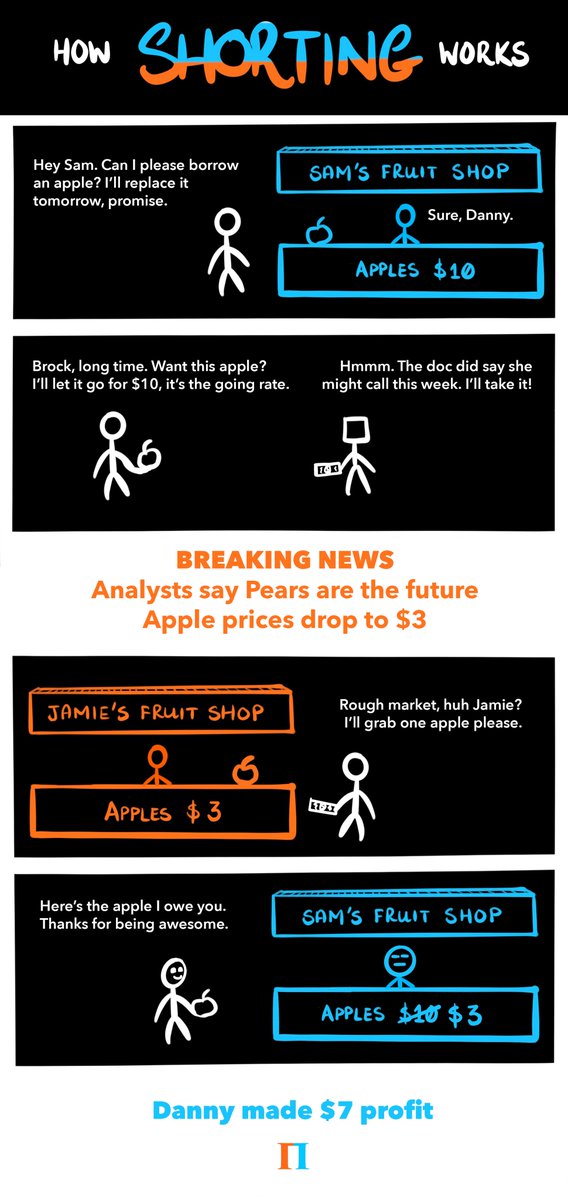
Heard about shorting in movies or in the financial news? Well, here's how it works. Stocks are borrowed from brokers and sold with the speculation that they will fall in price allowing one to replace them at a cheaper price - profiting the difference
New year's resolutions don't need to be grandiose acts that feel impossible to achieve. One take away from @JamesClear's approach, identify small behaviours, their triggers, and rewards, and hack them to be just a little better, consistently.