“A decentralised, water-dominated climate driven by regional ocean currents and chaotic cloud formations cannot be managed, taxed or centralised. This offers no financial leverage for global governance. “
Treating a minor shift in a trace gas as a 'code red' planetary emergency—while ignoring the massive planetary buffer systems—is a failure of perspective.
The oceans are a vast thermal and chemical flywheel. Because they are so vast and deep, their capacity to absorb, store, and redistribute heat and gases operates on centuries-long timescales. This dwarfs the short-term models of centralised bureaucracies. For example, the oceans contain 86% of the world's global carbon reservoir; yet the atmosphere holds a mere 1% to 2%.
Science itself shows that human-produced CO₂ adds only around 3.4% to the full annual global carbon cycle. But natural climate variation has been enlisted by globalist power brokers to drive a campaign blaming CO₂ for a future catastrophe. The roles of water vapor, clouds and oceans are being bypassed. They don't suit the agenda. Yet oceans cover 72% of the Earth's surface to an average depth of 2.3 miles and contain 91% of all the world's retained heat energy. The atmosphere retains hardly any.
They are so vast that all variations in concentrations of soluble CO₂ are readily absorbed into the marine sink. As oceans warm they retain less CO₂; when they cool, they retain more. This is known as Henry's Law. Natural processes heavily influence how much CO₂ resides in the atmosphere at any given time.
The human contribution, while measurable, is a fractional perturbation within a massive, dynamic system dominated by water vapor, cloud albedo and the sheer thermal inertia of the oceans. This also overlooks the complex, self-regulating feedback of cloud albedo.
As evaporation increases, cloud cover expands, acting as a natural planetary shield that reflects incoming solar radiation back into space—a chaotic, balancing mechanism that a simplified, CO₂-centric model cannot fully capture.
Water vapor is the Earth's most abundant greenhouse gas, making up to 4% of the atmosphere by volume in the tropics. This is 40,000 ppm compared with CO₂ at roughly 420 ppm. Yet water vapor has been minimised by a simplified political narrative because, unlike well-mixed atmospheric gases, it is not uniformly distributed—its concentrations are constantly shifting over the vast expanses of the seas.
We seem to know more about the topography of the Moon than the geography and dynamics of the deep oceans. The tropics and rainforests are accepted zones of peak water vapor. These are also primary zones for storm activities—like monsoons and seasonal rainfall—essential to atmospheric turbulence and heat redistribution.
Basic physics reveals that water vapor and clouds account for a vast majority of Earth's natural greenhouse effect—roughly 70% to 85%—while CO₂ is a minor shadow at around 9% to 12%. Its role is important to the atmospheric mix, but this doesn't mean it runs the world's climate. Water absorbs and traps infrared radiation on a massive scale, playing the dominant role in weather, cloud formation and precipitation.
The 'global warming or bust' agenda minimises the importance of cloud albedo and regional complexity. By flattening water vapor into a simple mathematical slave to CO₂, global models ignore the chaotic, self-regulating dynamics of cloud formation (which reflects sunlight and cools the earth) and localised tropical dynamics.
A decentralised, water-dominated climate driven by regional ocean currents and chaotic cloud formations cannot be managed, taxed or centralised. This offers no financial leverage for global governance.
A well-mixed, uniform trace gas like CO₂, however, provides the perfect metric for a centralised system and a whopping (and unnecessary) $275 trillion grid duplication.
Image: The oceanic flywheel; Deep-sea thermohaline circulation currents that regulate global heat distribution over centuries. Source: ttsz / Getty Images
🚨 Dropped: ‘We’re Going Broke, Canada’ today, Facts & no filter.
A raw, fact-based track calling out the reckless spending, the ignored warnings from real experts, and the mess we’re being left with.
This one’s different.
Real numbers.
Real frustration.
Real hope that we can still turn it around.
The visuals hit different too 🔥
🎵 Listen + watch the full video now
If you’re tired of watching Canada get run into the ground while they keep spending like there’s no tomorrow…
Drop a 🔥
Tag someone who needs to hear this
And share it.
We’re Going Broke, Canada…
But we don’t have to stay that way.
🚨 Canadian living in the U.S. just destroyed the “Mark Carney is a world-class economist” lie in under 3 minutes.
She asks the one question Carney’s fans never want answered:
“If he’s such a genius… why is housing still unaffordable?
Why are groceries still unaffordable?
Why are Canadians carrying record debt?
And why did Statistics Canada just confirm we’re in a technical recession after TWO straight quarters of economic contraction?”
Bonus: She reminds everyone Carney wasn’t some outsider savior — he was already shaping Trudeau’s economic policy before he took the throne.
Results matter. Credentials don’t.
Drop a 💯 if you’re tired of the Carney hype while everything gets worse.
#MarkCarney #cdnpoli #LiberalFail #TechnicalRecession #CanadaEconomy #CarneyLies
🚨 Dan McTeague @GasPriceWizard just dropped the receipts on Mark Carney’s heat pump fantasy.
“Net zero” sounds great until you’re freezing in a -40°C Canadian winter with a $20,000+ electric heat pump that can’t keep up.
Here’s the reality check:
✅ Install cost: $14,000–$25,000
✅ Monthly electricity bill: $400–$700 extra
✅ Payback period: 10–20 years (if ever)
✅ Vancouver already ditched heat pumps and brought back natural gas
✅ Insurance companies won’t cover homes running on heat pumps alone
✅ You STILL need natural gas/propane backup or you risk freezing
Oh… and Carney’s own company Brookfield is heavily invested in one of the biggest heat pump makers (Trane). Funny how that works.
This isn’t “affordable energy” — it’s forcing Canadians into unreliable, expensive tech that fails when we need it most.
Canadians for Affordable Energy has a petition up demanding the federal government drop this nonsense.
👉 Sign it here: https://t.co/7ELd92vGh3 (link in comments)
Who else is tired of net-zero virtue-signaling that jacks up your bills and leaves you cold? Drop a 🔥 if you’re signing.
#MarkCarney #HeatPumps #NetZeroFail #AffordableEnergy #cdnpoli #CanadaStrong #GasPriceWizard
With atmospheric CO₂ hovering around 430 ppm, nature is thriving in regions once completely inhospitable.
The vegetation is marching back into the world’s most hostile environments. Earth's biosphere is quietly demonstrating a profound, measurable benefit from higher CO₂. It's become a more resilient and greener world, one that is also more water-efficient. Fresh green cover is actively reclaiming the arid fringes of the Sahel (the Sahara’s southern edge), the Middle East and the Australian Outback.
An 8% reduction in the Sahara Desert's expanse since the 1980s alone means 700,000 square kilometres of formerly barren sand wastes have turned green. This is a literal reincarnation of Earth's famed living deserts. It's the natural world fighting back.
Since 1960, global food production has increased by over 250% to 390% (depending on the index). Most of this is from the Green Revolution—the arrival of fertilisers, tractors and genetics. But atmospheric CO₂—rising from 315 ppm to 430 ppm—is a silent yet profound tailwind behind every new hectare being harvested.
It's the ultimate irony: a climate change agenda that treated CO₂ as an agent of starvation. Instead, it has become the primary engine of agricultural abundance and drought resilience.
When you break down the plant science, the results are spectacular:
* C3 plants (95% of plant species): Rice, wheat, soybeans and potatoes have increased yields by 30% to over 50%. Their photosynthetic mechanisms are structurally starved at lower baseline levels; extra CO₂ accelerates their growth directly.
* C4 plants: Maize (corn), sorghum and sugarcane have increased yields by up to 10%, alongside massive efficiency gains during dry spells.
* Root and tuber crops: Potatoes and sweet potatoes show explosive underground growth, because they have a massive subterranean capacity.
Studies compiled by organisations like the USDA Agricultural Research Service show potato yields increasing by 50% to over 100% under elevated CO₂ when water is abundant. Across almost all major crop varieties, this atmospheric enrichment triggers a 10% to 40% reduction in plant water loss because leaf stomata don't need to open as wide to take in carbon.
CO₂ isn't the disaster they warned about—instead it is a massive insurance policy for global food security.
"I STOPPED BELIEVING THE IPCC AFTER CLIMATEGATE (2009). MAN MADE GLOBAL WARMING IS JUST GROUPTHINK, THERE IS NO SCIENTIFIC CONSENSUS ON IT. IT'S POLITICAL: SCIENTISTS ARE "GREEN" ACTIVISTS & LOBBYISTS" - Dr Judith Curry
I am really pleased to see the NDP, the Greens, civil liberties groups, Tech giants like Apple, Google, and Meta, smaller tech firms like @NordVPN, @windscribecom, @signalapp and law professors like @robertdiab and @mgeist come out with objections to Bill C22.
Every word of my original speech has been validated.
It’s rare to see such unified opposition from every corner of civil society, and every corner of the House of Commons.
🙏 After getting rejected by Earth, Elon, and even Mars… Mark Carney finally pitches Canada to God.
Heaven refuses to invest.
Mark immediately asks if they can at least announce a “historic” partnership 😂
At what point do Canadians realize press releases, fake MOUs, and CBC applause aren’t an economy?🤔
Pierre Poilievre WARNED us about Mark Carney…
and every single prediction is now crushing Canadians.
Carney spent FIVE YEARS as Trudeau’s top economic advisor — the exact time pipelines got slaughtered and carbon taxes exploded.
He testified AGAINST building pipelines at committee.
He flip-flops like a pro: tells BC he supports them… then tells Quebec provinces should veto them.
Now he wants an even HIGHER carbon tax — including on steel, the material everything in this country is built with.
His slick election trick? Hide the tax temporarily so gas prices drop for 35 days, fool the voters… then ram through a monster version with ZERO rebates if he wins.
This isn’t leadership. This is calculated deception from a guy who’s been wrong about everything.
Poilievre called the entire circus perfectly.
Carney isn’t just wrong —> he’s dangerously wrong for Canada’s future.
Canadians should have listened.
Drop a 🔥 if you’re done with the gaslighting.
#PoilievreWasRight #CarneyExposed #CDNPoli #CanadaFirst
"Did they vote for this in the last provincial election? No, they didn't."
That line from @MarkJCarney deserves to be framed and hung on a wall somewhere, preferably over the entrance to the "National Museum of Political Nerve & Hypocrisy."
Because now I have questions.
⁉️ Did Canadians vote for #Carney to pivot Canada toward a more European economic and defence model?
🙅🏼♀️ No, they did not.
⁉️ Did they vote for him to start loosening Canada from its most important trading relationship with the United States after campaigning as the only adult in the room who could handle Trump?
🙅🏼♀️ No, they did not!
⁉️ Did they vote for new strategic partnerships with China?
🙅🏼♀️ No, they did not!
⁉️ Did they vote for a revived industrial carbon pricing regime and carbon markets dressed up as competitiveness?
🙅🏼♀️ No, they did not!!
⁉️ Did they vote for "no Pathways, no pipeline" as national energy policy?
🙅🏼♀️ NO, THEY DID NOT!
Apparently #democracy only requires itemized voter consent when #Albertans want to ask an #Alberta question.
When #Ottawa changes the direction of the country after election day, they call it leadership.
When citizens want a direct say on the future of their own province, suddenly it is reckless, divisive and dangerous. Does this clown pretending to lead FOR Canadians even hear himself?
People asking people what people think.
Terrifying stuff.
#cdnpoli #CarneyIsALyingHypocrite #WesternAlienation
https://t.co/DN2vTrQnhL
“Nothing is clearly stated anymore. When the language of science is adopted by a centralised bureaucracy, clarity is the first casualty. It was replaced by consensus-driven wording designed to protect the institution's mandate rather than reflect shifting real-world data.”
The IPCC has now explicitly acknowledged that their own forecast of a 5°C future driven by human emissions is no longer credible. It is the baseline trajectory of our world 'no longer'.
This dire forecast was quietly dropped because human energy systems changed faster than the old models thought possible. Over the last two decades, trillions of dollars in capital allocation, global treaties, national regulatory frameworks, and corporate ESG metrics have been anchored to a one-dimensional climate model.
That model says bluntly: we are headed down a species-ending climate black hole.
But as technical experts increasingly point out, the extreme catastrophe scenarios used to justify these sweeping economic changes are actually highly implausible. They create a massive belief gap and an erosion of authority. Why should anyone believe the sweeping mandates just because 'they say so?'
The picture remains muddy because the IPCC writes by massive consensus, which blurs their language. It is indecipherable to almost everyone. They won't use a blunt word like 'implausible' in their public summaries because they want to guard against unexpected Earth-system feedbacks—meaning us.
To maintain political and financial momentum, it is much easier for the IPCC to quietly reclassify its worst-case scenario as a low-likelihood 'stress test' in the fine print. Yet it's keeping the public-facing rhetoric largely unchanged. They stopped short of calling these futures completely impossible. Instead, they changed how those scenarios are meant to be used, moving them from 'business-as-usual' to extreme high-risk outliers.
The scientific community is moving to confirm this lack of clarity. Climate scientists designing the next generation of models for the upcoming IPCC Seventh Assessment Report have openly discussed dropping the old extreme scenarios because real-world trends have made them indefensible.
Instead, the technical focus is shifting to a new baseline that peaks much lower, around 3°C to 3.5°C, even under a hypothetical rollback of clean energy policies. The public narrative still lags behind this technical realisation—the institutional river keeps coasting on the momentum of the older, hotter models. In other words, they refuse to openly admit it.
When a policy goal transforms from a flexible, data-driven scientific inquiry into a rigid moral directive, it stops reacting to new evidence. If the 1.5°C or 2°C targets are treated as absolute baselines, then admitting they were calculated using flawed or overly pessimistic assumptions threatens the entire administrative structure built to police them.
It creates a strange paradox: the data says the extreme 5°C future is off the table because global energy dynamics changed. Yet the bureaucracy insists the crisis is more urgent than ever, and the mechanisms must remain in place.
Nothing is clearly stated anymore. When the language of science is adopted by a centralised bureaucracy, clarity is the first casualty. It was replaced by consensus-driven wording designed to protect the institution's mandate rather than reflect shifting real-world data.
The original assumptions diverged significantly from reality. Specifically, those old 5°C models wrongly assumed there would be a five-fold expansion of coal use through 2100, effectively replacing other forms of energy with coal. Real-world exponential growth in solar, wind and electric vehicle adoption, alongside tightening global policies, made that massive pivot back to coal an impossibility.
The bureaucracy simply exploits fear of natural feedbacks to justify keeping a human-emission model they already know is broken.
Dismantling the world's reliable power structure of coal, oil, and gas - without a planet-wide substitute - could be the greatest and costliest error of judgment in history.
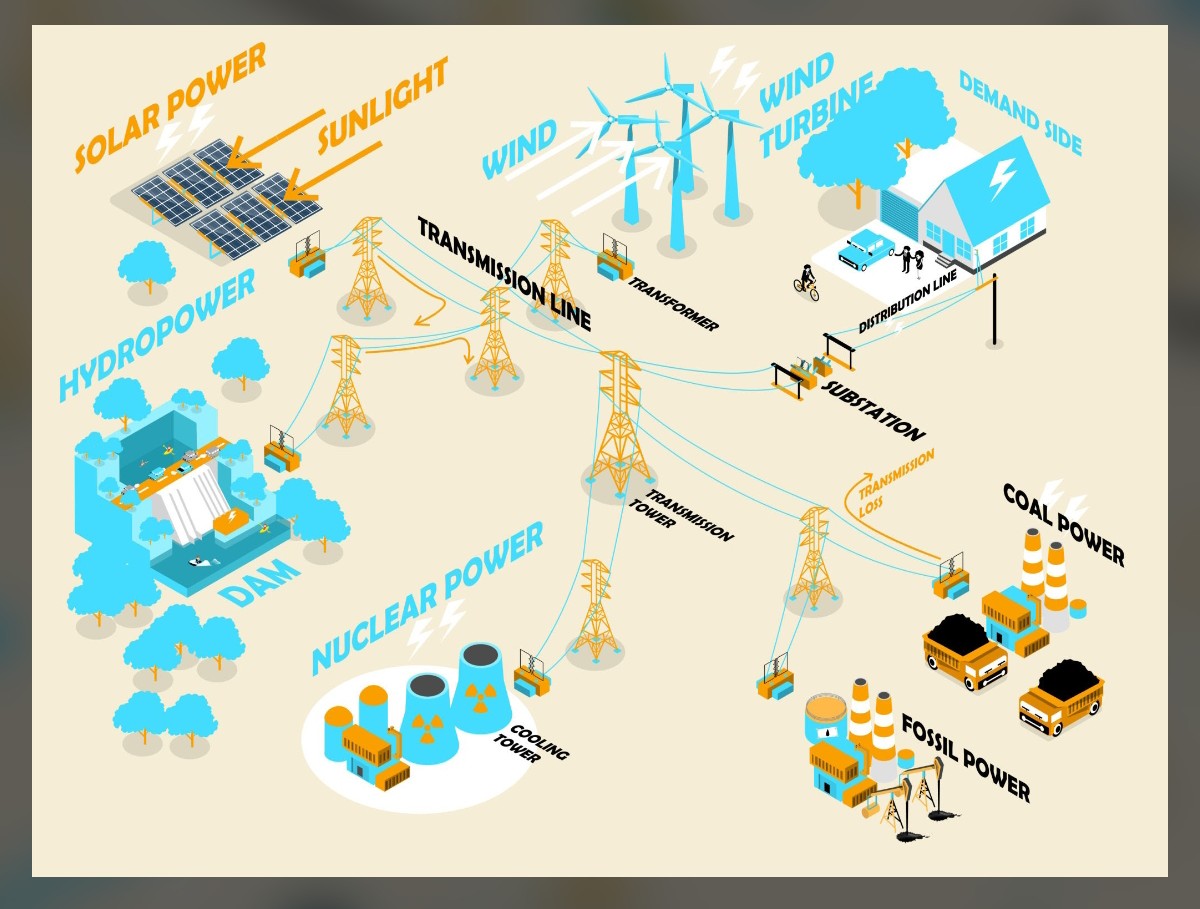
Despite decades of installing wind turbines and solar panels - at enormous cost - intermittent renewables remain unable to replicate the dense, reliable energy of hydrocarbons without fossil-fuel backup. Replacing the world grid for intermittent power carries a nominal price tag of $178 trillion 'so far'; McKinsey Global (2022) estimates the total transition by 2050 at $275 trillion.
No one appears to have thought through the colossal pitfalls that lie a decade or two ahead. This building spree already suggests waves of environmental degradation, as picturesque landscapes, coastal vistas, and farmland are hijacked for wind and solar 'farms'. The resulting shockwave could send modern nations into an irreversible economic slide as early as 2030, while blocking all modernisation efforts across the Global South.
It is a stark reversal of history. These universally successful energy sources are credited with the emergence of all modernity - the spark that exploded in the Industrial Revolution. Humankind first used coal in China around 3490 BC and later by the Aztecs. The Greeks and Romans used it for metal forging, and Marco Polo famously documented the use of 'black stones' for fuel in 13th-century China.
Crucially, coal was the primary driver of the Industrial Revolution in the 18th century, providing the intense heat needed to generate steam and power factories, trains, and ships during the icy depths of the Little Ice Age - a desperate era of cold and starvation.
Today, there are still vast known and untapped reserves of coal, oil and gas. Proven reserves alone are staggering:
Coal: 1.06 trillion tonnes (approx. 132 years remaining).
Gas: 7,299 trillion cubic feet (approx. 143 years remaining).
Oil: 1.65 trillion barrels (approx. 53 years remaining).
Yet the actual volume could be two or three times as much, lasting another three centuries. This abundance challenges the very nomenclature of 'fossil fuels', pointing instead to a profoundly abiotic, self-sustaining origin.
Look to the cosmos: hydrocarbons are a fundamental building block of the universe, detected on rocky planets, icy moons, gas giants, and primitive comets. Saturn’s moon Titan is the reigning champion, with a thick nitrogen-methane atmosphere that rains liquid methane and ethane into massive surface seas like Ligeia Mare. Titan holds hundreds of times more liquid hydrocarbons than all the known oil and natural gas reserves on Earth.
Closer to home, NASA’s Curiosity Rover has detected ancient organic molecules, including long-chain hydrocarbons like propane and benzene, preserved in Martian mudstones inside Gale Crater. Meanwhile, the atmospheres of Jupiter, Saturn, Uranus and Neptune are rich in methane, which breaks down under intense pressure to form complex chains like ethane and acetylene. Even primitive bodies - like Comet Halley and the asteroid Ryugu - are heavily laden with complex carbon-bearing molecules.
If the raw chemistry of hydrocarbons occurs abundantly across the frozen depths of the solar system, we must question the sacrifices demanded for net-zero.
Could humankind survive such a bureaucratic blind alley?
⛔️Canada had the world by the balls… and we absolutely flushed it all down the toilet.
Brutal truth: a country can’t survive on nothing but government jobs, bloated bureaucracy, and delusional “plans.” At some point you need real people with the guts to risk their own capital, build actual businesses, hire workers, open plants, drill, mine, manufacture, innovate, and grow this economy like it’s supposed to.
We have every single natural advantage on the planet: oil, gas, potash, uranium, gold, nickel, forests, farmland, fresh water, world-class talent, and a rock-solid banking system.
We should be an absolute global economic beast dominating the world stage.
Instead, investors look at our toxic swamp of crushing red tape, punishing taxes, regulatory insanity, activist grandstanding, endless bureaucracy, and nonstop anti-business venom… and they just say “No thanks” before taking their money and running to countries that actually want success.
This nightmare didn’t happen overnight. It was years of deliberate, brain-dead policy choices: years of choking productivity with red tape, years of treating every entrepreneur and investor like public enemy number one, years of making it damn near impossible to build anything in this country.
And what did millions of Canadians do?
They kept voting for more of this garbage.
That’s the part that makes my blood boil.
When the hell did we stop voting for a better future and start voting against people like brainwashed sheep?
Pure emotion. Personality cults. Fear-mongering. Imported “orange man bad” idiocy. CBC propaganda and social media echo chambers pointing fingers at the villains while the country quietly rotted from the inside.
Investment? Gone.
Productivity? Dead in the water. Young people? Completely locked out of ever owning a home. Doctors and skilled workers? Bailing en masse. Businesses? Sprinting for the exits. Capital? Long gone.
And now some clowns have the nerve to act shocked?
What the hell did anyone think was going to happen when governments spent years attacking the very industries that pay for everything in this country?
You cannot tax, regulate, shame, obstruct, and demonize the engines of growth forever and expect the economy to magically keep working. That’s not how money works. That’s not how people work. That’s not how reality works.
Capital goes where it’s welcomed. It runs screaming from where it’s punished.
End of story.
Businesses chase profits and investors want returns — that’s the machine that creates jobs, wages, pensions, infrastructure, and the tax revenue everyone loves to spend. You don’t have to love corporations to admit that chasing all investment out of Canada is straight-up economic suicide.
And here’s the ugly truth nobody has the guts to say out loud: Canada has an aging electorate that controls every election. Retirees who already own their homes, already stacked their wealth, and already lived through our best decades.
Younger Canadians get stuck with the wreckage: unaffordable housing, stagnant wages, crushing debt, and zero opportunity.
Every election turns into the same pathetic emotional “stop the scary guy” circus instead of any real debate about growth and competitiveness.
That stupid strategy works… right up until the bill shows up.
Well the bill is here, and it’s a monster.
The most rage-inducing part? Canada still has massive unrealized potential.
We’re not poor. We’re not out of resources. We’re not short on talent.
We’re just completely lacking any leaders with a spine to stand up and roar: “ENOUGH! Let the builders build again!”
Because no amount of government press conferences, slogans, subsidies, or worthless reports will ever replace real private investment.
That’s the brutal difference between creating real wealth… and just managing our own pathetic decline.
Conventional thinking treats wind and solar as permanent infrastructure. They aren't.
These are a form of short life-cycle, industrial gadgetry with roughly 15-to-25-year lifespans. They are all in various stages of permanent decay and replacement - hydrocarbon and nuclear plants last generations. We see this in the mounting graveyards of unsalvageable wreckage. Yes, much of it can be recycled in theory. But in reality, the economic and energy costs usually outweigh the benefits.
They are now decomposing faster than we can replace them and this is the Treadmill Effect. If a nation installs 5 GW of wind power every year, by Year 20, they aren't expanding the grid anymore. They are being forced to build 5 GW just to replace the rusted, fatigued and degraded turbines built in Year 1. Growth flatlines, swallowed up in pure maintenance.
Look at the scale of this dilemma: despite millions of massive turbines and solar arrays deployed over 40 years, hydrocarbon fuels still dominate at roughly 81% of global primary energy. Solar and wind deliver only a tiny fraction of total primary energy. We've reached the limit.
Almost every turbine and panel built over the last two decades is now in the late stages of decomposition. We're struggling just to keep up; and soon we will fall behind. The mines will become hollowed-out and these 'green' rust collectors will fall apart where they stand.
To feed this replacement treadmill will need an astronomical volume of minerals: like copper, nickel, cobalt and rare earths. But we have already devoured the high-grade ores. A century ago, copper ore was 5% metal. Today, major mines are crushing ore that is less than 0.5% copper.
To get the same tonne of metal, you must blast, haul and crush ten times more rock. This requires more massive, diesel-guzzling mining fleets and heavy industrial smelting. We are cannibalising dense, reliable fossil energy just to chase low-density, short-lived weather collectors.
Here is the Einsteinian paradox. In physics, the closer an object gets to the speed of light, the more massive it becomes, requiring exponentially more energy to move it a fraction further. The energy transition is its own relativistic wall.
The closer a grid gets to 100% renewable penetration, the greater its structural costs will become. You don't just need more panels; you need a parallel universe of over-building, synchronous condensers, and continent-spanning transmission lines just to handle the asynchronous volatility.
We are hitting that Inversion Point. The fossil fuel energy required to mine the rare earths, manufacture the turbines and endlessly replace the dying infrastructure will eventually outpace the net energy the system delivers. You cannot reach the limit of light.
Albert Einstein - the ultimate observer of universal limits - would smile at the irony. Net Zero is being driven by an ideological bureaucracy that reads financial blueprints but ignores the periodic table and the laws of thermodynamics.
Entropy is universal. Nothing can bypass it.
Imagery of rust, mechanical exhaustion and the accumulation of unmanaged composite materials.
Canada has one of the most strategic oil resources on earth, and Ottawa keeps treating it like a guilty habit instead of a national asset.
The oil sands are already below the global average for carbon intensity, according to the 2025 budget language cited here, yet the government still wants to keep layering costs on the sector as if Canada is the villain in the global energy story. Meanwhile, no other major oil-producing country is tying its own industry down with the same kind of tax burden.
That is not environmental leadership.
That is economic self-harm with a press release.
The worst part is the contradiction. Ottawa says it wants carbon capture. Fine. Industry says it is willing to advance Pathways if the regulatory and fiscal terms actually make sense. Also fine. Then the government turns around and keeps an industrial carbon tax sitting on top of the very project costs it claims to support.
So the message to industry is basically:
Build the project.
Absorb the risk.
Pay the tax.
Stay globally competitive.
And please clap.
That is not policy. That is a hostage note written by people who have never had to make payroll, finance a project, or compete against countries that actually want their energy sector to succeed.
Canada does not need more punishment layered onto production. It needs pipelines, export capacity, faster approvals, lower project risk, and a government that understands that energy wealth is national leverage.
The oil sands are not Canada’s problem.
The political class kneecapping them is.
You are completely full of it.
The Liberals are not “ahead on the economy.” They are presiding over the wreckage they helped create: unaffordable housing, weak productivity, higher debt, food inflation, stagnant private-sector growth, and a country where young people increasingly see ownership as a fantasy.
Calling that a “trust premium” is hilarious. That is not trust. That is media and polling conditioning plus Trump panic used as political bubble wrap.
A year ago, Conservatives owned the economic debate because reality was on their side. Reality still is. The only thing that changed is that Liberals found a banker with better table manners and the press decided to pretend the last decade didn’t happen.
Carney does not erase Liberal failure. He inherits it, defends it, and now owns it FFS.
I support Canada. Full stop.
That means I support Canadian energy, Canadian jobs, Canadian sovereignty, lower debt, affordable homes, secure borders, and a government that puts citizens ahead of global approval.
Dragging Trump into every Canadian debate is not an argument. It is a panic button.
Pierre Poilievre is not Trump. Canada is not America. And pretending every conservative voter is secretly MAGA is lazy political branding for people who ran out of policy defence.
So define “Canadian interests.”
Is it doubling the debt?
Killing investment?
Driving up housing costs?
Weakening the energy sector?
Letting healthcare decline while Ottawa announces another shiny spending program?
Because that is what we have been living through.
I support Canada.
That is exactly why I oppose what these Liberals have done to it.
It is astonishing how many Liberal voters still talk about spending as if Ottawa has a magic money drawer in the basement.
Canada is not paying for these announcements with productivity, growth, or national wealth. It is piling costs onto debt and handing the bill to people who are not old enough to vote yet. That is not compassion. That is intergenerational theft with better lighting.
And the worst part is the trade-off. Healthcare is strained. Housing is broken. Productivity is weak. Young families are drowning. Yet this government keeps treating spending announcements like moral achievements, while shutting down major parts of the energy economy that could actually help pay the bills.
That is the insanity of it.
You cannot kneecap your own resource sector, bury the country in debt, reward Liberal-connected insiders, and then lecture Canadians about responsibility. At some point, this stops being incompetence and starts looking like a governing class protecting its own ego, ideology, and access to money.
A serious country builds wealth before it spends it.
Canada’s Liberals have chosen the opposite.