Different parts of India are witnessing soaring temperatures and the challenges that come with it. This heat is harsh on all of us and I urge you all to take as many precautions as possible. Please stay hydrated, keep water with you when stepping out. Offer a glass of water to others. In weather like this, such kindness goes a long way.
@Pulkit989 We are currently checking this matter with our team. We kindly request you to allow us 48 hours to provide an update.-Vartika
https://t.co/jq6HypVoAf
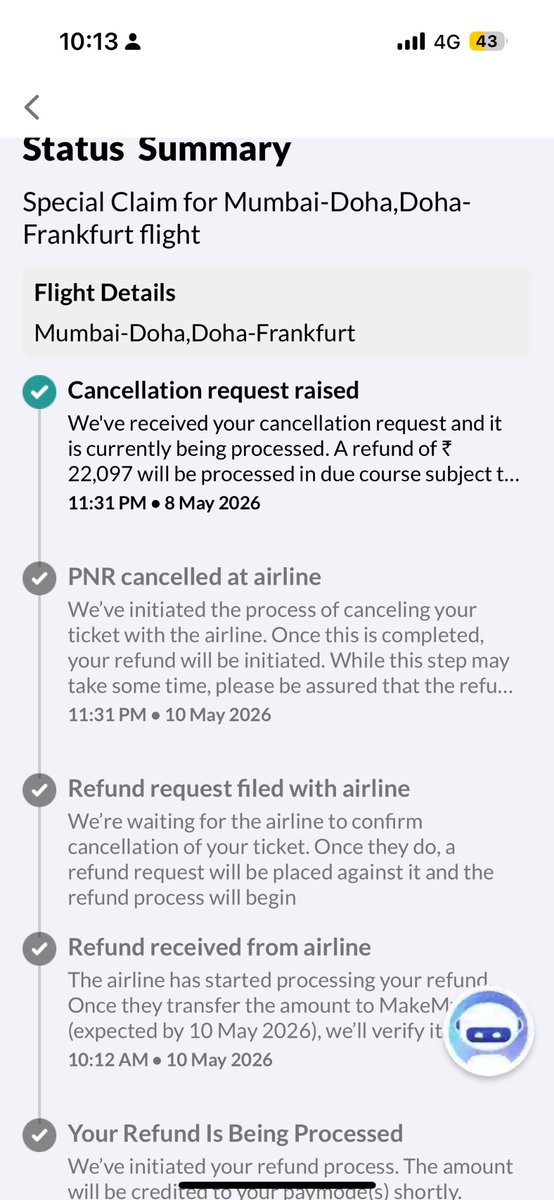
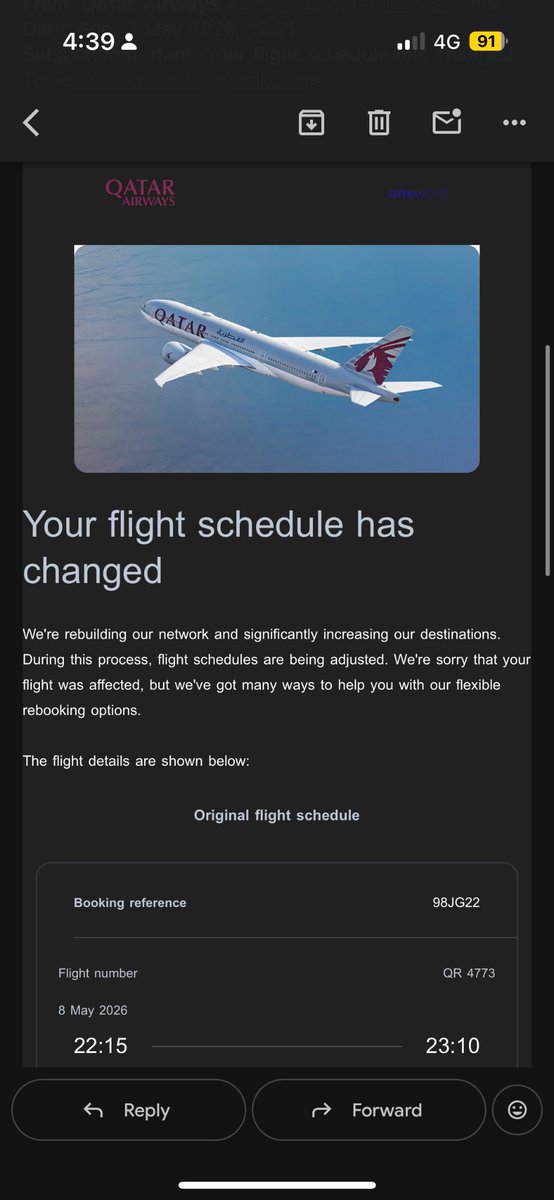
Hey @qatarairways I’m extremely disappointed with the repeated rescheduling of my brother’s BOM–FRA flight (Ref: 98JG22), which significantly disrupted his travel plans and forced me to make alternate bookings at additional cost just for him to reach his destination.
We recently built an AI assistant inside @Razorpay called Slash.
It reads our entire codebase, debugs production incidents, reviews specs, writes code, reviews every single PR, answer tech queries and also raises PRs for small features.
It's easily accessible through Slack. We can tag it in any Slack thread, describe the problem in English, and it gets to work.
Six weeks ago, Slash handled 122 tasks in its first week. Last week it handled 14000+. Queries, analysis, bug fixes, PR reviews, test runs and work that earlier lived across scattered tools and teams can now be done with Slash right within Slack. 1000+ people used it in a single week because it got their work done faster. The whole adoption has been completely organic.
The numbers from last week have been very encouraging - 14,854 tasks completed. 2,150 PRs raised, 1,152 merged, 45% of those PRs shipped with zero human rework.
A payout gets stuck mid-retry during a live incident, an engineer tags Slash and within seconds, it cross-references logs with code and pinpoints a state machine bug blocking the retry-to-failed state transition. Tells the team exactly which logs to check and how to resolve the incident.
With its K8s analyzer skill, Slash scanned a single namespace, right-sized all 11 workers using 48-hour P95 pod metrics, and raised the PR. One run saved $560/month.
A marketing banner bug was fixed with few prompt iterations with a PR raised, merged to prod and deployed in minutes. No front-end developer touched the code.
Security teams ran static security testing and remediation through Slash at org scale. Thousands of findings were purged and many more got validated autonomously.
But Slash isn't just an engineering tool.
Account managers now trace stuck customer payments and integration failures through Slash instead of pinging engineers on Slack. L2 product support tickets get triaged by Slash before they reach engineering.
250+ non-engineers ran thousands of sessions last week. PMs used it for research on our payments infra, customer interviews and product features sometimes raising PRs of their own. Analytics teams built SQL pipelines. 11% of all sessions came from people outside tech and product.
On our company bakkar (watercooler) Slack thread, someone asked Slash jokingly to assign tasks to everyone and it responded in the same tone. It seamlessly started participating in inside jokes and conversations.
The quality compounds with use. Engineers who shipped 11+ Slash PRs averaged a 63% merge rate without rework. First-timers averaged 37%. Across the org, human review comments per PR have dropped more than 40% with Slash starting to do in-depth review of every single change.
We're still early. Large cross-repo refactors, fully agentic sdlc and plan mode are next. But Slash has already changed how people at Razorpay build, debug, and ship every day.
Hey @qatarairways I’m extremely disappointed with the repeated rescheduling of my brother’s BOM–FRA flight (Ref: 98JG22), which significantly disrupted his travel plans and forced me to make alternate bookings at additional cost just for him to reach his destination.
Given that the original service could not be operated as scheduled, I respectfully request a full refund instead of being charged a “no-show” fee for circumstances beyond my control. I hope your team can review this fairly and resolve it at the earliest. #QatarAirways#customer
Deep fear and pessimism about India right now, although the only real change is the energy shock
The AI risk to India is overblown, and we will be net beneficiaries over 10 years
History tells us that none of this is structural, if anything we will find our way out
I came back to code because AI made it possible for me to build at a level I couldn't before.
I'm not coding despite being CEO of YC. I'm coding because this is the most important technological shift since the internet and I'd be an idiot to experience it from the bleachers.
I'm 45, running the most important startup institution in the world, and I can ship production software at 2am. That's not a distraction from the job.
That is the job understood correctly.
every AI startup in india that hits big numbers fast is going to get this treatment. every single one.
the ecosystem still thinks in SaaS. clean MRR, annual contracts, neat dashboards.
AI revenue doesn’t work like that. it’s usage-based, spiky, token-driven. a user can spend $0 one week and $500 the next. annualizing a big week isn’t fraud. it’s how the model works.
subscription revenue, usage-based consumption, and accrued transactions are not the same business. they don’t have the same margins, the same retention, or the same predictability. but we mash them into one number, slap “ARR” on it, and then act shocked when the math doesn’t look like Salesforce.
@cursor_ai did $100M ARR. @Lovable claims $20M+ MRR. nobody asked for stripe dashboards. no community notes. no investigative reports.
@emergentlabs claims the same numbers and the entire timeline becomes an accounting firm overnight.
the question isn’t “is emergent lying.” it’s does anyone in this ecosystem actually agree on what ARR means anymore.
the answer is no.
you can question the math. that’s healthy. but the energy right now is very “there’s no way an indian company is doing this”
Bengaluru has more PhDs, engineers, and capital per square kilometre than most countries. And yet the city can’t drain a road.
The problem isn’t capability. It’s that every smart person here is building for the world and not for the city they live in.
If you’re working on something for Bengaluru, maybe it’s time all of us came together to collectively try and do something.
[ A LONG READ ]
Where do you actually want to live 🇮🇳 / 🇺🇸
This is a common topic of conversation with friends and family, and one of the most common questions people DM me.
After living in both countries, I have noticed smaller, intangible things that go beyond the obvious reasons. The US does have better infrastructure, more money, more freedom. India has family, community, food.
What I’m sharing here isn’t meant to convince anyone or land on a definitive answer. It’s a personal, debatable, and biased perspective. I stay in India today for these reasons, and I also know that for many people, these are the same reasons they choose not to.
So if you’ve ever gone back and forth on this yourself, or felt torn, this might resonate.
————
[1] It’s easier to feel grateful here.
If you’re reading this tweet, chances are you’re doing very well by Indian standards, probably in the top 1%. In India, you’re reminded of that almost immediately. The moment you step out of your house, you see people living with far less. Auto drivers waiting in the heat. Security guards standing all day. Sweepers who show up every morning. Street vendors who know what one slow day means financially.
Seeing this every day brings a deep sense of gratitude without effort. You notice how people make peace with their circumstances and still find ways to enjoy life. I’ve noticed myself complaining less over time because your definition of 'enough' changes. It does recalibrate what feels worth stressing over.
In the US, most people around you have their basics sorted. Life is pretty comfortable. And yet, there’s often a persistent sense of yearning for more. More comfort, more success, more meaning. Sometimes it feels like having ten times more still doesn’t translate to feeling settled.
In India, it’s very hard to forget how privileged you are. That awareness stays with you, and it naturally turns into a desire to give back.
————
[2] People show up without explanation.
India is a collective society in ways that are hard to articulate until you’ve experienced it. There’s an instinct to help that doesn’t come with too many questions.
You can knock on a neighbour’s door and be helped without needing to explain much. There have been moments when being alone at home felt unsafe, and I stayed over at a neighbouring family’s place without hesitation. When I mention this to friends living abroad, they can’t quite comprehend it. On the streets too, you see this play out often. People stop what they’re doing and step in, sometimes for something as simple as directions, without first deciding whether it’s their responsibility.
In the US, help is clearer and more structured. You know where to go, what to fill out, who to contact. The systems work and they’re reliable, but they also create distance. You’re encouraged to be independent, to manage things on your own, and for the most part, you do. That independence has its advantages, but it also means that when things feel heavy, you often carry them alone.
In India, you start feeling like you exist inside a web of people rather than moving alone from one system to another. There’s comfort in knowing that someone will show up.
————
[3] There’s too much to fix, and your contribution matters.
India has an overwhelming number of problems. Education gaps, access issues, infrastructure that barely holds, systems that are slow and imperfect. You see them around you all the time.
Because of that, effort feels visible too. Even small work feels like it lands somewhere. I was a part of a project to update parts of the curriculum for government schools. We were able to bring in Harvard professors for inputs, rethink the structure, and design it better. What still feels a little unreal is that it’s actually being used now. Knowing that something you worked on is shaping how hundreds of students learn makes the effort feel real.
You see this around you in other ways as well. People organising street cleanups, awareness drives, local initiatives that move things forward. If you’re someone who likes giving inputs, this matters.
That feeling is hard to replicate in places that are already built. There, contribution often feels like optimisation. Making something slightly better, slightly faster, slightly cleaner. Life is convenient and more comfortable, but there’s less room to intervene. Here, systems are still forming. If you want to get involved, there’s space for it, and you can usually see where your input goes.
————
[4] You get used to hard things.
Growing up in India, you learn early that effort is non-negotiable. Competition is everywhere, systems don’t always support you, and very few things are handed to you cleanly. You just learn that if you want something, you’ll probably have to work for it, and then work some more.
You also understand young that effort doesn’t guarantee outcomes. Sometimes things still don’t go your way even after you’ve done everything right. That teaches you to stop expecting fairness and start focusing on response. You grow a thicker skin. When something breaks, you look for another way.
As adults, this shows up in small, everyday moments. When something doesn’t work, you don’t freeze. I have seen how helpless people can feel in places where systems are meant to be perfect. A delayed train, a cancelled service, and suddenly no one knows what to do next. Growing up here, you’re used to gaps. You look for workarounds instead of waiting for things to fix themselves.
I hear this a lot from people living abroad too. That they want their kids to grow up here again. It's not easier, but learning how to deal with uncertainty, effort, and imperfect systems is something that’s very hard to recreate once life becomes too smooth.
————
I still want India to get better on so many fronts. There’s a lot that frustrates me here, and I don’t pretend otherwise. But right now, I’ve found comfort and joy in these positives.
If you’re grappling with a similar question, I hope you find the reasons that feel true to you. No place is perfect :)
Raghav Chaddha ke RS mein topics jo bhi decide karta hai wo kamal hai bhai.
- Pain of Delivery Boys
- Health Insurance claim rejections
-Toll Plaza loot
- Spam Calls
- Monopoly in aviation
- 0% GST
-Free AI tools
- Global Free health checkups
- Agniveer Pensions
-Affordable food at airports
-Hidden Bank Charges
-Government Banks efficiency
- Railway Mismanagement
All relatable topics to Indian Middle Class.
Waki wo wahi purane rants kisi ko nahi sunne bhai, liberanduyo ki taali chahiye ya Middle class mein wapsi. Decide karlo.
London in the 1800s, New York in the 1900s and Beijing in the early 2000s were likely more polluted than Delhi NCR today
Feels like we have now hit the peak where there is real public anger and things will change
Byproduct of fast growth and I suspect 2035's NCR will be better