Troops of the Operation Hadin Kai have killed at least 20 members of Boko Haram/ISWAP, including a senior commander identified as Abu Yusu, the Munzir of Dursula, during a series of coordinated attacks on the Goniri community in Gujba, LGA, Yobe State.
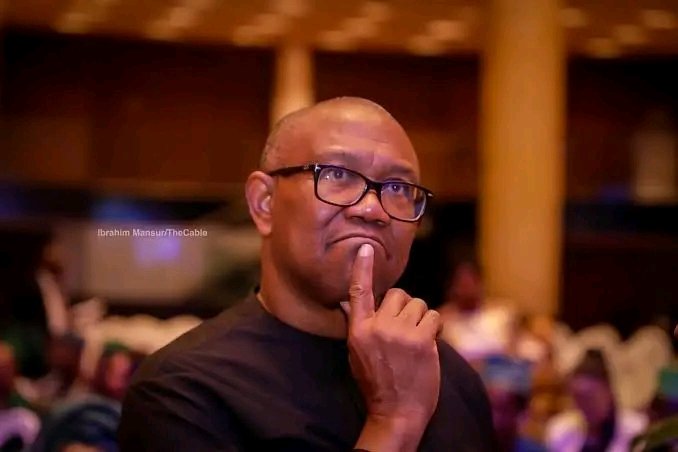
“I don’t have a house in Abuja, I don’t have a land and I’m not preparing to have because I don’t need it.
“The more you have all these things the more headache you put on your head, for years I have never been sick, why would I? Because it’s not necessary.
“I was the chairman of our regulatory body, Security and Exchange Commission, SEC; the day I was announced, I arrived and the DG showed me a jeep, a Prado and they told me how much allowance I have for accommodation and I told the DG, ‘I just want to come for meetings here, I don’t need anything from you, any day you fix meeting, tell me I would come. I don’t want your sitting allowance, your car, and your house.
"He said it’s my entitlement, but I said whatever I’m entitled to, God has given me.’
“You can go and ask whether when Peter Obi was the chairman, did he collect anything?
“I was Chairman of Fidelity Bank and they told me that I’m entitled to Mercedes 500 or Range Rover, the bank is still there, go and ask them if I collected anything. I told them that I’m the chairman and whatever I need in my house I have, unless you want to bring a headache to yourself.
“I have enough, I don’t need to do give away but what I need I have.”
- HE Peter Obi, 17.01.2026
@BashirAhmaad The cards playing out are the same card played during Goodluck Jonathan, if there is anyone or group causing this insecurity it's coming from the Northern part of the country.
This current administration is even gaining more support from those who never supported it in 2023.
In many parts of Nigeria, a painful narrative continues to unfold, one often unheard, unacknowledged, or dismissed. Fulani pastoralists, moving with their cattle in search of grazing fields, frequently find themselves at the centre of conflict, attacked blamed for insecurity, criminality, and clashes they say they did not start.
What is commonly echoed in affected communities is that being a Fulani herder is synonymous to criminality or terrorism. Across certain regions in the North Central and Southern states, reports from community leaders and pastoralist associations indicate that herders have fallen victim to attacks, targeted killings, and destruction of livestock. For many of them, their only possessions, cattle are seized or slaughtered. Victims often allege that when these incidents occur, there is little public outrage, sympathy or any form of government response to seek justice for the victims.
“We are profiled before we are heard,”When a herder is attacked, it doesn’t trend or matter to anyone. But if a retaliation happens somewhere else, suddenly we become the villains.”
For these pastoralists, cattle are not just livestock they are life savings, dowries, school fees, and social identity. Losing them is equivalent to losing everything.
The pattern of silent victimization and delayed justice fuels resentment and increases the risk of reprisal. The national narrative tends to simplify a complex situation: the line between criminals and innocent herders becomes blurred, and the entire ethnic group is often judged by the actions of a few.
The Fulani community deserves protection like any other Nigerian Justice must be fair and must be seen to be fair, otherwise grievances deepen. both security agencies and policymakers must resist profiling, identify perpetrators based on evidence, and protect innocent citizens on all sides of the conflict.
For many Fulani families on the move, peace remains their only demand and grazing with their cattle should not amount to a crime.
💡#DidYouKnow at @WFP, Disaster Risk Management starts before the shocks?
@WFP supported 75,862 people with cash assistance across 4 LGAs in Adamawa🇳🇬. A total of ₦208,184 has been distributed to 9000+ households helping communities prepare before crises hit.
#AnticipatoryAction