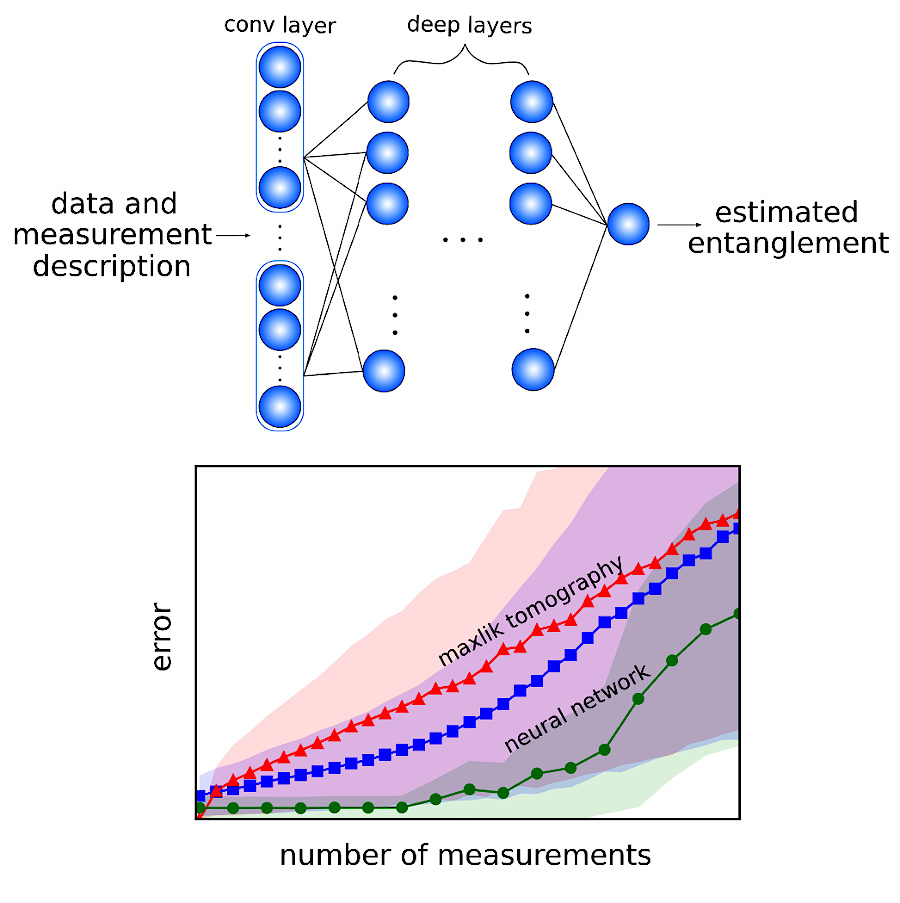
Researchers experimentally demonstrate quantum entanglement quantification boosted by #MachineLearning which could outperform state-of-the-art methods with greater accuracy from fewer measurements.
Learn more in this week's issue of Science Advances: https://t.co/Nh8H3I4ENS
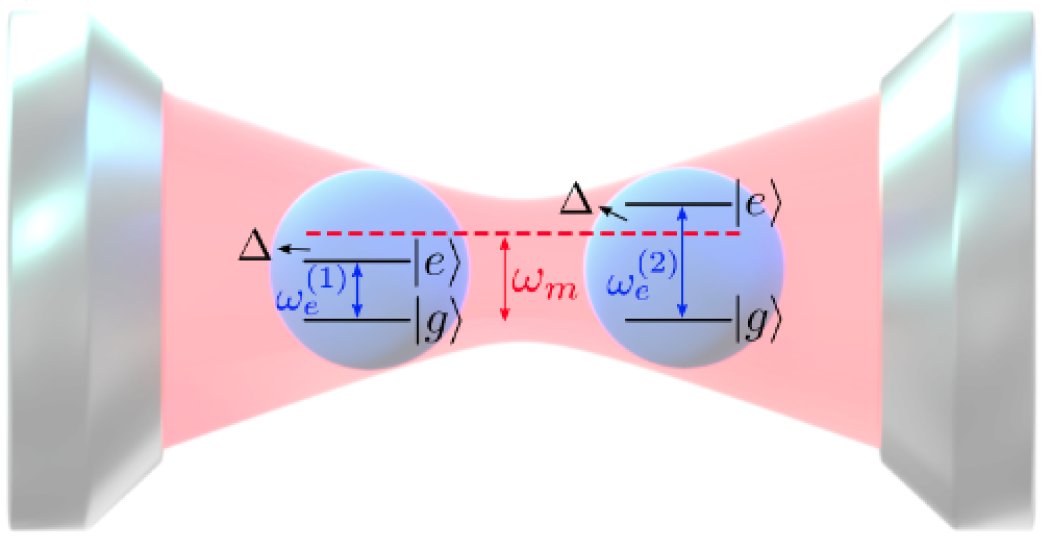
Optimal and tight Bell inequalities for state-independent contextuality sets, Junior R. Gonzales-Ureta, Ana Predojević, and Adán Cabello @QTechStockholm#Quantum#QuantumInformation https://t.co/htz1Smqyhs
Our latest paper is published - Phys. Rev. Research 5, L012035 (2023) - Optimal and tight Bell inequalities for state-independent contextuality sets https://t.co/EChuY2xUrF
Entanglement quantification from local measurements using neural networks. Works great for experimental data from quantum dots and parametric generators, while trained only on simulated data. https://t.co/ZSJsyHxnwM @KoutnyDominik@QtechStockholm@SchneiderQMat@QuantumHedgehog
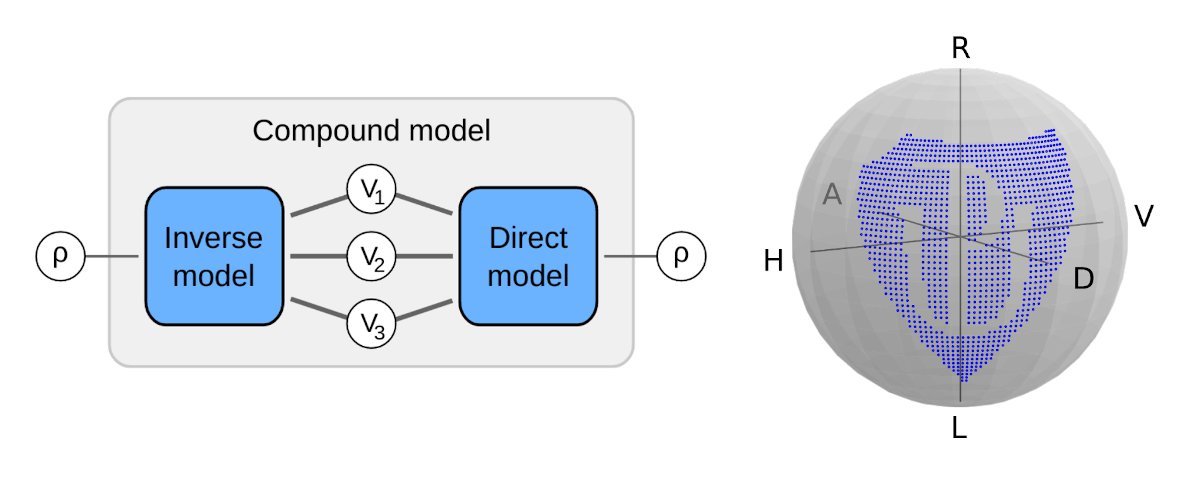
Deep learning of light polarization in twisted liquid crystals with errors down to 10^-4. Applied to quantum state preparation & measurement. https://t.co/ZbaP3VcuyN Data & code: https://t.co/Nmn59B5Jpq @DVasinka@QuantumHedgehog
Our new preprint entitled Device-independent quantum key distribution based on Bell inequalities with more than two inputs and two outputs is now on https://t.co/J4TIiP5mcJ.
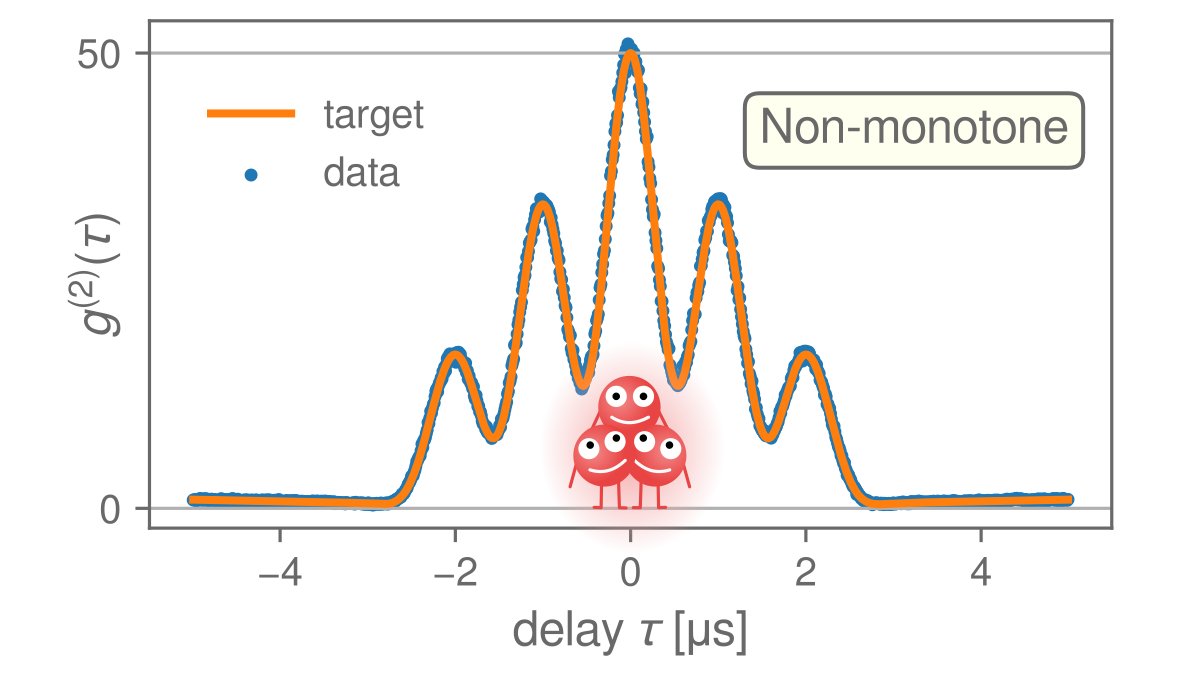
Our new preprint on shaping the g(2) autocorrelation and photon statistics is now on https://t.co/E7du4uOZsB 📝
Data and code are hosted by the amazing @CodeOceanHQ; capsule https://t.co/OVQS5VmTtB 🖥️
🐦@IvoStraka 🦔@QuantumHedgehog